How Do I Identify a Factory vs Trading Company When Sourcing Kids’ Sunglasses from China?
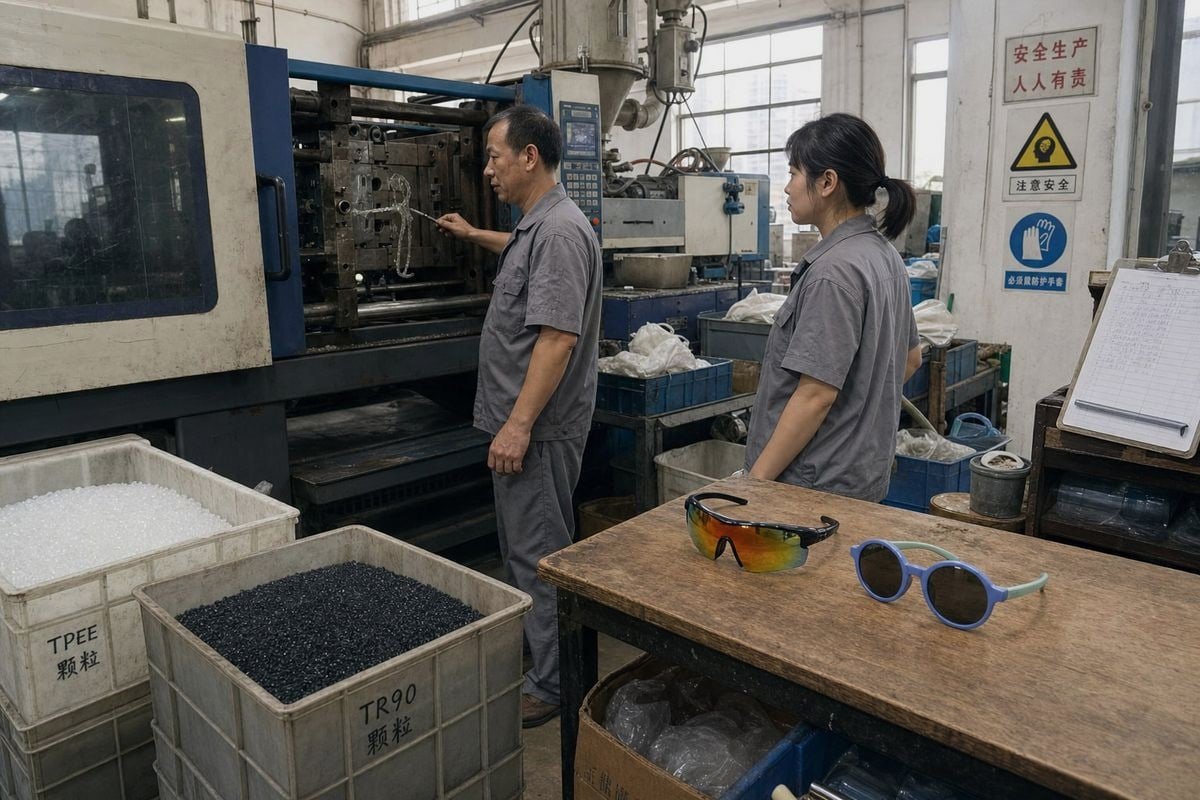
Telling a factory vs trading company apart matters more with kids’ sunglasses than almost any product UV400 verification 1. On our Taizhou production line, I have seen buyers burned by “factories” that never touched a molding machine.
To identify a factory vs trading company when sourcing kids’ sunglasses from China, check the business license scope for manufacturing terms, verify an industrial-zone address, review catalog specialization, ask process-level technical questions, and demand a live video walkthrough of the actual injection molding and assembly lines.
No single check is foolproof. But when you stack several signals together, the truth almost always shows itself. Let me walk you through each check, in the order I would run them.
What Signs Reveal Whether a Supplier Truly Owns Its Production Facility?
A buyer from Australia once told me she had "verified" three factories online — and all three turned out to be traders renting showrooms. Our own workshop taught me which signals actually hold up.
A supplier that truly owns its facility shows a business license scope containing manufacturing terms (生产, 制造, 加工), a registered address in an industrial zone, a specialized eyewear-only catalog, and consistent alignment between its license name, bank account name, and certification documents.
The fastest first check is the Chinese business license. Every legal company in China has one, and the business license scope 2 tells you what the company is registered to do. Look for manufacturing verbs like 生产 (produce), 制造 (manufacture), or 加工 (process). If you only see 贸易 (trade), 批发 (wholesale), or 进出口 (import/export), you are most likely talking to a trading company. Do not rely on the English name. Many trading firms add "Industrial" or "Technology" to their branding while owning nothing but desks.
Read the Address, Not the Website
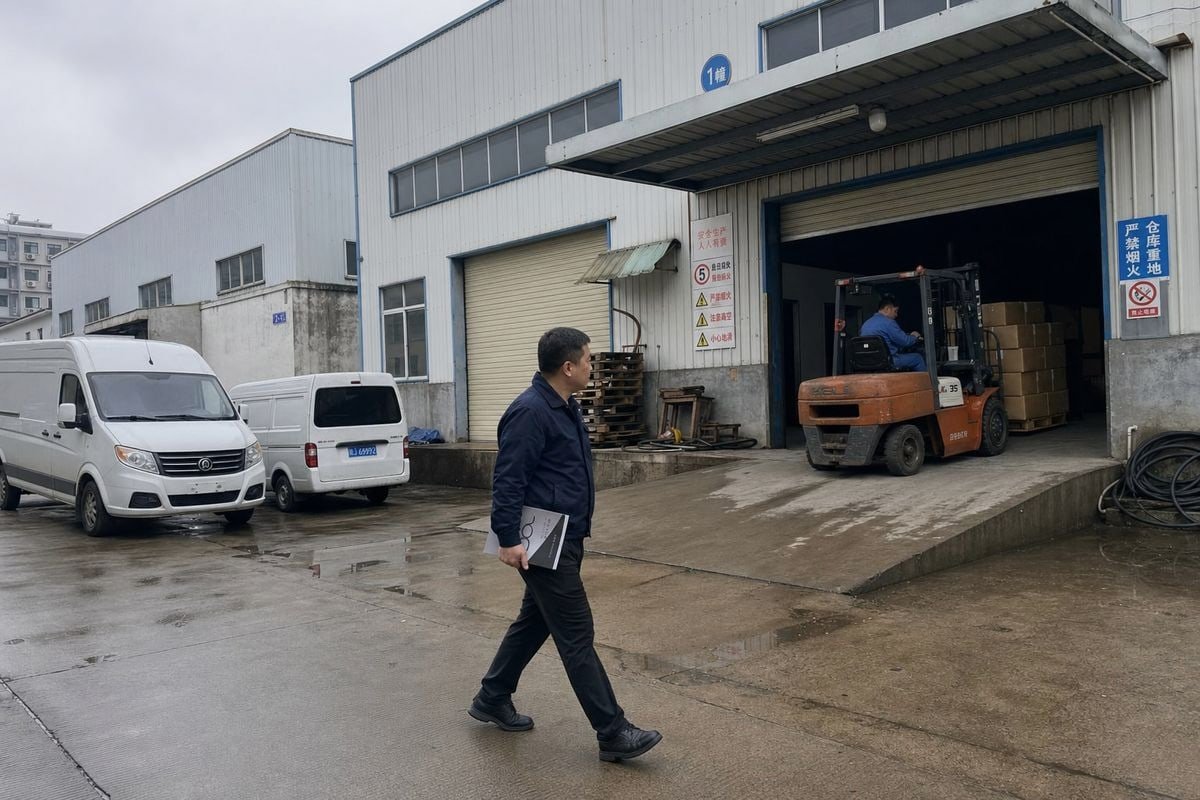
Genuine kids' eyewear production clusters in specific regions — Taizhou (Duqiao) and the Wenzhou eyewear manufacturers around Ouhai. A registered address in one of these industrial zones 3 is consistent with a factory. A high-rise office tower in downtown Shenzhen or a vague "Room 1205" address usually points to a trader. Use satellite maps to see whether the site looks like a workshop with warehouses, or an office block.
Compare the Signals Side by Side
| Señal | Likely Factory | Likely Trading Company |
|---|---|---|
| Business scope | 生产 / 制造 / 加工 | 贸易 / 批发 / 销售 |
| Address type | Industrial zone, workshop buildings | Office tower, room number |
| Catalog | Deep in eyewear only | Sunglasses plus toys, tools, apparel |
| Bank account name | Matches license entity | Sometimes a different entity |
| Social media posts | Raw workshop footage, new molds | Polished marketing assets only |
One subtle tip from my own experience: check the sales rep's WeChat Moments. Our team posts unfiltered clips of new molds and bulk packing. Traders rarely have that kind of behind-the-scenes footage to share.
Which Questions Should I Ask During a Video or On-Site Factory Audit?
Whenever a serious brand books a video tour with us, I can predict their order size from the quality of their questions. The best buyers arrive with a factory audit checklist and dig into process details.
During a factory audit, ask to see raw material storage, injection molding machines running your frame material, assembly and lens-fitting stations, QC checkpoints, and packing lines live. Then ask process questions — mold cavity counts, tolerance limits, defect thresholds — that only production staff can answer instantly.
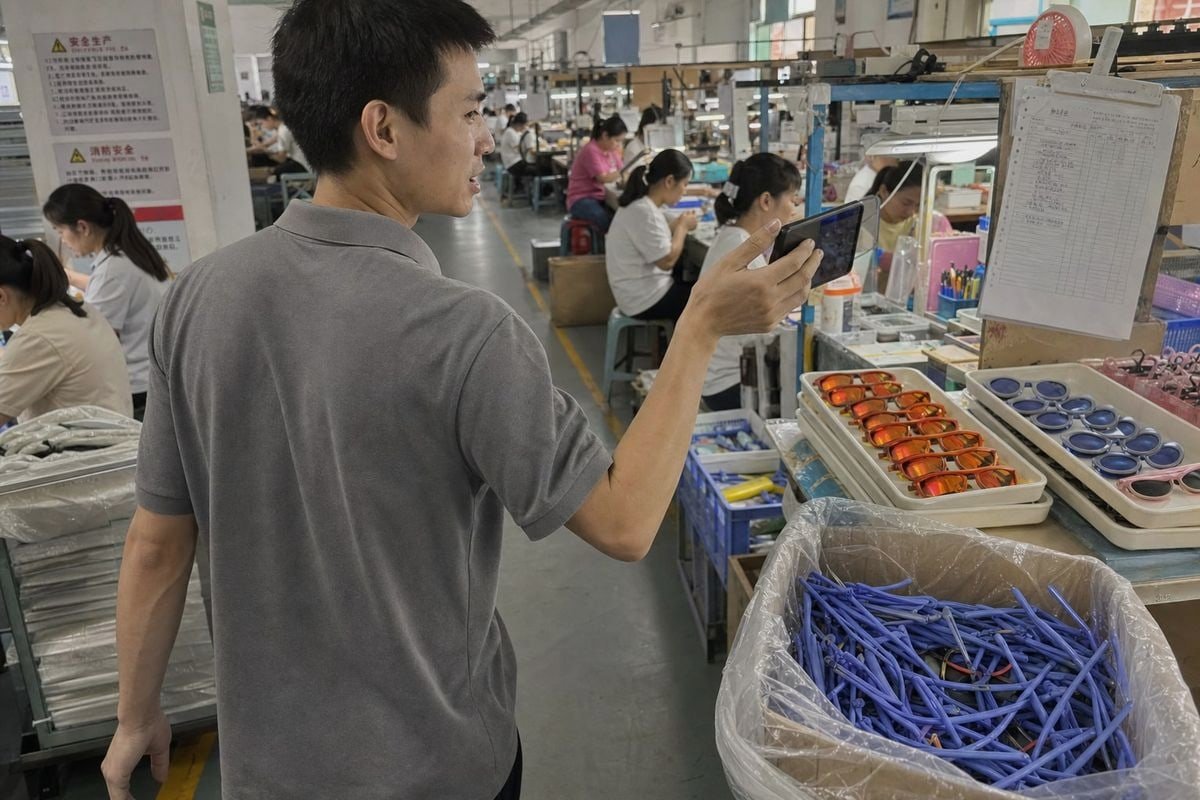
A real factory has nothing to hide. When buyers ask me for a live walkthrough, we simply carry the phone from the TPEE raw material warehouse to the injection workshop, through assembly, printing, and final packing. A trader, by contrast, will often stall, promise a "professionally filmed video," or say they need to "check with the factory." Delayed answers are themselves an answer.
The Question Sequence That Works
Run your audit in a logical order, and insist on live footage rather than polished promo videos:
- Raw materials. Ask which polymer supplier they use and request the Material Safety Data Sheet 4 (MSDS). Real factories can name their resin source and show recent procurement records — critical for kids' products.
- Molding. Ask the cavity count and tooling steel grade for a specific frame style. Our engineers answer this in seconds. Traders give vague or delayed estimates.
- Assembly and lens handling. Watch hinge insertion and lens fitting. Ask how they control frame alignment tolerances.
- QC stations. Ask about defect thresholds, AQL levels, and who signs off before packing. A 5S-managed workshop will show visible station labeling and inspection records.
- Packing. Confirm they can produce your retail-ready packaging in-house or through a controlled partner.
One More Test: The VAT Invoice
Ask for a 13% VAT invoice (增值税发票) for your sample order. Only a legitimate manufacturing entity issues these under a production tax category, and the invoice name must match the business license. It is a small request that filters out a surprising number of pretenders.
For larger orders, layer in third-party inspection services or a formal on-site audit. It costs little compared to a failed container of children's eyewear.
How Can I Verify a Supplier's Real Manufacturing Capacity and Experience?
Fifteen years in kids' eyewear has taught our team that capacity claims are the most inflated numbers in sourcing. A supplier promising "any quantity, any style, any time" usually controls none of it.
Verify real capacity by cross-checking worker count and machine count against claimed monthly output, reviewing export history in trade databases, confirming certifications like BSCI and ISO 9001 are issued in the supplier's registered name, and testing consistency across two or more sample rounds.
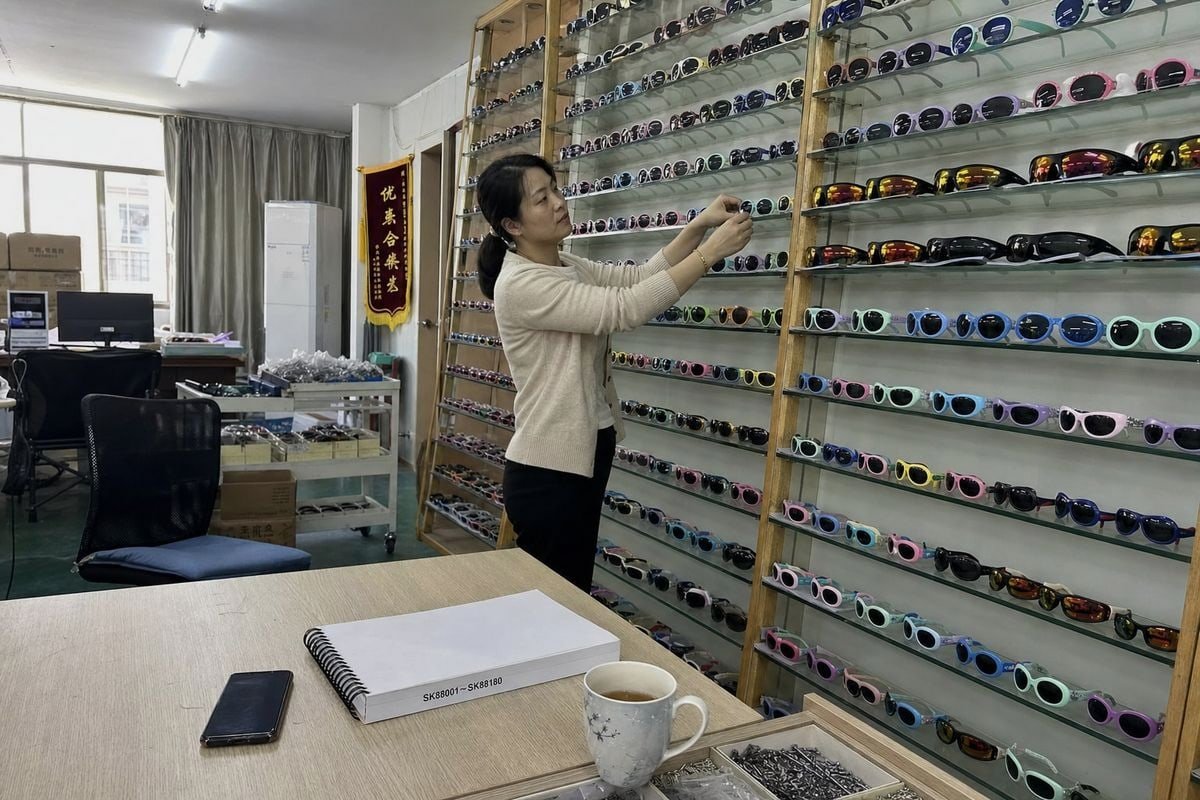
Capacity math is simple, and it exposes exaggeration fast. Ask how many injection machines they run, how many cavities per mold, and how many shifts they work. Then compare the arithmetic to their claimed output. Our facility runs about 120 workers, and I can walk any buyer through exactly how our monthly volume breaks down by machine. A trader reciting a borrowed number cannot survive two follow-up questions.
Certifications Must Match the Entity
This is where kids' products get serious. Check that every document — the BSCI audit report 5, Certificación ISO 9001 6, CE test reports, UV400 verification, EN71 safety standards testing, or FDA registration for sunglasses bound for the US — carries the supplier's own registered company name. A certificate issued to a different entity means someone else made the sample, and your compliance chain is already broken. Verify certificates directly with the issuing body rather than trusting a PDF.
Capacity Verification Matrix
| What to Check | How to Verify | Señal de alerta |
|---|---|---|
| Monthly output | Machines × cavities × shifts math | Numbers don't add up |
| Experiencia de exportación | Trade data, shipping records | No export history under license name |
| Certifications | Issuing body confirmation | Certificate names a third party |
| Product experience | Ask years in kids' eyewear specifically | Only generic sunglasses history |
| Consistency | Two sample rounds, same specs | Second sample differs from first |
Experience Shows in the Details
Ask how they solve child-specific problems: temple flexibility for TPEE, hinge durability for TR90, lens impact behavior. Suppliers with genuine OEM and ODM capabilities describe past projects with specifics — colorways, packaging solutions, tooling decisions. Generic answers signal generic experience. Also weigh Minimum Order Quantity (MOQ) 7 logic: a real factory quotes MOQs tied to molding and color-change economics, not arbitrary round numbers.
Why Does Working with a Genuine Factory Matter for My Brand's Quality and Pricing?
Last year a European kids' brand came to us after a trader-sourced shipment failed UV testing at customs. Nobody in their supply chain could even name the factory that molded the frames. That story shapes how I answer this question.
Working with a genuine factory gives you direct factory pricing without hidden markup, direct control over mold quality and lens compliance, faster technical communication, traceable safety documentation, and accountability for QC — all critical because children's sunglasses are a safety-sensitive, regulated product.
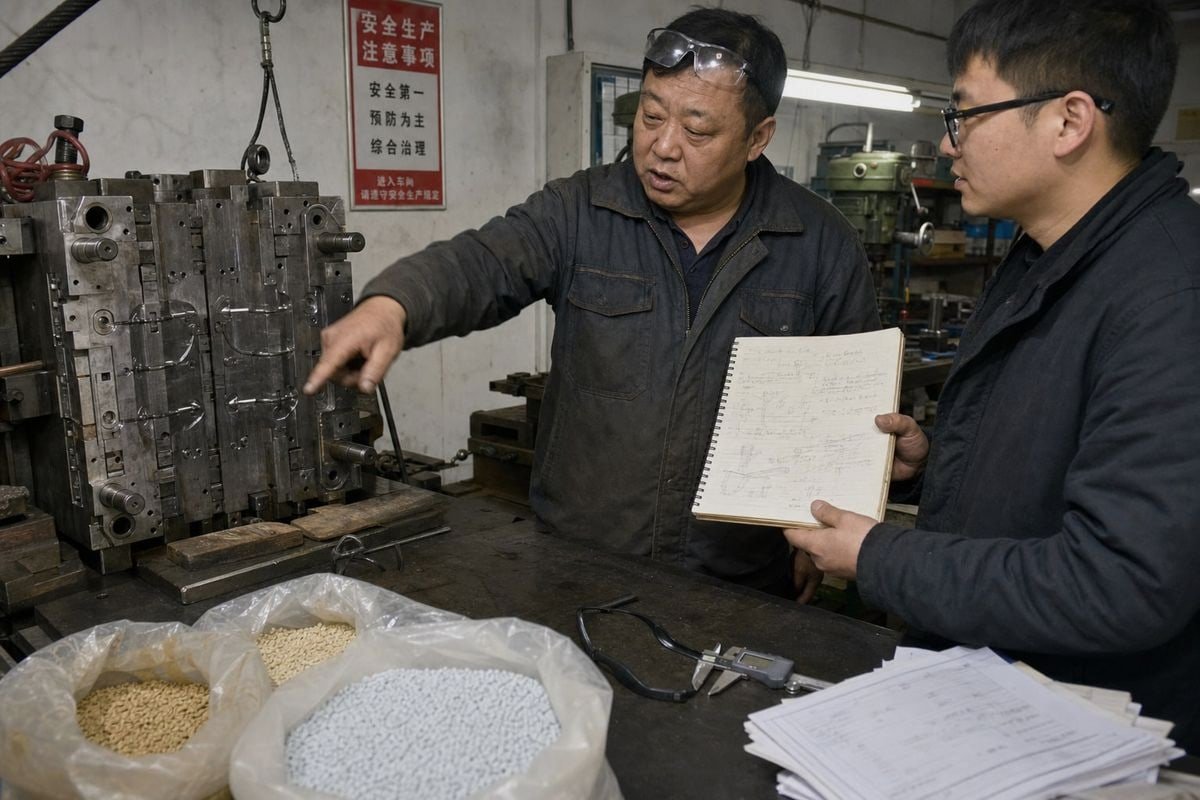
For a commodity product, a middleman markup is annoying. For children's eyewear, an invisible manufacturer is a genuine liability. Your brand name goes on the box, so your brand carries the regulatory exposure if UV protection claims fail or a frame snaps against a child's face. Supply chain transparency is not a buzzword here; it is your legal shield.
Where Factory-Direct Actually Pays Off
Direct sourcing improves four things at once. First, pricing: you keep the trader's margin, which matters most on large branded runs. Second, customization: custom colors, logos, lens coatings, and retail packaging move faster when you speak to the people running the machines. Third, compliance: test reports trace to the real production source, model, and material. Fourth, problem-solving: when a hinge tolerance drifts, I can walk to the workshop and fix it the same day. A trader relays messages and hopes.
But Be Honest About the Trade-Offs
I will say something that may surprise you coming from a factory owner: a trading company is not automatically bad. Good traders manage stable factory networks, accept smaller trial orders, and smooth communication for first-time importers.
| Scenario | Better Fit | Por qué |
|---|---|---|
| Small test order, mixed styles | Trader (or factory with stock styles) | Lower MOQ, flexible sourcing |
| Private-label scale-up | Direct factory | Price, mold control, compliance traceability |
| Safety-critical kids' product | Direct factory | You must know who controls QC and lens claims |
| One-off promotional buy | Either, if verified | Speed matters more than depth |
One caveat: factories like ours can bridge the test-order gap too. With roughly 800 existing styles, a new brand can launch without heavy mold investment — factory pricing with trader-level flexibility. The real question is never "factory good, trader bad." It is: who actually controls mold quality, UV compliance, and final QC on my product? Whoever that is, that is who you must verify.
Conclusión
Sourcing kids' sunglasses blind is risky: hidden middlemen inflate costs and blur compliance. Verify the license scope, address, catalog, live production, and certificates — then choose the partner who truly controls quality.
Notas al pie
1. WHO explains UV radiation risks, supporting the importance of UV400 protection testing. ↩︎
2. Explains the legal concept of business licensing referenced as a key verification signal. ↩︎
3. Background on industrial zones helps buyers understand why factory addresses matter. ↩︎
4. OSHA is the authoritative source explaining MSDS requirements for raw material safety. ↩︎
5. Amfori is the official body issuing BSCI audits mentioned as a compliance checkpoint. ↩︎
6. Official ISO page verifies the meaning and legitimacy of ISO 9001 certification claims. ↩︎
7. Defines the sourcing term MOQ mentioned when comparing factory versus trader flexibility. ↩︎
Más artículos que te podrían gustar

1 de agosto de 2026
¿Debería la fábrica encargarse del embalaje y etiquetado de las gafas de sol para niños, o utilizar un proveedor designado?

1 de agosto de 2026
Almacén propio vs. Cumplimiento directo del proveedor: ¿Qué reduce los costos de devolución para las marcas de gafas de sol para niños?

1 de agosto de 2026
Directo al almacén del puerto o staging en el extranjero: ¿Cuál ahorra más en el envío de gafas de sol para niños?
¿Buscas un socio confiable en gafas para niños?
Explore más de 800 estilos listos y soporte OEM/ODM completo adaptado a su marca.
Ponte en contacto English
  Español de México
  Deutsch
  Français
  日本語
日本語  العربية
  Português do Brasil