How to Get Suppliers to Provide Multi-Angle Detail Shots of Kids Optical Frames?
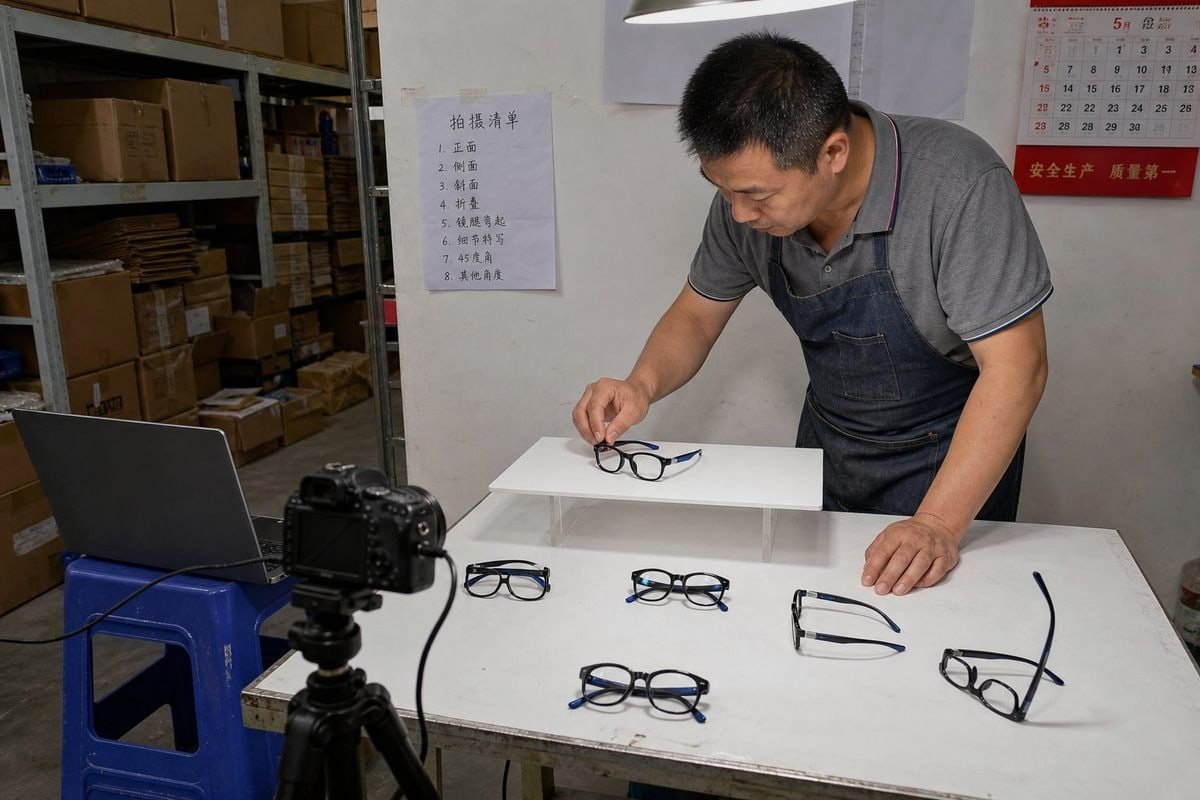
Getting suppliers to provide multi-angle detail shots of kids optical frames 1 is a constant frustration for buyers. On our production line in Taizhou, we see why: most requests are simply too vague to act on.
To get multi-angle detail shots of kids optical frames, send suppliers a precise shot list — front, both sides, top-down, 45°, folded, plus close-ups of hinges, temples, nose bridge, and lens edges — with resolution, background, and file-naming standards clearly stated upfront.
That sounds simple, but the details matter. Below, I will break down exactly what to ask for, how to verify safety features through photos, and how to spot the gap between catalog images and real production.
What should I ask for when requesting detail shots of hinges, temples, and lens edges?
A buyer from Australia once messaged me: "Send more pictures please." Our team sent twelve photos. She needed hinge close-ups. We had sent none. That wasted three days for both sides.
Request a written shot list covering hinge close-ups from both open and folded positions, inside temple markings, temple tip texture, lens rim thickness, and nose bridge structure. Specify minimum 1920×1080 resolution, neutral background, no filters, and SKU-plus-angle file naming.
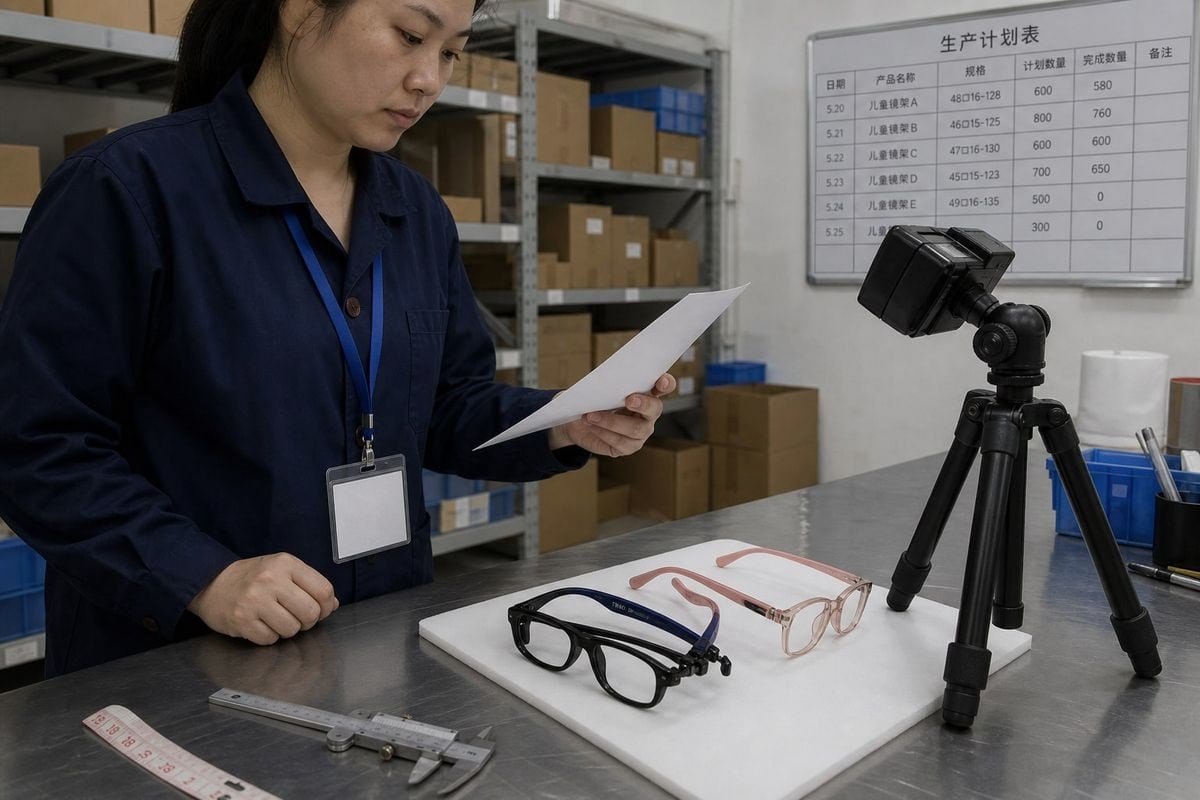
The core principle is this: a photo request is a quality-control tool, not just a marketing ask. When we prepare eyewear product photography for our own ~800 existing styles, we follow a fixed checklist. Buyers who send us a similar checklist always get better images faster, because our photo team does not have to guess.
The exact shot list to send
Here is the shot list I recommend for children's optical frames. It works whether the frame is a glossy black TR90 style with flexible TPEE temples or a translucent pink acetate-look design.
| # | Shot | What it verifies |
|---|---|---|
| 1 | Front view | Lens shape, symmetry, bridge design |
| 2 | Left and right side profiles | Temple length, curve, hinge alignment |
| 3 | Top-down view | Frame wrap, temple splay, warping |
| 4 | 45° angle | Overall proportions and finish |
| 5 | Folded view | Hinge closure, temple overlap |
| 6 | Hinge close-up | Screw type, spring hinge, flex hinge |
| 7 | Inside temple marking | Size measurements, material stamp |
| 8 | Nose bridge close-up | Saddle bridge shape 2, pad material |
| 9 | Lens rim close-up | Rim thickness, groove quality, edge finish |
| 10 | Temple tip close-up | Grip loop, rubber texture, mold lines |
| 11 | Logo/branding close-up | Print or emboss quality |
| 12 | Packaging shot | Case, cloth, labeling, retail readiness |
Set standards, not just angles
Angles alone are not enough. Attach basic e-commerce image standards to the request: consistent lighting, a white or neutral background, no beauty filters, and color accuracy that matches the physical sample. Also ask for the same shot count across every SKU in the line. This turns a pile of random images into a comparable set you can drop into your digital asset management system 3. One more tip from our side of the camera: tell the supplier what you do not want. A quick example — "no showroom glamour shots, no heavy shadows" — prevents style misinterpretation before it happens.
How can I confirm frame flexibility and safety features through photos alone?
There is a trade-off we weigh every week in our workshop: photos are fast and cheap, but flexibility is a physical property. Still, a well-designed photo request can capture most of it.
Ask for photos of the frame being flexed — temples bent outward, front twisted gently — plus close-ups of flex hinges, soft temple tips, and one-piece bridge construction. Then request a short 15-second video showing the frame returning to shape after bending.
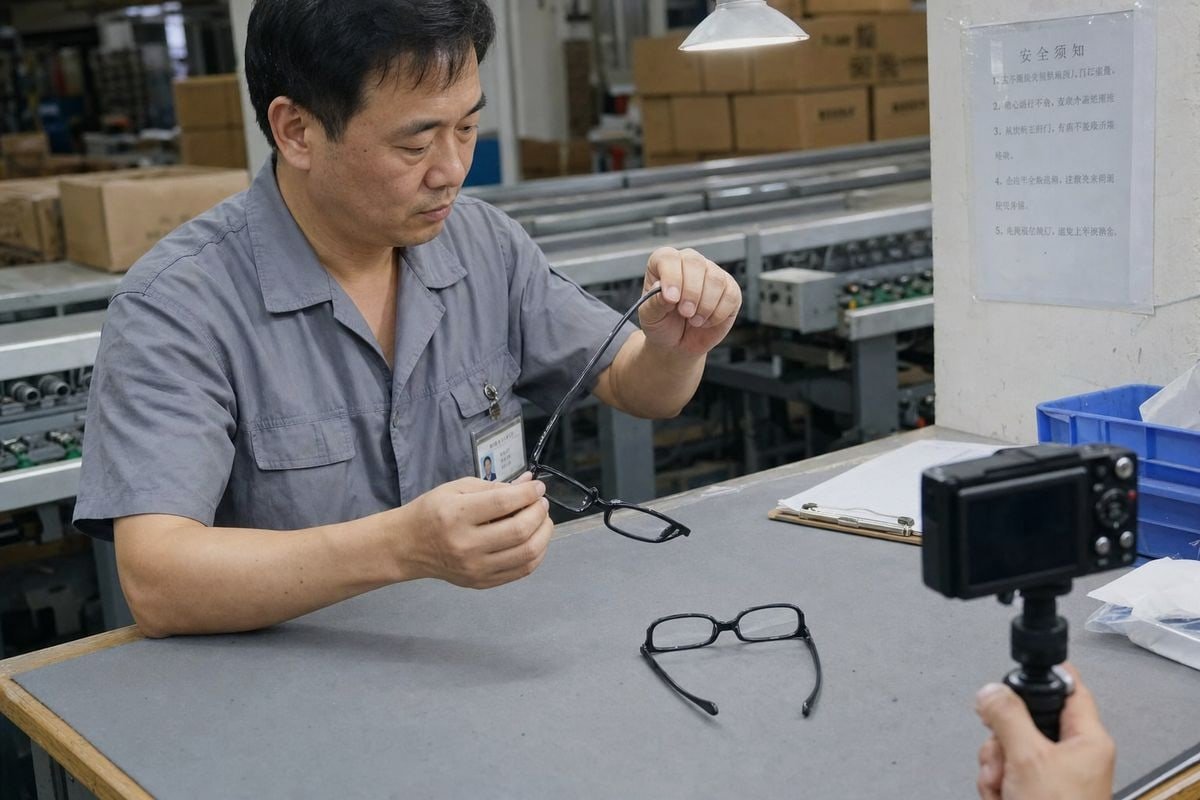
Flexibility and safety are the two things parents ask retailers about first. So they should be the two things you verify hardest. In our fifteen years making children's eyewear, we have learned that a static photo hides stiffness. A rigid injection-molded frame and a genuinely flexible TR90 frame with TPEE temples can look identical from the front. The difference only appears under stress.
Photos that reveal material behavior
Request these specific "action" shots:
- Temples spread wider than normal wearing position, held by hand.
- The frame front twisted slightly along its horizontal axis.
- A temple bent back toward the frame front.
- The nose bridge pressed with a finger to show give.
Then ask for the recovery shot — the frame sitting flat on a table afterward, undistorted. If a supplier refuses these shots, treat it as an early warning sign. Genuinely flexible material handles this demonstration easily. Brittle, cheap plastic does not, and the supplier knows it.
Where photos hit their limit
Here is the honest counterpoint: photos screen suppliers, but they do not replace samples. A photo cannot tell you hinge tension after 500 open-close cycles, or whether the temple tip rubber irritates skin. Our position is clear — use photo requests to shortlist, then order physical samples before any bulk commitment. When a buyer cannot wait for samples, we offer a live video call so they can direct the flexing test in real time. That combination of supplier communication and video verification catches most problems before production ever starts.
Which angles reveal fit and comfort issues before I approve a bulk order?
When we developed a rounded-rectangular kids frame with looped temple tips last year, one buyer caught a bridge issue purely from a top-down photo. That single angle saved her an entire re-order cycle.
Top-down, side profile, folded, and inside-temple views reveal the most fit issues. Top-down shows frame wrap and temple splay; side profile shows temple drop angle; folded view exposes hinge misalignment; inside markings confirm lens width, bridge width, and temple length.
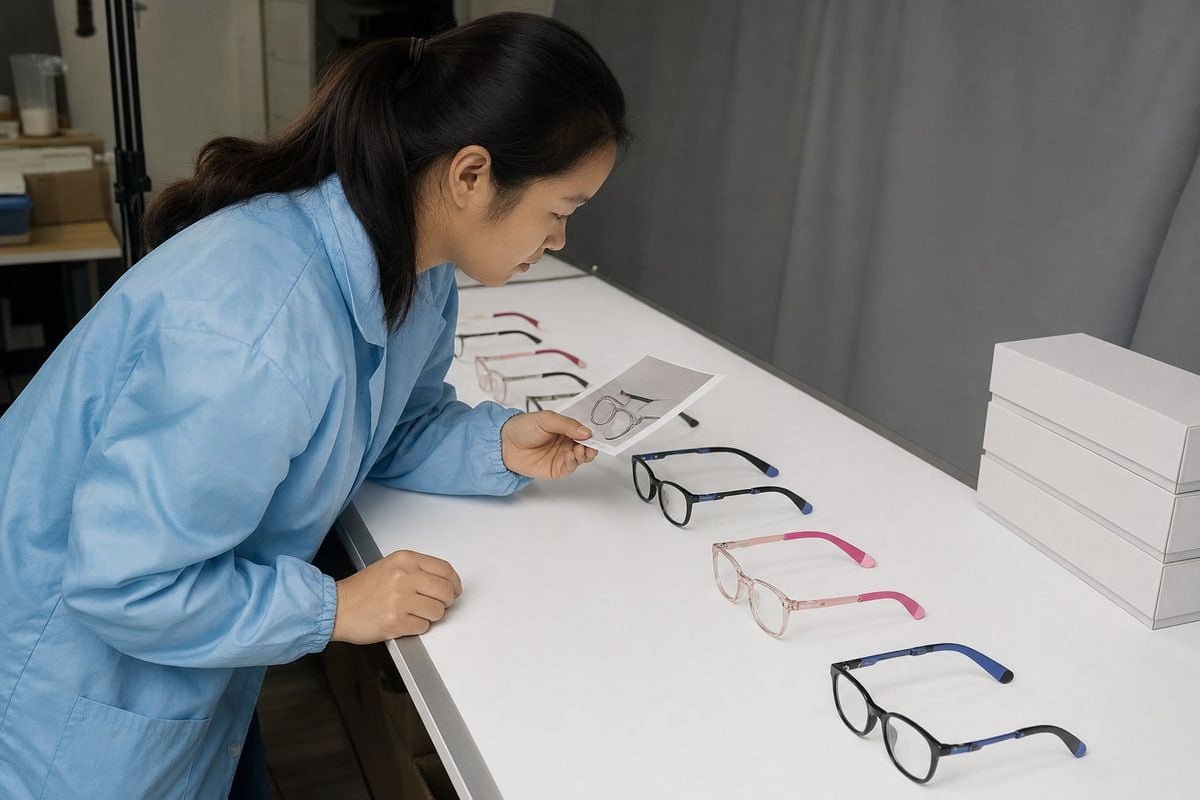
Kids optical frames demand more scrutiny than adult fashion frames. A few millimeters of bridge width decide whether glasses sit on a child's nose or slide down it. Children's nose bridges are lower and flatter than adults', so the saddle bridge shape you see in a close-up matters enormously. This is why product visualization for children's eyewear needs structural angles, not just pretty front shots.
Matching angles to fit problems
| Angle | Fit issue it exposes | What to look for |
|---|---|---|
| Top-down | Excessive frame wrap or flat front | Even curve, temples opening at consistent angle |
| Side profile | Wrong temple drop for small ears | Gentle downward bend, correct tip position |
| Folded view | Warped front or uneven hinges | Temples lying flat and parallel |
| Nose bridge close-up | Bridge too high or narrow | Wide, soft saddle contact area |
| Inside temple marking | Wrong size for age group | Measurements like 46□16-125 clearly stamped |
| Temple tip close-up | Pressure points behind ears | Rounded, soft, seam-free finish |
Read the measurements, not just the shapes
Always ask the supplier to photograph the size stamp inside the temple, then confirm it with a photo of the frame beside a ruler or calipers. Total width alone is misleading. A frame can measure "small" overall yet have a bridge too wide for a four-year-old. Some buyers also ask us for shots on an age-appropriate mannequin head, which is a fair request — it shows proportion without involving real children. For brands building virtual try-on photography 4 later, these calibrated structural angles become the raw material, so requesting them early pays twice.
How do I compare a supplier's real production photos against catalog images?
A procurement manager from Japan once placed two images side by side on a call with me: our catalog render and our factory photo of the same pink translucent frame. The exercise impressed me — and it should be standard practice for every buyer.
Request photos of a real production sample shot the same day, with a handwritten date note in frame. Compare hinge hardware, surface gloss, color accuracy, and logo placement against catalog images. Discrepancies in these details signal the catalog shows an idealized or outdated version.
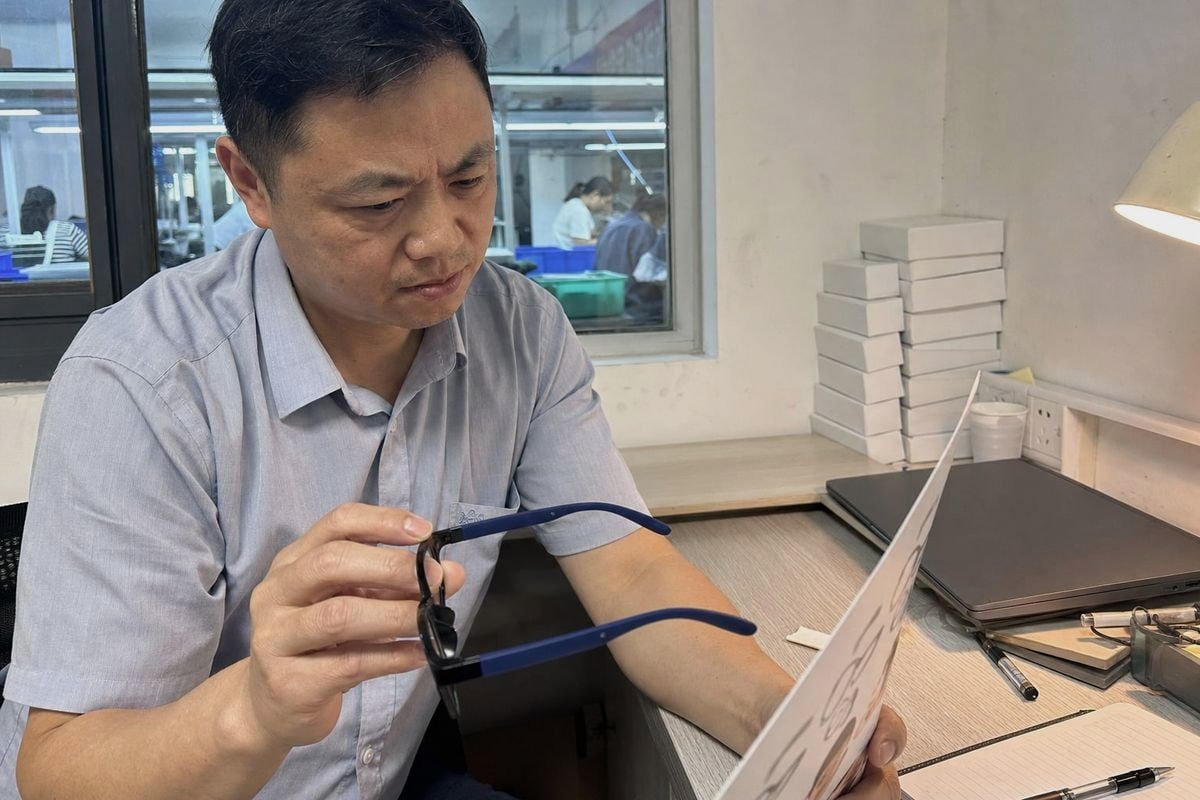
Catalog images serve a purpose. They are often retouched, sometimes 3D rendered, and always shot under perfect lighting and reflection control. None of that is dishonest by itself. The problem starts when the catalog is the only visual evidence you have before wiring a deposit.
A practical comparison workflow
- Ask for photos of a current production sample, not a showroom golden piece. A dated handwritten note in the frame proves freshness.
- Match angles one-to-one. Compare catalog front view against real front view, hinge against hinge.
- Check the details that renders fake easily: screw heads, mold seam lines, embossed dot patterns on rubber temples, and the faint blue tint of anti-glare demo lens coatings.
- Verify color accuracy by asking the supplier to include a common reference object — a white sheet of paper or a color card — in one shot.
- Log everything in a simple lista de verificación de control de calidad with pass/fail notes per feature.
What discrepancies actually mean
| Discrepancy | Likely cause | Your action |
|---|---|---|
| Different hinge hardware | Component substitution | Request written confirmation of hinge spec on the product specification sheet |
| Duller surface finish | Catalog was retouched | Ask for daylight photos, adjust expectations or reject |
| Color shift | Different dye batch or lighting | Request color card reference shot |
| Missing safety feature | Catalog shows a newer revision | Confirm which version ships |
Suppliers who resist this comparison are telling you something. When buyers run it on our frames, we welcome it, because consistent vendor requirements protect serious factories from being undercut by traders reselling stock photos. If a supplier cannot show you real production photos at all, offer a small sample order or a live factory video call as the next step. A reliable partner will take that offer immediately.
Conclusión
Vague photo requests waste weeks and hide defects until goods arrive. The fix is a precise shot list, clear standards, flex demonstrations, and dated production photos. Treat every image request as quality control — then confirm with samples. That is how strong sourcing relationships start.
Notas al pie
1. Provides context on the rising demand and specific needs for children’s eyewear. ↩︎
2. Explains the saddle bridge design in eyeglasses and its comfort benefits. ↩︎
3. Found an authoritative guide from Microsoft explaining digital asset management (DAM) systems for enterprises. ↩︎
4. Describes virtual try-on technology for eyewear, enhancing customer experience and sales. ↩︎
Más artículos que te podrían gustar

5 de agosto de 2026
Bio-Based vs Regular Cellulose Acetate: What's the Difference for Kids' Frames?

5 de agosto de 2026
How Recyclable Are Kids' Optical Frame Materials, and What Eco-Friendly Alternatives Exist?
5 de agosto de 2026
Do Kids Optical Frames Whiten or Age in Storage, and How to Control Warehouse Conditions?
¿Buscas un socio confiable en gafas para niños?
Explore más de 800 estilos listos y soporte OEM/ODM completo adaptado a su marca.
Ponte en contacto English
  Español de México
  Deutsch
  Français
  日本語
日本語  العربية
  Português do Brasil