How Do FOB vs CIF Terms Affect Cost and Risk When Purchasing Kids Optical Frames?
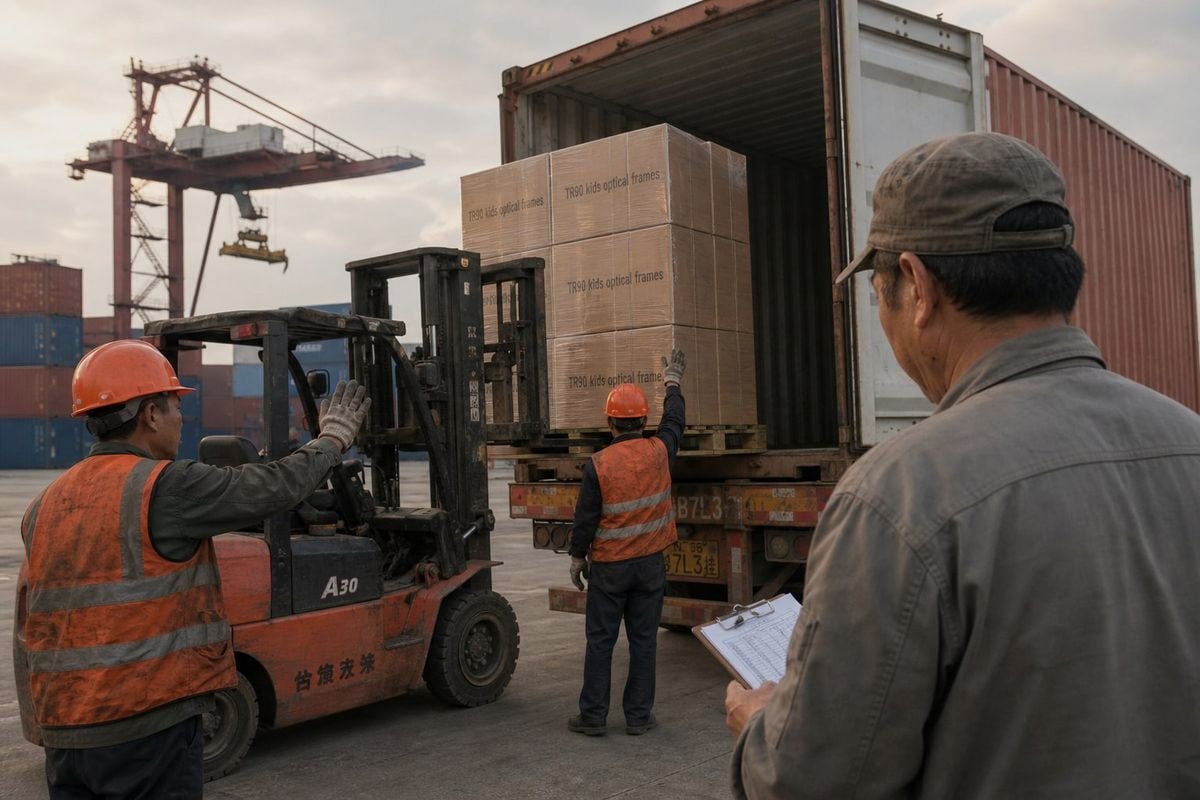
FOB vs CIF terms for kids optical frames confuse many buyers we quote from our Taizhou factory Institute Cargo Clauses C 1. Pick the wrong term, and hidden freight markups or weak seguro de carga 2 quietly erode your margin.
FOB vs CIF terms mainly change who pays for ocean freight and insurance on kids optical frames. Under both terms, risk transfers to the buyer once goods are loaded at origin. FOB gives you cost control; CIF gives convenience but only minimum insurance cover.
Let me walk you through how these two terms really work, what they cost, and which one protects fragile children’s eyewear better.
How do FOB and CIF pricing actually break down when I compare supplier quotes for kids optical frames?
A buyer from Australia once asked me why our FOB quote looked 15% cheaper than a competitor's CIF price. The answer was simple: our quote just excluded freight. Comparing them directly is a mistake.
An FOB quote covers the product, export clearance, and loading at the origin port only. A CIF quote adds ocean freight and minimum cargo insurance to the named destination port. CIF quotes typically run 10–20% higher because those transport costs are embedded in the seller's price.

When we prepare quotes for our TR90 kids optical frames, we always label the term clearly. Under reglas Incoterms 2020 3, the label changes what you are actually buying. Here is the side-by-side breakdown we share with new importers:
| Cost component | FOB (buyer pays) | CIF (seller pays) |
|---|---|---|
| Product and packaging | Included in quote | Included in quote |
| Export clearance in China | Vendedor | Vendedor |
| Loading at origin port | Vendedor | Vendedor |
| Flete marítimo | Comprador | Vendedor |
| Cargo insurance | Buyer arranges | Vendedor (cobertura mínima solamente) |
| Destination port charges | Comprador | Comprador |
| Import customs and duties | Comprador | Comprador |
| Transporte terrestre al almacén | Comprador | Comprador |
Why the gap between quotes can mislead you
Kids optical frames are light. A carton of 300 frames weighs very little, so freight costs are spread across many units. But that same lightness means freight can still be a meaningful share of unit cost on small orders. One published example showed a CIF importer paying about $1,104 more per shipment than an FOB importer on the same lane, and over $3,300 more per year. Treat those figures as examples, not rules. Actual differences depend on shipment size, the shipping lane, market rates, and how much markup the supplier adds to freight.
What to ask before comparing
Always confirm three things. First, is the quote truly FOB origin port or CIF to a named destination port? Second, what insurance clause applies under CIF? Third, which destination port is named? A CIF quote to the wrong port helps nobody.
Which shipping term gives me more control over quality and delivery timelines from Taizhou to my country?
Every back-to-school season, we watch buyers scramble for vessel space out of Ningbo and Shanghai. The ones on FOB terms with their own freight forwarders almost always move faster than those waiting on seller-booked CIF space.
FOB gives you more control over quality and timing because you choose the carrier, the forwarder, the sailing schedule, and the insurance terms. CIF hands those decisions to the seller, which simplifies your workload but limits your visibility and your ability to expedite shipments.
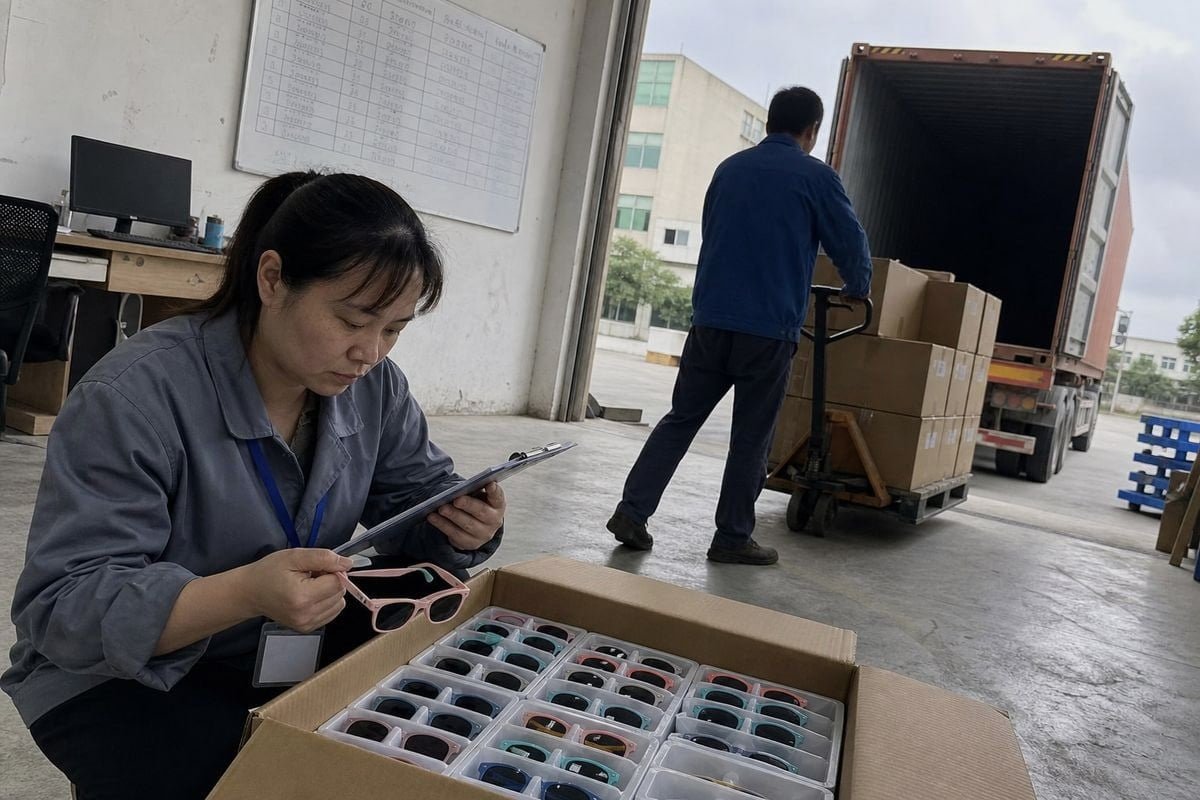
Control matters more with children's eyewear than with many commodity goods. Our TPEE and TR90 frames pass strict quality control before they leave our 5S-managed workshop, but what happens after loading is shaped by the shipping term you chose.
Control points under FOB
Under FOB, you appoint the freight forwarder. That means you can pick one experienced with fragile consumer goods and with children's products that face import regulations at destination. You control routing, transshipment choices, and carrier reliability. You can also coordinate a pre-shipment inspection right before loading, so quality checks and logistics align. For seasonal kids' eyewear — back-to-school, summer sun ranges — that flexibility lets you expedite an order, split a shipment, or switch carriers when a vessel is delayed.
Control points under CIF
Under CIF, the seller books the freight. A good factory books responsibly, but you see less of the chain. You cannot easily upgrade to a faster service or reroute around congestion. You also inherit whatever cargo insurance the seller purchased, which is usually the minimum required. For compliance-heavy products — kids optical frames must meet CPSIA standards 5 in the US market and equivalent rules elsewhere — FOB lets you choose customs brokers who understand children's product documentation, correct Harmonized System codes 6, and FDA compliance paperwork for optical goods, reducing clearance delays.
A quick decision snapshot
- Need speed flexibility in peak season? FOB.
- First shipment ever, small volume, no forwarder? CIF is workable.
- Regulated children's product with tight launch dates? FOB, with a broker you trust.
How do I calculate my true landed cost when choosing between FOB and CIF for a bulk order?
One lesson fifteen years of eyewear manufacturing has taught us: the invoice price is never the real price. Buyers who compare only the quote line often discover surprise charges at the destination port.
Calculate landed cost by adding product price, ocean freight, cargo insurance, destination port and handling charges, customs duties and clearance fees, and inland trucking. Compare FOB and CIF offers on this full total, not on the invoice price, because CIF never covers destination-side costs.
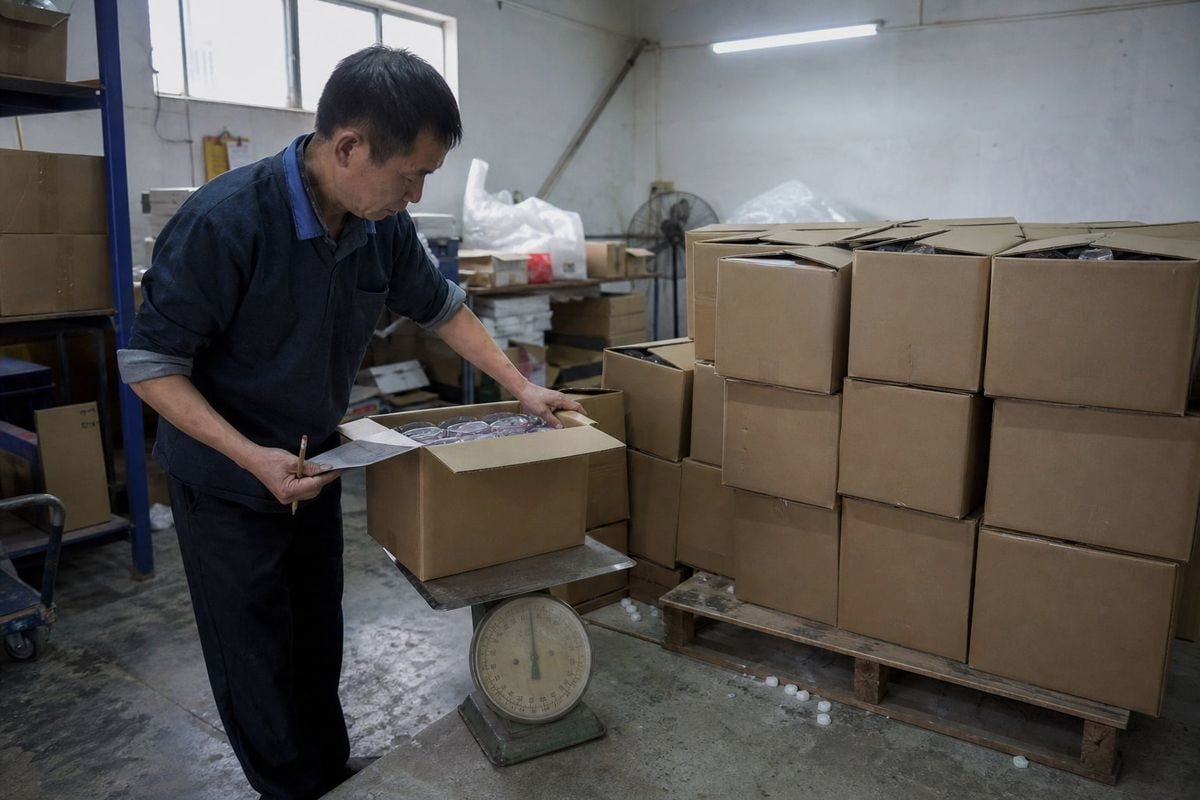
Landed cost is the number that actually hits your margin per frame. Good supply chain management starts with building this figure honestly for both terms, then choosing whichever total is lower for your specific lane and volume.
The landed cost formula in practice
Here is the worksheet structure we suggest to buyers ordering bulk kids optical frames from our ~800 existing styles:
| Línea de costo | FOB scenario | CIF scenario |
|---|---|---|
| Unit price × quantity | Lower base quote | Higher base quote (freight embedded) |
| Flete marítimo | You negotiate directly | Included, markup possible |
| Cargo insurance | You choose the coverage level | Included, minimum cover only |
| Destination port and terminal handling | You pay | You pay |
| Customs duties and taxes | You pay | You pay |
| Broker and clearance fees | You pay | You pay |
| Transporte terrestre al almacén | You pay | You pay |
| Landed cost per frame | Total ÷ units | Total ÷ units |
Notice how the last five lines are identical. The real difference between FOB and CIF is only the freight and insurance lines. That is where transparency matters. Under FOB, you see the actual freight invoice. Under CIF, freight sits inside the product price, and some sellers add a margin there. We keep our CIF quotes itemized precisely because experienced buyers ask for the split.
A worked mindset, not a fixed answer
Suppose you order 5,000 TR90 frames with TPEE temples. On a busy lane with good forwarder rates, FOB usually wins on total cost. On a small trial order of 500 frames, a factory's consolidated freight booking under CIF can genuinely beat the rates a small buyer gets alone. Run both totals before deciding. Volume, lane, and season change the answer.
What risks should I plan for during ocean freight when importing children's optical frames under each term?
During a quality review a few years back, we traced a batch of crushed cartons to rough transshipment handling, not to production. The frames inside survived because we had reinforced the inner boxes. That incident shaped how we advise buyers on transit risk.
Under both FOB and CIF, risk transfers to you once frames are loaded on the vessel at origin. Plan for crushing, moisture, and handling damage. CIF's minimum insurance (Institute Cargo Clauses C) may not cover these adequately, so negotiate broader cover or insure independently under FOB.

This is the biggest conceptual trap in the FOB vs CIF discussion. Many buyers assume CIF means the seller carries transit risk until the destination port. It does not. Under reglas Incoterms 2020, risk transfer happens at loading on board in both terms. Under CIF, the seller pays to move your goods, but you own the risk while they cross the ocean. If a container floods or cartons are crushed, you file the insurance claim — against a policy the seller chose, at minimum coverage.
The main transit risks for kids optical frames
| Riesgo | Why it matters for kids frames | Mitigación |
|---|---|---|
| Crushing | Bulk cartons stacked in containers can deform frames and cases | Strong export cartons, correct stacking specs, inner boxes |
| Moisture | Humidity can spot lenses and degrade packaging print | Desiccants, sealed poly bags, moisture barriers |
| Handling damage | Fragile hinges and demo lenses suffer from drops | Cushioned individual packaging, fragile labeling |
| Claim gaps | Minimum ICC(C) cover excludes many partial-loss events | Upgrade to ICC(A) or buy your own all-risk cargo insurance |
| Delay | Missed back-to-school windows cost real sales | FOB routing control, buffer time, split shipments |
Why insurance quality beats the insurance label
CIF only obligates the seller to buy minimum cover. For a high-margin, fragile product like children's eyewear, that floor is often too low. Under FOB, you buy your own policy, choose all-risk terms, and deal with an insurer in your own country and language when claiming. Whichever term you choose, inspect goods immediately on arrival, photograph any damage before unpacking further, and document everything within the claim window. And push packaging specs upstream: at our factory we treat carton strength and inner protection as part of product quality, because a perfect frame in a crushed box is still a failed delivery.
Conclusión
Choosing wrong costs margin and sleep. FOB gives you freight transparency, timing control, and better insurance; CIF gives convenience. Compare landed costs, upgrade cover, and choose by your experience level.
Notas al pie
1. Details the specific coverage levels of marine cargo insurance clauses. ↩︎
2. Defines cargo insurance and its importance in shipping. ↩︎
3. Explains the official international trade terms and their application. ↩︎
4. Provides a clear definition and components of landed cost calculation. ↩︎
5. Replaced HTTP 404 link with the official page for the Consumer Product Safety Improvement Act on the CPSC website. ↩︎
6. Explains the international system for classifying traded goods by the WCO. ↩︎
Más artículos que te podrían gustar

5 de agosto de 2026
Bio-Based vs Regular Cellulose Acetate: What's the Difference for Kids' Frames?

5 de agosto de 2026
How Recyclable Are Kids' Optical Frame Materials, and What Eco-Friendly Alternatives Exist?

5 de agosto de 2026
Do Kids Optical Frames Whiten or Age in Storage, and How to Control Warehouse Conditions?
¿Buscas un socio confiable en gafas para niños?
Explore más de 800 estilos listos y soporte OEM/ODM completo adaptado a su marca.
Ponte en contacto English
  Español de México
  Deutsch
  Français
  日本語
日本語  العربية
  Português do Brasil