How Do FCL vs LCL Shipping Differ for Kids’ Optical Frames from China?
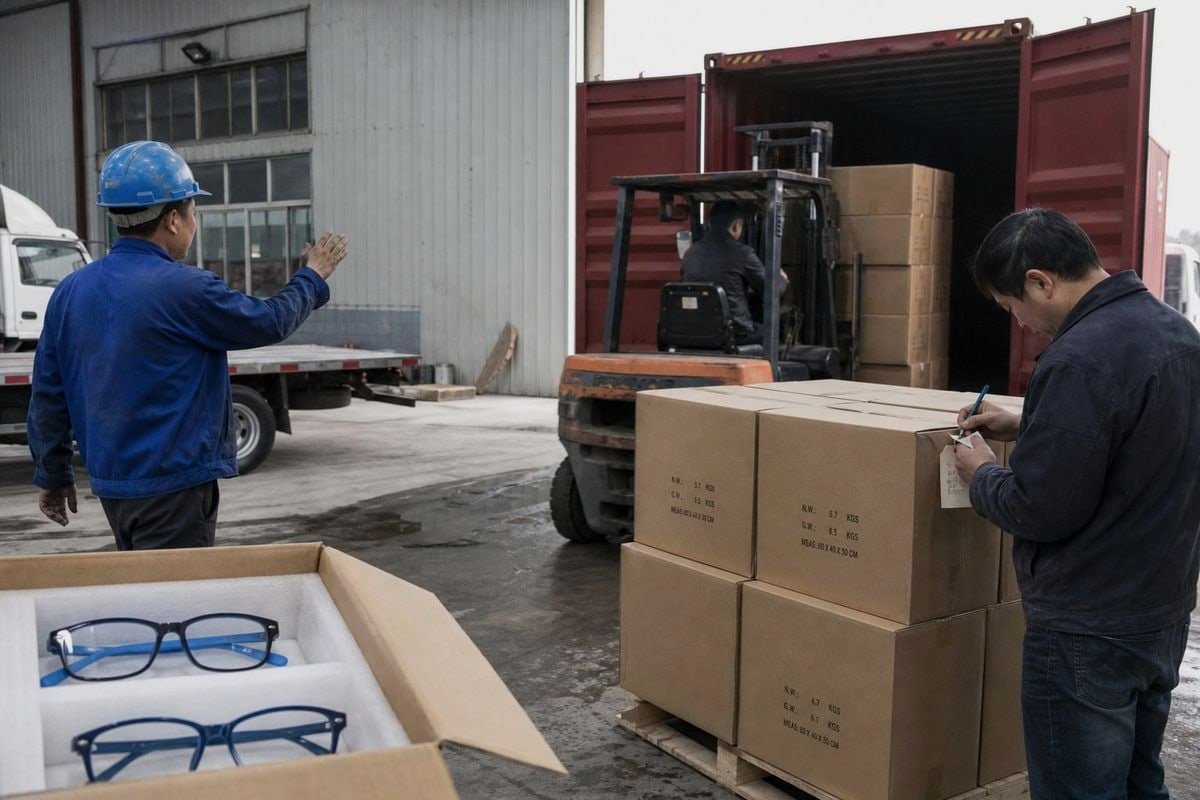
FCL vs LCL shipping confuses many buyers who import kids’ optical frames from China. I see this weekly when new brands ask our Taizhou factory for freight advice — and guessing wrong costs real money.
FCL means you book a whole sealed container; LCL means you share container space and pay per cubic meter. For kids’ optical frames, LCL suits small test orders under roughly 15 CBM, while FCL offers faster transit, fewer handling points, and lower damage risk once volume grows.
Both modes can work for children’s eyewear. The right choice depends on your order size, timeline, and tolerance for handling risk. Let me walk you through each factor the way I explain it to our own buyers.
How do I decide between FCL and LCL when importing kids' optical frames from China?
Last spring, a buyer from Australia asked us to quote both freight modes for the same 6 CBM order of TR90 kids optical frames. The comparison surprised her — and it taught a useful lesson.
Decide based on packed cargo volume, not unit count. Use LCL when your shipment is clearly under about 10–15 CBM, request quotes for both modes between 5 and 15 CBM, and choose FCL above 15 CBM or whenever schedule control and damage reduction outweigh a small freight premium.
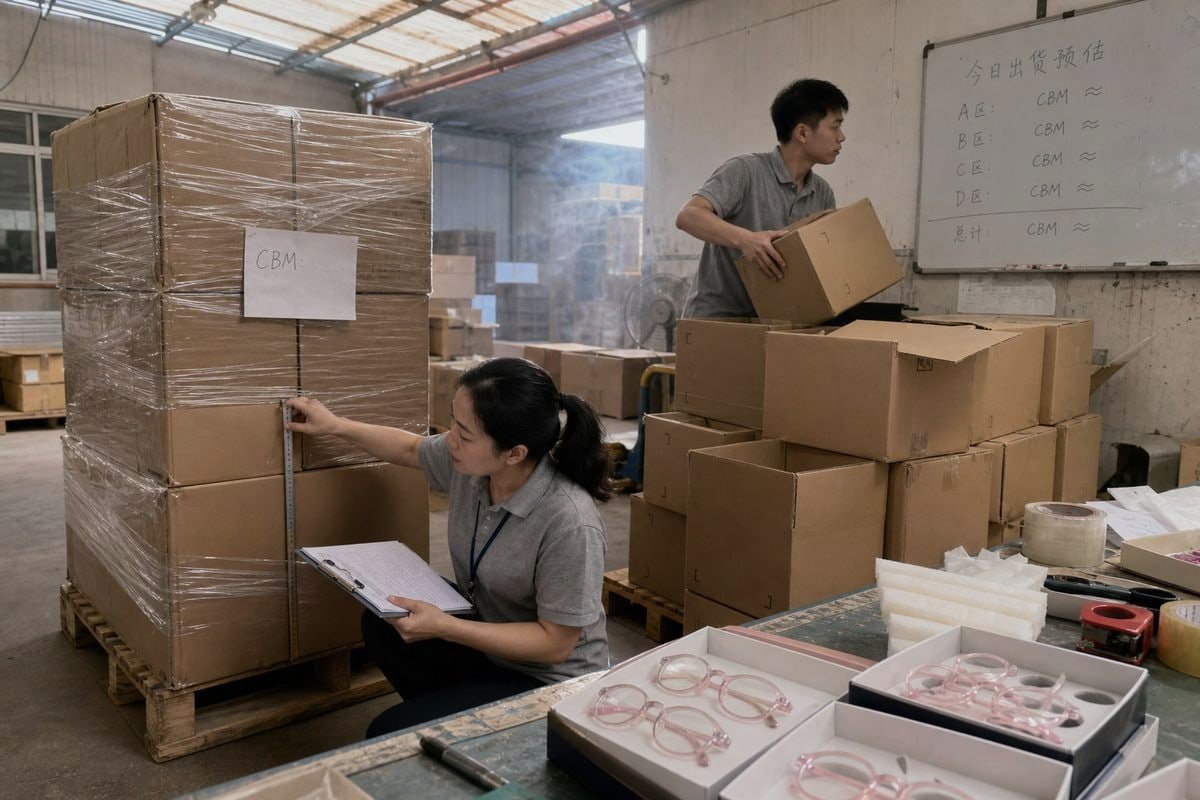
The core difference is simple. With FCL, one shipper uses the entire container. It gets sealed at our factory or the origin warehouse and stays sealed until it reaches you. With LCL, your cartons travel with cargo from other shippers. A freight forwarder consolidates everything at a container freight station, and workers deconsolidate it again at the destination.
Here is a quick side-by-side view:
| Factor | FCL (Full Container Load - Carga de Contenedor Completa) | LCL (Less than Container Load - Menos de Carga de Contenedor) |
|---|---|---|
| Space | Entire container, exclusive | Shared with other shippers |
| Pricing | Flat container rate | Per CBM or weight/measure |
| Manipulación | Sealed door to door | Multiple touchpoints |
| Transit time | Faster, more predictable | Slower, consolidation delays |
| Lo mejor para | 15+ CBM, urgent, fragile | Small test orders, replenishment |
Why frames are a special case
Kids' optical frames are compact but high-value and quality-sensitive. A pair like our glossy black rectangular frame with soft TPEE temples weighs very little, but each unit needs a case, an inner tray, and a retail box. That protective packaging inflates cargo volume quickly. So an order that sounds small in units can consume meaningful CBM once it is packed properly.
In our experience shipping to buyers in 20+ countries, the decision usually comes down to three questions. How many CBM will the packed shipment actually be? How firm is your launch date? And how much handling risk can your packaging absorb? Answer those honestly, and the mode almost chooses itself.
What order quantity do I need before FCL shipping makes sense for my brand?
One trade-off we weigh with buyers all the time is mold investment versus freight efficiency. Our ~800 existing styles let brands launch without tooling costs — but freight math still depends on how those styles are packed.
FCL typically becomes cost-effective around 14–18 CBM, which is roughly 12,000–20,000 boxed kids' frames depending on packaging. Below 5 CBM, choose LCL. Between 5 and 15 CBM, quote both modes, because extra LCL handling fees often make FCL competitive earlier than buyers expect.
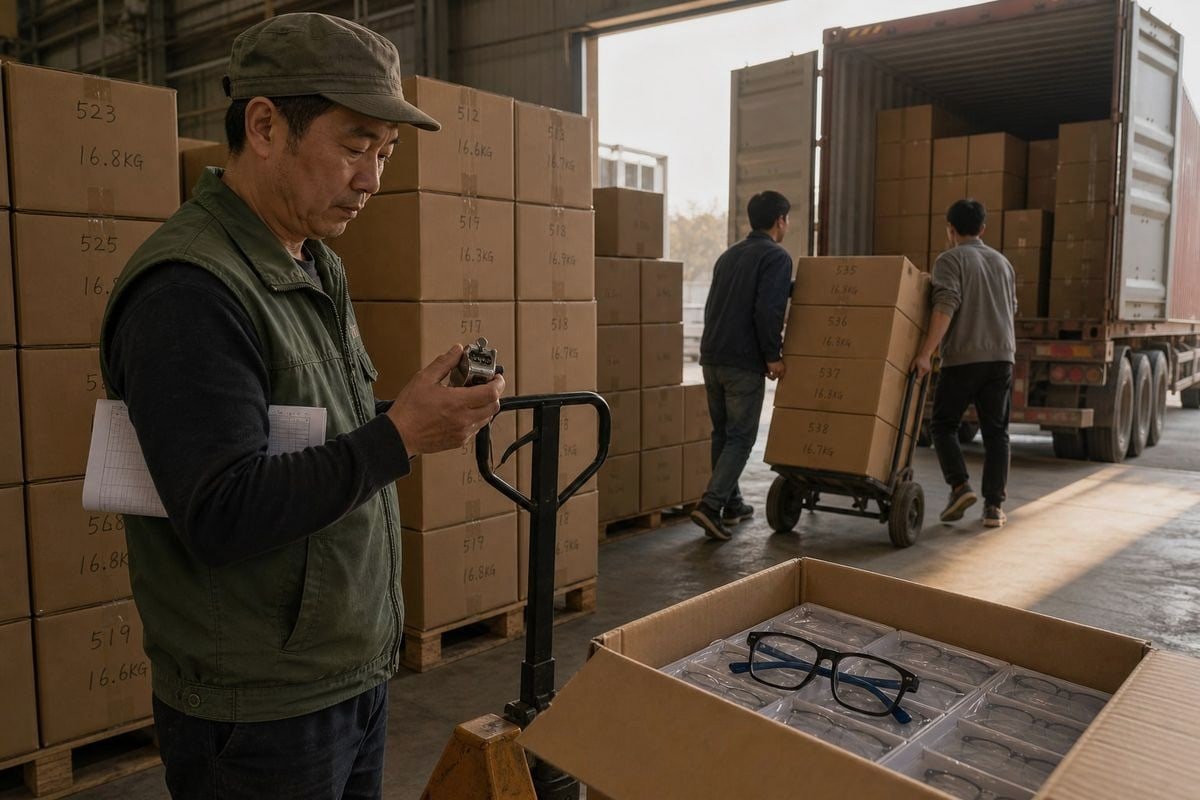
Let me make this concrete with the packaging formats we use most at our factory. A frame shipped in a simple polybag takes far less space than one in a hard case inside a printed retail box. Retail-ready presentation is worth it for shelf appeal, but it changes your freight math.
| Packed shipment size | Rough boxed frame count | Recommended mode |
|---|---|---|
| Under 5 CBM | Up to ~5,000 pairs | LCL, no debate |
| 5–10 CBM | ~5,000–10,000 pairs | LCL, but compare quotes |
| 10–15 CBM | ~10,000–15,000 pairs | Quote both — the crossover zone |
| 15+ CBM | ~15,000+ pairs | FCL usually wins |
Why the crossover arrives earlier than you think
Many buyers assume FCL only makes sense near a 20-foot container's 28 CBM capacity. That is a misconception. LCL pricing stacks origin consolidation fees, destination deconsolidation fees, and terminal charges on top of the per-CBM ocean freight rate. As your cargo volume rises into the mid-teens, those accumulated charges can exceed a flat FCL container rate. Several logistics guides now place the break-even zone at 14–18 CBM, and our buyers' real quotes usually confirm it.
Frequency matters too
If you replenish small batches monthly, staying with LCL keeps inventory lean and cash flow flexible. If you place two or three large seasonal purchase orders per year — say, before back-to-school — consolidating into FCL usually lowers total shipping costs and simplifies gestión de la cadena de suministro 1. Some of our distributor clients even combine orders from multiple Chinese suppliers at a forwarder's warehouse to fill one container efficiently.
Will LCL shipping increase the risk of damage to my children's eyewear frames?
A lesson we learned years ago: a buyer's LCL shipment arrived with crushed corner cartons because heavy machinery parts were loaded beside them. Since then, we redesigned our export cartons specifically for shared containers.
Yes, LCL carries higher damage risk because cargo is handled at consolidation and deconsolidation points and sits beside unknown freight. Strong double-wall cartons, inner trays, moisture barriers, and palletization reduce that risk substantially, making LCL still safe for well-packed kids' optical frames.
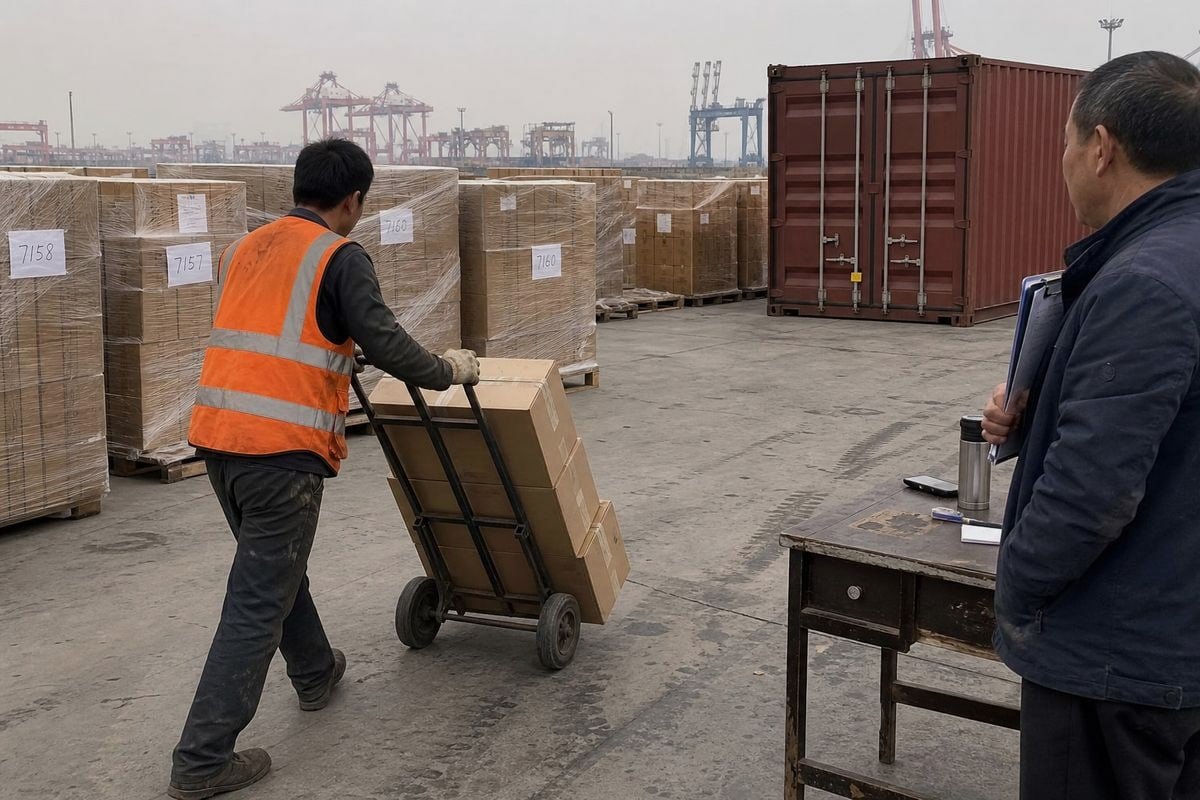
Fragile goods shipping is really a packaging discipline. Optical frames themselves are surprisingly tough — especially flexible TR90 fronts with TPEE temples, which bend rather than snap. The vulnerable parts are the painted finishes, the metal hinges, and the retail boxes. A scuffed lens or a dented gift box makes a pair unsellable even if the frame is fine.
What actually gets damaged in transit
In fifteen years of eyewear exports, we see three failure modes. First, crushing: cartons stacked under heavier cargo collapse and deform the retail boxes inside. Second, moisture: humidity inside a shared container wrinkles printed packaging and can spot metal hinge components. Third, abrasion: loose units rubbing during repeated handling scratch glossy acetate and translucent finishes, like the blush-pink rounded frames we produce.
How we pack for LCL specifically
Our standard LCL protocol adds layers a sealed FCL shipment may not need:
- Each frame goes in a polybag or microfiber pouch, then its case or box.
- Boxes sit in corrugated inner trays so nothing shifts.
- Master cartons are double-wall, with edge protectors on the stack.
- Desiccant packs go inside every master carton.
- For shipments over 2 CBM, we recommend palletizing and shrink-wrapping so the forwarder handles one unit, not forty loose cartons.
With these steps, damage claims on our LCL shipments are rare. Without them, you are gambling on who your container neighbors happen to be.
How does my choice between FCL and LCL affect delivery time and customs clearance?
When a Japanese optical brand asked us to guarantee stock before their back-to-school window, we mapped both freight modes week by week. The timeline gap was bigger than they expected.
FCL is faster and clears customs more smoothly because one sealed container belongs to one consignee. LCL adds consolidation and deconsolidation dwell time — often one to two extra weeks — and your cargo can be held if any co-loaded shipment triggers a customs inspection.
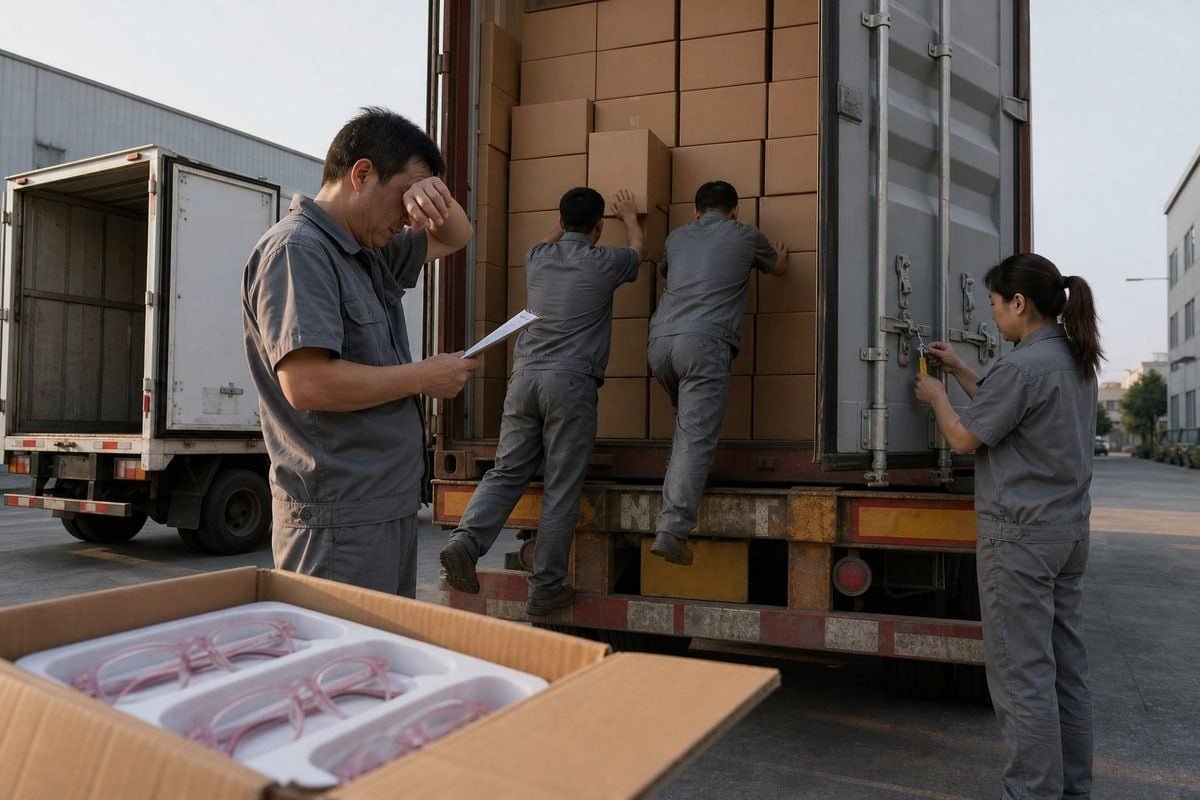
Transit time differences come from process, not vessel speed. Both modes ride the same ships. But an LCL shipment must wait at the origin container freight station until the consolidator fills the box, and it waits again at destination while workers strip the container and sort every shipper's cargo. On some lanes, that adds 8–14 days versus FCL door-to-door.
| Etapa | FCL | LCL |
|---|---|---|
| Origin handling | Load and seal at factory or warehouse | Wait for consolidation at CFS |
| Ocean leg | Same vessel schedule | Same vessel schedule |
| Destination handling | Container released to you | Deconsolidation, sorting, release |
| Customs exposure | Your cargo only | Shared with co-loaded cargo |
| Typical extra time | Línea de base | Often 1–2 weeks longer |
The customs clearance angle for children's products
Here is a risk specific to our category. Children's eyewear faces safety and material compliance rules in most markets — lead content, phthalates, and impact standards. Your paperwork can be perfect, with the correct Código HS 2 and full material declarations, yet an LCL container can still be flagged because a different shipper's cargo triggers an inspection. The whole container gets held, and everyone inside it waits. With FCL, your customs clearance depends only on your own documentation and your import duties being settled.
Documentation also differs. FCL usually moves on a single master bill of lading. LCL uses a house bill issued by the consolidator under the carrier's master bill, which adds a party to coordinate with. A good freight forwarder manages this smoothly, but it is one more link in the chain. For hard seasonal deadlines, we tell buyers plainly: FCL buys you predictability, and sometimes that predictability is worth shipping a container that is not completely full.
Conclusión
Choosing wrong between FCL and LCL wastes money or misses launch windows. Match the mode to your packed CBM, deadline, and packaging strength — and quote both in the 5–15 CBM zone.
Notas al pie
1. ISM is a leading professional association for supply chain management, offering resources and education. ↩︎
2. Official government source defining Harmonized System (HS) codes for classifying traded products. ↩︎
Más artículos que te podrían gustar

5 de agosto de 2026
Bio-Based vs Regular Cellulose Acetate: What's the Difference for Kids' Frames?

5 de agosto de 2026
How Recyclable Are Kids' Optical Frame Materials, and What Eco-Friendly Alternatives Exist?

5 de agosto de 2026
Do Kids Optical Frames Whiten or Age in Storage, and How to Control Warehouse Conditions?
¿Buscas un socio confiable en gafas para niños?
Explore más de 800 estilos listos y soporte OEM/ODM completo adaptado a su marca.
Ponte en contacto English
  Español de México
  Deutsch
  Français
  日本語
日本語  العربية
  Português do Brasil