How to Evaluate a Kids’ Optical Frames Supplier for Long-Term Partnership?

Choosing a kids’ optical frames supplier feels risky. I’ve watched buyers approve a beautiful sample, place a big order, and then receive frames that snap, pinch, or fail a lab test. On our production line in Taizhou, we’ve spent fifteen years learning why that happens — and how careful evaluation prevents it before the first purchase order is ever signed.
Evaluate a kids’ optical frames supplier on four pillars: documented safety certification compliance, repeatable quality control across batches, genuine OEM/ODM development support, and proven capacity to meet your volume and lead times. A long-term partner proves all four — not just an attractive sample or a low quote.
Kids’ frames are not small adult frames. The stakes around fit, safety, and documentation are higher. Let’s break down each pillar so you can vet suppliers with confidence.
What Quality Control Standards Should I Expect from a Kids' Optical Frames Manufacturer?
A few years back, a European buyer asked me why we keep a sealed master sample for every SKU in our workshop. My answer was simple: memory drifts, but a master sample never does.
Expect a documented QC system: a locked master sample per SKU, multi-stage inspections during injection, assembly, and polishing, written tolerance limits, and batch traceability back to a specific line and date. A supplier who cannot describe this process in detail cannot reproduce quality at scale.
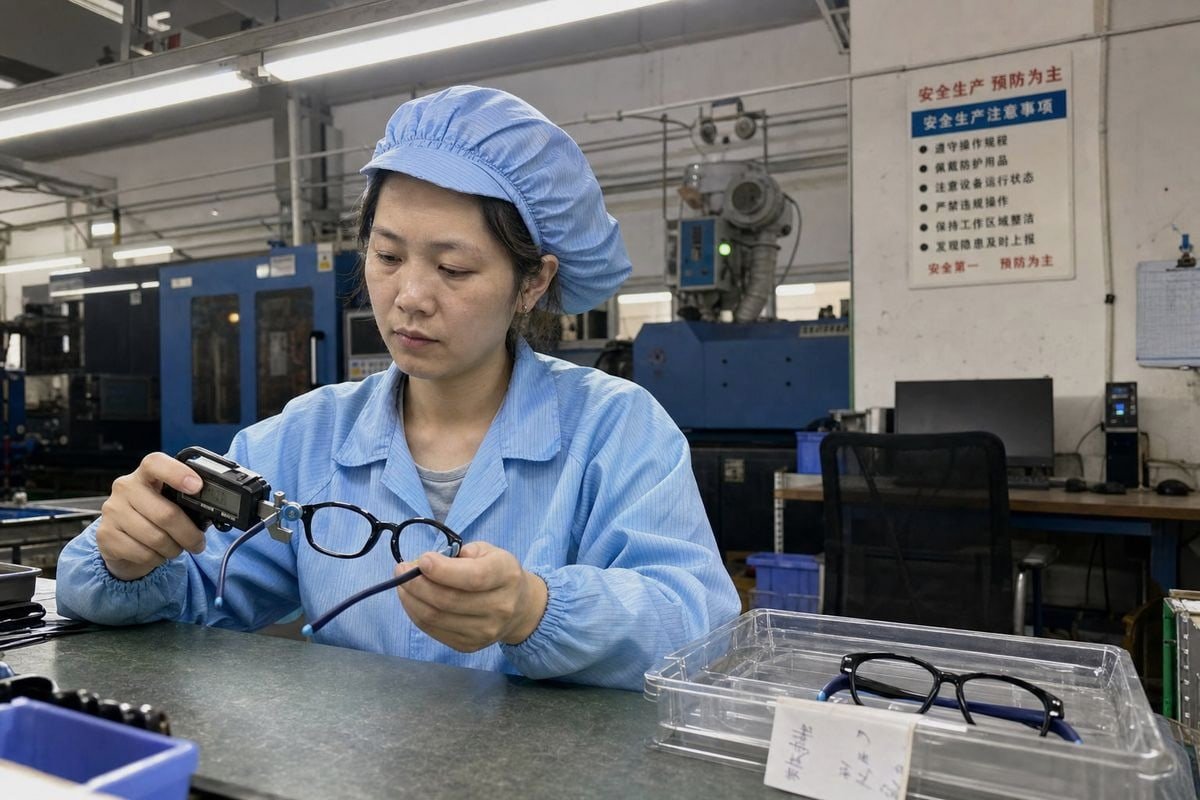
Quality control inspection standards are the single biggest difference between a supplier who looks good once and a partner who stays good for years. A pretty sample tells you what a factory can do under ideal conditions. A QC system tells you what it will do on a Tuesday afternoon in peak season.
The Inspection Stages That Actually Matter
In our taller gestionado con 5S 1, we inspect at three points, and I'd urge you to ask any candidate supplier to walk you through their equivalent:
| Etapa | What Is Checked | Why It Matters for Kids' Frames |
|---|---|---|
| During injection | Material color, flow marks, shrinkage, flash | Defects here weaken the frame structurally |
| During assembly | Hinge tension, temple alignment, screw torque | Loose hinges pinch skin or let frames fall off active kids |
| After polishing | Inner-surface smoothness, coating adhesion, fit against master sample | Rough contact areas irritate children's sensitive skin |
Batch Consistency Is the Real Test
Before you scale, request two or three units of the same SKU — ideally from different pre-production batches. Compare them side by side. Check color match, hinge feel, and temple flex. If the units vary noticeably, the factory's process control is weak, no matter what their sales team promises.
Also ask about traceability. When a defect appears, can the supplier identify which line, which worker, and which day produced that batch? We keep those records because a children's product recall without traceability is a brand-killing event. A supplier who shrugs at this question is asking you to carry their risk. Finally, confirm their after-sales warranty terms in writing — how defects are reported, verified, and compensated — before the first bulk order, not after the first complaint.
How Can I Tell If a Supplier's Materials Are Truly Safe and Comfortable for Children?
There's a trade-off we weigh on every new style: a stiffer frame holds lenses more rigidly, but a child will bend, sit on, and yank their glasses daily. Flexibility wins almost every time — as long as the material is genuinely up to it.
Verify material safety through component-level certificates and recent third-party lab reports — CPSIA and REACH for your target market — covering frame material, nose pads, temple tips, hinges, screws, and coatings. Then physically test flexibility, inner-surface polishing, and skin-contact comfort on real samples.

Documentation matters as much as appearance in children's eyewear. Our engineers have found that buyers who skip lab reports at the sampling stage almost always regret it at customs or at retail. Safety certification compliance is not a formality; it is your legal shield in regulated markets like the EU, US, Japan, and Australia.
Ask for Reports, Not Reassurances
Request recent third-party test reports from accredited labs such as SGS, Intertek, Bureau Veritas, or TÜV. Then check three things: the report date, the exact material tested, and whether it matches what will actually go into your production run. A common trick is showing an old report for a different resin batch. Insist on batch-specific testing for lead, ftalatos 2, and — for sun lenses — UV protection performance.
Why TR90 and TPEE Dominate Kids' Frames
We build most of our frames in TR90 3 with TPEE temples, and there's a reason this combination has become the category standard. TR90 material durability handles impact and daily abuse, while TPEE gives temples a soft, rubbery flex that survives extreme bending without snapping. Both are lightweight and hypoallergenic 4, which matters for eco-conscious families increasingly asking about bio-based and environmentally friendly materials.
| Material | Key Property | Best Use in Kids' Frames |
|---|---|---|
| TR90 | High impact resistance, memory flex, lightweight | Front frames and full optical frames |
| TPEE | Extreme flexibility, soft touch, twist-proof | Temples, hinge connectors, ear hooks |
| Silicona | Grippy, ultra-soft, slip-resistant | Nose pads, adjustable ear hooks, hinge sleeves |
Comfort Details You Can Feel
Run your finger along the inner surfaces of a sample. A quality factory polishes every skin-contact area — even where it doesn't show in photos. Check whether temples use a flexible spring hinge design or soft silicone connectors that absorb pulling forces. Look for matte, non-distracting finishes and seamless, pressure-free temples too; these details matter enormously for neurodivergent children with sensory sensitivities, and forward-thinking suppliers already design for them.
What Level of OEM/ODM Support Do I Need for My Brand to Succeed Long-Term?
One of my most memorable buyer conversations came from an Australian baby-products brand. They loved eyewear but feared mold investment. We solved it by letting them launch from our existing style library first, then customize colors, logos, and packaging — and they scaled from there.
You need a supplier with full OEM and ODM capabilities: custom colors, logos, lenses, packaging, and accessories, plus an existing style library for low-risk launches, age-specific mold options, and support for trial orders. Strong development support today predicts strong line extensions tomorrow.
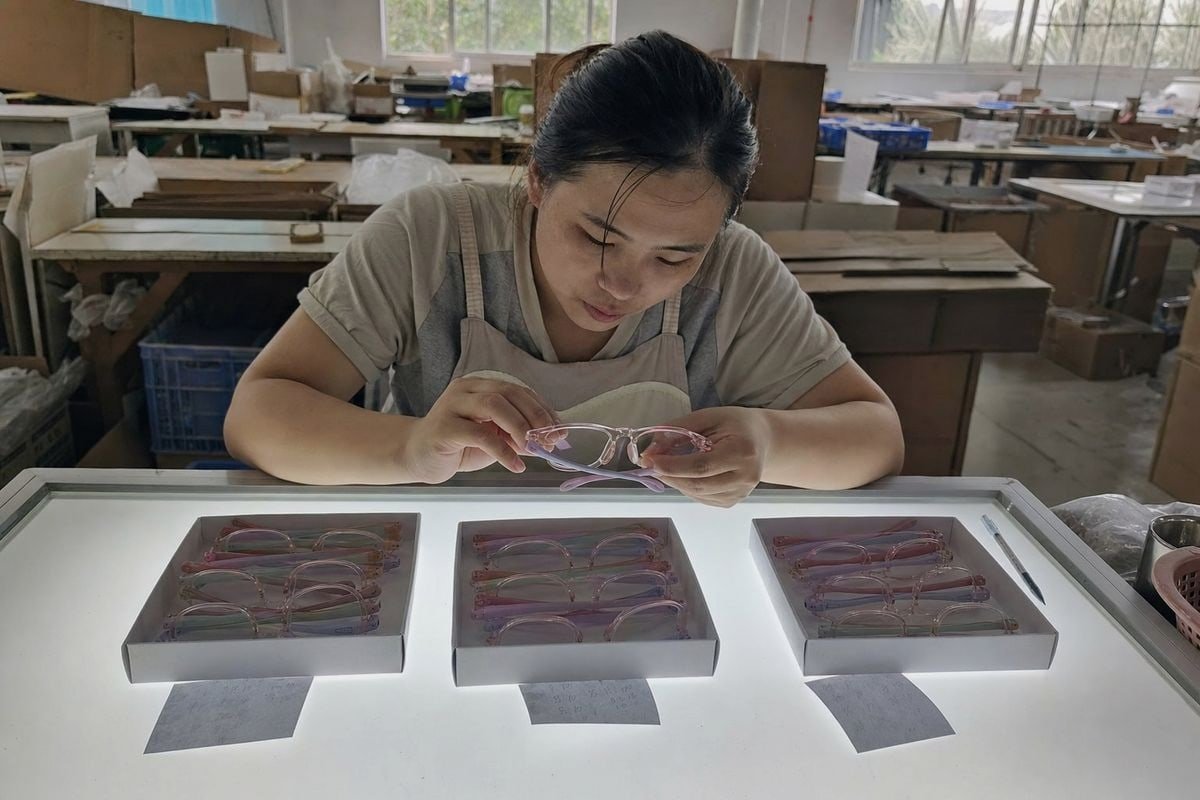
Customization support is a proxy for partnership quality. A supplier who collaborates well during development will also handle your future seasonal refreshes, replenishment cycles, and design updates well. A supplier who only wants to ship catalog stock is a vendor, not a partner.
Match the Support Model to Your Stage
Different brands need different entry points, and a serious factory offers a path for each:
- New brands and importers. Start from an existing style library. Ours holds roughly 800 styles, which lets a buyer test the market without any mold investment. You pick styles, apply private label branding options, and launch fast with lower risk.
- Growing brands. Customize existing molds — new colorways, logo printing or engraving, custom lens tints, UV400 5 or polarized options, and retail-ready packaging with cases and cloths.
- Established brands. Full ODM development: adjusted or new molds, age-group-specific sizing, and exclusive designs your competitors cannot buy.
Audit the Mold Library, Not Just the Catalog
Here is a question most buyers never ask: do you have different molds for different age groups? Children's faces change fast. A 3-year-old needs a different nose bridge height, lens width, and temple length than an 8-year-old. Suppliers who simply shrink adult designs produce frames that slide down small noses and pinch growing heads. Ask for measurements beyond total frame width, and ask whether frames were fitted on real children before bulk production. Also check age-grade labeling capability — printing or engraving markings like "3+" on frames or packaging — because some retail channels require it.
Look beyond product, too. The strongest partners increasingly offer retail enablement — fitting guidance for staff, marketing assets aimed at parent decision-makers — and even circularity ideas like outgrown-frame recycling programs.
How Do I Know If a Factory Can Reliably Handle My Order Volume and Delivery Timeline?
A hard lesson from our early exporting years: capacity promises are cheap in January and expensive in August. Peak season exposes every weakness in planning, staffing, and material supply — which is why we now plan resin purchasing and line scheduling months ahead.
Test capacity with a small pilot order — roughly 100 to 200 pieces across 3 to 5 styles — and measure on-time delivery, batch consistency, and communication speed. Confirm MOQ policy, standard versus peak-season lead times, and reorder color and fit consistency before committing to volume.

Manufacturing lead times and capacity are where long-term partnerships are won or lost. Your shelf dates, marketing launches, and cash flow all depend on a factory delivering what it promised, when it promised. So verify, don't assume.
Start With a Pilot, Then Scale Deliberately
I always recommend buyers begin with a trial run. A pilot order of 100–200 pieces across a few styles is large enough to reveal real production behavior but small enough to limit your risk. During that pilot, track four things:
| Métrica | What to Measure | Señal de alerta |
|---|---|---|
| On-time delivery | Actual ship date vs. promised date | Delays with vague or shifting excuses |
| Batch consistency | Color, fit, and finish vs. approved sample | Visible variation between cartons |
| Communication | Response speed and clarity on technical questions | Evasive answers or price-only talk |
| El próximo Pasaporte Digital de Producto de la UE requerirá un registro de transparencia escaneable para EPP. Las marcas que solo tienen informes de prueba en papel tradicionales, comunes en las cadenas de suministro centradas en Australia, deberían comenzar a estructurar archivos de cumplimiento digital ahora. | Test reports, certificates, packing accuracy | Missing or outdated paperwork |
Ask the Hard Capacity Questions
Get specific answers on: Minimum Order Quantity 6 (MOQ) for both trial and repeat orders; standard lead time versus peak-season lead time; and how reorders maintain color and fit consistency across production runs months apart. A factory of meaningful size — ours runs about 120 workers — should also explain how it prioritizes orders when lines are full, and whether it can handle urgent small-batch production for replenishment.
Supply chain transparency 7 belongs in this conversation too. Ask who supplies their raw materials, whether material certificates are batch-specific, and whether records exist if a defect ever needs tracing. Some buyers now also ask about digital infrastructure — real-time inventory visibility to prevent stockouts of high-demand children's sizes and colors. A supplier who welcomes these questions is signaling long-term intent. A supplier who dodges them is telling you something, too.
Conclusión
A cheap quote wins one order; a proven partner protects your brand for years. Choose the kids' optical frames supplier who documents safety, repeats quality, supports your growth, and delivers on time.
Notas al pie
1. 5S is a recognized workplace organization system that underpins reliable factory quality control. ↩︎
2. EPA reference explaining restricted chemicals tested in children’s product certifications. ↩︎
3. Background on the nylon-based polymer family used for frame material durability. ↩︎
4. FDA consumer guidance relevant to hypoallergenic material safety claims for children. ↩︎
5. Background on UV protection standards referenced for sun lens performance. ↩︎
6. Background definition of MOQ, a key sourcing term discussed for capacity planning. ↩︎
7. WTO resource on supply chain and trade facilitation relevant to sourcing transparency. ↩︎
Más artículos que te podrían gustar
5 de agosto de 2026
Bio-Based vs Regular Cellulose Acetate: What's the Difference for Kids' Frames?

5 de agosto de 2026
How Recyclable Are Kids' Optical Frame Materials, and What Eco-Friendly Alternatives Exist?
5 de agosto de 2026
Do Kids Optical Frames Whiten or Age in Storage, and How to Control Warehouse Conditions?
¿Buscas un socio confiable en gafas para niños?
Explore más de 800 estilos listos y soporte OEM/ODM completo adaptado a su marca.
Ponte en contacto English
  Español de México
  Deutsch
  Français
  日本語
日本語  العربية
  Português do Brasil