How Should Distributors Stock Kids Optical Frames for School, Outdoor, and Home Use?
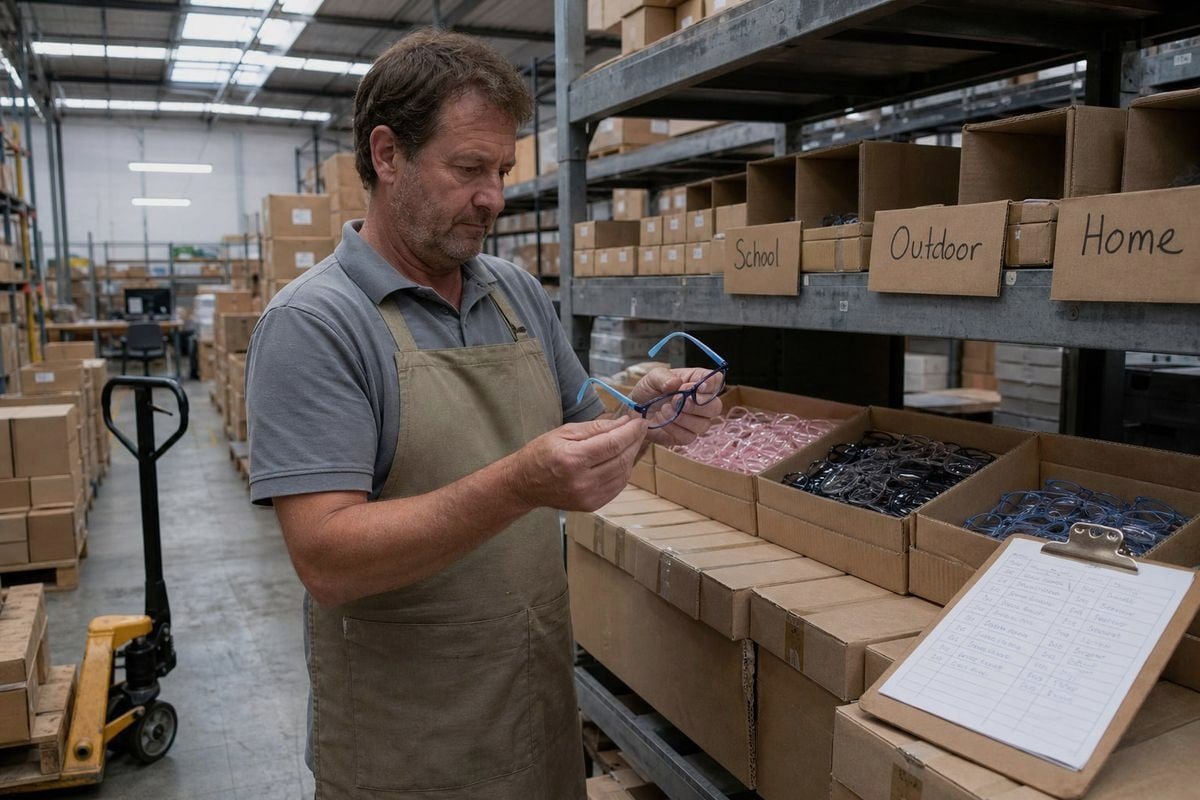
Stocking kids optical frames looks simple until returns pile up. On our production line in Taizhou, I have seen distributors overbuy trendy colors and underbuy the durable basics children actually wear.
Distributors should stock kids optical frames as three use-case segments: flexible, lightweight TR90 frames with spring hinges for school; impact-resistant, secure-fit frames for outdoor play; and comfortable, low-pressure frames for home wear — with backup-pair SKUs and core sizes stocked deeply.
Kids frames are not one market. They are three use cases. Below, I break down how to build each segment, which materials to prioritize, how to size your assortment, and how to source it without mold investment.
How do I decide which kids optical frame styles to stock for school, outdoor, and home use?
A buyer from Australia once asked me for "one perfect kids frame." After fifteen years making children's eyewear, I told her honestly: no single frame survives all three environments a child lives in.
Segment your kids optical frame inventory by use case: school frames need flexible temples, spring hinges, and all-day comfort; outdoor frames need impact resistance and secure retention; home frames need lightweight, low-pressure comfort for screen time and long wear.
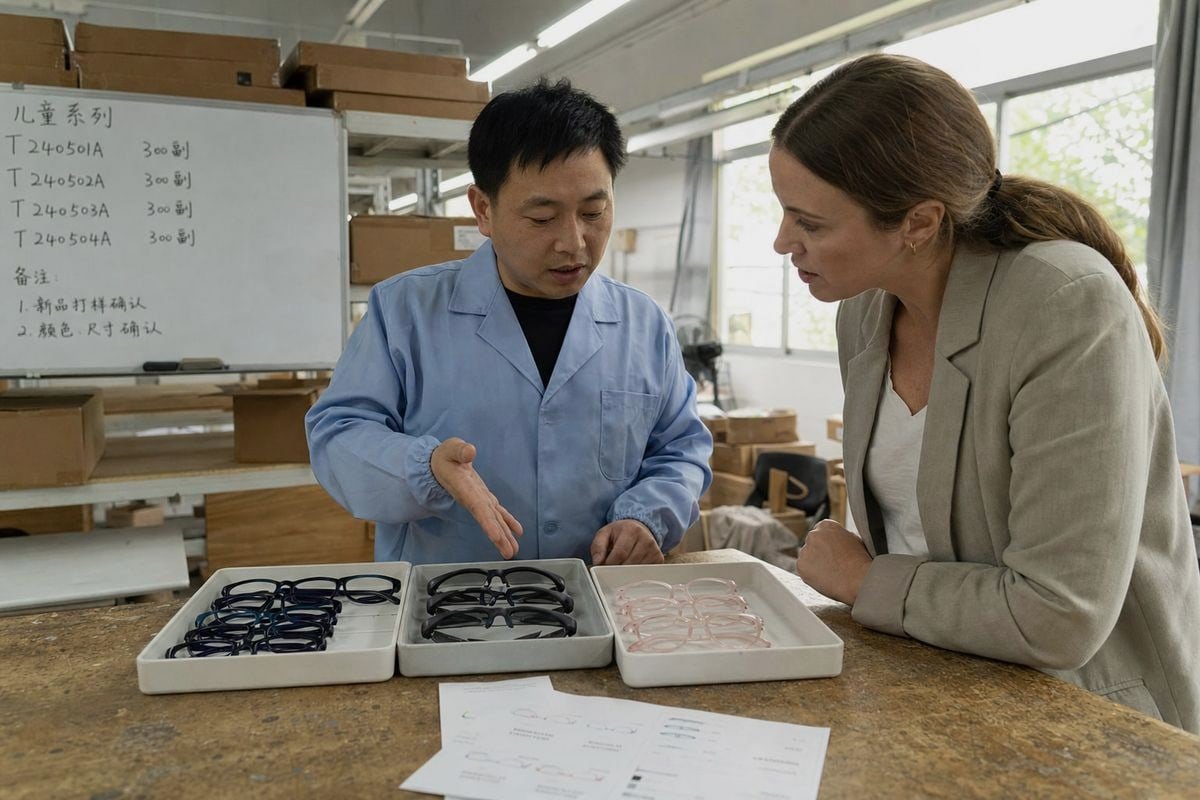
Children's frames fail far more often than adult frames. Kids drop them, bend them, sit on them, and outgrow them. Active movement, rough handling, and growth spurts mean durability and fit must lead your assortment planning — not style alone. That is why I always advise buyers to think in a use-case portfolio.
The three use cases, side by side
| Playa, lago, navegación | Top priority | Key features | Typical share of stock |
|---|---|---|---|
| School (daily wear) | Durability + all-day comfort | Flexible TR90 fronts, spring hinges, lightweight build, neutral colors | 50–60% |
| Outdoor / sport | Impact resistance + retention | Wraparound or snug fit, strap-compatible temples, UV protection standards for sunwear | 20–30% |
| Home / screen time | Comfort + low pressure | Soft silicone temple tips, light weight, optional blue light filtering | 15–20% |
School frames are your volume driver. A child wears them through reading, writing, recess, and every classroom transition, so these frames must bend without breaking. Outdoor frames are a distinct health category — pediatric eyewear trends increasingly separate UV-protective sunwear and prescription sports goggles from daily-wear optical, so they do not cannibalize each other. Home frames matter because many children now spend hours on screens, and a heavy or pinching frame gets taken off and lost.
One more point I stress with every distributor: school seasonality shapes demand. Back-to-school inventory planning should drive your ordering calendar, because vision screenings and new school years concentrate purchasing into predictable windows.
What materials should I prioritize when stocking optical frames that need to survive active school days?
In our 5S-managed workshop, we run a simple flex test on every batch: temples bent well past ninety degrees, repeatedly. Rigid acetate fails this test. Flexible materials pass it — and that difference defines material strategy.
Prioritize flexible, lightweight materials: TR90 frame material for fronts, TPEE for temples, and silicone for tips and nose pads. These bend without breaking, weigh under 20 grams, and are hypoallergenic. Avoid rigid acetate or metal for younger, highly active children.

Material choice is the single biggest lever you have against breakage and returns. In our experience exporting to buyers in 20+ countries, the frames that come back are almost never the flexible ones. They are the rigid, adult-style frames scaled down for children.
Why flexibility beats rigidity for kids
A child does not treat glasses carefully. Frames get yanked off one-handed, stuffed into backpacks, and stepped on. TR90 frame material is a thermoplastic that returns to shape after bending. TPEE goes further — we use it for temples because it stays soft and flexible even in cold weather, and it is environmentally friendly. Many of our best-selling designs combine a TR90 front with TPEE temples and soft silicone ear tips, like our two-tone navy-and-sky-blue style with embossed grip patterns on the ear hooks.
Comparación de materiales de un vistazo
| Material | Flexibilidad | Peso | Skin safety | Lo mejor para |
|---|---|---|---|---|
| TR90 | High — returns to shape | Muy ligero | Hypoallergenic materials | School frame fronts |
| TPEE | Very high — soft flex | Muy ligero | Skin-friendly, eco-friendly | Temples, toddler frames |
| Silicona | Extreme | Light | Gentle on skin | Nose pads, ear tips |
| Acetate | Low — can snap | Moderado | Generally safe | Older kids, fashion tiers |
| Metal | Low — bends permanently | Varía | Allergy risk for some | Teens only |
Weight matters as much as flexibility. Frames above 20 grams tend to slip down a child's nose and cause discomfort, so we engineer most kids styles well under that threshold. And do not forget the lenses your retail customers will fit: polycarbonate lens durability 1 is the standard recommendation for children, so stock frames with rims strong enough to hold impact-resistant lenses — including the deeper grooves needed for thicker myopia-management lenses 2, a fast-growing category.
For older children, some buyers still want premium-looking acetate. That is a fair merchandising trade-off — but keep acetate as a small fashion tier for teens, never as your core for ages four to ten.
How many styles and sizes do I need to cover different age groups in my inventory?
The costliest mistake I watch new distributors make is ordering by age label alone. "Ages 5–8" printed on a tag tells you almost nothing. Lens width, bridge width, and temple length tell you everything.
Cover four developmental brackets — toddler, early primary, late primary, and teen — with 12 to 20 core styles. Stock core sizes (roughly 115–130 mm frame width for ages 4–12) deeply, keep fringe sizes shallow, and plan for replacement every 1 to 2 years as children grow.
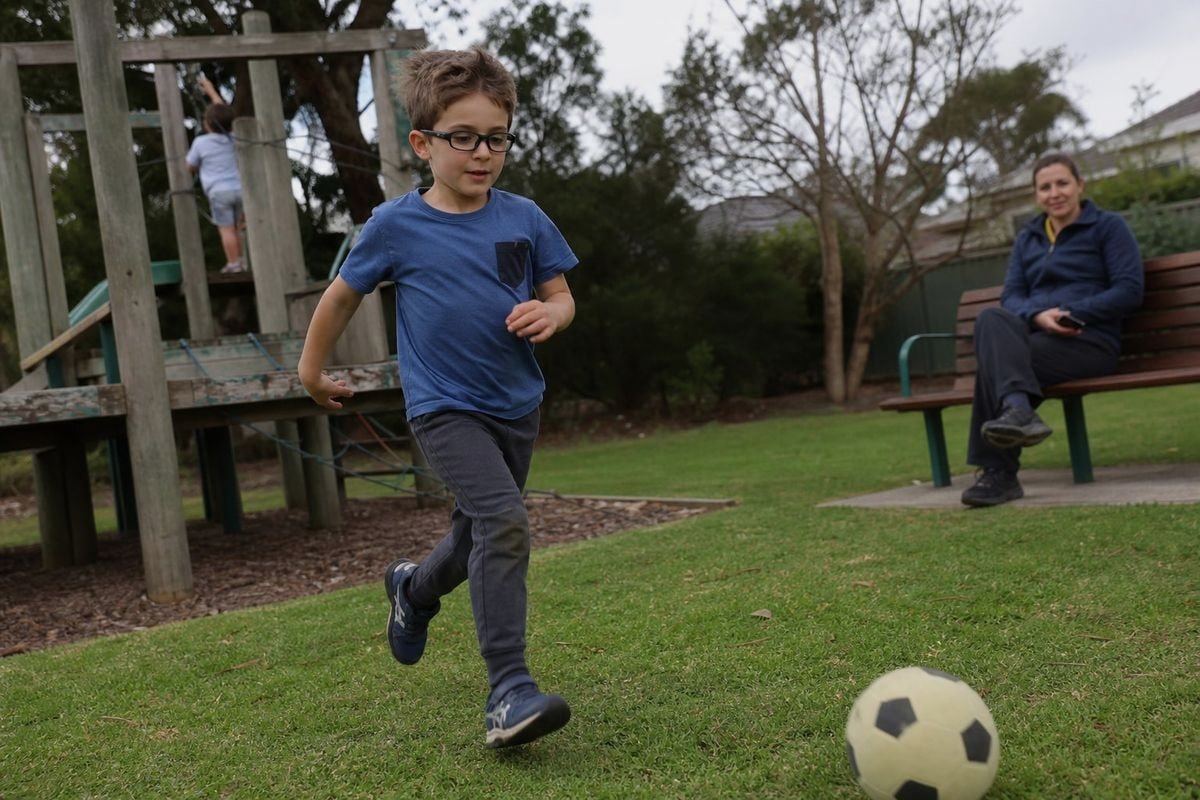
Children's frame ergonomics change fast as faces develop. A toddler has almost no nose bridge, so frames need low, wide bridge fits or adjustable nose pads. By the teen years, facial proportions approach adult dimensions. Your inventory must track this progression.
A practical sizing framework
| Age bracket | Frame width guide | Fit priorities | Stocking depth |
|---|---|---|---|
| Toddler (2–4) | ~110–118 mm | Soft full-flex materials, strap options | Shallow — niche demand |
| Early primary (5–8) | ~115–125 mm | Spring hinges, silicone nose pads | Deep — core volume |
| Late primary (9–12) | ~122–130 mm | Adjustable fit, more colorways | Deep — core volume |
| Teen (13+) | ~128 mm+ | Adult-like styling, premium finishes | Moderado |
This is the weighted inventory model I recommend to protect cash flow: stock the two primary-school brackets deeply, and carry toddler and teen sizes at sample-plus levels until your sell-through data justifies more.
Plan for growth and backups
Children typically need new frames every 1 to 2 years due to growth and wear. That replacement cycle is recurring revenue — if you have stock ready. It also supports backup-pair logic: optometry guidance 4 suggests very active children, or those highly dependent on correction, should own a second pair. Curate low-cost "emergency backup" SKUs that mirror the fit of your premium styles, and offer them as secondary-pair bundles in your catalog. Retailers love this, because a broken frame with no backup means a child without vision correction and a parent in a panic.
On style count: 12 to 20 well-chosen styles across the brackets usually outperform 40 scattered ones. Favor neutral, gender-flexible colors for the school core, then add playful colorways — like the translucent pastel-pink rounded-rectangular frames we produce — as the personality layer on top.
Can I source flexible, safe optical frames from an existing catalog without investing in new molds?
A startup kids brand from Japan approached us last year worried that entering eyewear meant tens of thousands of dollars in tooling. We walked them through our existing catalog instead, and they launched a full collection without opening a single new mold.
Yes. Established OEM/ODM factories like ours offer large existing catalogs — we maintain around 800 ready styles in TR90 and TPEE — so distributors can select proven designs, customize colors, logos, lenses, and packaging, and launch without any mold investment or tooling risk.
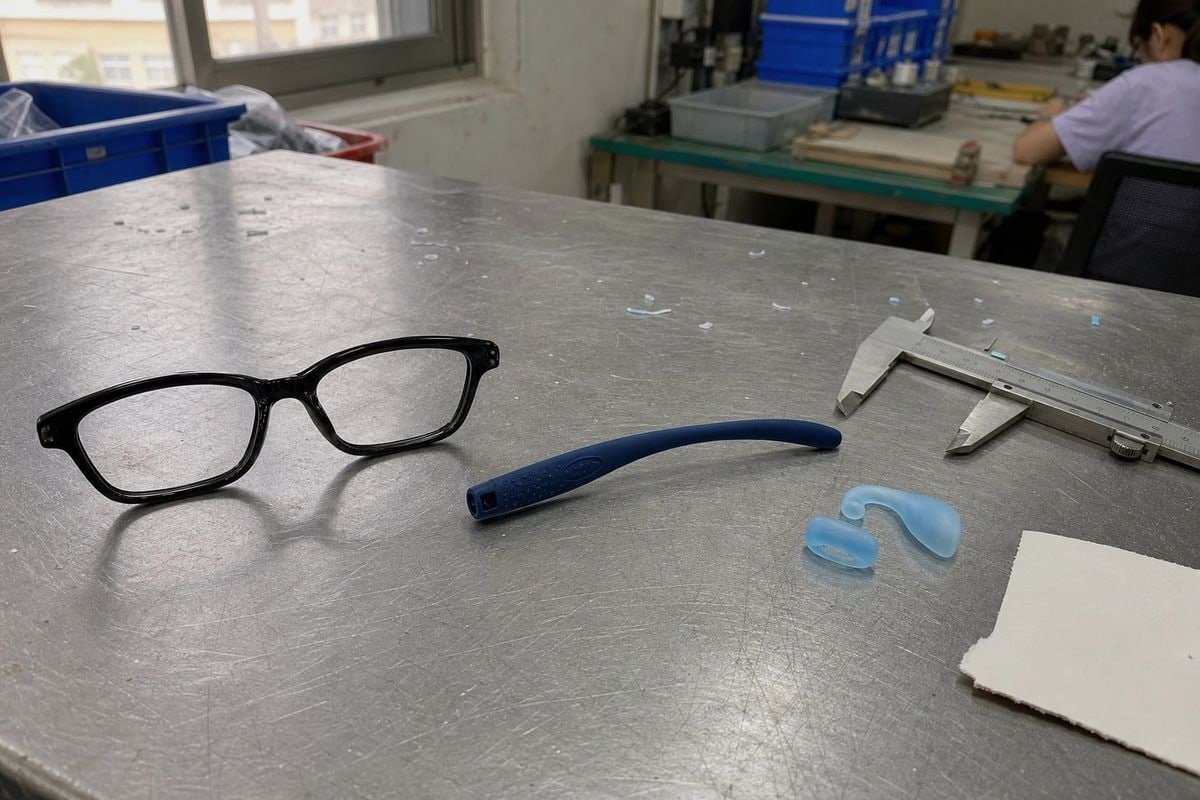
Mold investment is the biggest barrier for brands and distributors entering wholesale optical supplies. A new frame mold costs real money and locks you into one design before you know if it sells. An existing-catalog approach removes that risk entirely.
How catalog-based sourcing works in practice
Here is the process we run with buyers, step by step:
- Define your use-case mix. School core, outdoor add-on, home comfort — as covered above.
- Select from existing styles. With roughly 800 designs on our shelves, buyers can fill all four age brackets and all three use cases from proven, tested shapes.
- Customize without tooling. Colors, temple combinations, logo printing, lens options (including UV400, polarized sunwear, and blue light filtering categories for screen-time positioning), packaging, and accessories can all change — no new molds needed.
- Sample and validate. Test fit, flexibility, and finish before committing to volume.
- Order in flexible quantities. Test the market with lower risk, then scale winning styles.
What to verify in a catalog supplier
Not every catalog is equal. I encourage buyers to check three things. First, material honesty: confirm the frames are genuinely TR90 and TPEE, not lookalike cheap plastics — flex the temples hard and check cold-weather flexibility. Second, kid-specific engineering: look for flexible spring hinges (ideally 180-degree), adjustable nose pads or silicone bridge fits, and bendable temple tips designed for children's ears, not shrunken adult hardware. Third, quality control and presentation: our factory runs 5S management with about 120 workers, and every export order ships retail-ready with branded packaging — because a distributor's reputation rides on consistency, not just the first sample.
One caveat I raise honestly: some optometrists caution against buying kids glasses online because in-person fitting matters. For distributors, the answer is not to avoid catalogs — it is to stock accurate size runs and provide clear lens width, bridge width, and temple length specs so retail partners can fit children properly in person.
Conclusión
Stock kids optical frames by use case, not by trend. Build a flexible TR90/TPEE school core, add outdoor and home segments, size by measurements, plan backups — and source from an existing catalog to launch without mold risk.
Notas al pie
1. The American Academy of Ophthalmology identifies polycarbonate as the safest, most durable lens material for active children. ↩︎
2. The World Health Organization highlights the increasing global prevalence of myopia and the need for effective corrective lenses. ↩︎
3. TR90 is a brand of transparent polyamide (Nylon 12) known for its high flexibility and fatigue resistance. ↩︎
4. The American Optometric Association provides clinical guidance on backup eyewear and vision correction for active children. ↩︎
Más artículos que te podrían gustar
5 de agosto de 2026
Bio-Based vs Regular Cellulose Acetate: What's the Difference for Kids' Frames?

5 de agosto de 2026
How Recyclable Are Kids' Optical Frame Materials, and What Eco-Friendly Alternatives Exist?
5 de agosto de 2026
Do Kids Optical Frames Whiten or Age in Storage, and How to Control Warehouse Conditions?
¿Buscas un socio confiable en gafas para niños?
Explore más de 800 estilos listos y soporte OEM/ODM completo adaptado a su marca.
Ponte en contacto English
  Español de México
  Deutsch
  Français
  日本語
日本語  العربية
  Português do Brasil