How Do I Determine Which Returned Kids’ Optical Frames Can Be Resold?
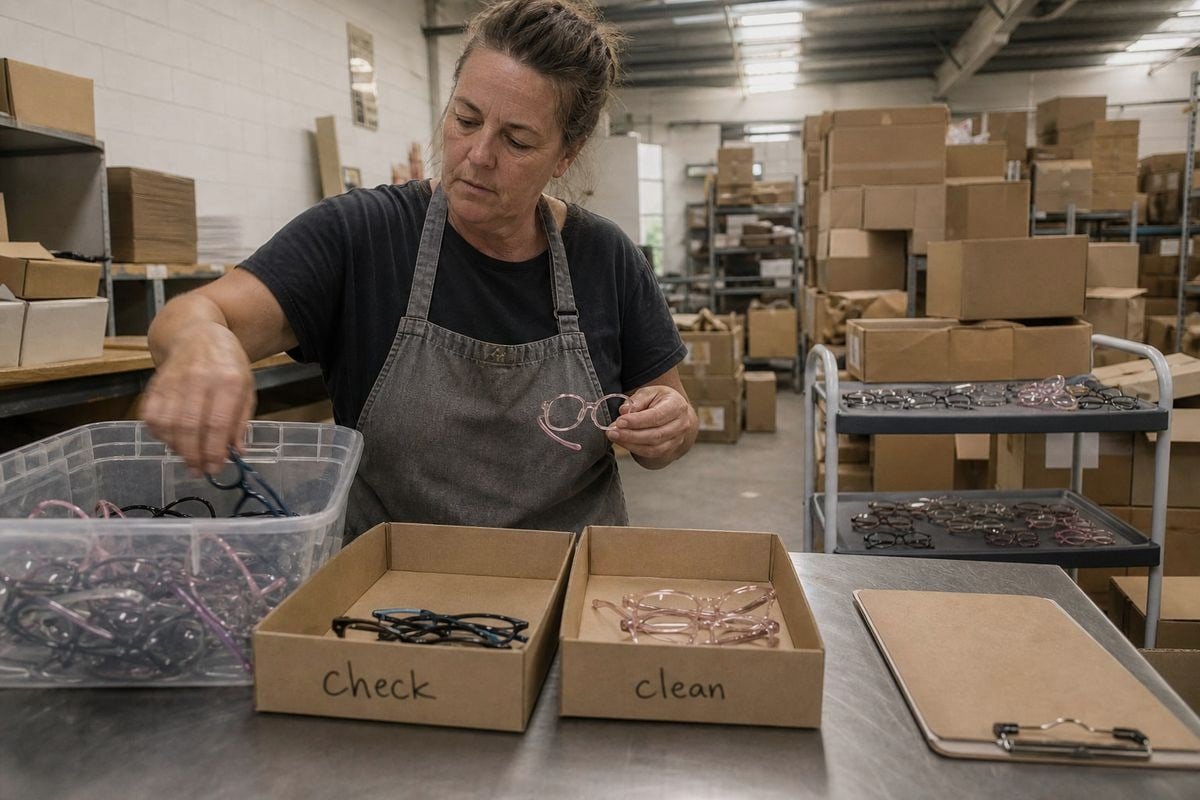
Returned kids’ optical frames pile up fast in our clients’ warehouses. Every unsorted return ties up cash, shelf space, and staff time — a quiet drain we see across the brands we supply.
Returned kids’ optical frames can be resold only if they are unused, clean, structurally sound, and complete with original packaging and parts. Frames with custom lenses, visible wear, adjustment marks, or missing components should be discounted, returned to the vendor, donated, or scrapped instead.
That is the short answer. The longer answer involves inspection routines, hygiene protocols, grading systems, and clear criteria you can enforce consistently. Let me walk you through each step.
How can I tell if a returned frame is safe enough to resell to another family?
A buyer in Australia once asked me why two identical-looking returns from her store got opposite verdicts from her QC team. The answer came down to safety, not appearance.
A returned frame is safe to resell if it shows no structural damage, has intact hinges and screws, contains no sharp edges or stress cracks, passes a documented disinfection process, and still meets children's product safety standards for non-toxic, impact-resistant materials.
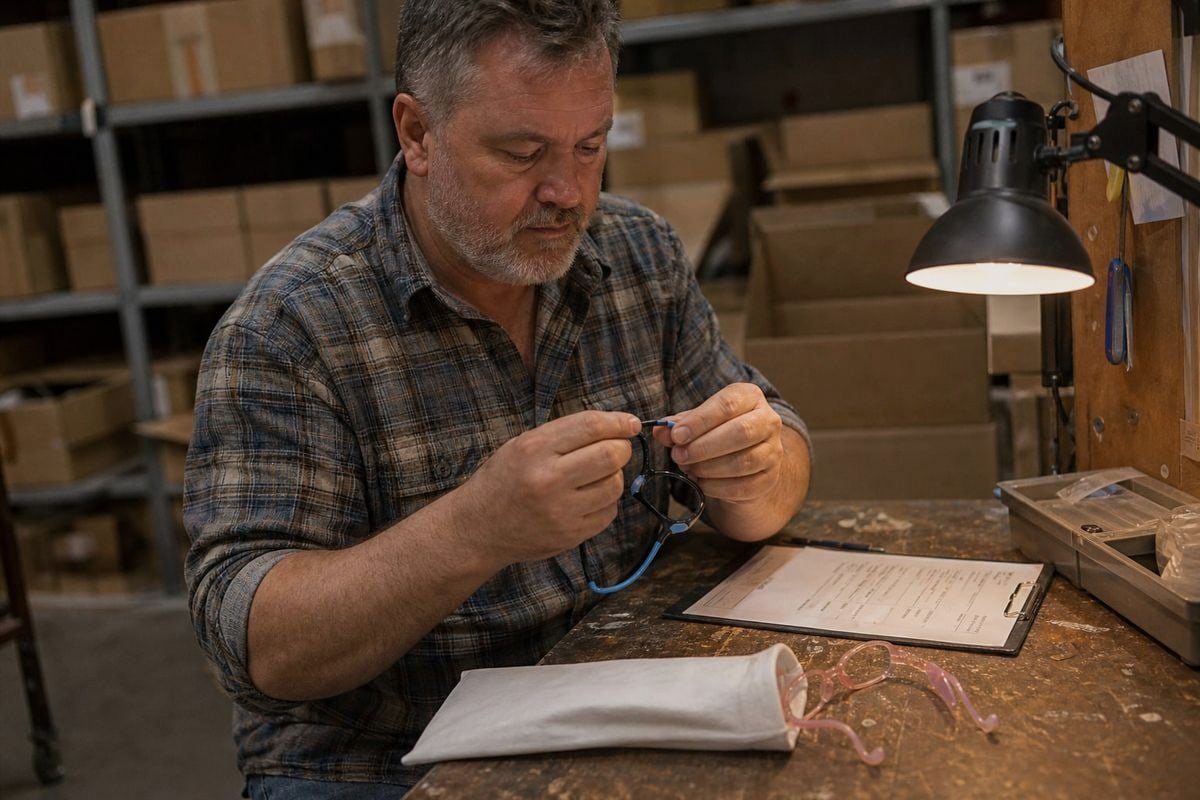
Safety comes before cosmetics, always. A frame can look flawless and still be unsafe for the next child. In our factory in Taizhou, we build kids' frames from TR90 and TPEE 1 precisely because these optical frame materials flex without snapping into sharp fragments. But even flexible materials fatigue. A return that was bent, chewed, or sat on may carry invisible stress marks that fail under the next child's use.
Start with structural integrity
Check the hinge tension first. A loose hinge on a child's frame is not just annoying — it lets the frame slip during play, and repeated tightening can strip the screw hole. Then flex each temple gently. TR90 should return to shape smoothly. If you feel a click, hear a creak, or see whitening at the flex point, that frame has internal damage. Scrap it.
Then confirm hygiene
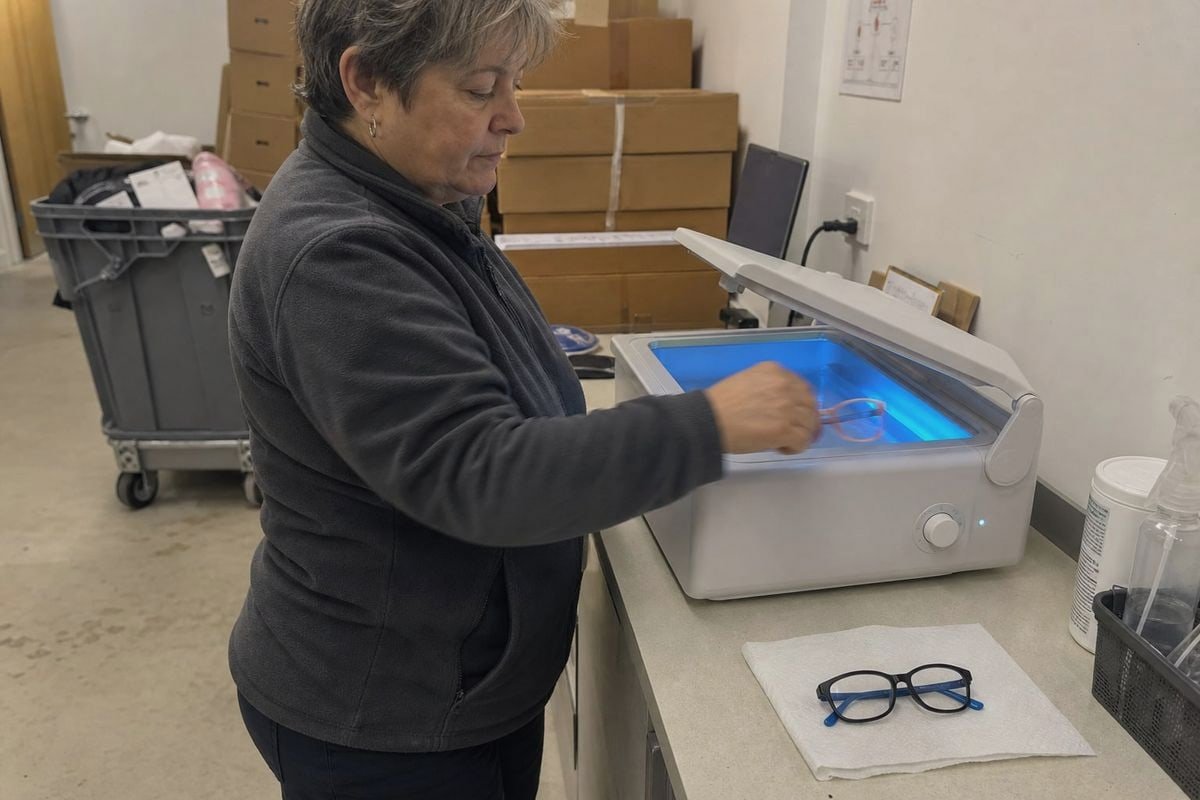
Children's product safety includes eyewear sanitation. Kids touch their faces constantly, and nose pads and temple tips absorb skin oils. We advise our B2B clients to run every accepted return through a consistent disinfection process 2 — ultrasonic cleaning followed by a UV-C chamber where available, or at minimum an approved optical sanitizing wipe-down with documented steps. If your team cannot verify the frame was sanitized, it does not go back on the shelf.
Finally, check compliance
Confirm the frame is not part of any recall and still carries readable model markings. In our experience exporting to 20+ countries, buyers in the EU, Japan, and the US expect traceability. A frame with worn-off markings cannot be traced to its production batch, and that alone can disqualify resale.
What quality checks should I run before restocking returned kids' optical frames?
There is a trade-off I weigh with every client: a longer inspection checklist catches more problems, but it also slows returns processing. The list below is the balance we have settled on after fifteen years of building kids' eyewear.
Before restocking, inspect frame condition for scratches, cracks, and warping; test hinges, screws, and temple flex; check lenses for scratches or delamination; verify logos and markings are readable; confirm all packaging, cases, and accessories are present; then sanitize and grade the frame.
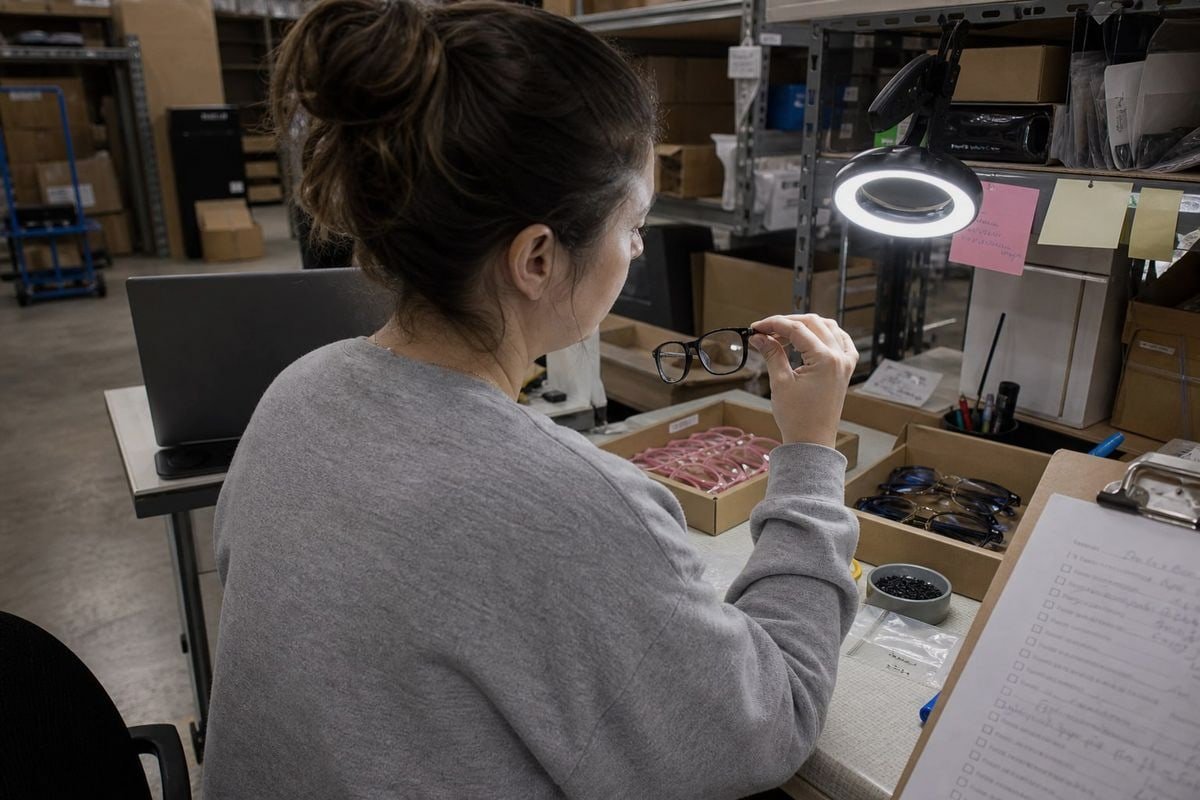
Our 5S-managed workshop taught us that a checklist only works when it is fast, visual, and repeatable. Your returns desk needs the same discipline. Here is the multi-point inspection we recommend, ordered from fastest to slowest so obvious failures exit the process early.
| Check point | What to look for | Pass standard |
|---|---|---|
| Frame front | Scratches, chips, cracks, faded finish | No visible defects under bright light |
| Temples | Chew marks, bite dents, whitening at flex points | Smooth surface, clean flex return |
| Hinges & screws | Loose screws, stripped threads, stiff or floppy motion | Firm, even movement on both sides |
| Bridge & alignment | Warping, twisted front, uneven temple spread | Frame sits flat on a level surface |
| Nose pads & tips | Discoloration, wear, hardened silicone | Original color and softness |
| Demo lenses | Scratched lenses, delamination, pop-out marks | Clear, secure, no glazing marks |
| Markings | Logo, model number, size, material stamps | Fully readable |
| Empaque | Case, cloth, tags, inserts | Complete per your policy |
Grade every frame that passes
A pass is not one single outcome. We advise clients to use a three-tier grading system. Grade A means unopened or indistinguishable from new — restock as new. Grade B means opened but perfect — sell as open-box or certified pre-loved at a discount. Grade C means functional but visibly handled — route to outlet, staff sale, or donation programs, never back into new inventory.
Track why frames come back
Log the return reason against the production batch. When we see a pattern from a client — say, hinge complaints clustered in one batch — we can separate a manufacturing issue from a sizing or style issue. That traceability turns returns from a cost center into free product development data.
Which returned frames should I scrap instead of trying to resell?
Early in my time supplying importers, I watched a client lose a wholesale account over one incident: a resold frame with a hairline crack snapped on a child's face. That lesson shaped every scrap rule we now recommend.
Scrap any returned frame with cracks, broken hinges, warped geometry, chew damage, missing parts, permanent adjustments, custom prescription lenses installed, worn-off safety markings, or recall exposure. When a frame's condition or history is uncertain, treat it as non-resellable rather than risking a child's safety.
The used eyewear market forgives cosmetic flaws far more than it forgives safety flaws. So your scrap criteria should be hard rules, not judgment calls. Broken frames, cracked bridges, and stripped hinge threads are automatic write-offs. But scrapping does not have to mean landfill.
Hard disqualifiers versus soft disqualifiers
Some issues end the conversation. Others just change the channel.
| Problema | Verdict | Best exit route |
|---|---|---|
| Crack, chip, or stress whitening | Never resell | Recycle |
| Broken or repaired hinge | Never resell | Recycle or parts harvest |
| Custom prescription lenses installed | Not resellable as new | Frame-only donation after lens removal |
| Chew marks or bite dents | Never resell | Recycle |
| Missing temple or nose pad | Not resellable | Vendor credit if policy allows, else parts |
| Faded color, light case wear | Resellable at discount | Open-box or outlet channel |
| Missing packaging only | Resellable at discount | Open-box channel |
Why lenses change everything
Frames sold with prescription lenses are usually final sale, and for good reason. The lenses are custom to one child, so their resale value is effectively zero, and lens removal often leaves glazing marks on the groove. If you accept these returns for goodwill, plan for the frame to exit through donation programs or refurbishment channels, not your new-stock shelf.
Give scrapped frames a second life
Partner with recycling or upcycling organizations for frames that fail inspection. TR90 and TPEE are recyclable engineering plastics, and several optical charities accept clean, intact frames for communities in need. This keeps your write-offs out of landfill and gives your brand a genuine sustainability story — one that resonates strongly with the parent-focused brands we supply.
How can my manufacturer help me set clear criteria for reselling returned inventory?
When we develop a new style with a client — like our glossy black TR90 front with flexible TPEE temples and silicone ear hooks — we also hand over the acceptance specs. Those same specs become the client's returns criteria.
Your manufacturer can supply written acceptance specifications, tolerance data for hinges and flex points, batch traceability records, spare parts for refurbishment, replacement packaging for open-box resale, and material safety documentation — giving you objective, enforceable criteria instead of subjective judgment calls at the returns desk.
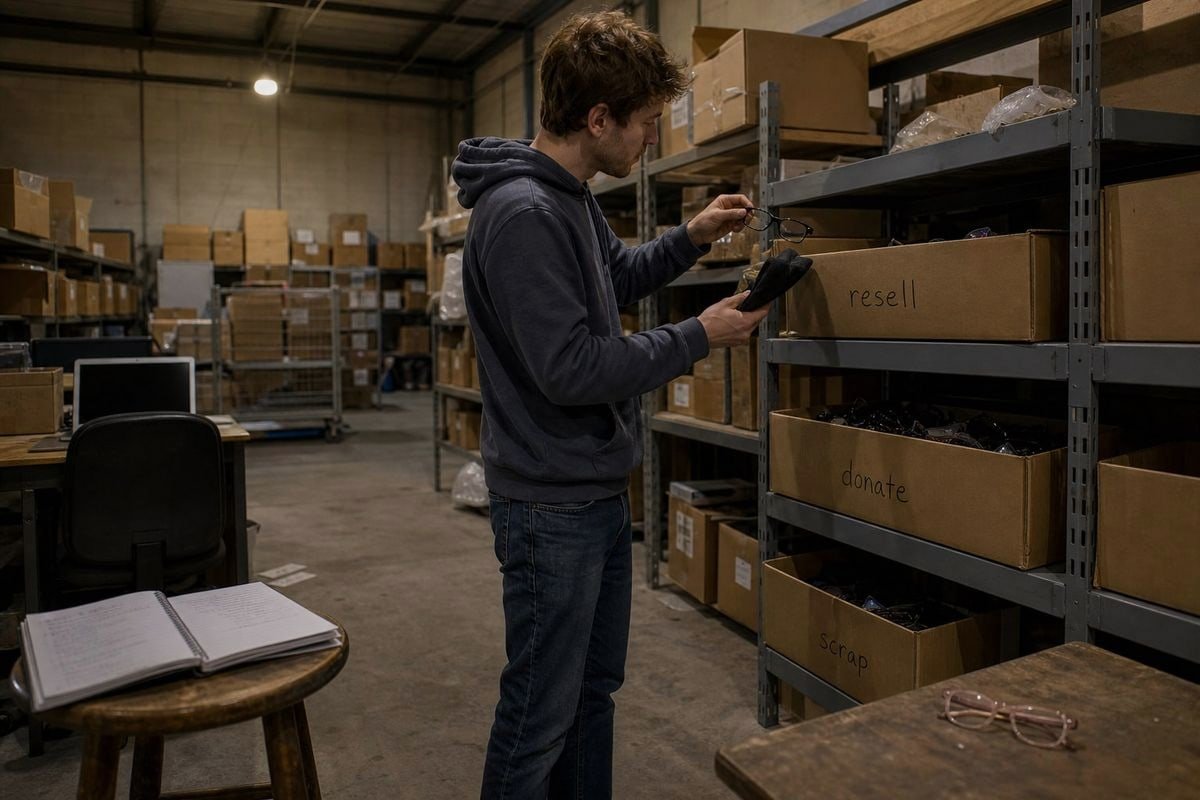
A factory partner changes the returns equation in ways many buyers overlook. Objective criteria are the biggest one. If your inspection standard says "hinge should feel firm," two staff members will disagree. If your factory tells you the designed hinge tension range and how to test it, the decision becomes consistent. Our engineers document these tolerances during development, and we share them with clients precisely so their QC and returns teams work from the same reference as our production line.
What to ask your factory for
- Acceptance specs. The same checklist we use at final QC — surface finish, alignment, flex behavior, marking placement — becomes your restock standard.
- Spare parts. Temple tips, screws, nose pads, and demo lenses. A Grade B frame with a scuffed temple tip becomes a Grade A frame after a two-minute part swap. This kind of refurbishment recovers real resale value at almost no cost.
- Replacement packaging. Fresh cases, cloths, and inserts let you restock a perfect frame whose box was damaged in transit. We supply retail-ready packaging as part of our OEM/ODM service for exactly this reason.
- Batch traceability. Every frame we ship links back to a production batch. When a client reports a return pattern, we can isolate the batch, identify the cause, and correct it — separating a design flaw from a one-off defect.
- Material documentation. Certificates confirming non-toxic, BPA-free, impact-resistant materials support your children's product safety claims when reselling open-box stock. non-toxic, impact-resistant materials 4
Design choices that reduce returns in the first place
The best returned frame is the one that never comes back. Flexible TPEE temples survive being sat on. Cable-style ear hooks and silicone tips stay comfortable, so kids actually wear the frames. With around 800 existing styles, we also help brands test sizing and styles in small runs before committing — which cuts fit-related returns dramatically. Pair that with customer care guides that teach parents proper handling, and more of the returns you do receive will still be in resellable frame condition.
Conclusión
Sort every return by safety, frame condition, completeness, and hygiene. Restock only the flawless, discount the good, and recycle or donate the rest — with your factory's specs guiding every call.
Notas al pie
1. Explains the properties and applications of thermoplastic elastomers, which include TPEE. ↩︎
2. Offers guidelines for disinfection protocols in optical settings, including frames. ↩︎
3. Details how ultrasonic cleaning works and its benefits for optical frames and lenses. ↩︎
4. References the U.S. FDA regulation for impact-resistant lenses in eyeglasses and sunglasses. ↩︎
Más artículos que te podrían gustar
5 de agosto de 2026
Bio-Based vs Regular Cellulose Acetate: What's the Difference for Kids' Frames?
5 de agosto de 2026
How Recyclable Are Kids' Optical Frame Materials, and What Eco-Friendly Alternatives Exist?
5 de agosto de 2026
Do Kids Optical Frames Whiten or Age in Storage, and How to Control Warehouse Conditions?
¿Buscas un socio confiable en gafas para niños?
Explore más de 800 estilos listos y soporte OEM/ODM completo adaptado a su marca.
Ponte en contacto English
  Español de México
  Deutsch
  Français
  日本語
日本語  العربية
  Português do Brasil