How to Design Unboxing-Ready Gift Boxes for Bulk Kids’ Sunglasses Without Adding Shipping Weight?
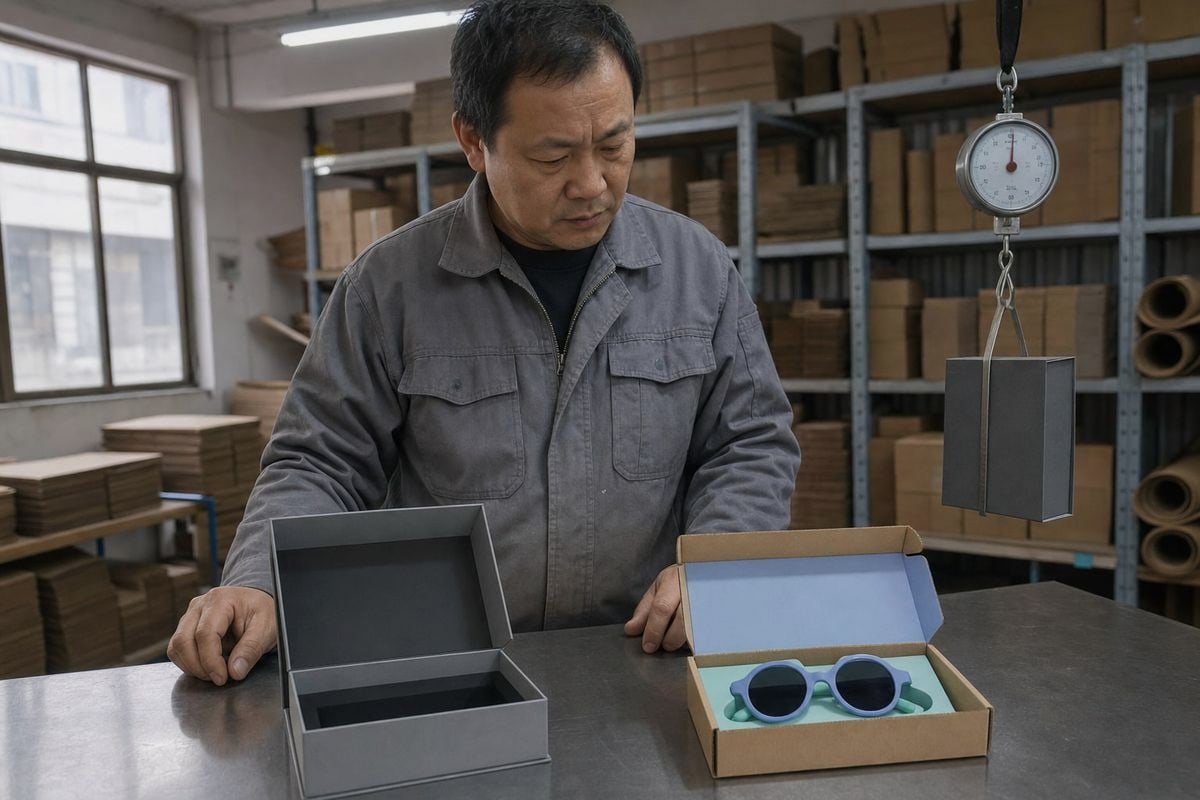
Designing unboxing-ready gift boxes for bulk kids’ sunglasses nearly broke one of our early packaging projects. The buyer wanted luxury; the freight quote wanted mercy. Heavy rigid boxes doubled the pallet weight, and every extra gram multiplied across ten thousand units. Our packaging team eventually cracked the formula, and I want to share it here.
Design unboxing-ready gift boxes for bulk kids’ sunglasses by using lightweight E-flute or folding carton structures, flat-pack box design, die-cut paperboard inserts instead of foam, right-sized dimensions to cut dimensional weight, and premium print finishes that add perceived value without adding measurable mass.
That single sentence covers the strategy. But each part hides real decisions. Let me walk you through the materials, the premium tricks, the memorable design elements, and the eco-friendly balance, one section at a time.
What packaging materials can I use to keep gift boxes lightweight but still sturdy for bulk shipping?
A buyer from Australia once sent our factory two competing box samples and asked a blunt question: why does the sturdier one weigh less? The answer changed how she ordered packaging forever.
Use 1.5mm E-flute corrugated cardboard or 300–350gsm folding carton board. Both are crush-resistant yet far lighter than rigid greyboard. Choose flat-pack box designs that ship knocked-down, then replace foam trays with custom cardboard inserts that lock sunglasses in place through geometric tension.
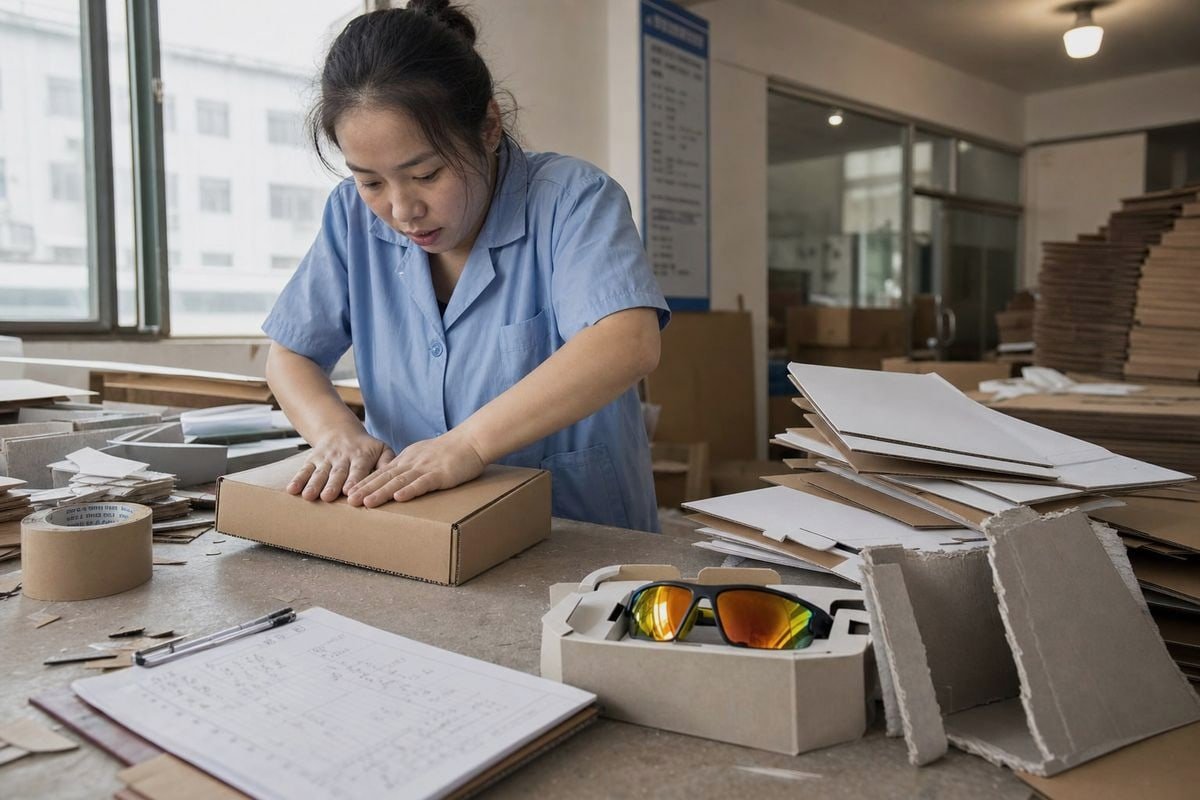
Material choice is where most of your shipping weight is won or lost. In our 15 years producing children's eyewear in Taizhou, we have packed everything from soft TPEE toddler frames 1 to sport-style wraparound shields with mirrored gradient lenses. The lesson is consistent: structure beats thickness. A well-engineered thin board outperforms a lazy thick one.
The three materials that actually work
E-flute corrugated board is the workhorse. At roughly 1.5mm thick, its fluted core gives high crush-resistance 2 for fragile frames and hinges, yet it weighs a fraction of traditional rigid board. Folding carton board is even lighter and prints beautifully, which matters for kids' brands. Corrugated mailer boxes combine both worlds for direct-to-consumer shipping.
| Material | Typical Weight | Strength | Best Use Case |
|---|---|---|---|
| E-flute corrugated (1.5mm) | Baja | High crush-resistance | Bulk shipping cartons, mailer boxes |
| Folding carton (300–350gsm) | Muy bajo | Moderado | Individual retail gift boxes |
| Rigid greyboard (2mm+) | Alta | Alta | Flagship retail display only |
| Kraft corrugated mailer | Low-medium | Alta | E-commerce fulfillment |
Why flat-pack matters more than you think
Knock-down structures ship flat from our workshop to your fulfillment center. That reduces both storage volume and freight class. One pallet of flat-packed cartons replaces four pallets of pre-assembled rigid boxes. For bulk orders of a few thousand kids' sunglasses, this difference alone can decide whether your packaging budget survives.
Some buyers push back and argue that rigid boxes protect better. In practice, protection comes from the insert, not the shell. A die-cut paperboard cradle that grips the frame at the temples prevents movement far better than a heavy box with a loose product rattling inside.
The trade-off I weigh most often in our OEM packaging projects is this: every millimeter of extra box dimension can push a shipment into a higher DIM pricing bracket, yet buyers still want a designer feel.
Create premium feel through finishes, not mass. Apply spot UV, matte lamination, soft-touch coatings, or cold foil stamping to lightweight board. Right-size the box with zero internal void space so dimensional weight optimization keeps you in lower DIM pricing brackets while the surface still signals luxury.
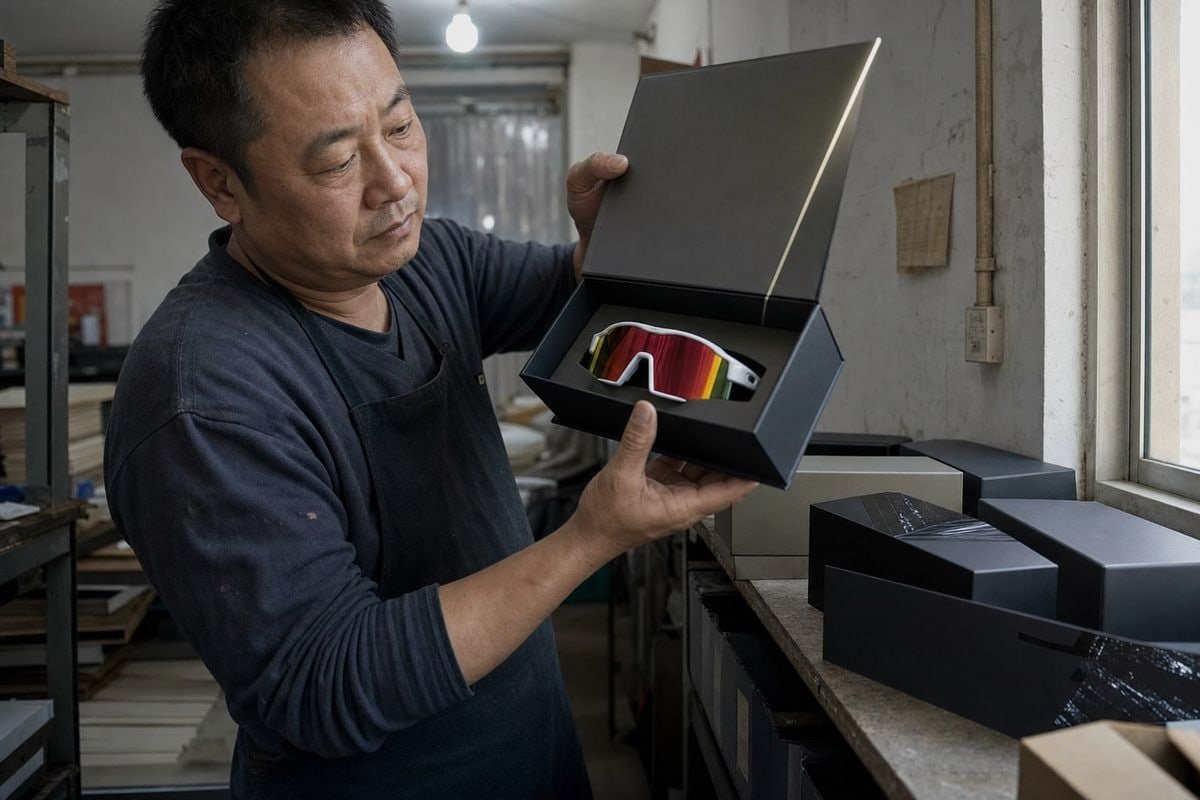
Dimensional weight is the silent killer of packaging budgets. Carriers charge by whichever is greater: actual weight or the volume-based DIM weight. A beautiful oversized box 3 full of air costs you money on every single shipment. So the first premium move is subtraction, not addition.
Right-sizing comes first
When we develop custom packaging for a client's kids' collection — say, a round two-tone frame in periwinkle and mint for toddlers — we start by measuring the folded sunglasses precisely. Then we design the box around them with almost no void space. No sustainable void fill needed, no crumpled paper, no air pillows. The product presentation layout does the protective work. This single step often drops the shipment into a lower DIM bracket.
Finishes that weigh nothing
Here is where perceived value lives. These treatments add virtually zero grams:
| Finish | Feel It Creates | Weight Added | Relative Cost |
|---|---|---|---|
| Matte lamination | Soft, modern, muted | Negligible | Baja |
| Spot UV 4 | Glossy highlights on logo or artwork | Negligible | Low-medium |
| Soft-touch coating | Velvety, tactile, "expensive" | Negligible | Medio |
| Cold foil stamping | Metallic shine, giftable sparkle | Negligible | Medio |
| Grit haptic coating | Playful texture kids love to touch | Negligible | Medio |
A matte-laminated folding carton with a spot UV sunburst around your logo feels more premium than a plain rigid box that weighs three times as much. Kids respond to the tactile contrast; parents read it as quality.
Structure as a luxury signal
Lid-and-base formats and sleeve boxes create that classic gift reveal. A sleeve sliding off a printed tray builds anticipation the same way a rigid two-piece box does, at a fraction of the weight. In our experience exporting to Europe and Japan, buyers consistently rate the sleeve-plus-tray combination as "premium" in blind comparisons, even though it flat-packs and weighs under 40 grams.
What unboxing design elements make my brand more memorable to parents and kids alike?
A distributor once told me his repeat orders jumped after we redesigned his opening mechanism — nothing else changed. The box opened with a satisfying pull-tab, and parents started posting it online.
Memorable unboxing combines a satisfying tear-strip or pull-tab opening, a designed reveal sequence with the sunglasses presented face-up, printed interior messaging, branded tissue paper accents, and interactive extras like hidden AR markers or kid-friendly scented board — all of which add experience, not weight.
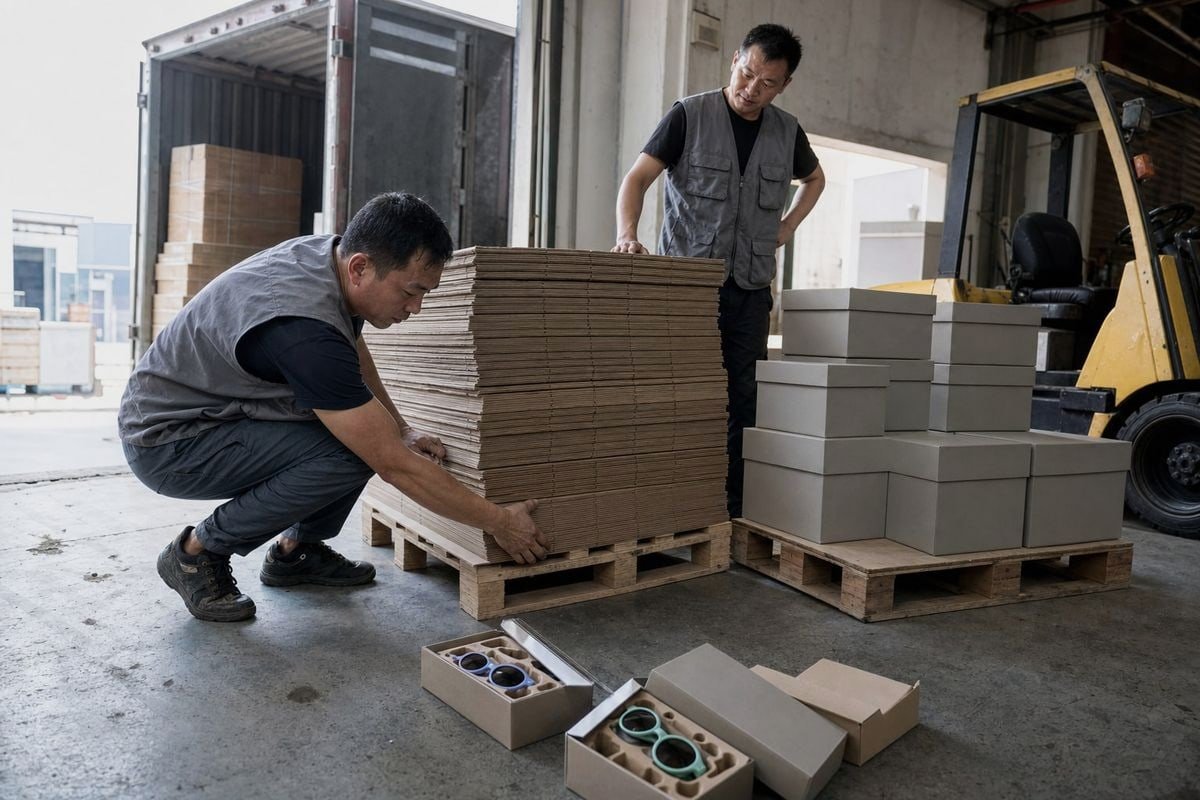
The unboxing moment is brand theater. For a children's product, you are performing for two audiences at once. The parent judges quality, safety cues, and thoughtfulness. The child judges fun, color, and surprise. Great packaging design serves both in under ten seconds.
Build the reveal in stages
Think of the opening as a short story with three beats:
- The invitation. A built-in tear-strip or zip-strip lets a parent open the box tool-free, with a clean, satisfying rip. No scissors near a child, no mangled cardboard. The box survives intact for reuse as a toy box or storage.
- The pause. Branded tissue paper or a printed inner flap creates one beat of anticipation. Interior printing — a rainbow, a beach scene, a short welcome message to the child by name placeholder — turns the lid interior into a second billboard.
- The reveal. The sunglasses sit face-up in a custom cardboard insert, lenses catching the light. For a mirrored gradient shield lens 5, this angle is everything; the iridescent orange-to-yellow surface is the hero, so the product presentation layout should frame it like jewelry.
Add discovery without adding grams
Two SERP-proven ideas cost almost nothing in mass. First, print a hidden AR marker 6 inside the lid that launches a simple game or photo filter — kids get entertainment, you get engagement, and the scale reads zero. Second, micro-encapsulated scents infused into the interior board, like fruit punch or ocean breeze, create an instant sensory memory the moment the lid lifts. We have prototyped scented board for promotional clients, and children react to it before they even see the product.
The hammock trick
One of our favorite space-savers: thread the included microfiber cleaning pouch through slits in the insert sidewalls so it cradles the lenses like a hammock. The pouch becomes lightweight protective padding, a gift accessory, and a lens protector all at once — three functions, one item, no separate wrapping.
How do I balance eco-friendly packaging with an unboxing experience that still feels special?
Sustainability questions come up in almost every packaging brief our factory receives now, especially from European and Australian kids' brands whose customers read labels carefully.
Balance sustainability and delight by choosing recyclable mono-material boards, soy or water-based inks, FSC-certified paper, and paper-based inserts instead of plastic or foam. Then let clever structure, print design, and reuse-worthy construction deliver the special feeling that heavier mixed materials once provided.
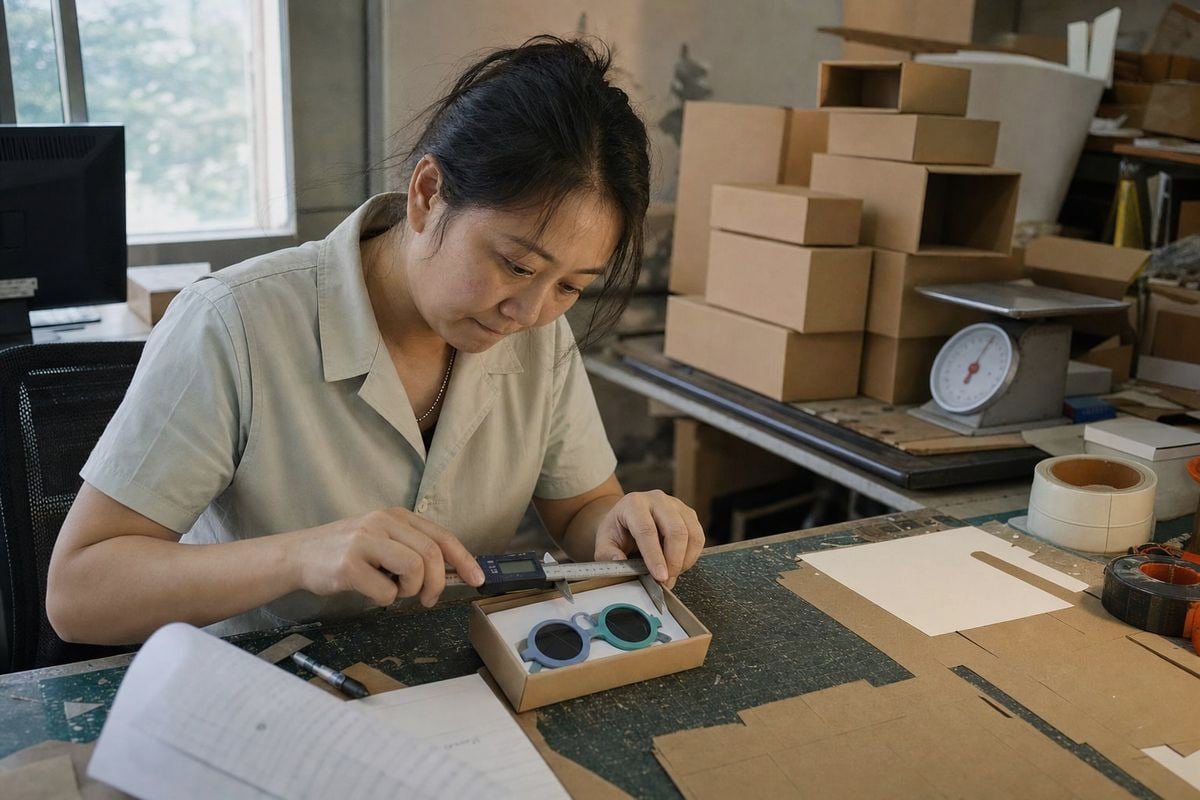
There is a persistent objection I hear from buyers: eco-friendly packaging looks cheap, and gift packaging must look rich. That was true a decade ago. It is not true now. In fact, the eco-friendly playbook and the lightweight playbook are nearly the same playbook. Both push you toward less material, smarter structure, and paper-based everything.
Where eco and lightweight goals align
Replacing an EVA foam tray with a die-cut paperboard insert removes plastic, cuts weight, and makes the entire package curbside-recyclable as one material stream. Flat-pack box design reduces freight emissions 7 per unit. Right-sizing eliminates void fill entirely, and when you do need cushioning, sustainable void fill like shredded kraft or corrugated wrap keeps the package mono-material.
| Conventional Choice | Eco-Friendly Swap | Effect on Weight | Effect on Unboxing |
|---|---|---|---|
| EVA foam tray | Die-cut paperboard insert | Lighter | Cleaner, more designed look |
| Plastic window film | Die-cut shaped opening | Lighter | Playful peek-a-boo reveal |
| Leatherette wrap | Soft-touch coated board | Much lighter | Same tactile luxury |
| Air pillow void fill | Right-sized box, no fill | Lighter | Snug, intentional feel |
| Glossy plastic lamination | Water-based matte varnish | Same | Softer, modern finish |
Make the box worth keeping
The most sustainable box is one a child refuses to throw away. A tear-strip that opens cleanly preserves the box for reuse — a crayon box, a treasure chest, a case for the sunglasses themselves. Printed interior games, a cut-out mask on the lid, or a fold-flat design that becomes a play scene all extend the box's life. Parents notice this, and it says more about your brand values than any green logo.
Since our own kids' frames use environmentally friendly TPEE and TR90 materials, the packaging story has to match the product story. A safe, flexible, eco-conscious pair of children's sunglasses inside a plastic-heavy box sends a mixed message. Aligning both is what makes the brand feel honest.
Conclusión
Heavy boxes drain freight budgets without impressing anyone. The fix is structural: lightweight board, flat-pack formats, smart inserts, and finishes that weigh nothing. Premium comes from design, not grams.
Notas al pie
1. Technical details on the flexible, durable thermoplastic elastomer used in kids’ eyewear. ↩︎
2. Explains the structural properties of corrugated materials that protect fragile items during shipping. ↩︎
3. Carrier guidelines on how large, lightweight packages are billed based on volume rather than weight. ↩︎
4. Authoritative Wikipedia entry explaining UV coating and selective application techniques. ↩︎
5. Authoritative Wikipedia entry for mirrored sunglasses and reflective optical coatings. ↩︎
6. Authoritative Wikipedia entry defining augmented reality and its tracking systems. ↩︎
7. EPA resource on reducing the environmental impact and carbon footprint of freight transportation. ↩︎
Más artículos que te podrían gustar
1 de agosto de 2026
¿Debería la fábrica encargarse del embalaje y etiquetado de las gafas de sol para niños, o utilizar un proveedor designado?
1 de agosto de 2026
Almacén propio vs. Cumplimiento directo del proveedor: ¿Qué reduce los costos de devolución para las marcas de gafas de sol para niños?
1 de agosto de 2026
Directo al almacén del puerto o staging en el extranjero: ¿Cuál ahorra más en el envío de gafas de sol para niños?
¿Buscas un socio confiable en gafas para niños?
Explore más de 800 estilos listos y soporte OEM/ODM completo adaptado a su marca.
Ponte en contacto English
  Español de México
  Deutsch
  Français
  日本語
日本語  العربية
  Português do Brasil