How to Coordinate Receiving Appointments, ASN, and Container Arrival for Kids Sunglasses?

Coordinating receiving appointments, ASN, and container arrival for kids sunglasses trips up many buyers we ship to. One missed handoff, and your container sits at the port burning fees.
Coordinate receiving appointments, ASN, and container arrival by finalizing carton counts first, submitting the ASN after packing but before departure, booking container appointments at least 5 business days before Last Free Day, and matching PO, container number, and counts across all documents.
That sounds simple on paper. In practice, three teams must move in sync: your factory, your carrier, and your warehouse. Let me walk you through how we help our buyers make this work, shipment after shipment.
How can I set up ASN timing that actually matches my container's real arrival schedule?
A buyer in Australia once asked us to send the ASN the day we confirmed her order. We had to explain why that would backfire once her 3PL 1 scanned the cartons.
Submit the ASN after final pack-out is complete but before the container leaves your supplier's facility. Then update the ETA electronically 24–72 hours before vessel arrival at the destination port, so the warehouse sees accurate contents and a realistic delivery window.
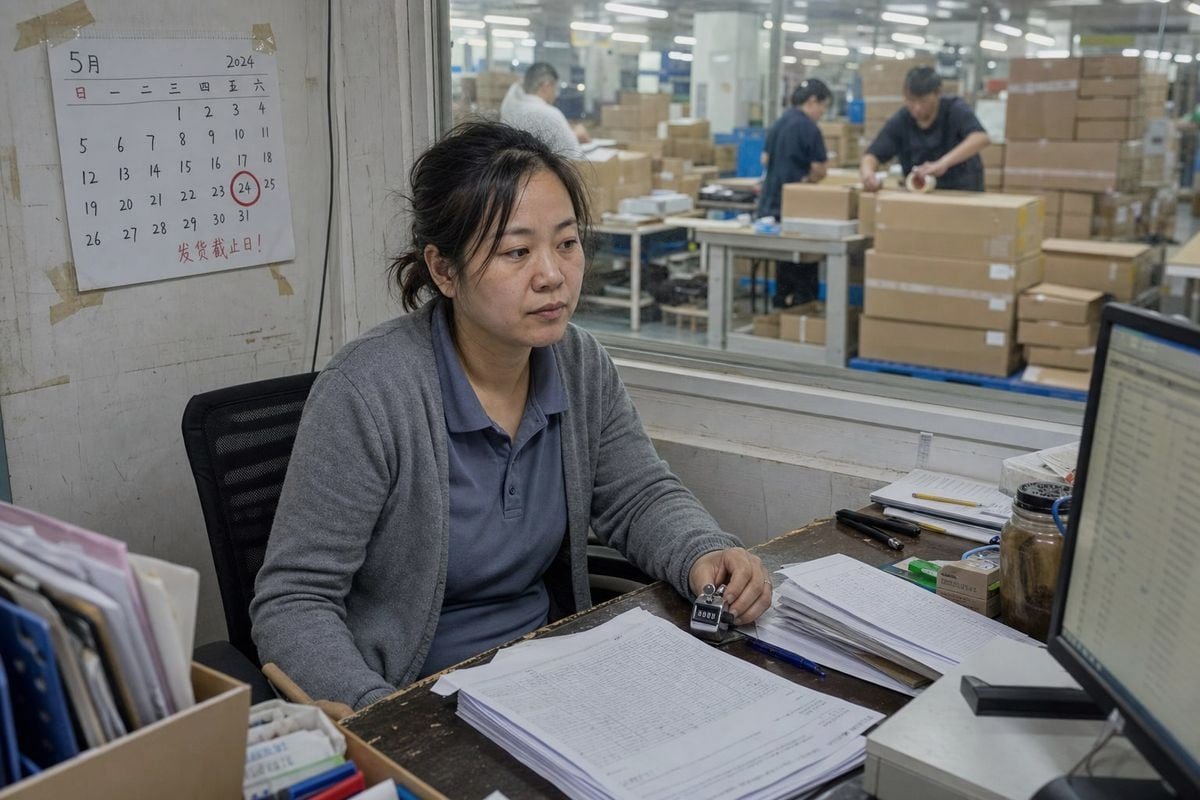
The ASN is not a promise. It is a data snapshot of what is physically inside the container. If you send it before packing is finished, the numbers will drift. Kids sunglasses orders make this worse, not better. A typical order from our Taizhou factory might include ten or more styles — wraparound sport shields, pastel round frames, mirrored lenses — packed in mixed-master or single-SKU cartons. Any last-minute style swap changes carton counts. An early ASN then mismatches the real load, and the receiving team creates exceptions instead of scanning cartons through.
The right sequence for ASN submission
Follow this order every time:
- Finalize packing and count every carton by SKU.
- Generate the packing list from the actual pack-out, not the PO.
- Submit the ASN (often via EDI 856 2) with those final numbers.
- Confirm the ASN references match the booking: container number, seal number, PO.
- Update the ETA as the vessel moves, especially in the last 72 hours.
Why the update step matters
Ocean schedules slip. Port congestion, blank sailings, and customs holds shift arrival windows constantly. An ASN with a stale ETA is almost as harmful as a wrong carton count, because the warehouse plans labor around it. We advise our buyers to track the container through their forwarder's portal and push a revised ETA whenever it moves more than a day.
| ASN Timing Choice | Result |
|---|---|
| Sent at order confirmation | High mismatch risk; counts change during production |
| Sent after pack-out, before departure | Accurate contents; warehouse has weeks to plan |
| Sent after container arrival | Too late; no labor or dock planning possible |
| Sent on time, ETA never updated | Dock booked for the wrong day; rescheduling delays |
What information should I require from my kids sunglasses supplier before booking a receiving appointment?
Before every departure from our 5S-managed workshop, we send buyers a shipment data pack. We learned to do this after one buyer's 3PL rejected a load over a single mismatched PO number.
Require the final packed carton and pallet count, PO number, container and seal numbers, BOL reference, carrier name, per-SKU quantities, packing list, and children's product compliance documents such as UV400 and safety test certificates before booking any receiving appointment.
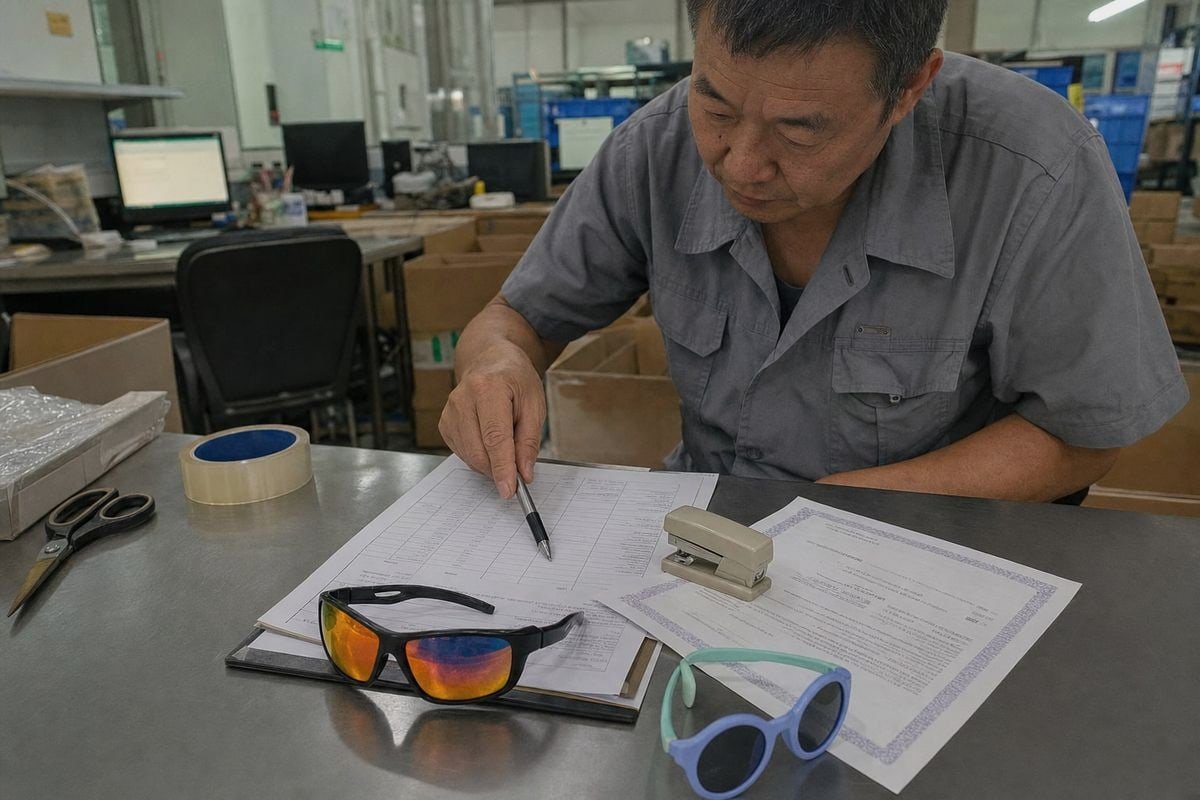
The receiving appointment is only as good as the data behind it. Warehouses check identifiers at check-in, and if the paperwork the driver hands over does not match the appointment request, some facilities will turn the truck away. So the burden falls on you to collect complete, consistent data from your supplier first — and to insist that the same numbers appear on every document.
The supplier data checklist
Here is the minimum set we prepare for every kids sunglasses shipment leaving our factory:
| Data Item | Why the Warehouse Needs It |
|---|---|
| Final carton and pallet counts | Receiving verifies physical counts against the ASN |
| PO number | Links the shipment to the buyer's purchase record |
| Container / trailer / pro number | Ties the appointment to the actual equipment arriving |
| Seal number | Confirms load integrity at check-in |
| Packing list with per-SKU carton breakdown | Enables scan-based receiving of mixed-style cartons |
| BOL and carrier name | Matches paperwork at the gate |
| UV400 3 / safety compliance certificates | Children's eyewear may face extra documentation checks |
| Carton label format confirmation | Barcodes must scan cleanly at the dock |
Why kids eyewear needs extra care here
Children’s sunglasses are lightweight, but they are SKU-heavy. One container might hold a glossy black sport shield with a mirrored orange lens, a periwinkle round frame with mint temples, and a white wraparound with a gradient lens — each in multiple case packs. Receivers use scan-based workflows, not "good enough" counts. Clear carton labels, readable barcodes, and an exact SKU-to-carton map are what let a small-accessory load clear the dock in one pass. We photograph every pallet before it leaves so buyers can resolve any dock dispute with evidence.
How do I avoid warehouse delays when customs clearance and container arrival don't align?
The trickiest calls we get from importers are never about production. They are about a container discharged at port while the customs entry is still pending — with a dock appointment already booked.
Avoid delays by pre-filing the customs entry before container discharge, tracking Last Free Day daily, booking the receiving appointment 5 business days before LFD, and keeping a rebooking plan ready with your drayage carrier if clearance slips past the scheduled slot.

Customs and the warehouse run on separate clocks. The port gives you a Last Free Day before demurrage charges 4 start. The warehouse gives you a fixed appointment window. Your job is to keep the container's release date inside both windows at once. When either one moves, the other must move with it.
Sequence the clearance before the appointment
Work with your customs broker 5 so entry filing and duty payment happen before the vessel arrives, not after discharge. Pre-clearance turns customs from a bottleneck into a formality. If clearance is confirmed early, you can book the dock slot with confidence. If it is uncertain, book toward the later end of your free time rather than the earliest possible day.
Plan for the kids-product inspection factor
Children's products can attract extra scrutiny. CPSIA 6-related checks on lead content, phthalates, and children’s product labeling can trigger inspection holds that adult eyewear rarely sees. We prepare test documentation for our UV400 and polarized lenses 7 in advance and share it with buyers before departure, precisely so their brokers can answer questions fast. Build one or two buffer days into your appointment plan for children's goods. That buffer costs nothing when unused and saves demurrage when needed.
A simple alignment timeline
- Vessel departs — broker receives full document set.
- Five to seven days before arrival — entry pre-filed, duties arranged.
- Five business days before LFD — receiving appointment requested.
- Container discharged — release status confirmed same day.
- Drayage dispatched — arrival timed inside the appointment window.
- Any hold occurs — appointment rescheduled immediately, not after LFD.
The worst pattern is silence. If a hold appears and nobody tells the warehouse, you lose the slot and pay port fees at the same time.
What's the best way to coordinate with my factory to prevent last-minute shipping and appointment conflicts?
Fifteen years of exporting children's eyewear has taught our team one lesson above all: appointment conflicts are usually born weeks earlier, at the factory, not at the port.
Prevent conflicts by locking the packing plan before production ends, agreeing on a fixed document handoff date, getting final carton counts at pack-out, confirming the booking against the appointment lead time, and holding a short pre-departure data check with your factory.

Think of this as a handoff problem across four parties: purchasing, the factory's export team, the carrier, and the warehouse. The ASN is the data bridge between them. When the factory sends complete, final data on a predictable schedule, everything downstream — appointment booking, drayage dispatch, dock check-in — becomes routine.
Set a shared milestone calendar
We give buyers a milestone sheet with every order so both sides know exactly when data changes hands:
| Hito | Momento | Owner |
|---|---|---|
| Packing plan locked (SKUs, case packs, labels) | Before production completes | Buyer + factory |
| Final carton and pallet counts confirmed | At pack-out | Factory |
| Packing list, BOL draft, compliance docs sent | Within 24 hours of pack-out | Factory |
| ASN submitted | Before container departure | Buyer or 3PL |
| Receiving appointment requested | Per warehouse lead time (24h LTL; 5 days pre-LFD for containers) | Buyer or 3PL |
| Pre-arrival reconfirmation | Day before delivery | Buyer + carrier |
Watch the seasonal squeeze
Kids sunglasses peak hard in late spring, early summer, and back-to-school. Distribution centers tighten slot availability in exactly those windows, and a late delivery can mean a stockout on your fastest styles. We encourage buyers to pull shipping dates forward before peak season and to book appointments at the earliest allowed point, not the latest. Because we hold around 800 existing styles, buyers can also split orders — ship proven sellers early and follow with newer styles — instead of gambling everything on one tightly timed container.
Reconfirm the day before
A two-minute check the day before delivery — driver has the paperwork, appointment reference is correct, ETA still holds — catches most last-minute failures while they are still fixable.
Conclusión
Misaligned appointments, ASNs, and containers quietly drain margin through fees and stockouts. Lock the sequence — pack, notify, book, deliver — and your kids sunglasses arrive dock-ready every time.
Notas al pie
1. Explains third-party logistics providers referenced for warehouse and receiving coordination. ↩︎
2. Wikipedia overview of EDI standards clarifies the ASN transmission format mentioned. ↩︎
3. EPA resource on U
Más artículos que te podrían gustar

1 de agosto de 2026
¿Debería la fábrica encargarse del embalaje y etiquetado de las gafas de sol para niños, o utilizar un proveedor designado?

1 de agosto de 2026
Almacén propio vs. Cumplimiento directo del proveedor: ¿Qué reduce los costos de devolución para las marcas de gafas de sol para niños?

1 de agosto de 2026
Directo al almacén del puerto o staging en el extranjero: ¿Cuál ahorra más en el envío de gafas de sol para niños?
¿Buscas un socio confiable en gafas para niños?
Explore más de 800 estilos listos y soporte OEM/ODM completo adaptado a su marca.
Ponte en contacto English
  Español de México
  Deutsch
  Français
  日本語
日本語  العربية
  Português do Brasil