How to Confirm CPSIA Lead Limits for Kids Sunglasses Frames from China?
Confirming Límites de plomo de CPSIA 1 for kids sunglasses frames worries many buyers I meet. One failed shipment can mean customs seizures, recalls, and a damaged brand. Our Taizhou factory sees this fear every week.
To confirm CPSIA lead limits for kids sunglasses frames from China, verify that accessible components contain no more than 100 ppm total lead and surface coatings no more than 90 ppm, backed by third-party testing from a CPSC-accepted laboratory and a Children’s Product Certificate.
That sounds simple. In practice, it is a supply-chain verification process, not one lab test. Let me walk you through how it actually works, step by step.
What CPSIA Lead Limits Apply to Kids Sunglasses Frames?
A procurement manager from Australia once asked me if sunglasses were "just accessories" and exempt. I had to explain gently: her round two-tone kids frames were absolutely children's products.
Kids sunglasses designed for children 12 and under are children's products under CPSIA. Accessible frame components must not exceed 100 ppm total lead content, and any paint or similar surface coating must not exceed 90 ppm lead, certified under 15 U.S.C. § 1278a.
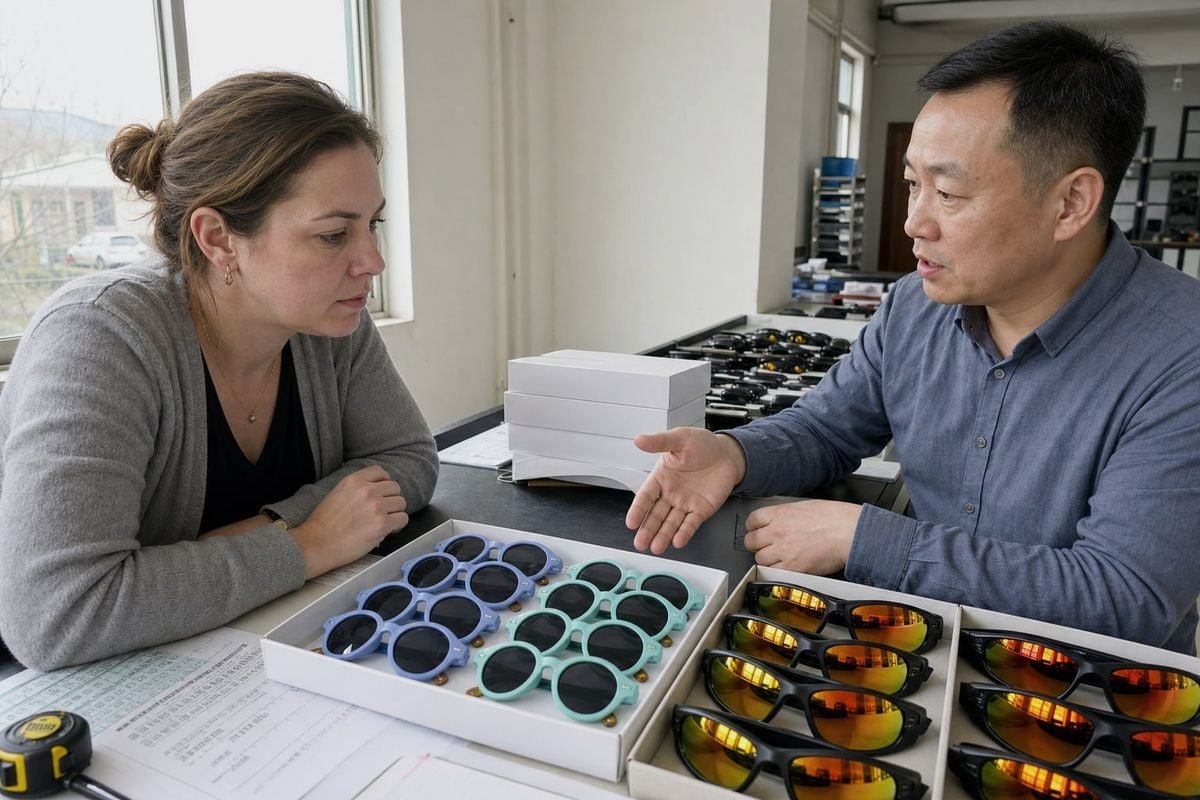
The first question is always whether your product counts as a children's product. The law looks at intended use, not the product category name. If your sunglasses are sized for small faces, sold in playful colors like periwinkle-blue and mint-teal, and marketed to parents of young kids, they are children's products. Some industry voices argue sunglasses can escape CPSIA as fashion accessories. That reading only holds for adult eyewear. Once your marketing, age grading, and labeling 2 target children 12 and under, the lead framework applies. I resolve this objection with buyers by asking one question: who wears it? If the answer is a child, plan for compliance.
The Two Lead Limits You Must Know
The limits are different for the base material and the coating. Many buyers mix them up.
| Requisito | Límite | Applies To |
|---|---|---|
| Total lead content | 100 ppm | Accessible substrate materials: frame plastic, metal hinges, screws, nose pads |
| Lead in paint/coatings | 90 ppm | Paint, lacquer, printed logos, decorative surface coatings |
| Legal citation | 15 U.S.C. § 1278a | Must appear on the Children's Product Certificate |
Why the Limit Is 100 ppm Today
The law originally set 600 ppm, then tightened to 300 ppm, and finally to 100 ppm as technology allowed. That history is useful context, but the practical rule today is simple: 100 ppm for accessible components, 90 ppm for surface coating regulations. Remember also that lead is only one part of the picture. Buyers often ask us about ASTM F963-17 mechanical requirements and límites de contenido de ftalatos at the same time, because a full compliance file 3 covers more than lead alone.
How Can I Verify My Chinese Manufacturer's Lead Compliance Testing?
Early in our fifteen years making children's eyewear, a buyer showed me a "test report" from another supplier. It was two years old and covered a different frame color. That taught me why verification matters.
Verify compliance by requesting a third-party testing report from a CPSC-accepted laboratory, matching the report to your exact SKU, colorway, and production run, confirming all accessible components were tested, and cross-checking the lab's accreditation on the CPSC website.

Reused or expired reports are one of the most common causes of customs problems. A report is only meaningful if it matches your actual production materials. When we run testing for our TR90 and TPEE frames, we test the specific resin batch, the specific coating, and the specific metal hardware that will ship. A similar-looking sample is not good enough. Colors matter too. A glossy black sport frame and a white one may use different masterbatch pigments, so one report cannot cover both.
Un proceso de verificación de cinco pasos
- Confirm the lab is CPSC-accepted. Search the lab's name and accreditation number 4 on the CPSC's public list. If the lab is not listed for lead testing, the report has no legal weight for your CPC.
- Match the report to your order. Check the SKU, frame color, material description, and date. The report should describe your production run, not a generic "kids sunglasses" sample.
- Check the test scope. The report must cover total lead in substrates and lead in surface coatings separately. Ask whether hinges, screws, and printed logos were included.
- Ask for component-level results. A good third-party testing report breaks the product into homogeneous materials and gives a ppm result for each.
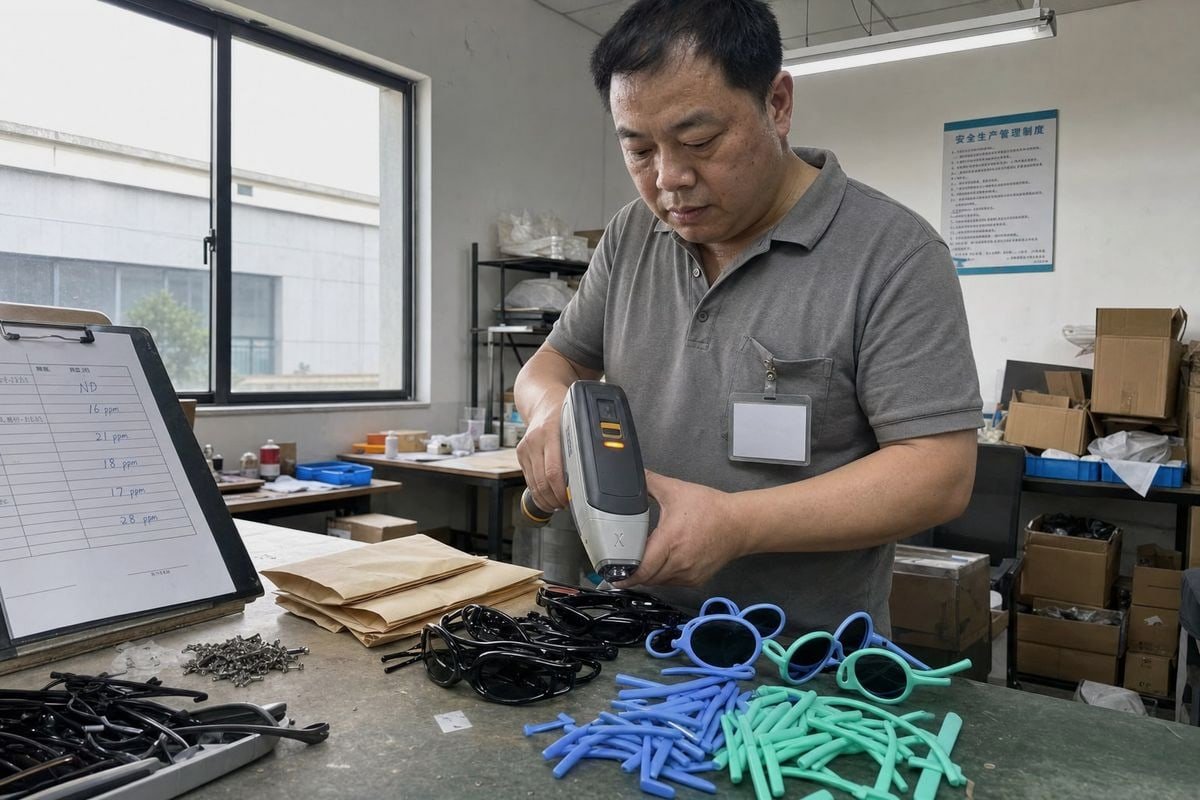
- Consider XRF screening as a gate. We support buyers who want on-site X-ray Fluorescence screening 5 at the factory before bulk shipment. XRF screening is fast and non-destructive. It does not replace CPSC-accepted lab testing, but it catches problems before goods leave China and saves lab costs on obvious failures.
One more objection I hear often: "My supplier already gave me a certificate, so I'm covered." That is risky thinking. Supplier paperwork helps, but the U.S. importer holds the legal obligation. You need your own defensible compliance basis, built on acceptable evidence. A serious factory will welcome that scrutiny. When buyers audit our 5S-managed workshop and question our documentation, we see it as the start of a long-term partnership, not an insult.
Which Materials Help Me Avoid Lead Compliance Risks in Kids Frames?
There is a trade-off we weigh on every new project: material cost versus compliance risk. Cheap mixed-source plastic saves cents per frame. Clean, traceable TR90 and TPEE save you from recalls.
Virgin TR90 and TPEE resins with traceable supply chains carry the lowest lead risk for kids frames. Avoid unverified recycled plastics, leaded brass or machinable steel hardware, and heavy decorative coatings. Certain untreated materials and listed alloys qualify for testing exemptions, but exemptions are narrow.
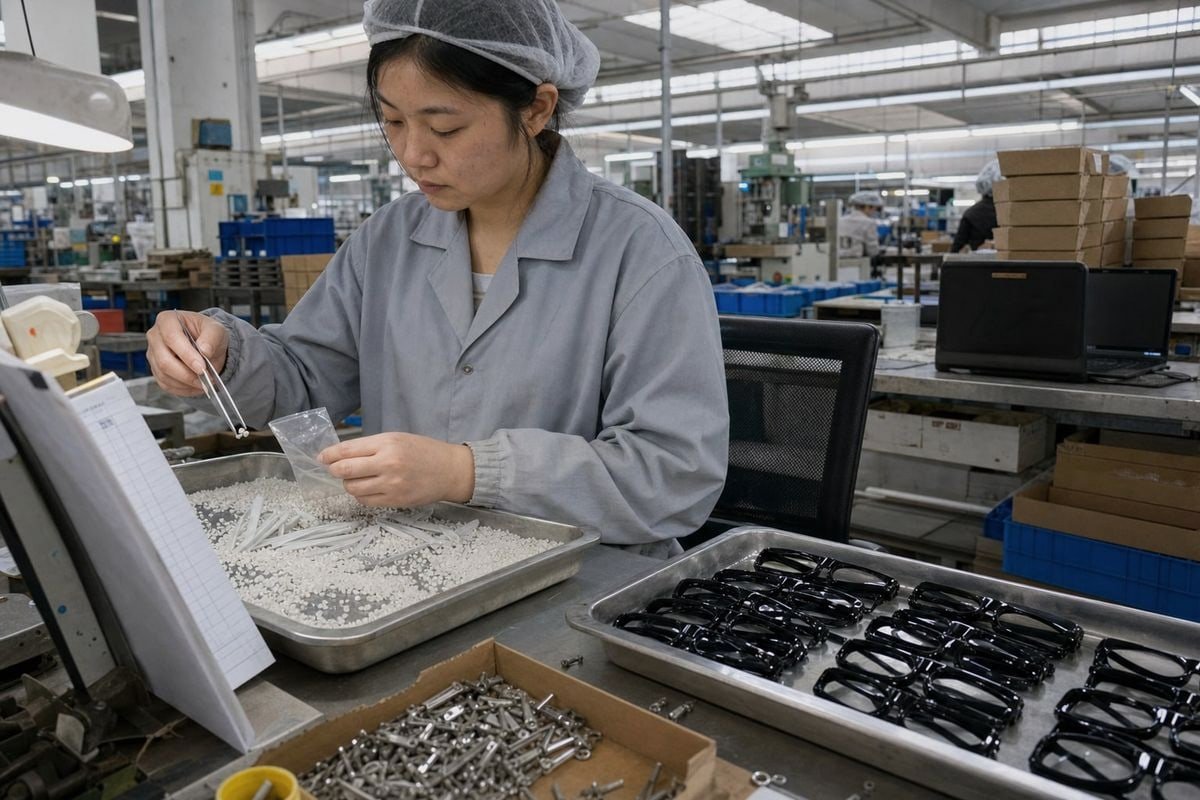
Material choice is your first line of defense. Lead rarely appears in a kids frame by accident when the inputs are controlled. It appears when inputs are not controlled. Here is how the common frame materials compare in our experience producing flexible children's eyewear.
Material Risk Comparison
| Material / Component | Lead Risk Level | Por qué |
|---|---|---|
| Virgin TR90 frame resin | Baja | Clean polymer, stable supply chain, consistent batches |
| Virgin TPEE temples | Baja | Flexible, food-contact-grade options available, traceable |
| Recycled or "eco" plastics | Alta | Legacy chemicals from industrial waste streams can carry lead contamination |
| Painted or lacquered surfaces | Medium–High | Coatings face the stricter 90 ppm limit; cheap pigments are a risk |
| Brass or machined steel hinges/screws | Alta | Lead is often added to alloys to improve machinability |
| Listed stainless steel hardware | Baja | Certain unadulterated alloys are recognized as not exceeding lead limits |
Watch the Small Metal Parts
The frame body gets the attention, but small machined components fail most often. Hinge screws, like the small silver ones visible on our round kids styles, must be specified carefully. We source hardware from vetted suppliers and confirm the alloy grade, because leaded brass is common in general hardware markets.
Exemptions Are Real, but Narrow
CPSC recognizes that certain untreated materials and specific metals, including some stainless steels and precious metals, do not exceed lead limits if they have not been treated or adulterated. This can reduce your testing burden. But two cautions apply. First, exemption from testing is not exemption from the limit itself. You still certify compliance in your CPC. Second, any added coating, electroplating, solder, or filler is a separate component that needs its own review. A note on recycled materials: sustainability sells, and we support eco-friendly directions, but recycled resins need more frequent substrate material testing, not less, because the original waste stream is unknown.
What Documentation Should I Request Before Placing My Order?
A Japanese baby-brand buyer once sent us a two-page documentation checklist before her first purchase order. I appreciated it. Prepared buyers get smoother shipments, and her list mirrors what we now proactively offer.
Request a Children's Product Certificate template, current third-party test reports from a CPSC-accepted laboratory, a full bill of materials, supplier material declarations, tracking label samples, and written confirmation that production materials will match tested materials, all before payment.

Your compliance file is what protects you when customs, a marketplace, or a retailer asks questions. Build it before the goods ship, not after. From mid-2026, CPC data must also be electronically filed with U.S. Customs through the ACE eFiling system at the time of entry, so incomplete paperwork will stop shipments faster than ever. Here is the file we help our buyers assemble.
The Importer's Compliance File
| Documento | Lo que demuestra | When to Request |
|---|---|---|
| Certificado de Producto Infantil | Certifies compliance with lead limits under 15 U.S.C. § 1278a and other applicable rules | Draft before order; final at shipment |
| Third-party test reports | Actual lead results per accessible component from an accepted lab | Before order; updated per production run |
| Lista de materiales (BOM) | Every component and material in the frame, including hardware and coatings | Before order |
| Declaraciones de materiales | Supplier statements on resin grade, pigments, coatings, alloy specs | Before order |
| Tracking label sample | Permanent label with manufacturer, date, location, batch/lot number | At sampling stage |
| Production consistency record | Confirmation that bulk goods match tested samples | Before shipment |
Tracking Label Requirements Deserve Attention
Every pair and its packaging needs a permanent tracking label identifying the manufacturer, production date and location, and batch information. We mold or print this for our OEM clients, and it also supports traceability if any question ever arises. Tracking label requirements are easy to forget at the sampling stage and painful to fix after molding.
Match Scope to Your Range
If you order multiple colorways from our catalog of roughly 800 existing styles, confirm which test reports cover which colors and materials. Testing one style and assuming the rest comply is a classic mistake. So is ignoring "smart" features. If your kids sunglasses ever include UV sensors or electronics 6, internal circuitry and solder introduce lead risks that standard eyewear product safety compliance protocols overlook. Finally, put material consistency 7 into your purchase order terms. A written commitment that production materials will not change without notice gives your compliance file real teeth.
Conclusión
CPSIA lead compliance failures destroy shipments and brands. The fix is verification: 100 ppm and 90 ppm limits, accepted-lab testing, matched reports, and a complete documentation file. Our team at OKAY EYEWEAR builds that file with every buyer.
Notas al pie
1. Official CPSC guidance on lead limits for children’s products. ↩︎
2. CPSC guidance on identifying products intended for children 12 and under. ↩︎
3. Official explanation of the mandatory Children’s Product Certificate (CPC). ↩︎
4. Searchable database of laboratories accredited by the CPSC. ↩︎
5. Scientific explanation of XRF technology used for material analysis. ↩︎
6. Scientific overview of UV measurement and sensor technology. ↩︎
7. International standards for quality management and production consistency. ↩︎
Más artículos que te podrían gustar

1 de agosto de 2026
¿Debería la fábrica encargarse del embalaje y etiquetado de las gafas de sol para niños, o utilizar un proveedor designado?

1 de agosto de 2026
Almacén propio vs. Cumplimiento directo del proveedor: ¿Qué reduce los costos de devolución para las marcas de gafas de sol para niños?

1 de agosto de 2026
Directo al almacén del puerto o staging en el extranjero: ¿Cuál ahorra más en el envío de gafas de sol para niños?
¿Buscas un socio confiable en gafas para niños?
Explore más de 800 estilos listos y soporte OEM/ODM completo adaptado a su marca.
Ponte en contacto English
  Español de México
  Deutsch
  Français
  日本語
日本語  العربية
  Português do Brasil