How to Choose Kids Optical Frames to Control Lens Edge Thickness?

Choosing kids optical frames to control lens edge thickness is a challenge we hear about weekly on our production line flexible TR90 1. Thick lens edges make glasses heavy, ugly, and unworn. Children then refuse them, prescriptions go uncorrected, and parents blame the brand. The good news: frame size, shape, and material can fix most of it before the lens lab ever gets involved.
To control lens edge thickness in kids optical frames, choose the smallest full-rim frame that fits comfortably, match the frame’s geometric center to the child’s pupillary distance, prefer round or oval shapes for minus prescriptions, and use acetate or TR90 rims thick enough to conceal the lens edge.
That answer covers the essentials. But each of those decisions has trade-offs. Let me walk you through them one at a time, the way I would with a new buyer.
How do I choose the right frame shape to keep my child's lenses from looking too thick?
A buyer from Australia once asked me why the same -5.00 prescription looked bulky in one of our frames and nearly invisible in another. The answer was pure geometry, not lens quality.
Choose round frame shapes or soft ovals for high minus prescriptions, because they remove the corner "dead space" where edge thickness peaks. Avoid sharp rectangles for strong minus lenses. For high plus prescriptions, compact ovals keep the center bulge and overall lens weight under control.
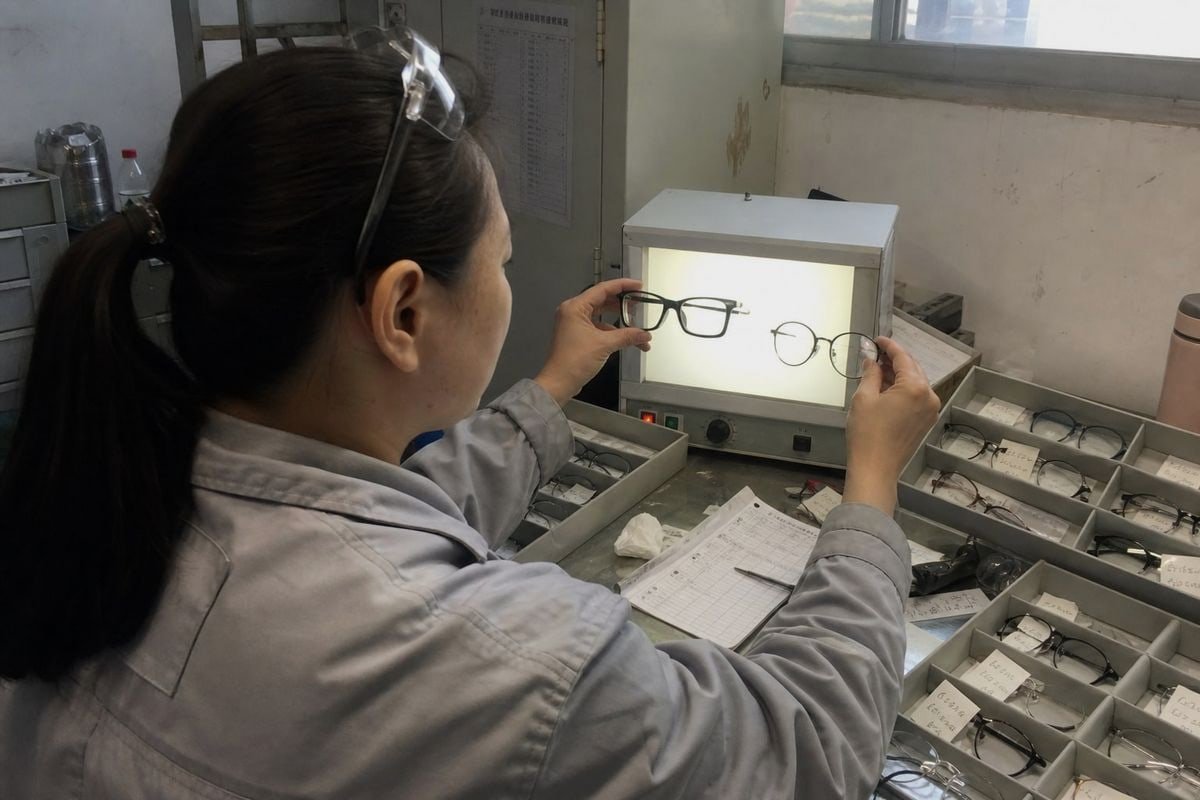
Here is the core optical fact in plain terms. A minus lens gets thicker the farther you travel from its optical center. A rectangular frame pushes material de la lente 2 out into the corners, far from the pupil. Those corners become the thickest, most visible points of the whole lens. Round frame shapes simply cut that material away before it exists.
Why corners are the enemy
Think of the lens as a hill that rises toward its edge. A round frame cuts a circle near the base of the hill. A sharp rectangle reaches into the steepest zones at each corner. That is why opticians talk about effective diameter, not just lens width. A frame with a low effective diameter keeps every point of the lens closer to the optical center, so the edging process removes the thickest material.
Matching shape to prescription
| Prescription type | Best shapes | Shapes to avoid | Por qué |
|---|---|---|---|
| High minus (myopia) | Round, soft oval, tapered | Sharp rectangles, aviator-style | Corners expose maximum edge thickness |
| High plus (hyperopia) | Compact oval, gentle rectangle | Oversized any shape | Large lenses add center bulk and weight |
| Moderate astigmatism | Symmetrical rounded shapes | Very wide shapes | Cylinder axis can thicken one edge zone |
One nuance worth flagging: some guides suggest rectangular or oval shapes for prescriptions above +3.00. In our experience, that advice only works when the frame stays small and well centered. Shape is a secondary lever. Size and centration come first, and we design our children's collections around that priority.
Vertical depth matters too. Parents focus on width, but a very tall lens shape also adds material, weight, and visible thickness. Keep the depth moderate — with one caveat we will cover later for myopia-control lens designs.
What frame materials help me minimize edge thickness for high-prescription kids' glasses?
There is a trade-off we weigh on every new mold: a chunkier rim hides more lens edge, but adds weight to a small nose. Fifteen years of tooling TR90 and TPEE frames taught us where the balance sits.
Full-rim plastic frames — acetate, TR90, or similar polymers — conceal lens edges far better than thin metal, semi-rimless, or rimless styles. A rim profile of a few millimeters physically hides the beveled edge, while flexible TR90 keeps the frame light and safe for children.
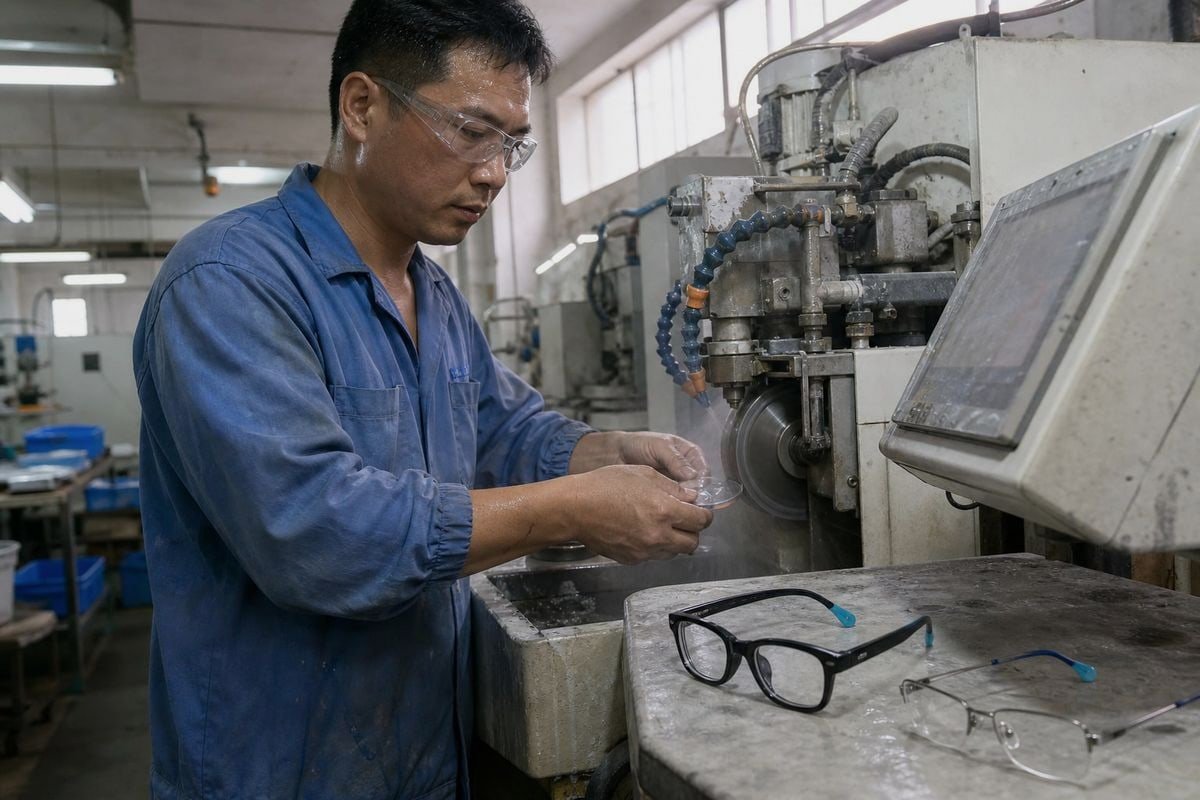
The material question is really two questions: what hides the lens, and what survives a child. Let me separate them.
Hiding the edge
A thick lens edge protrudes past a thin metal rim 3 like a shelf. A full plastic rim, by contrast, wraps around the lens groove and swallows several millimeters of edge. During lens beveling, the lab can also position the bevel toward the front of the lens edge, pushing most of the thickness behind the rim where nobody sees it. That trick only works when the rim has enough depth to hide behind — which is exactly why we spec deeper eyewire grooves on our high-prescription-friendly styles.
Rimless and semi-rimless frames do the opposite. They expose the full lens edge on at least one side. For high plus lenses, drilled rimless mounts add a second problem: the lens edge can be too thin to hold the drill points securely.
Comparing frame materials for high prescriptions
| Material | Edge concealment | Peso | Flexibility & safety | Lo mejor para |
|---|---|---|---|---|
| Acetate (full rim) | Excelente | Moderado | Rigid, can snap | Style-led lines, older kids |
| TR90 | Muy buena | Muy ligero | Highly flexible | Active kids, everyday wear |
| TR90 + TPEE temples | Muy buena | Muy ligero | Extremely flexible | Toddlers, high-energy wearers |
| Thin metal full rim | Regular | Ligero | Bendable, needs adjusting | Mild prescriptions |
| Rimless / semi-rimless | Pobre | Muy ligero | Fragile for kids | Not recommended for high Rx |
One objection buyers raise: "Won't a thicker plastic rim look heavy on a small face?" Modern polymers solve this. Our TR90 frames carry a substantial rim profile while weighing less than most thin metal frames. The two-tone styles in our range — glossy fronts with soft silicone-tipped temples — deliberately use the rim's visual weight as a design feature, so hiding a thick edge looks intentional, not corrective.
The frame material also pairs with the lens material. Impact-resistant polycarbonate lenses remain the default for kids, while Material Trivex 4 offers better optical clarity at similar safety levels. A full rim supports either choice; a rimless mount limits both.
How small should I go with frame size to reduce lens edge thickness without sacrificing fit?
During a QC review last year, we measured demo lenses cut for two frames with identical prescriptions. The frame just 4 mm wider per eye produced noticeably thicker temporal edges. Small numbers, big visual difference.
Choose the smallest frame eye size that fits the child's face comfortably, with the frame's boxed center distance matching the child's pupillary distance as closely as possible. Keep lens decentration under 3–4 mm per eye, and never buy a frame for the child to "grow into."
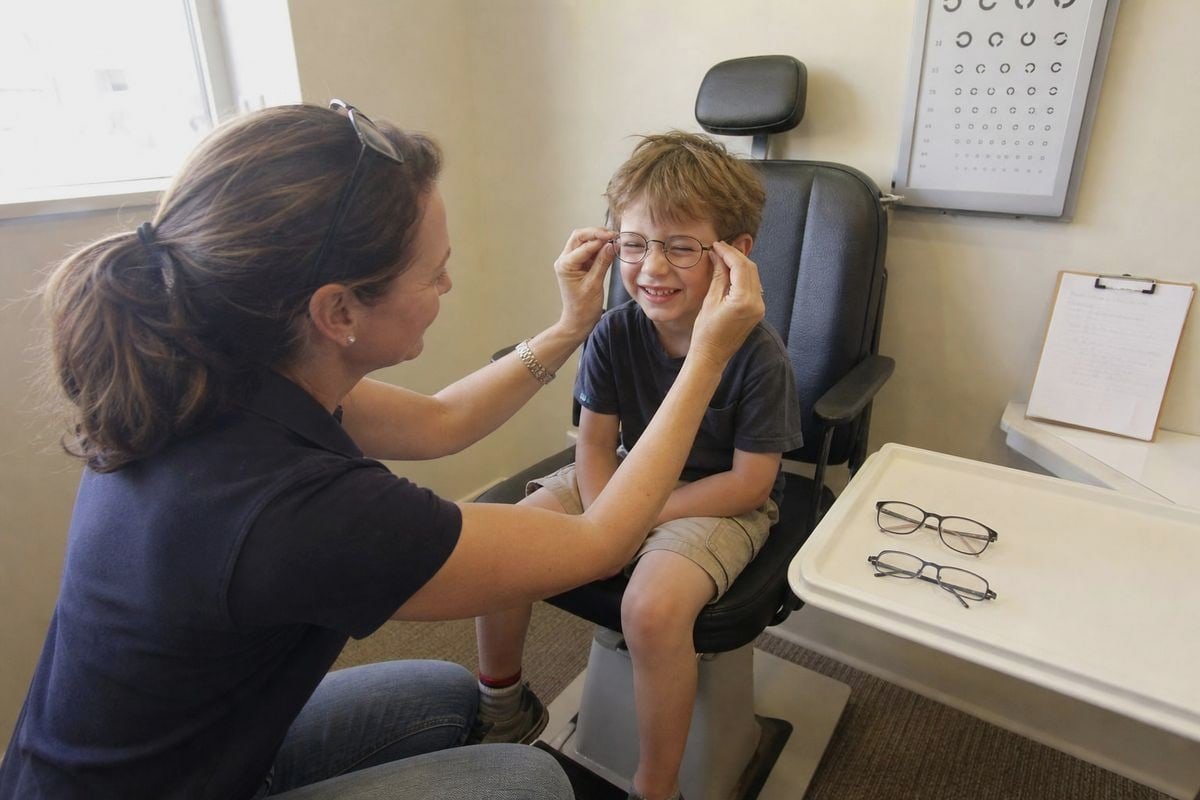
Frame size is the single most powerful lever you control, and it works through one mechanism: lens decentration. Every millimeter the child's pupil sits away from the geometric center of the lens opening forces the lab to shift the lens blank. That shift drags thicker peripheral lens material into the frame.
The PD-matching rule
Pediatric dispensing guides put it simply: pick a frame whose boxed center distance is close to the child's pupillary distance. If a child has a PD of 54 mm and the frame's eye size plus bridge totals 62 mm, each lens gets decentered 4 mm inward — the upper limit of what fitting guides consider acceptable. Beyond that, edge thickness climbs fast and can even induce unwanted prism effects.
Here is a quick worked check any buyer or parent can do:
- Take the frame's eye size (lens width) and bridge width from the temple marking, for example 46-16.
- Add them: 46 + 16 = 62 mm. That is the frame PD.
- Subtract the child's PD: 62 − 54 = 8 mm total, or 4 mm per eye.
- If the per-eye figure exceeds 3–4 mm, choose a smaller frame.
Why "room to grow" backfires
The temptation is real: kids grow, glasses are replaced yearly, so why not buy big? Because an oversized frame fails twice. Optically, it increases decentration and edge thickness immediately. Physically, a too-wide frame sits loose, slides down the nose, and gets knocked off during play. When a lens slides down even slightly, the child looks through an off-center zone, which distorts peripheral vision and makes the edges appear thicker from every angle. A stable bridge fit is not a comfort luxury — it is part of the optical system. This is exactly why our children's frames run in tight size gradations rather than one "kids' size," so importers can offer a genuine fit across age groups instead of forcing a compromise.
Can I work with my manufacturer on lens index and frame design together to control edge thickness?
Early in our OEM work, we treated frames and lenses as separate conversations. A European optical client corrected us: the biggest thickness wins came when both were specified together. We have designed that way ever since.
Yes — coordinating frame design and lens specification is the most effective approach. Pair a small, PD-matched frame with an appropriate high index or Trivex lens, request digital freeform surfacing optimized for the exact frame shape, and confirm the frame depth suits any myopia-control lens design.
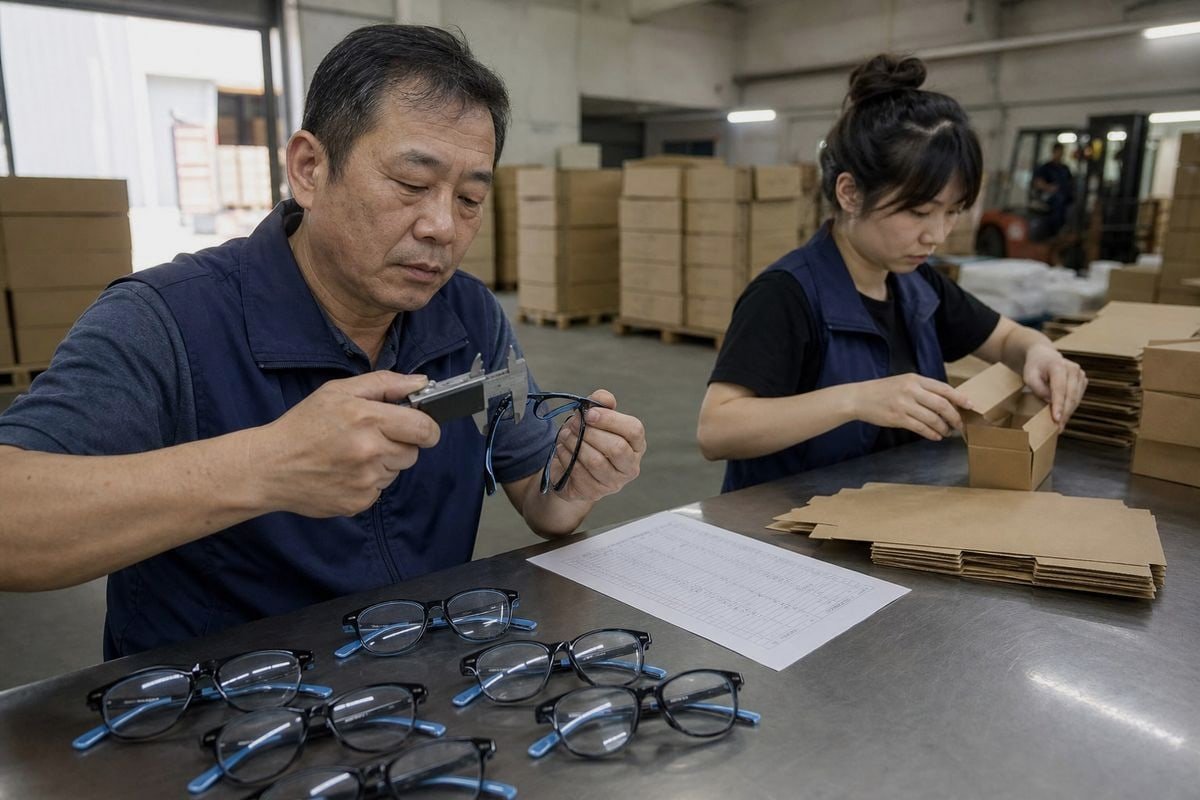
Frame selection is the visible first step, but the lens order form is where the remaining thickness gets engineered out. A good manufacturing partner should be fluent in both sides.
What to align with your supplier
| Decision | Frame side | Lens side | Combined benefit |
|---|---|---|---|
| Dimensionamiento | Small eye size, low effective diameter | Smaller lens blank needed | Less edge material overall |
| Centration | Frame PD close to child's PD | Optical center on pupil | Minimal decentration thickness |
| Index & material | Rim depth to hide edge | High index lenses, polycarbonate, or Trivex | Thinner and safer together |
| Surfacing | Exact shape data supplied | Digital freeform optimization | Material shaved per frame shape |
| Special designs | Adequate vertical depth | Myopia-control treatment zones | Peripheral zones not cut off |
A few points deserve emphasis. High index lenses help, but they are not a substitute for a well-sized frame — a -6.00 lens in an oversized rectangle will look thick at any index. For a strong high minus prescription, aspheric or atoric lens designs flatten the profile further, and an anti-reflective coating 5 reduces the visible "rings" inside the edge. For extreme plus powers, labs can use lenticularization, placing the prescription only in a central aperture to cut weight and center bulge dramatically.
One modern caution: myopia-control lenses carry peripheral treatment zones. If the frame's vertical depth is too shallow, edging can cut those zones off. This is the exception to "keep frames small" — the frame must stay compact horizontally while preserving the minimum depth the lens design requires. When our ODM clients develop myopia-management lines, we check this dimension at the design stage, alongside custom colors, logos, and packaging. Choosing from an existing catalog of proven kid-fit shapes also lets a brand test high-prescription-friendly styles without investing in new molds first.
Conclusión
Thick edges make kids abandon their glasses. The fix starts with the frame: small, round-leaning, full-rim, PD-matched — then let coordinated lens choices finish the job. Choose frames first, and thickness stops being a problem.
Notas al pie
1. Technical data on Nylon 12 (TR90), a high-performance polymer used in flexible and lightweight eyeglass frames. ↩︎
2. Authoritative comparison of different lens materials and their optical properties from the American Academy of Ophthalmology. ↩︎
3. Professional guidance on selecting eyeglass frame materials based on durability and prescription requirements. ↩︎
4. Leading eye health organization detailing the safety and clarity benefits of Trivex for pediatric eyewear. ↩︎
5. Clinical overview of how anti-reflective coatings minimize reflections and improve the aesthetic appearance of lenses. ↩︎
Más artículos que te podrían gustar

5 de agosto de 2026
Bio-Based vs Regular Cellulose Acetate: What's the Difference for Kids' Frames?

5 de agosto de 2026
How Recyclable Are Kids' Optical Frame Materials, and What Eco-Friendly Alternatives Exist?

5 de agosto de 2026
Do Kids Optical Frames Whiten or Age in Storage, and How to Control Warehouse Conditions?
¿Buscas un socio confiable en gafas para niños?
Explore más de 800 estilos listos y soporte OEM/ODM completo adaptado a su marca.
Ponte en contacto English
  Español de México
  Deutsch
  Français
  日本語
日本語  العربية
  Português do Brasil