How to Calculate Acceptable Supply Price for Kids Optical Frames From Retail Price?

Buyers ask me weekly how to calculate an acceptable supply price for kids optical frames. Many overpay because they judge factory quotes in isolation, and margins quietly collapse after our containers ship.
To calculate an acceptable supply price for kids optical frames, start from your target retail price, multiply by (1 − target gross margin) to get maximum landed cost, then subtract freight, duties, compliance testing, packaging, and QC allowances. The remainder is your supply price ceiling.
That is the short answer. Below, I break the math into steps, show worked examples, and explain the hidden costs that catch new buyers.
How do I calculate the right markup multiplier for kids optical frames before setting my retail price?
A distributor in Australia once asked me why his margin looked healthy on paper yet vanished at year-end. His markup multiplier was the culprit, not our quote.
Most kids optical frames need a 3x to 5x markup from landed wholesale cost to retail price. Divide your intended retail price by your fully landed cost per unit; if the result falls below 3x, your supply price is too high for sustainable retail economics.
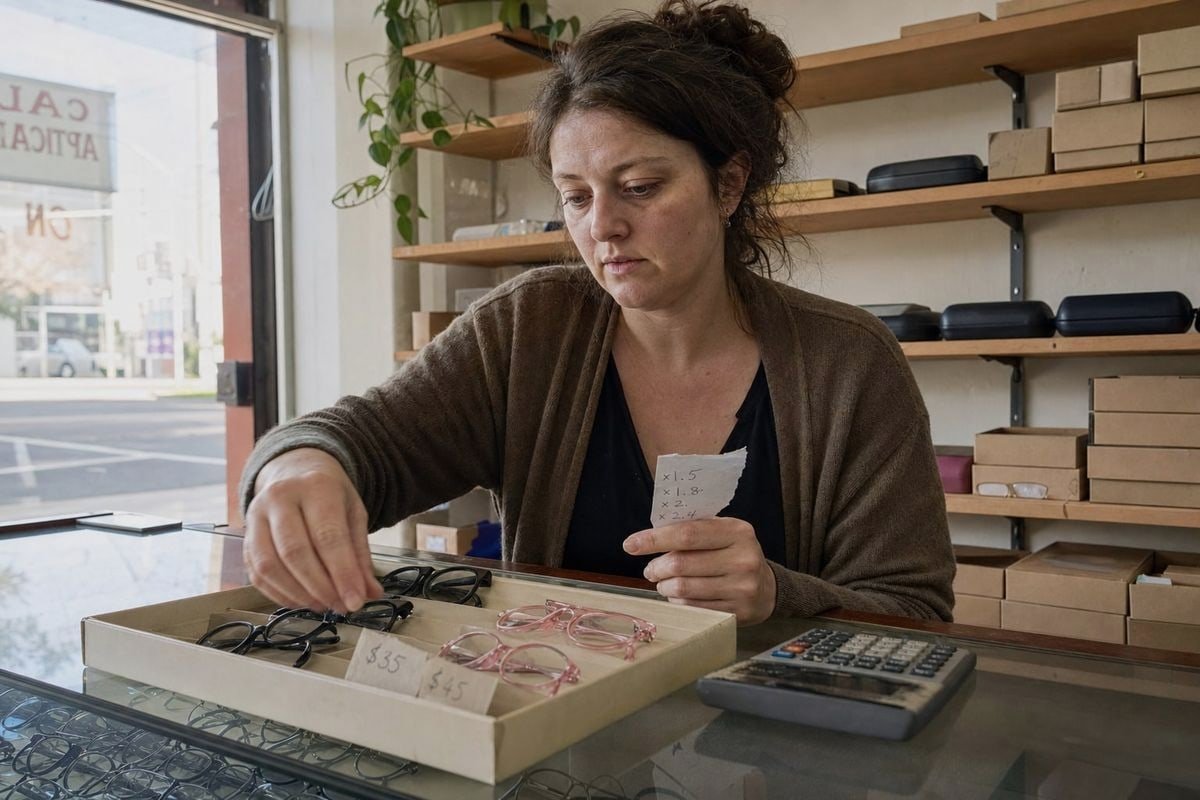
The markup multiplier is the bridge between what you pay and what your customer pays. It must cover far more than the frame itself. It carries your operating overhead, marketing, returns, slow-moving stock, and profit. For children's eyewear, it must also absorb a higher breakage and replacement rate than adult frames.
Markup vs gross margin — don't confuse them
Markup is retail price divided by cost. Gross profit margin 1 is profit divided by retail price. A 4x markup equals a 75% gross margin. Many new buyers mix these up and accidentally price themselves 20 points below where they think they are.
| Markup Multiplier | Gross Profit Margin | Uso típico |
|---|---|---|
| 2x (keystone markup) | 50% | Wholesale distribution, high volume |
| 3x | 66.7% | Online kids eyewear brands |
| 4x | 75% | Independent optical shops |
| 5x | 80% | Premium boutiques, managed vision care buffers |
How to choose your multiplier
Work through three questions. First, what does your channel demand? Optical shops carrying dispensing overhead need 4x or more. E-commerce brands can survive at 3x. Second, what do managed vision care plans pay in your market? If a plan reimburses a percentage of charge, your retail price must be high enough that the discounted amount still covers your cost of goods sold. Third, what replacement policy will you offer? In our fifteen years supplying flexible TR90 material 2 frames, we have seen brands succeed by building one guaranteed "kid-proof" replacement into the initial markup — effectively treating the supply price as 1.5x the unit cost when they set retail.
Once you fix the multiplier, the acceptable supply price falls out of the arithmetic. Retail price of $60 at 4x means a landed cost ceiling of $15, before you even subtract logistics.
What factors should I consider when my supplier's quote seems too low or too high for the retail price I want?
During a factory audit last spring, a European buyer showed me a competitor's quote that was 30% below ours. I asked one question: does it include hinge cycle testing and Documentación CPSIA 3? It did not.
Judge a quote against your landed cost ceiling, not against other quotes. A low price may hide missing compliance testing, weaker TR90 material, or thin packaging; a high price may be justified by lower defect rates, better fit, and fewer warranty replacements downstream.

A quote is only meaningful once you translate it into landed cost and compare it with your retail-driven ceiling. A $3.50 FOB frame with a 6% defect rate can cost you more than a $4.20 frame with a 1% defect rate, once returns, replacements, and lost customers are counted.
When a quote seems too low
Ask what was removed to reach that price. Common culprits include recycled or blended raw material instead of virgin TR90, no third-party impact testing 4, skipped salt-spray tests on metal parts, generic polybags instead of retail-ready packaging, and no age-grade labeling capability. For children's products, safety testing is not optional. At our Taizhou workshop, we treat compliance as a fixed cost per SKU, because customs seizures and recalls destroy brands faster than any margin gain.
When a quote seems too high
A higher supply price can still be acceptable if it buys measurable value. Consider these trade-offs:
- Durabilidad: flexible TPEE temples and spring-free flex hinges cut breakage returns, which directly protects your gross profit margin.
- Fit quality: correct pediatric bridge sizing reduces returns from parents whose kids refuse to wear the frames.
- MOQ flexibility: paying slightly more per unit on a 300-piece trial order beats committing to 3,000 pieces of an unproven style.
- Existing molds: choosing from a factory's existing style library — we maintain around 800 — avoids $1,500–$3,000 mold investments that inflate your true per-unit cost.
The decision rule is simple. Recalculate the landed cost with the real quote and real inclusions. If it still sits under your ceiling, accept it. If not, negotiate scope, volume, or specification — not just price.
How can I use standard industry margin ratios to estimate a fair FOB price for my target market?
Our sales team keeps a reverse-pricing spreadsheet open during every quotation call. It starts with the buyer's shelf price, never with our cost sheet, and it has saved many negotiations from stalling.
Take your target retail price and multiply by (1 − target gross margin), typically 65% to 75% for kids frames. Then subtract 15% to 30% for freight, duties, testing, and packaging. The result is a fair FOB price ceiling for your market.
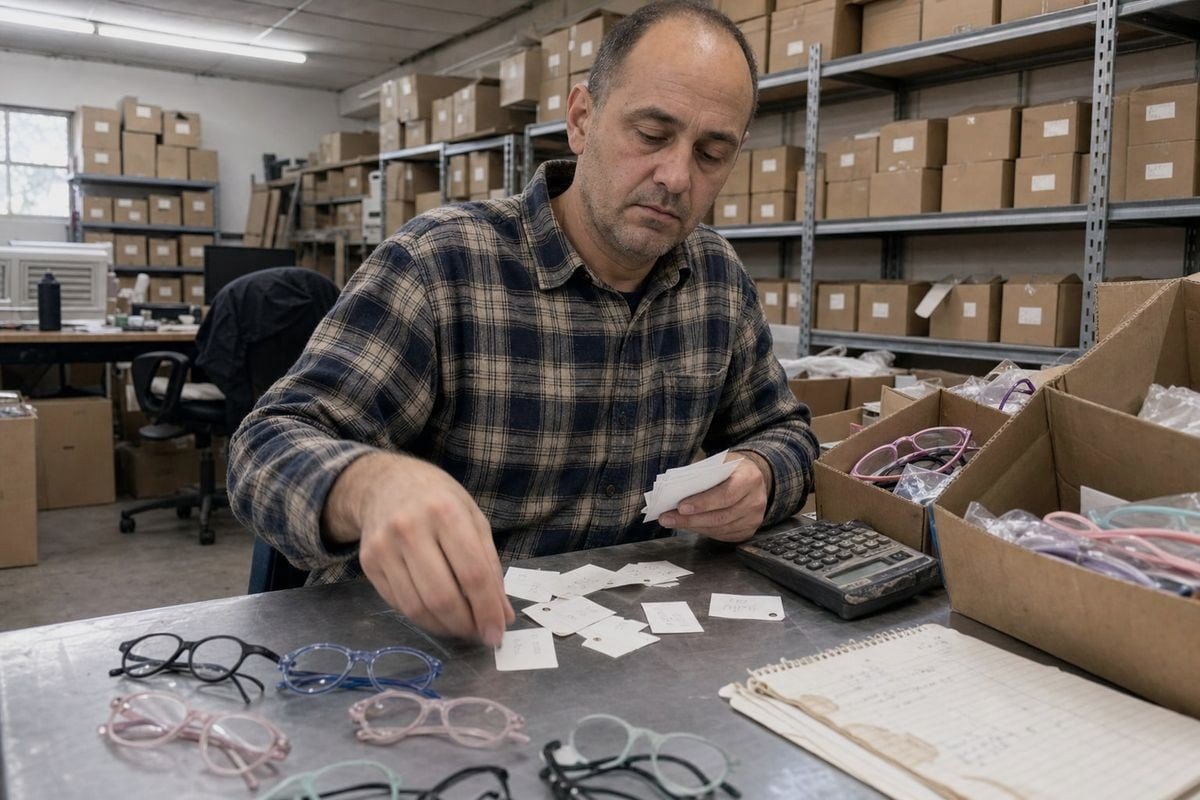
This is the "work backward" method, and it is the most reliable way to anchor sourcing decisions in retail reality. Let me walk through two worked examples so the arithmetic is concrete.
Worked example one: budget retail at $49.99
| Line Item | Amount |
|---|---|
| Target retail price | $49.99 |
| Target gross margin (60%) | −$30.00 |
| Maximum landed cost | $20.00 |
| Inbound freight and duties | −$2.50 |
| Compliance testing allocation | −$1.50 |
| Packaging and QC | −$1.00 |
| Maximum acceptable FOB supply price | $15.00 |
If a factory quotes $16.80, you have three options: increase order volume to dilute fixed costs, simplify the specification, or accept a slightly lower margin because the frame's durability reduces replacement losses.
Worked example two: premium retail at $89.99
| Line Item | Amount |
|---|---|
| Target retail price | $89.99 |
| Target gross margin (65%) | −$58.49 |
| Maximum landed cost | $31.50 |
| Logistics and compliance | −$5.00 |
| Maximum acceptable FOB supply price | $26.50 |
Notice the premium example leaves generous headroom. Custom OEM children's TR90 frames commonly run $1.50–$4.00 FOB at MOQ, so premium positioning lets you afford policarbonato 5, upgraded hinges, bio-based materials 6, and branded retail packaging — and parents will often accept a 15% to 20% higher retail price for eco-friendly pediatric products. Also set a minimum list price floor for optical channels, often $150–$200 with prescription lenses included, so insurance discounts and wholesale allowance deductions never turn a sale into a net loss.
The costliest lesson I have watched buyers learn involves a first shipment that landed 22% over budget. Every single overage was foreseeable — none of it appeared on the factory quote.
Hidden costs include inbound freight, customs duties, third-party safety testing, retail packaging, pre-shipment QC, payment fees, defect losses, and licensing royalties. Together they typically add 15% to 30% to the base FOB price, so subtract them before setting your supply price ceiling.
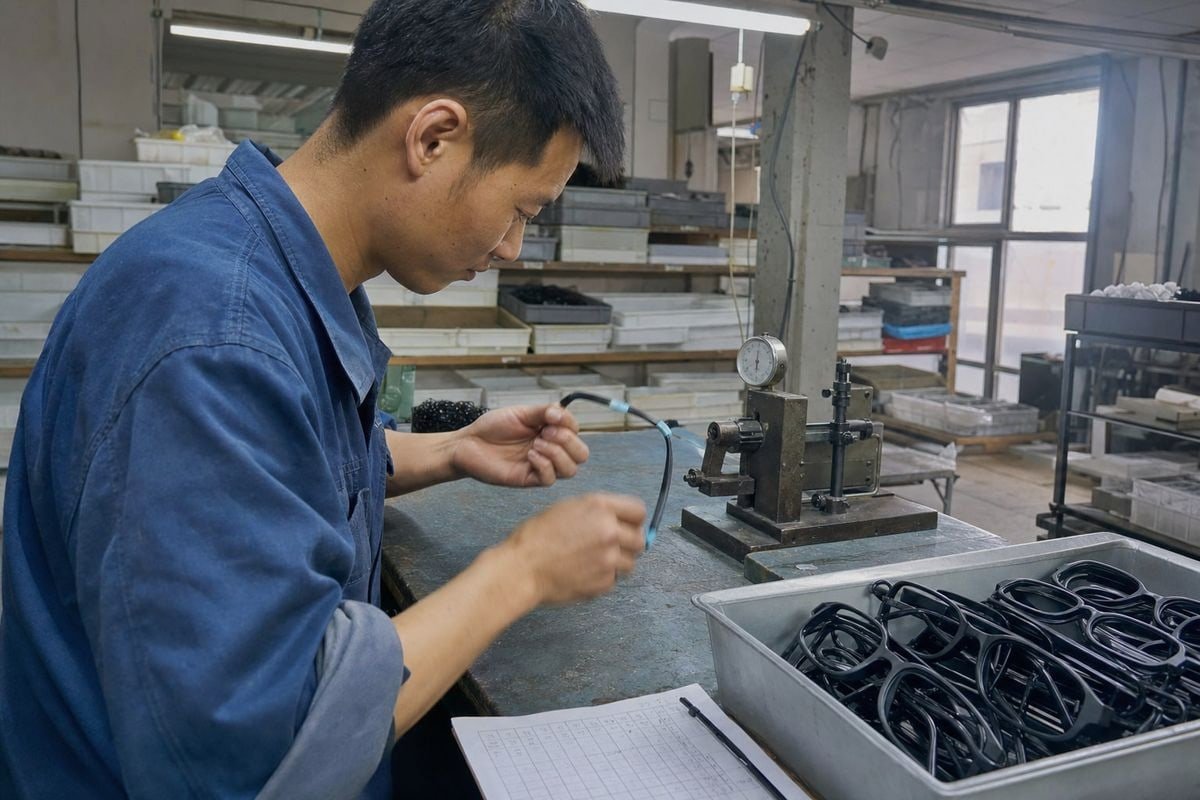
Landed cost is the true number your margin lives or dies on. Here is a checklist of the items most often missed, roughly in the order they hit your invoice.
The landed cost stack
- Freight and insurance. Sea freight is cheap per unit at volume, but a 200-piece trial order shipped by air can add $1–$2 per frame.
- Customs duties and brokerage. Duty rates 7 vary by market and material classification; budget for them per unit, not as an afterthought.
- Compliance testing. CPSIA, REACH, and impact testing run roughly $300–$800 per SKU. Spread across a 300-piece MOQ, that is $1.00–$2.70 per frame. Across 3,000 pieces, it becomes negligible — this is why order size changes the acceptable supply price.
- Embalaje y accesorios. Branded cases, cloths, and retail-ready boxes add real cost but also justify higher retail prices.
- QC and defect allowance. Budget 1–3% for inspection and rejected units, even with a disciplined 5S-managed factory.
- Payment and currency fees. Wire fees and FX spreads shave another fraction of a percent.
- Licensing royalties. If your kids line carries a character or sports license, royalties of 8–12% of wholesale come straight out of your margin.
Order size changes everything
At our factory, typical MOQ for custom OEM children's frames is 300–500 pieces per style, and we encourage new brands to run trial orders of 100–200 pieces across 3–5 existing styles first. The per-unit hidden costs are higher on trials — accept that deliberately, validate sell-through, then scale so fixed costs dilute and your true supply price ceiling relaxes.
The practical rule: build a landed cost model once, in a spreadsheet, and run every quote through it before you reply to any supplier.
Conclusión
Calculate the acceptable supply price for kids optical frames backward from retail: fix your margin, subtract every landed cost, and treat the remainder as your ceiling — never let a factory quote set your price.
Notas al pie
1. Wikipedia clarifies the gross margin concept the article uses to distinguish it from markup. ↩︎
2. TR90 is a flexible nylon-based copolymer; background on nylon materials aids buyer understanding. ↩︎
3. Official CPSC page explains the U.S. children’s product safety law referenced in the article. ↩︎
4. ASTM sets the impact testing standards referenced for children’s eyewear safety compliance. ↩︎
5. Background on polycarbonate explains why it’s favored for durable, impact-resistant kids’ lenses. ↩︎
6. USDA BioPreferred program is the authoritative source on bio-based product materials mentioned. ↩︎
7. WTO explains customs tariff structures relevant to calculating duty costs in landed pricing. ↩︎
Más artículos que te podrían gustar

5 de agosto de 2026
Bio-Based vs Regular Cellulose Acetate: What's the Difference for Kids' Frames?

5 de agosto de 2026
How Recyclable Are Kids' Optical Frame Materials, and What Eco-Friendly Alternatives Exist?

5 de agosto de 2026
Do Kids Optical Frames Whiten or Age in Storage, and How to Control Warehouse Conditions?
¿Buscas un socio confiable en gafas para niños?
Explore más de 800 estilos listos y soporte OEM/ODM completo adaptado a su marca.
Ponte en contacto English
  Español de México
  Deutsch
  Français
  日本語
日本語  العربية
  Português do Brasil