Export Credit Insurance vs Bank Performance Bond: Which Suits Wholesale Kids Optical Frame Orders?
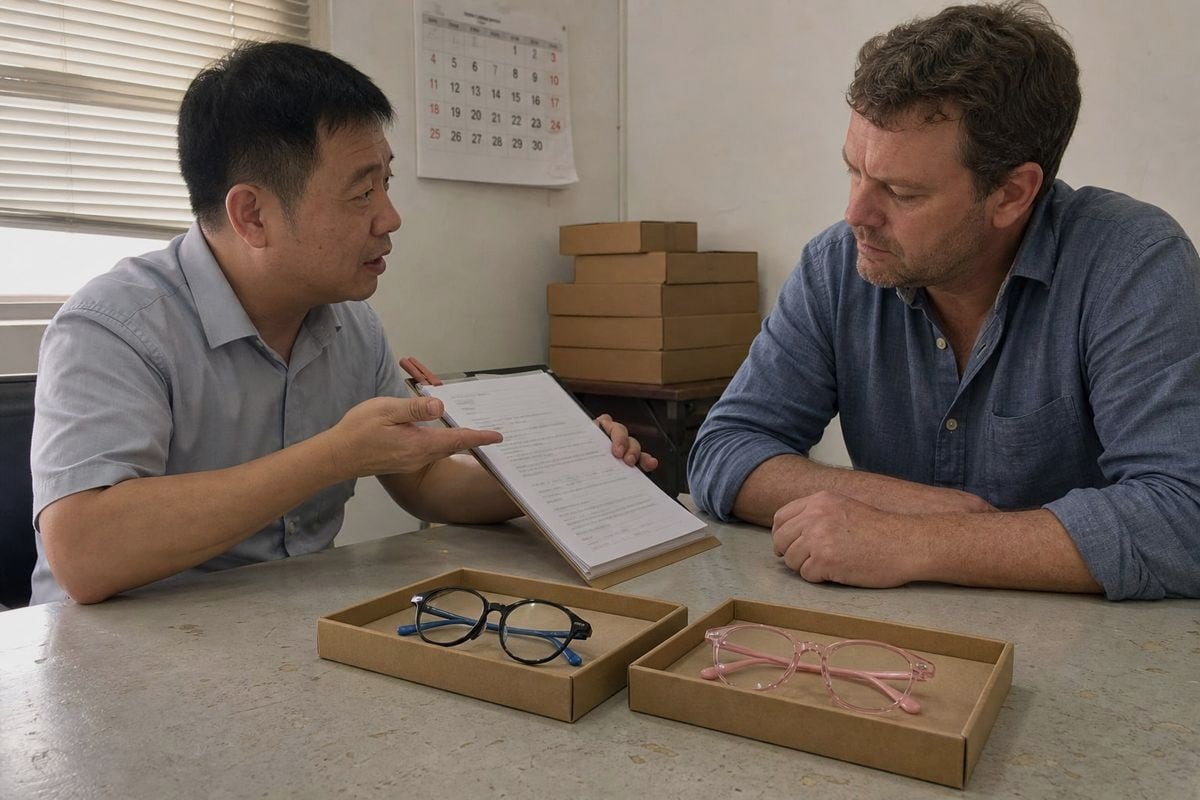
Choosing between export credit insurance 1 and a bank performance bond comes up constantly in our wholesale kids optical frame negotiations. Pick wrong, and either your cash or your contract sits exposed.
Export credit insurance protects the exporter against buyer non-payment, while a bank performance bond protects the buyer against non-delivery or contract default. For repeat wholesale kids optical frame orders on credit terms, insurance usually fits; for custom private-label contracts with launch deadlines, a performance bond fits better.
The two instruments solve opposite problems. One shields the seller. The other shields the buyer. Let me walk you through how each works, what it costs, and when you actually need one for children’s eyewear orders.
How do I decide between export credit insurance and a bank performance bond for my wholesale kids optical frame orders?
A distributor in Australia once asked us for a performance bond when what really worried him was our reliability, not his own payment. That conversation taught me how often these two tools get confused.
Decide based on who carries the bigger risk. If you buy standard kids frames on open account and worry about supply reliability, ask about a performance bond. If you are the exporter extending credit terms, export credit insurance covers your non-payment risk instead.
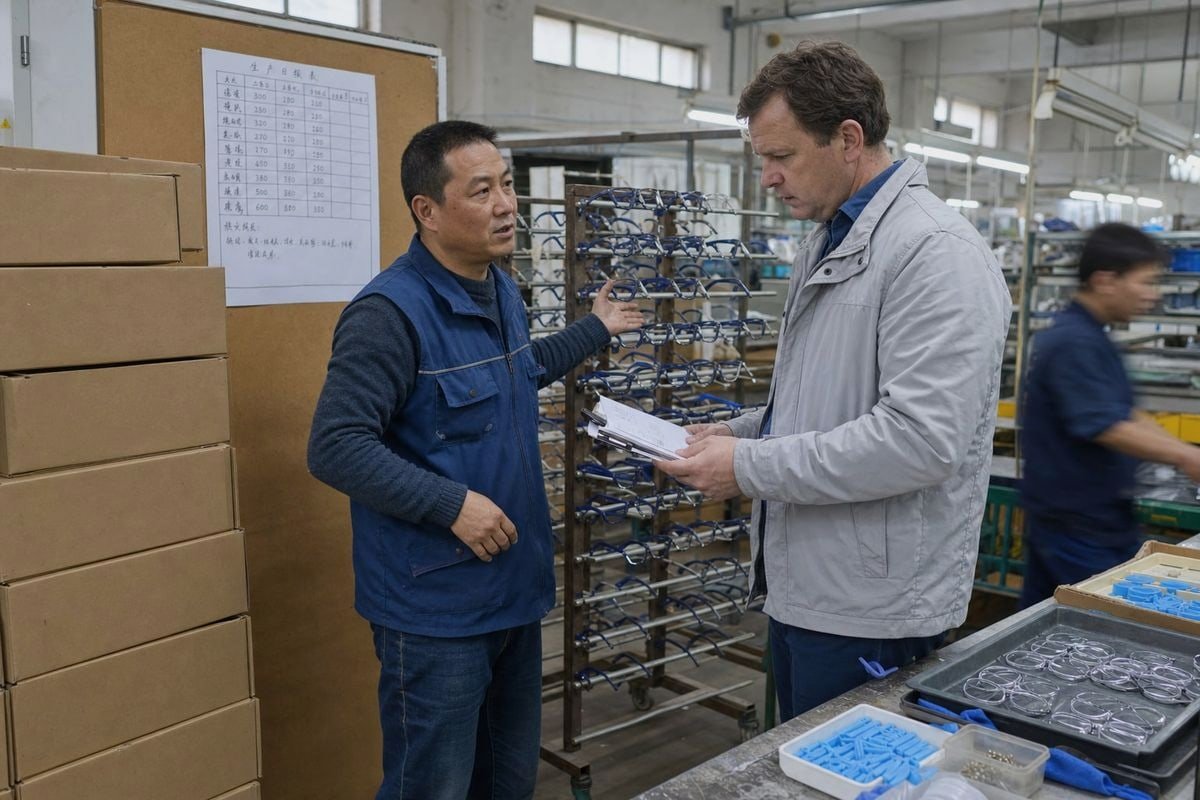
Start with a simple comparison. These instruments protect different parties, cover different triggers, and suit different order types.
| Característica | Export Credit Insurance | Bank Performance Bond 2 |
|---|---|---|
| Protected party | Exporter (or its financier) | Buyer / importer |
| Main risk covered | Non-payment by the buyer | Non-performance by the exporter |
| Desencadenante | Buyer insolvency, protracted default, political events | Exporter fails to meet contract terms |
| Typical coverage | 80%–95% of the invoice value | 5%–25% of the contract value |
| Typical duration | Short-term trade, often up to 2 years | Life of the specific contract |
| Capital impact | Supports open-account sales and financing | May require collateral or bank credit capacity |
Match the instrument to the order type
For recurring wholesale eyewear orders of standard styles, the biggest commercial risk is usually payment, not production. That points to trade credit insurance on the exporter's side. It covers commercial risk coverage items like bankruptcy and protracted default, plus political risk insurance for events that block payment transfer across borders.
For custom orders, the picture flips. If you commission private-label TR90 frames with your logo, custom packaging, and a fixed retail launch date, your risk is that the goods arrive late or off-spec. A performance bond, essentially a delivery default guarantee, gives you a financial remedy if that happens.
Ask three questions before deciding
First, who extends credit in this deal? Second, is the product standard or built to your specification? Third, what happens to your business if the shipment fails versus if the invoice goes unpaid? Answer those honestly, and the right instrument usually becomes obvious. In some larger deals, both tools coexist: the buyer holds a bond, and the seller insures the receivable. They are complementary, not mutually exclusive.
What costs and application steps should I expect when arranging export credit insurance or a performance bond with my frame supplier?
When we quote large private-label runs from our Taizhou factory, buyers often ask what a guarantee actually costs. The honest answer: less than most expect, but the paperwork differs sharply between the two tools.
Export credit insurance premiums are typically a small fraction of insured turnover, arranged by the exporter with an insurer. A performance bond costs an issuance fee plus possible collateral, arranged through the exporter's bank or a surety, usually covering 5%–25% of the contract value.

The processes run on different tracks. Here is what each one looks like in practice for a wholesale children's eyewear deal.
Steps to arrange export credit insurance
- The exporter approaches a private insurer or an export credit agency 3.
- The insurer reviews the buyer's creditworthiness and sets a credit limit per buyer.
- The exporter pays a premium, usually calculated on insured sales volume.
- Shipments proceed on open account 4, with invoices reported to the insurer.
- If the buyer defaults, the insurer pays out, commonly 80%–95% of the loss depending on the policy.
Private-market policies suit short-term trade receivables, often up to about two years, which matches the rhythm of wholesale eyewear payment terms far better than long-dated project cover. Financiers may also require the policy in practice, because it turns foreign receivables into acceptable collateral and widens export financing options.
Steps to arrange a bank performance bond
- The buyer requests the bond in the sales contract, defining the trigger events.
- The exporter applies to its bank or a surety provider.
- The issuer assesses the exporter and may demand collateral or consume the exporter's credit line.
- The bond is issued in the buyer's favor for an agreed percentage of the contract.
- The buyer can call the bond only after a documented contractual default.
| Elemento de costo | Export Credit Insurance | Performance Bond |
|---|---|---|
| Who pays | Exporter | Exporter (often priced into the quote) |
| Fee basis | Premium on insured turnover | Annual fee on bond amount |
| Collateral | Generally none | Often required by the issuing bank |
| Working capital effect | Frees capital by securing receivables | Can tie up capital and credit lines |
One practical note for buyers: when you demand a bond, the exporter's collateral cost often flows back into your unit price. Weigh that against the payment security international trade instruments actually give you.
Can I rely on OKAY EYEWEAR's factory reputation and quality control instead of requiring extra financial guarantees for my order?
Fifteen years of running our 5S-managed workshop has taught me one lesson: reputation reduces risk, but it never replaces a clear contract. I say that even though our track record is our best sales tool.
Factory reputation and quality control lower the probability of a problem, while financial guarantees manage the consequence if one still occurs. For smaller trial orders from an established factory, guarantees are often unnecessary; for large custom contracts, prudent buyers still layer contractual protection on top.
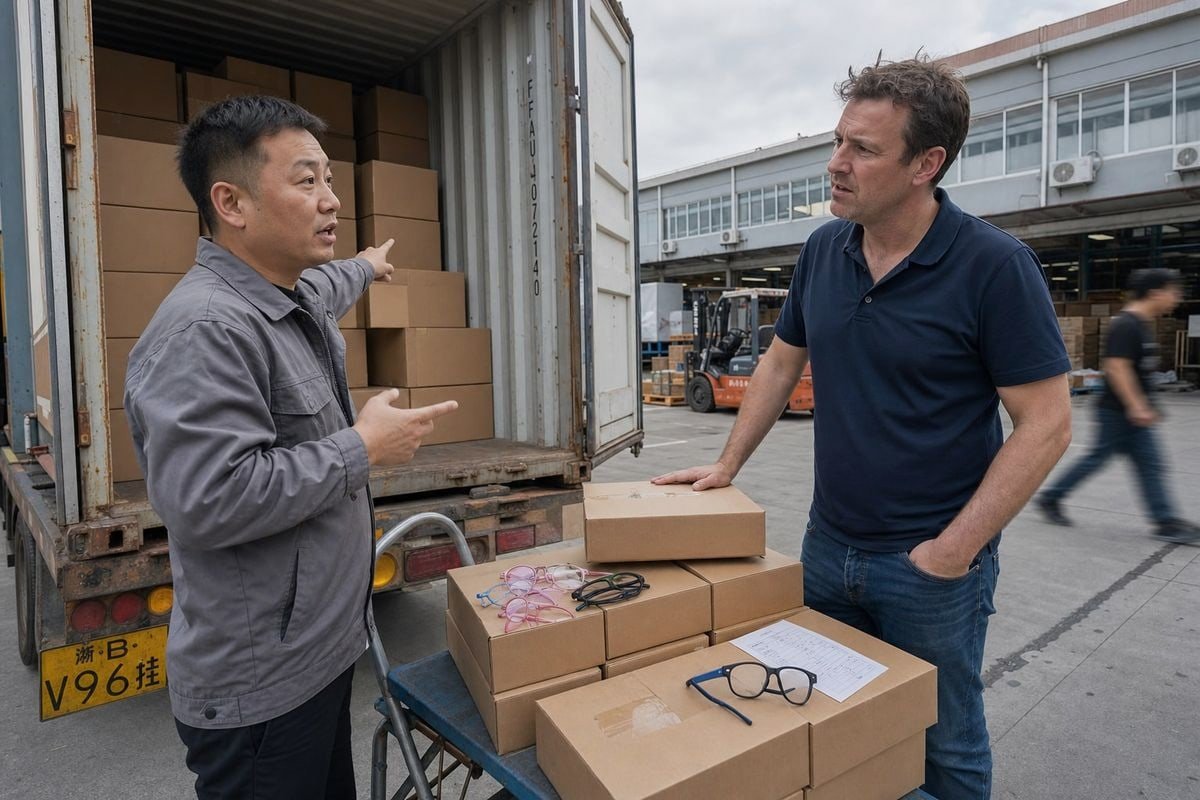
Let me be direct about how we think this through with buyers, because the answer depends on order size and customization, not on trust alone.
What a strong factory actually de-risks
Our roughly 120 workers produce children's eyewear all day, every day, and we hold around 800 existing styles that buyers can order without any mold investment. That matters for risk in two ways. First, a stock-style order carries almost no development risk; the frame already exists, the tooling is proven, and samples arrive fast. Second, a factory with in-house QC catches hinge, coating, and dimensional defects before packing, which is where most quality disputes are born.
For a first order of standard TR90 kids optical frames worth a modest amount, insisting on a bank guarantee international arrangement adds cost and friction without adding much real protection. A sample approval process, a pre-shipment inspection, and staged payments do the same job more cheaply.
Where guarantees still earn their place
Custom projects change the math. When a buyer commissions unique colors, logos, packaging, and a timed launch, both sides carry more exposure. We have supplied brands across 20+ countries, and the most professional buyers combine three layers: a detailed specification sheet, third-party inspection rights, and, on very large contracts, a formal guarantee. That structure is not an insult to the factory. It is simply how international contract risk gets allocated when the numbers grow. Reputation gets you to the table; documentation keeps everyone safe at it.
Which option better protects my brand if there are delays or quality issues with a large TR90 or TPEE kids eyewear order?
Delays and defects are the two failure modes we engineer against daily, especially with flexible TPEE temples where material consistency drives comfort and safety on a child's face. For your brand, the right protection depends on which failure hurts more.
A performance bond protects your brand better against delays and quality failures, because it pays the buyer when the exporter misses delivery milestones or specifications. Export credit insurance only protects the seller's receivables and offers the buyer no remedy for defective or late frames.

Children's eyewear is unforgiving on timing and safety. Kids frames follow seasonal demand and fast-moving trends, so a shipment that lands six weeks late can miss the back-to-school window entirely. That is why, for importers, timely delivery secured by a bond is often worth more than any payment cover.
How each instrument responds to real failure scenarios
| Scenario | Export Credit Insurance response | Performance Bond response |
|---|---|---|
| Frames ship 6 weeks late, missing launch | No help to the buyer | Buyer can claim if delivery milestones were bonded |
| Hinges fail safety testing on arrival | No help to the buyer | Claimable if quality clauses are written into the bond |
| Buyer refuses to pay after delivery | Insurer reimburses the exporter | No help to the exporter |
| Buyer goes insolvent mid-contract | Insurer covers the unpaid invoices | Bond stays with the buyer's estate, not the seller |
Write the bond around what actually matters for kids products
A generic bond wording protects less than buyers assume. For children's eyewear, the bond can be tailored to reference specific clauses: safety compliance for children's items, agreed material specifications for TR90 and TPEE, fill-rate minimums, and even recall liability triggers. That transforms a vague surety bond for exports into a precise brand-protection tool.
There is a counterpoint worth resolving. Some sellers argue that insurance is the better default because unpaid invoices, not failed shipments, are the exporter's real economic exposure. That is true from the seller's chair. But if you are the brand owner, your exposure is a ruined launch and a damaged reputation with retailers. The clean answer for large custom deals: the buyer holds a performance bond scoped to delivery and quality, and the seller separately insures the invoice balance against non-payment risk exporter side. Each party covers the risk it actually bears, and neither instrument is asked to do a job it was never designed for.
Conclusión
Insurance protects the seller's payment; a bond protects the buyer's delivery. Match the instrument to your real risk, and pair either one with a factory whose QC you trust.
Notas al pie
1. Official U.S. government source explaining export credit insurance. ↩︎
2. Replaced HTTP 404 with an authoritative and relevant Wikipedia article on performance bonds, which are often issued by banks. ↩︎
3. Provides a comprehensive overview and definition of export credit agencies. ↩︎
4. Official announcement from the International Chamber of Commerce on open account trade rules. ↩︎
Más artículos que te podrían gustar

5 de agosto de 2026
Bio-Based vs Regular Cellulose Acetate: What's the Difference for Kids' Frames?

5 de agosto de 2026
How Recyclable Are Kids' Optical Frame Materials, and What Eco-Friendly Alternatives Exist?
5 de agosto de 2026
Do Kids Optical Frames Whiten or Age in Storage, and How to Control Warehouse Conditions?
¿Buscas un socio confiable en gafas para niños?
Explore más de 800 estilos listos y soporte OEM/ODM completo adaptado a su marca.
Ponte en contacto English
  Español de México
  Deutsch
  Français
  日本語
日本語  العربية
  Português do Brasil