Exclusive Agency vs Annual Supply Agreement: Which Suits Wholesalers Sourcing Kids’ Optical Frames From China?

Choosing between an exclusive agency 1 and an annual supply agreement confuses many wholesalers we meet at our Taizhou factory. Pick wrong, and the contract fights your business model.
Choose an exclusive agency if you actively build a defined market and can commit to annual volume targets in exchange for territorial protection. Choose an annual supply agreement if you prioritize flexible replenishment, supplier comparison, and lower lock-in while sourcing kids’ optical frames from China.
The real question is simple: do you want to own the market, or just secure the product territorial protection 2? Let me walk you through how we structure both deals, what terms to expect, and where the traps hide.
How do I decide between exclusive agency and an annual supply agreement for my market?
A distributor from Australia once asked us for exclusivity across his entire country after a single trial order of 600 frames minimum order quantities 3. We said no — and then explained why that protected him too.
Decide based on your role: exclusive agency suits market builders with an existing sales network, defined territory, and realistic volume commitments. An annual supply agreement suits replenishment buyers who are still testing demand, want to compare factories, and need flexibility on styles, MOQs, and pricing.
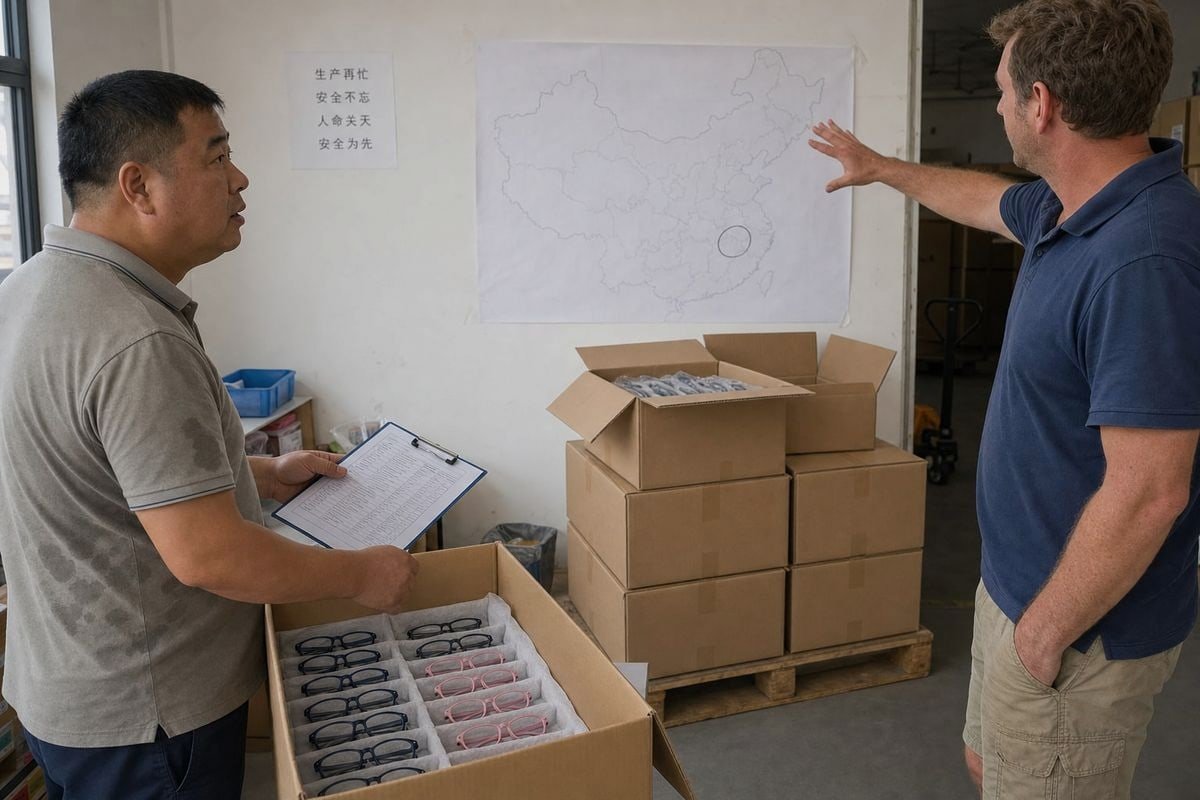
The two contracts control completely different things trademark in China 4. An exclusive agency agreement governs territory, channel control, non-circumvention, minimum sales thresholds, and marketing support obligations. An annual supply agreement 5 is fundamentally a procurement contract. It governs price, forecast commitments, order process, quality control standards, delivery timing, and renewal terms. Neither is "better." Each matches a different business behavior.
Here is the side-by-side view we share with buyers before any negotiation:
| Factor | Exclusive agency | Annual supply agreement |
|---|---|---|
| Core purpose | Territory and channel control | Reliable purchasing |
| Supplier obligation | Non-compete inside your territory | Deliver agreed product on agreed terms |
| Buyer focus | Sales development, market penetration strategy | Procurement stability |
| Lo mejor para | Distributors funding local promotion | Replenishment buyers, market testers |
| Main risk | Dependency plus missed volume targets | No protection from channel bypass |
| Exit difficulty | Harder — relationship is deep | Easier — switch at renewal |
Ask yourself three honest questions
First, do you have a sales network already, or are you still building one? Exclusivity without distribution muscle just sets you up to miss targets. Second, is your market geographically clean — one country, one region — or scattered across marketplaces? Exclusivity only works with clear borders. Third, can you commit to a yearly turnover number and actually hit it? In our experience, wholesalers who overpromise volume lose exclusivity within eighteen months, and both sides walk away frustrated.
Some buyers push back: "Exclusivity forces the factory to commit to me." That is true, and it is a fair reason to want it — especially if you are funding local advertising. But the reverse is also true. If we cannot sell to anyone else in your market and you underperform, our frames sit invisible there. That is why serious factories tie exclusivity to minimums. If you are not ready for minimums, an annual supply agreement gives you the product without the pressure.
What minimum order quantities and pricing terms should I expect from a Chinese kids' optical frames factory?
Every week our sales team fields the same first question by email: "What is your MOQ?" The honest answer depends heavily on which contract structure you choose and how much customization you need.
Expect MOQs of roughly 300–1,200 pieces per style for stock designs and higher for full custom molds. Standard payment terms are a 30% deposit with the 70% balance against the bill of lading copy. Exclusive agency deals typically trade better unit pricing for firm annual volume commitments.
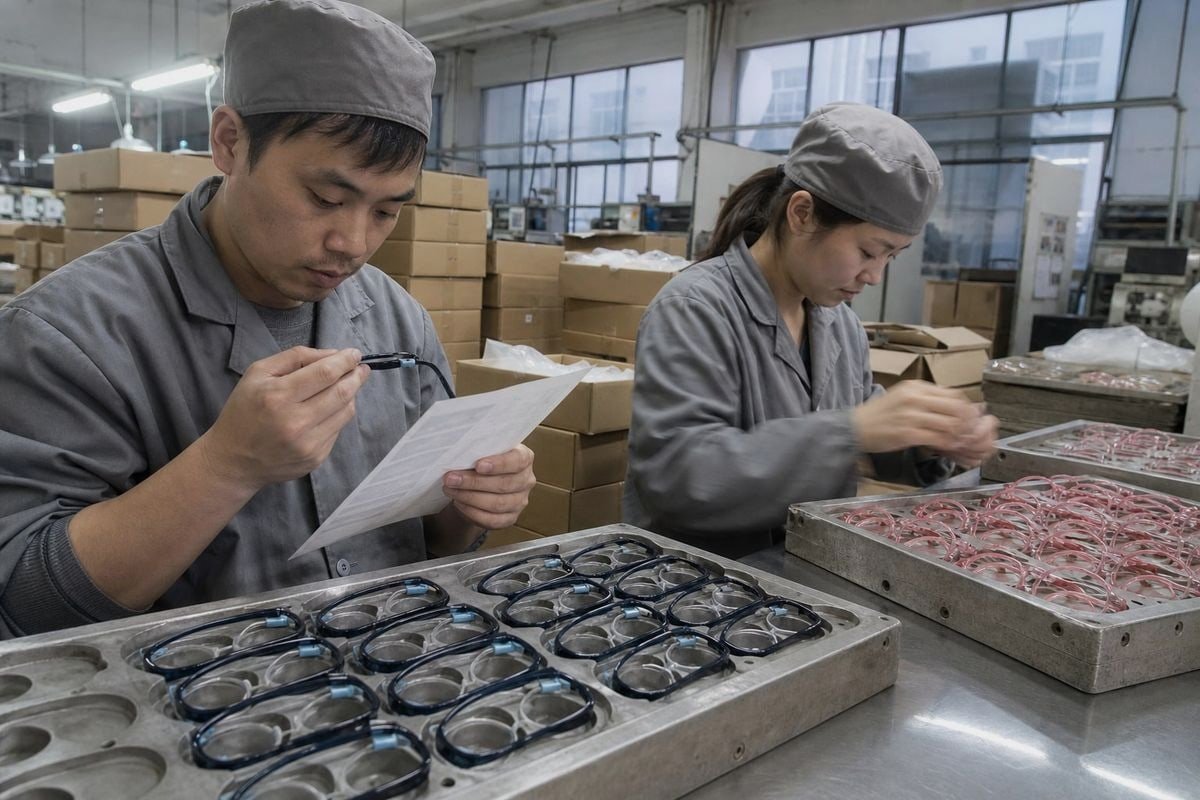
The reason MOQ ranges vary so widely comes down to tooling and material batches. At our workshop, we run about 800 existing styles in TR90 and TPEE. If you pick from that library, you skip mold investment entirely. That is exactly why new brands and importers use us to test the market at lower risk. Custom colors on an existing mold sit in the middle. A fully new frame design requires mold fees and a much larger commitment, because the injection setup only pays off at volume.
How the two contract types shape your commercial terms
| Commercial term | Exclusive agency deal | Annual supply agreement |
|---|---|---|
| Precio unitario | Lower — rewarded for volume commitment | Standard tiered pricing |
| MOQ per style | Often higher, fixed annually | Flexible, negotiated per order |
| Price adjustment | Locked for the term, with material-cost clauses | Reviewed at each renewal or quarter |
| Payment terms | May improve over time (e.g., partial credit) | Usually 30/70 deposit-balance structure |
| Mold and tooling | Sometimes shared or absorbed by factory | Paid by buyer, ownership stated in writing |
Pricing red flags to watch
Be cautious with any factory demanding 100% prepayment — that shifts all sourcing risk onto you. Equally, be skeptical of prices far below market. Kids' optical frame materials like TR90 and flexible TPEE cost more than generic PC plastic, and a suspiciously cheap quote usually means material substitution. Also insist the contract includes a price-adjustment mechanism tied to raw material indices, not vague "market conditions." That protects both sides from disputes when resin prices swing, and it keeps your landed-cost calculations — including customs regulations and duties for your destination market — predictable across the year.
Finally, negotiate sampling terms upfront. Reasonable factories charge a sample fee and refund it against your first bulk order. Free samples with no accountability often signal a trading company, not a factory.
How can I protect my territory rights and brand exclusivity when sourcing from an OEM/ODM manufacturer?
A European buyer once shared his worst sourcing story with me: his previous supplier copied his private-label design and sold it to a competitor two towns over. That single failure in intellectual property protection cost him a retail chain listing.
Sign a China-enforceable NNN agreement (Non-Disclosure, Non-Use, Non-Circumvention) before sharing designs, then add explicit territory and channel-restriction clauses to your main contract. Register your trademark in China, define exclusivity by geography and channel, and tie it to measurable annual purchase minimums.

Standard Western NDAs are close to useless in China. An NNN agreement 6, written in Chinese, governed by Chinese law, with arbitration or jurisdiction inside China, is enforceable — and a professional OEM manufacturing partner will not hesitate to sign one. When we develop custom colorways, logos, and packaging for a brand, that NNN sits underneath everything. If a factory resists signing, treat that as your answer about their intentions.
Layer your protection — one clause is never enough
- NNN agreement first. Sign it before sending tech packs, logo files, or packaging artwork. It must cover non-use (they cannot make your design for others), not just non-disclosure.
- Register your trademark in China. China is first-to-file. If you skip this, someone else can register your brand name and legally block your own shipments at the port.
- Define exclusivity precisely in the main contract. "Exclusive for Australia" is weak. "Exclusive for retail optical channels in Australia and New Zealand, excluding cross-border e-commerce" is enforceable.
- Tie exclusivity to performance. Agree on annual minimums and a review date. This keeps exclusivity credible and gives you a defined renewal path.
- Control the tooling. If you paid for a custom mold, the contract must state you own it and the factory cannot run it for anyone else.
- Fix dispute resolution. Specify arbitration at a recognized Chinese institution or a neutral venue, with a dual-language contract where the Chinese version is enforceable.
One objection we hear: "Exclusivity clauses make me dependent on one factory." That is a real trade-off. Our answer is to scope exclusivity narrowly — protect your custom designs and your territory, but keep freedom to source other product lines elsewhere. Territory protection and supply chain diversification are not mutually exclusive if the contract is drafted carefully.
What quality control and delivery guarantees should I negotiate before signing either agreement?
During a pre-shipment inspection last year, our QC team pulled an entire batch because hinge tension on one temple style drifted outside our tolerance. Catching that in the factory, not in a customer's warehouse, is exactly what your contract needs to guarantee.
Negotiate written product specifications, mandatory safety documentation (CE, FDA, REACH as your market requires), approved golden samples, multi-stage QC checkpoints with third-party inspection rights, an AQL defect threshold, defined lead times, and penalty or remedy clauses for late delivery or failed inspections.
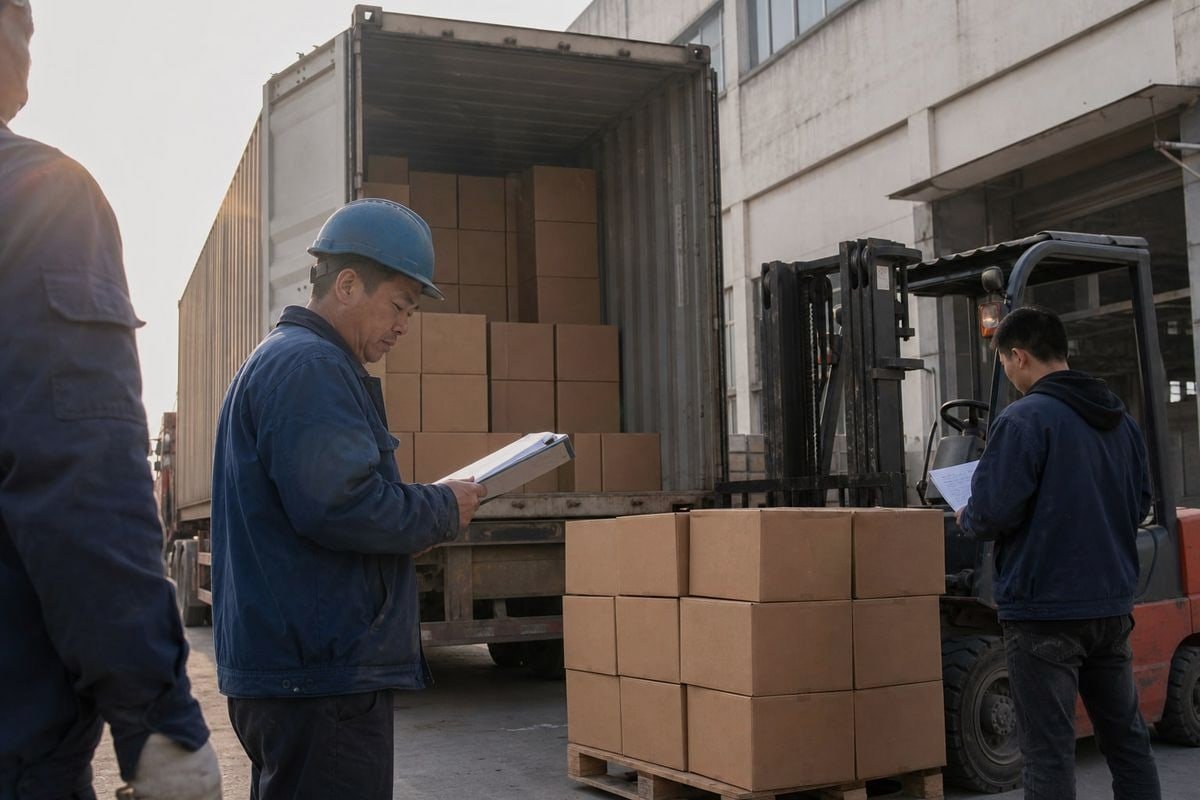
Kids' optical frames are not a generic accessory category. These products sit on a child's face for hours a day. Weak quality clauses cost you returns, damaged retail reputation, and in the worst case, compliance failures. So your agreement — exclusive or annual — must convert quality expectations into written, testable standards.
The QC clauses that actually matter
| Clause | What to specify | Why it matters for kids' frames |
|---|---|---|
| Product specification | Material grade (TR90, TPEE), dimensions, colors | Prevents silent material substitution |
| Safety documentation | Test reports per destination market (CE, FDA, REACH 7) | Compliance proof, not just a low price |
| Golden sample | Signed, sealed reference sample both sides hold | Settles "does this match?" disputes instantly |
| Inspection rights | Third-party pre-shipment inspection at your cost | Independent verification before balance payment |
| Defect threshold | AQL level plus remedy (rework, replace, credit) | Defines what "acceptable" means numerically |
| Tiempo de entrega | Days from deposit to ex-factory, per order size | Anchors your delivery guarantee |
| Late-delivery remedy | Discount per week late, or cancellation right | Gives the promise real teeth |
Sample validation before volume
Before any bulk commitment, validate physical samples for the failure points specific to children's eyewear: hinge quality and flex cycles, frame symmetry, plating and coating adhesion, temple flexibility, and overall durability under twisting. Our engineers test flexible TPEE temples precisely because active kids bend, drop, and sit on their glasses. A frame that survives that abuse is what your written spec should describe.
Structure your first order as a smaller test volume with full QC documentation. A trustworthy factory welcomes this as part of your supplier vetting process — verify the business license, export eligibility, workshop management, and production capacity through an audit before you scale. Good supply chain management starts with proving the factory can repeat quality, not just produce one nice sample.
Conclusión
The wrong contract quietly works against you — exclusivity without volume strands a market, and open supply without protection erodes your margins. Match the agreement to your actual behavior instead.
If you are building a market — funding promotion, running a sales team, owning a territory — negotiate an exclusive agency with clear minimums, narrow scope, and layered IP protection. If you are securing a product line — testing demand, comparing factories, iterating styles — an annual supply agreement keeps you flexible and safe. Either way, insist on an NNN agreement, written quality control standards, safety documentation, and inspection rights before signing. At our Taizhou factory, the partnerships that last fifteen years are the ones where the contract matched the buyer’s real strategy from day one. Decide what you are first — market builder or replenishment buyer — and the right agreement chooses itself.
Notas al pie
1. Provides a clear definition of exclusive agency from an authoritative source. ↩︎
2. Offers a legal definition of exclusive territory in a distribution agreement. ↩︎
3. Provides a clear definition and explanation of Minimum Order Quantity (MOQ). ↩︎
4. Explains the process and importance of registering a trademark in China. ↩︎
5. Defines supply agreements and outlines key terms for a reliable supply chain. ↩︎
6. Details how to draft and enforce NNN agreements effectively under Chinese law. ↩︎
7. Discusses FDA export certificates and mentions CE mark in the context of medical devices. ↩︎
Más artículos que te podrían gustar
5 de agosto de 2026
Bio-Based vs Regular Cellulose Acetate: What's the Difference for Kids' Frames?
5 de agosto de 2026
How Recyclable Are Kids' Optical Frame Materials, and What Eco-Friendly Alternatives Exist?
5 de agosto de 2026
Do Kids Optical Frames Whiten or Age in Storage, and How to Control Warehouse Conditions?
¿Buscas un socio confiable en gafas para niños?
Explore más de 800 estilos listos y soporte OEM/ODM completo adaptado a su marca.
Ponte en contacto English
  Español de México
  Deutsch
  Français
  日本語
日本語  العربية
  Português do Brasil