¿Cuánto duran los armazones oftálmicos para niños de TR90 antes de cambiarlos?
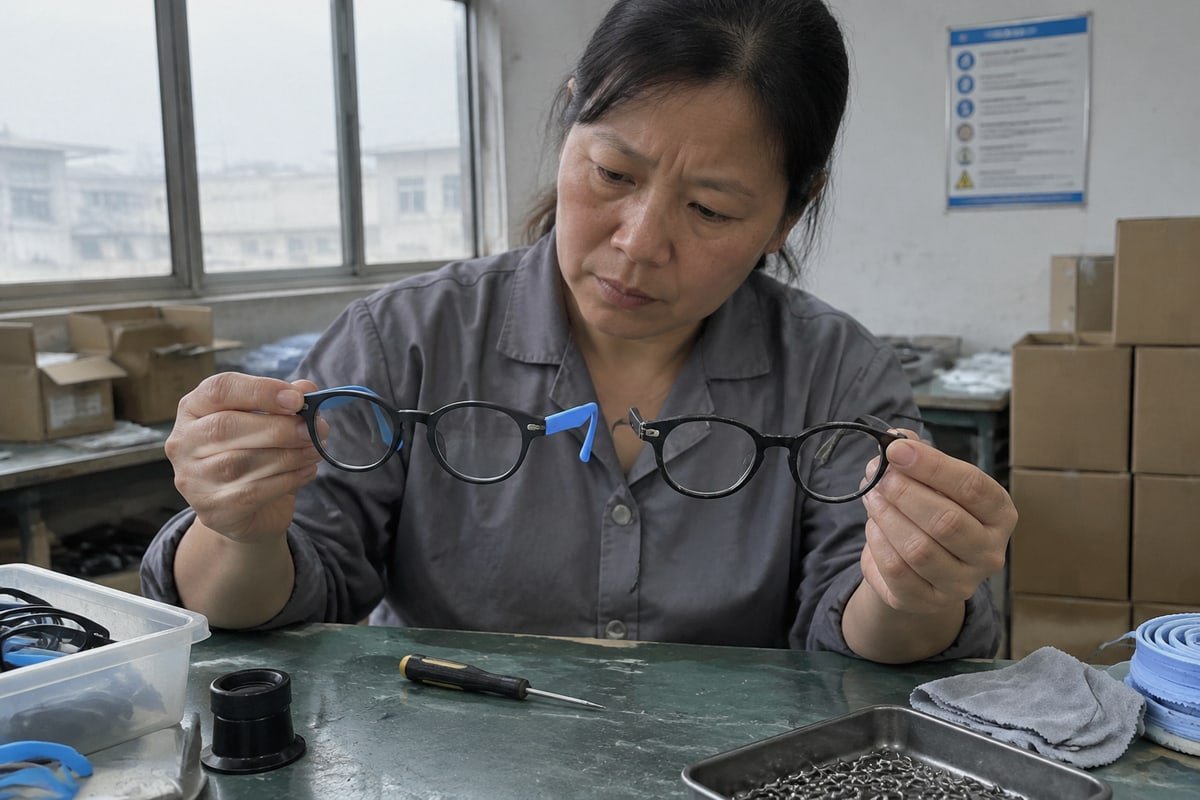
Los compradores le hacen una pregunta al equipo de nuestra fábrica en Taizhou sobre los armazones oftálmicos para niños de TR90 1 cada semana. Un armazón que parece resistente termina en el bote de basura en seis meses. ¿Por qué?
Los armazones oftálmicos para niños de TR90 suelen durar de uno a tres años antes de cambiarse. El material del armazón suele durar más tiempo. La mayoría de los reemplazos se producen porque al niño le queda chico el ajuste, cambia la graduación, las bisagras se aflojan o las micas se rayan, no porque el cuerpo de TR90 se rompa.
Esa diferencia entre la vida útil del material y el tiempo real de reemplazo es toda la historia. A continuación, desglose las señales de desgaste, los factores que acortan la vida útil, cómo se compara el TR90 frente al acetato y al metal, y qué puede hacer como marca para que los armazones que adquiera duren lo que deben.
¿Cómo puedo saber si mis monturas TR90 para niños se están desgastando o si todavía son seguras de usar?
En una ocasión, un distribuidor devolvió una caja de armazones devueltos a nuestra mesa de control de calidad en Taizhou. Los frentes de TR90 estaban intactos. Las bisagras contaban una historia diferente.
Compruebe cinco aspectos: el ajuste de las bisagras, la alineación de las patillas, el ajuste nasal, los arañazos en las lentes y las grietas o blanqueamiento en la superficie. Una montura de TR90 sigue siendo segura si se flexiona y recupera su forma de manera uniforme. Reemplácela cuando las patillas se cedan, los tornillos no aprieten o la montura quede torcida en la cara del niño.
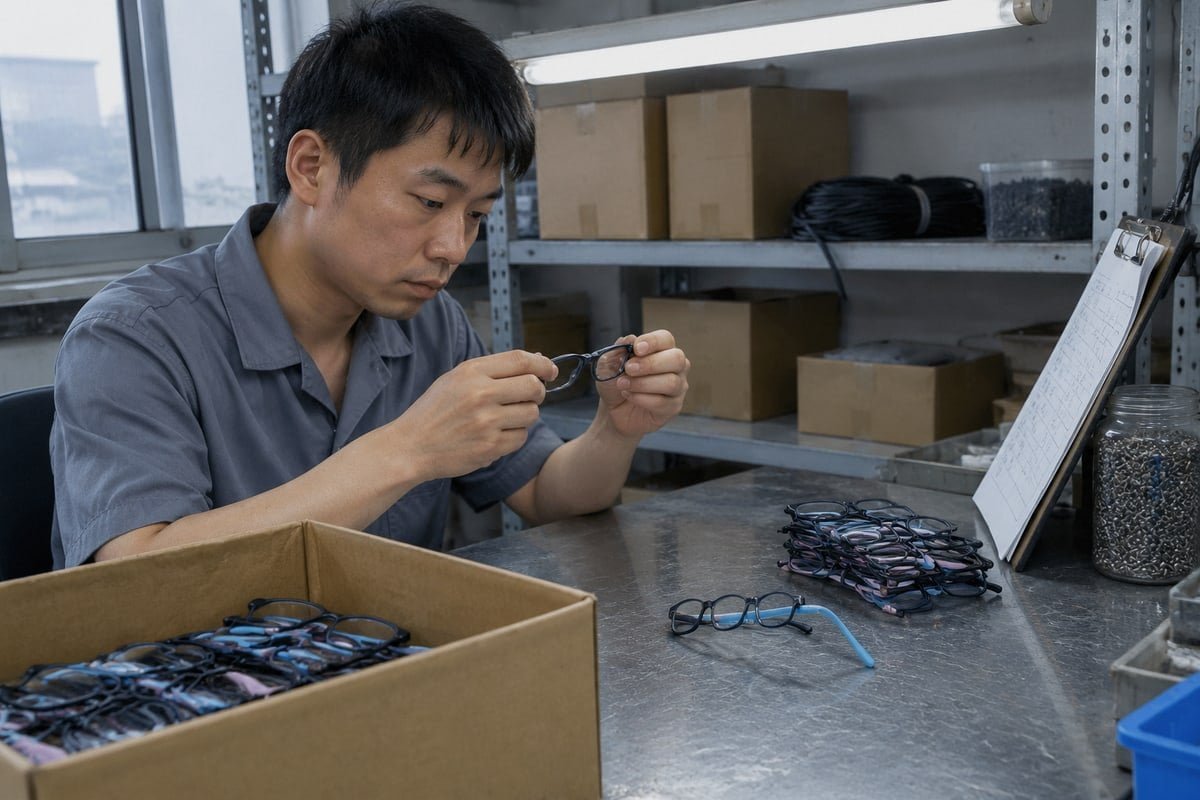
Esa caja devuelta me enseñó algo sencillo. Los padres y minoristas se fijan primero en la parte equivocada. Verifican si el armazón está roto. Pero el TR90 es una resina termoplástica con memoria. Se dobla y regresa a su forma. Por lo tanto, el frente rara vez muestra daños drásticos. El desgaste se oculta en las piezas pequeñas y en el ajuste.
La vida útil del material no es lo mismo que la vida útil de uso
Separo estas dos ideas en cada conversación con los compradores. La vida útil del material es el tiempo que el Material Grilamid TR90 2 se mantiene estructuralmente firme. La vida útil de uso es el tiempo que los lentes siguen siendo útiles y seguros para un niño específico. Un armazón puede superar la vida útil del material con años de sobra y aún así fallar en la vida útil de uso en doce meses. Las bisagras flojas, las varillas desalineadas y las micas rayadas acortan la vida útil de uso.
Una lista de verificación práctica para la inspección
Esta es la lista de verificación que le entrego a nuestros clientes OEM para su propio personal de venta al por menor o equipos de atención al cliente.
| Qué comprobar | Lo que ves | Lo que significa | Acción |
|---|---|---|---|
| Ajuste de la bisagra | Las varillas oscilan libremente o tambalean | La rosca del tornillo o el barril están desgastados | Apretar o reemplazar el tornillo; reemplazar si no se sostiene |
| Alineación de las varillas | El armazón queda torcido en la cara | La varilla se dobló más allá de su rango de memoria | Ajuste profesional; reemplazar si vuelve a quedar chueca |
| Ajuste nasal | Marcas rojas o deslizamiento | El ancho del puente ya no coincide con el crecimiento facial del niño | Cambiar a un tamaño más grande |
| Superficie de la lente | Rayones en la línea de visión | Desgaste del recubrimiento | Reemplazar los lentes, conservar el armazón si el ajuste es bueno |
| Superficie del armazón | Blanqueamiento en los dobleses, grietas finas | Fatiga por esfuerzo o daño por calor | Reemplaza la montura |
| Puntas de las patillas | Duro, seco o partido | Material envejecido | Reemplazar las terminales o el armazón |
La cuestión de la vida útil higiénica
Un punto de los debates recientes de la industria merece atención. Las microabrasiones acumuladas en la superficie del armazón 3 pueden retener biofilm y bacterias. Esto sugiere una vida útil higiénica que puede terminar antes que la vida útil mecánica. Según nuestra experiencia, esto es más visible en las terminales de las varillas y en las zonas de las plaquetas nasales, donde el contacto con la piel es constante. La limpieza regular con agua y jabón suave prolonga esto de forma considerable. Pero si la superficie del armazón se siente áspera o pegajosa incluso después de lavarla, lo considero una señal de reemplazo, no solo algo estético.
La seguridad está antes que la apariencia
Un frente raspado no es problema. Un frente chueco que ejerce presión descompensada en una oreja sí lo es. El ajuste descompensado desplaza el centro óptico de la mica 4, lo que afecta la visión del niño. Es un problema de seguridad y visión, no de estilo. Cuando capacito a nuevo personal de control de calidad, les digo que verifiquen la simetría del ajuste antes que el acabado de la superficie exactamente por esta razón.
¿Qué factores afectan más a cuánto duran realmente las monturas ópticas de TR90 en niños activos?
Cada vez que especificamos el grosor de una varilla, evaluamos dos cosas. Más delgada significa más ligera y cómoda. Más gruesa significa mayor resistencia a la tensión en caso de que un niño se siente sobre los lentes.
El ajuste y el crecimiento son lo más importante. El crecimiento facial de un niño, la frecuencia de actualización de la graduación, la calidad de la bisagra, la exposición al calor, el peso de las micas y los hábitos de manejo diario deciden la vida útil real. Los niños con un uso rudo pueden necesitar un reemplazo en 6 a 12 meses, el uso escolar típico dura de 1 a 2 años y el uso cuidadoso puede alcanzar de 2 a 4 años.

Ese balance en el grosor es un buen ejemplo de cómo la vida útil se decide en pequeñas elecciones. Ningún factor la controla por sí solo. Por lo tanto, los clasifico según la frecuencia con la que cada uno realmente provoca un reemplazo en los comentarios que recibimos de importadores y clientes ópticos en más de 20 países.
The five replacement triggers, ranked
- Outgrown fit. This is the number one reason. Bridge width and temple length stop matching the child's face. Even our most flexible temple arms cannot fix a frame that is now too narrow.
- Prescription changes. Many children need new lenses more often than a new frame. But if the old eyewire has stretched, the new lenses may not seat securely, and the whole unit gets replaced.
- Hardware wear. Hinges and screws loosen with thousands of open-and-close cycles. This happens well before TR90 fatigues.
- Lens damage. Scratches and coating wear end the glasses' usefulness even when the frame is perfect.
- Loss or serious abuse. Sports, drops, and bending far past the normal range. TR90 survives most of this, but not all of it.
Two factors people underestimate
Heat is the first. Leaving glasses on a car dashboard exposes the polymer to repeated thermal cycling. Over time this can compromise the molecular bonds. The practical result is sudden brittleness, often after 12 to 18 months of that kind of exposure. I have seen frames that felt fine one week and cracked at the hinge the next. The frame did not fail suddenly. It was weakened slowly.
Lens weight is the second. High-diopter lenses put constant peripheral tension on the eyewire. This can cause material creep, which is a slow permanent stretch. Eventually the lenses lose their secure fit. For strong prescriptions, I recommend a slightly thicker eyewire profile and a full-rim design rather than the thinnest fashion option.
Lifespan by usage profile
| Usage profile | Typical replacement window | Controlador principal | What helps most |
|---|---|---|---|
| Heavy use, sports, frequent loss | 6–12 meses | Abuse and loss | Spring hinges, strap, spare pair |
| Typical school use | 1–2 años | Growth and lens updates | Correct sizing, 6–12 month servicing |
| Careful use, good fit, regular care | 2–4+ years | Prescription cycle | Hinge checks, heat avoidance, cleaning routine |
One product listing I reviewed states a 1-year normal-use expectation for a kids' TR90 frame. That is conservative compared to promotional claims elsewhere. I think it is honest for the heavy-use group. For a well-fitted frame with quality hinges, our customers generally report longer.
¿Cómo se compara la flexibilidad del TR90 con los armazones de acetato o metal en lo que respecta a la durabilidad?
A product manager from Australia asked us why we don't just use acetate like the adult brands do. I handed her a sample and asked her to twist it.
El TR90 se dobla y vuelve a su forma original, por lo que resiste caídas, torsiones y accidentes al sentarse sobre él mejor que el acetato o el metal estándar. El acetato luce más elegante, pero se rompe bajo presión. El metal conserva su forma, pero se deforma de manera permanente y puede corroerse. Para niños activos, el TR90 ofrece el mejor equilibrio entre resistencia a los impactos y comodidad.
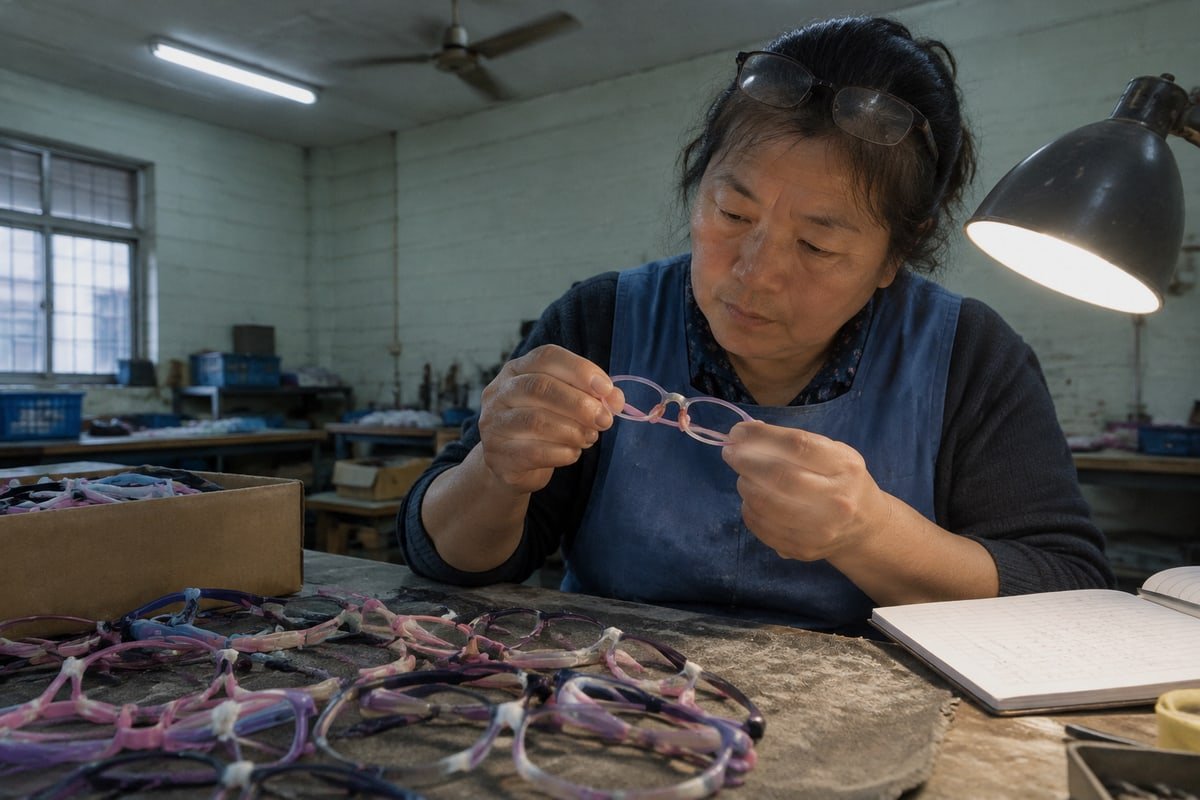
She twisted the sample, watched it spring back, and stopped asking about acetate. But the full picture is more nuanced than that demo. Here is how I compare the four common frame materials when a buyer is choosing for a children's range.
| Material | Comportamiento de flexión | Resistencia al impacto | Peso | Skin and sweat resistance | Typical kids' lifespan issue |
|---|---|---|---|---|---|
| TR90 (Grilamid) | Se dobla y regresa | Alta | Muy ligero | High, hypoallergenic properties | Hinges and fit outlast the front |
| Acetato | Rígida, flexión limitada | Moderada | Medio | Can yellow and degrade from skin oils | Snaps at bridge or temple under stress |
| Standard metal | Se dobla y permanece doblado | Moderada | Light to medium | Can oxidize, nickel sensitivity risk | Repeated re-adjustment, corrosion |
| Excelente — retorno a la memoria | Bends and stays bent, some spring | Alta | Muy ligero | Excelente, hipoalergénico | Cost; still bends permanently |
Where acetate vs TR90 durability really diverges
Acetate is a beautiful material. Adults love the depth of color. But it is a plant-based cellulose material 5 that reacts to skin oils and perspiration over years. It can yellow, lose surface finish, and become brittle. TR90 resists those oils. It keeps its finish, and it does not irritate skin. For a child who wears glasses eight hours a day and sweats through recess, that resistance matters as much as the flex.
The flex difference is the bigger point. Acetate has almost no memory. Twist it past a small angle and it cracks. TR90 is a memory resin. It absorbs the twist and recovers. This is why a child sitting on TR90 glasses usually gets a quick re-adjustment, while sitting on acetate glasses usually means a new frame.
Where metal and titanium still fit
Metal has real strengths. It holds a precise adjustment and works well for thin, minimal looks. Titanium is light and hypoallergenic. But both bend permanently. A child who bends a metal temple needs an optician to bend it back, and each bend fatigues the metal a little more. Nose pads on metal frames also loosen and collect grime. For older children with careful habits, metal can be a fine choice. For the under-ten group, I steer buyers toward TR90.
Por qué combinamos frentes de TR90 con patillas de TPEE
Our own approach combines a TR90 front with TPEE temples on many styles. The front gives the eyewire tensile strength to hold lenses securely. The TPEE temples add another level of softness and flex where the frame contacts the head. Two of our current samples show this well: a round matte black front with sky-blue temples and a keyhole bridge, and a translucent pink gradient rounded-square. Both look like fashion frames. Both are built to be sat on.
¿Qué puedo hacer como marca para garantizar que los armazones de TR90 que adquiero alcancen su vida útil esperada?
Fifteen years in eyewear taught us one hard lesson. Frame lifespan is decided long before the child wears the glasses. It is set at the raw material and hinge stage.
Especifique resina TR90 genuina, solicite evidencia de pruebas de ciclos de flexión e impacto, elija bisagras de resorte o reforzadas y confirme que las tablas de tallas coincidan con sus grupos de edad objetivo. Luego, brinde soporte a los clientes con consejos de mantenimiento del armazón, un recordatorio de servicio a los 6-12 meses y piezas reemplazables. Esto cubre tanto la vida útil del material como la vida útil por uso de manera conjunta.
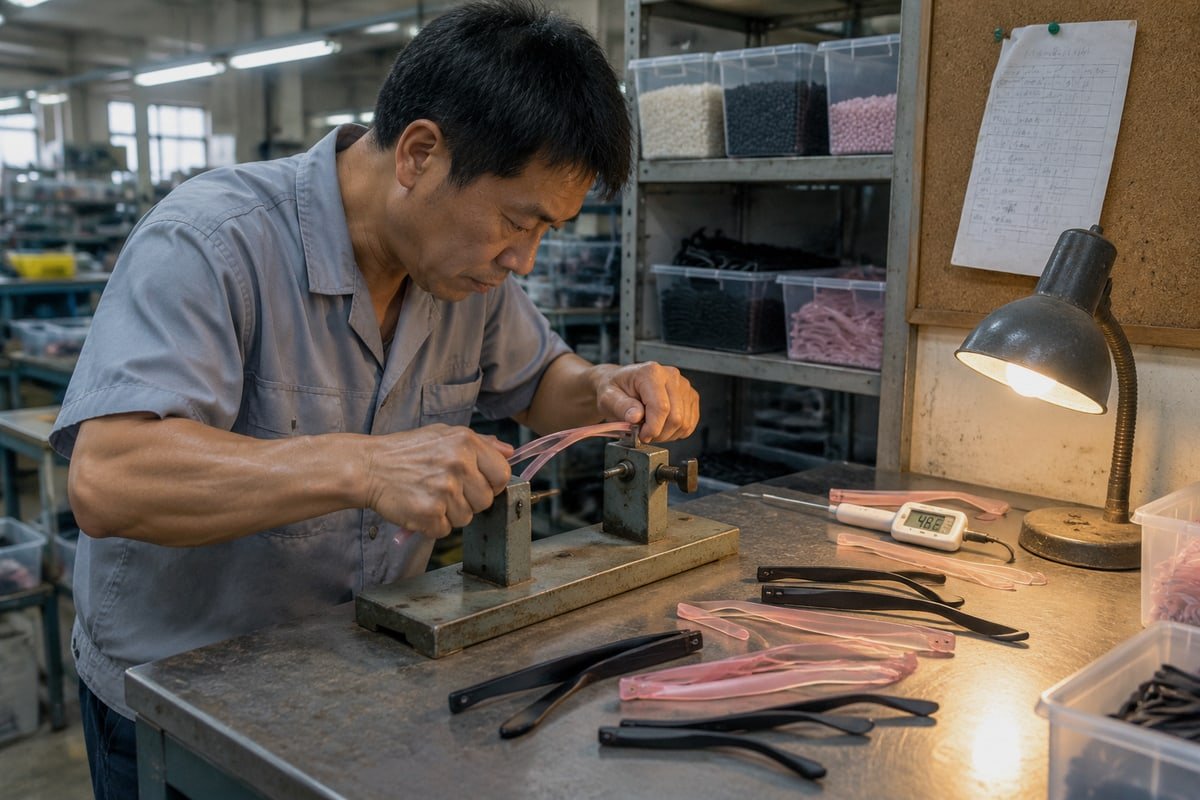
That lesson shaped how our 5S-managed workshop handles every new order. Here is the process I recommend to any founder or procurement manager building a children's optical range. It works whether you pick from our roughly 800 existing styles or develop a custom mold.
A six-step sourcing process
- Este es el orden que solicitaría, porque cada paso se basa en el anterior. Ask for the material grade and supplier. Recycled or blended nylon does not behave like true Grilamid TR90 material. The flex feels similar for a week and then fails.
- Ask for test evidence, and read it critically. One supplier guide cites ISO 12870:2016 fatigue-resistance testing 6 with 500+ cycles of 90° temple flexing. Another flexible-frame vendor claims 50,000+ flex cycles in lab testing. These numbers are useful. But they are supplier-reported and not directly comparable across brands. I tell buyers to treat them as indicators that a frame will outlast basic plastic, not as a guaranteed lifespan.
- Specify the hinge. TR90 plus spring hinges is the combination most often recommended for active kids. The spring absorbs the over-extension that would otherwise wear the barrel and screw. If cost rules out spring hinges, ask for reinforced barrels and thread-locked screws.
- Match sizing to age bands. Growth is the top replacement trigger, so a good size ladder is a durability feature. We size by bridge width and temple length, not just lens width.
- Consider modular designs. Newer modular TR90 designs allow replacement of individual temples or bridges. This can extend a frame's functional life past the typical two-year growth spurt. It also reduces warranty cost for your brand.
- Plan the aftercare content. Lifespan continues after the sale. Give your retailers and parents clear care guidance.
What to request from your factory
| Artículo a solicitar | Why it matters for lifespan | Qué aspecto tiene lo bueno |
|---|---|---|
| Material data sheet | Confirms genuine TR90 | Named resin grade, not just "TR90" on the invoice |
| Flex and impact test report | Shows fatigue resistance | Referenced standard, cycle count, test conditions stated |
| Hinge specification | Hinges fail before TR90 | Spring hinge or reinforced barrel, screw type listed |
| Sizing chart by age | Prevents early outgrowth returns | Bridge, temple, and lens width per size |
| Spare parts availability | Enables repair over replacement | Temples, screws, tips available for reorder |
| Packaging and care insert | Extends wear-life at home | Cleaning and heat-avoidance guidance included |
Frame maintenance tips worth printing on your insert
I keep these short because parents skim. Clean with mild soap and lukewarm water. Never leave glasses in a hot car or on a radiator. Use two hands to take them off. Store them in the case, not a school bag pocket. Book a professional servicing check every 6–12 months, and a fit check at least every 1–2 years. None of this is complicated. But each tip removes one of the small causes that end a frame's life early.
Handling the unbreakable objection
Some sellers advertise lifetime or unbreakable performance. I understand the temptation. It sells. But your retailers will face the parent whose child lost the glasses at month four, or whose prescription changed at month eight. I advise our OEM partners to market TR90 honestly: bends instead of snapping, lighter on the nose, kind to sensitive skin, and built to survive normal childhood. That claim holds up. Unbreakable does not.
Conclusión
TR90 kids' optical frames usually outlast the child's need for them. Plan replacement around growth and lenses, not breakage, and source frames whose hinges and fit match that reality.
¿Interesado en obtener los productos mencionados en este artículo? Ver detalles y solicitar un presupuesto aquí:
Notas al pie
1. Official US government resource for international trade and industry standards. ↩︎
2. Official manufacturer site for the high-performance polyamide resin used in TR90 optical frames. ↩︎
3. CDC resource on hygiene and the nature of microbial growth on various surfaces. ↩︎
4. Authoritative medical explanation of how lens alignment and the optical center affect vision. ↩︎
5. Technical background on the composition and properties of cellulose acetate used in eyewear. ↩︎
6. Official ISO standard for ophthalmic optics specifying requirements and test methods for spectacle frames. ↩︎
Más artículos que podrían interesarte

9 de noviembre de 2026
¿Cómo saber cuándo es necesario reemplazar los armazones ópticos de TR90 para niños?

8 de noviembre de 2026
¿Por qué las monturas ópticas de TR90 para niños se vuelven amarillas y quebradizas, y qué acelera esto?

6 de noviembre de 2026
¿Qué información de la etiqueta colgante revisan primero los padres en las monturas ópticas TR90 para niños?
¿Buscas un socio confiable en lentes para niños?
Explore más de 800 modelos ya desarrollados y soporte completo de OEM/ODM adaptado a su marca.
Póngase en contacto English
 Español de México
 Deutsch
 Français
 日本語
 العربية
 Português do Brasil