Why Does TR90 & TPEE Kids Sunglasses Weight Matter, and What Gram Count Is Lightweight?
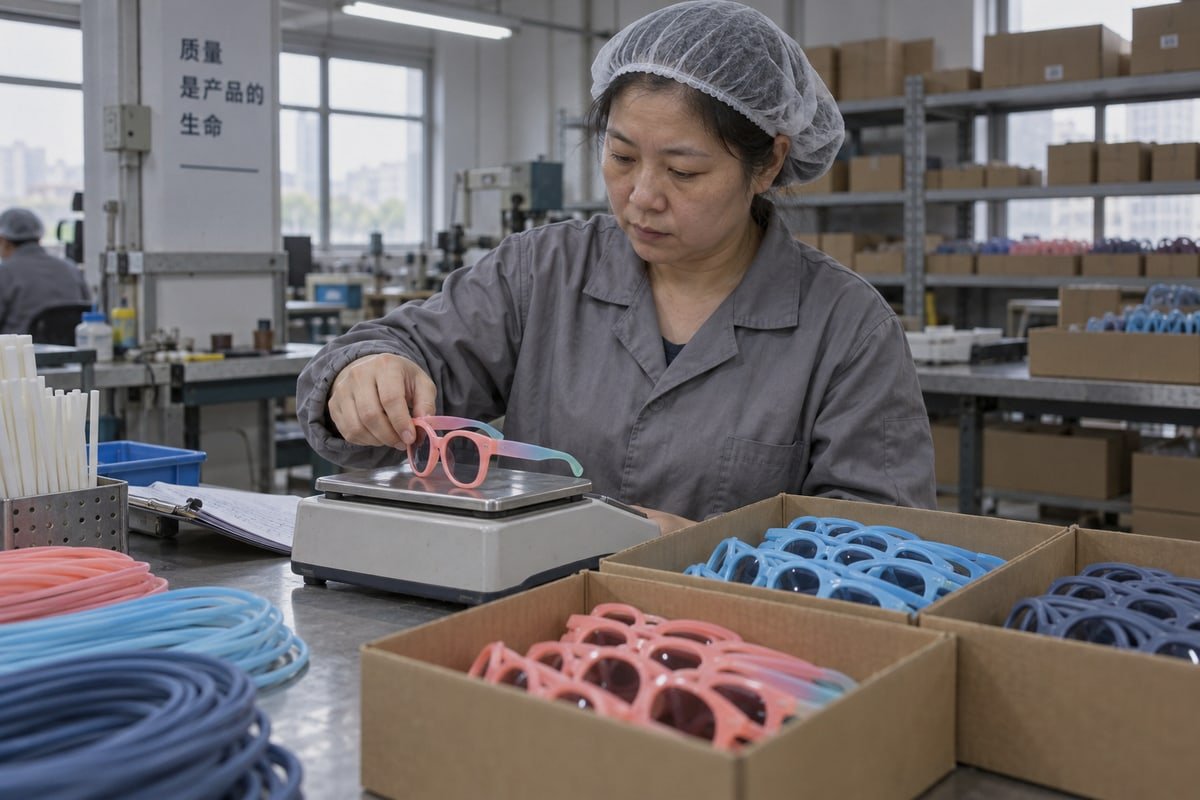
TR90 and TPEE kids sunglasses weight decides whether a child keeps their glasses on thermoplastic polymers 1. On our production line in Taizhou, a few grams often separates a bestseller from a return.
TR90 and TPEE kids sunglasses weight matters because lighter frames reduce nose and ear pressure, so children actually wear them. Lightweight means under 20 grams: toddlers do best at 12–15 grams, school-age kids at 15–20 grams, and anything over 25 grams feels heavy.
Those numbers sound simple. But behind them sit real questions about materials, age groups, fit, and how to verify weight before you order. Let me walk you through each one.
How light is light enough for my kids' sunglasses to feel comfortable all day?
A buyer from Australia once asked our team why her previous supplier's 26-gram frames kept coming back in returns. The kids simply pulled them off. Weight was the culprit.
Kids' sunglasses feel comfortable all day when they weigh under 20 grams. Toddlers need under 15 grams, the point where children lose sensory awareness of the frame. School-age children tolerate up to 20–22 grams if the frame is balanced and grips well.
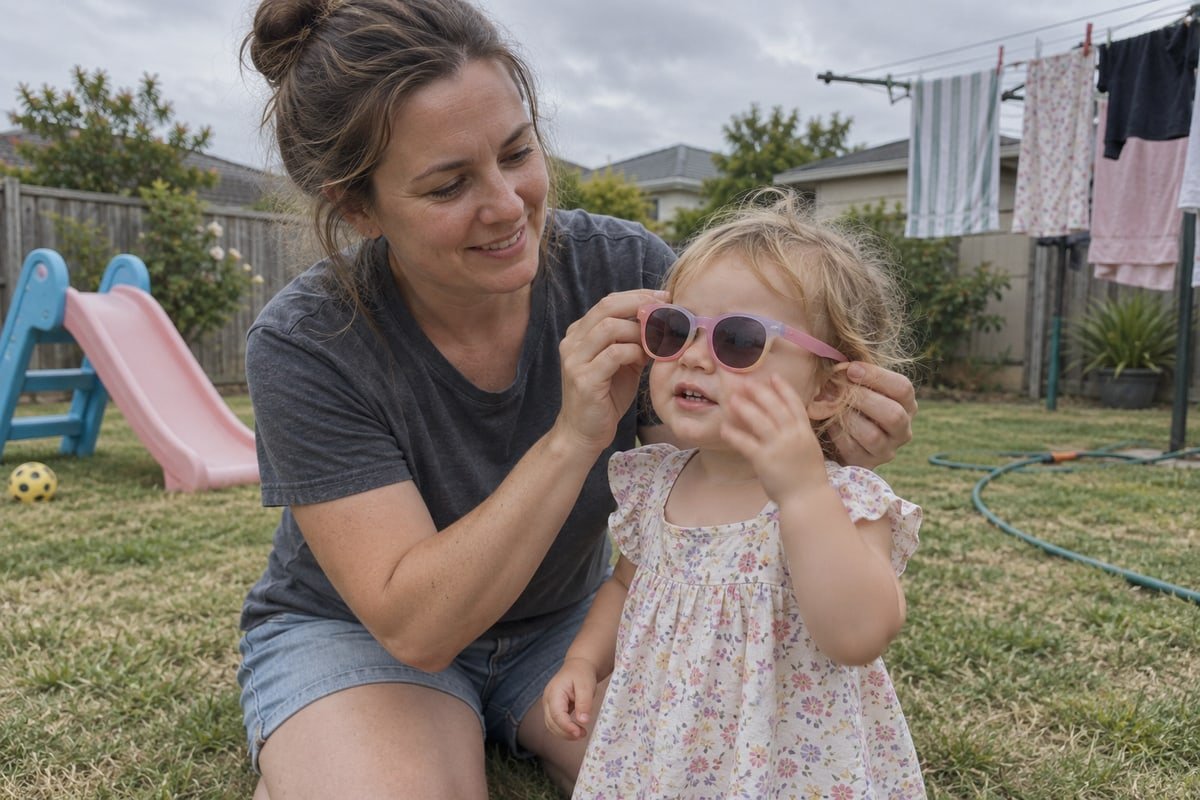
Children's faces are not scaled-down adult faces. The nasal bridge is softer, the cartilage is still developing, and the skin behind the ears is more sensitive. So a frame weight that an adult would never notice can create real pressure points on a child. That is why pressure point reduction is the first thing we check when we approve a new kids' style at our factory.
There is also a compliance angle. Sunglasses only protect eyes when they stay on the face. A lighter frame increases wear compliance, which means more consistent تظل رؤية شاشات LCD طبيعية. 2 through the day. Heavier frames slide down, bounce during play, and get yanked off by an annoyed toddler. Some pediatric eyewear standards 3 discussions even note that long-term use of heavy frames can subtly affect soft nasal cartilage in growing children. That makes ultra-light construction more than a comfort feature.
Weight benchmarks by age group
| فئة العمر | Target weight | Why it works |
|---|---|---|
| الرضع والأطفال الصغار (0-4) | Under 15 g | Below the "invisible weight" threshold; child forgets the frame is there |
| School-age (5–9) | 15–20 g | Light enough for all-day wear with a secure fit |
| Older kids and sports (10+) | 18-22 جرام | Acceptable if the frame adds coverage and grip |
| Any age | Over 25 g | Likely too heavy; expect removal and complaints |
Note that some industry sources call 18–25 grams the "standard lightweight" benchmark. In our experience, that range is defensible only for older children. For the toddler segment, we always push our buyers toward the sub-15-gram zone.
Why do TR90 and TPEE make such a big difference in reducing frame weight?
Fifteen years of molding thermoplastic frames has taught our engineers one thing: material choice sets the weight ceiling before design even begins. You cannot make a heavy polymer light through styling alone.
TR90 and TPEE reduce frame weight because both are low-density thermoplastic polymers with built-in flexibility. Their material memory lets frames bend and recover without metal hinges or thick reinforcement, cutting grams that acetate and metal frames cannot avoid, while keeping shatterproof, impact-resistant construction.
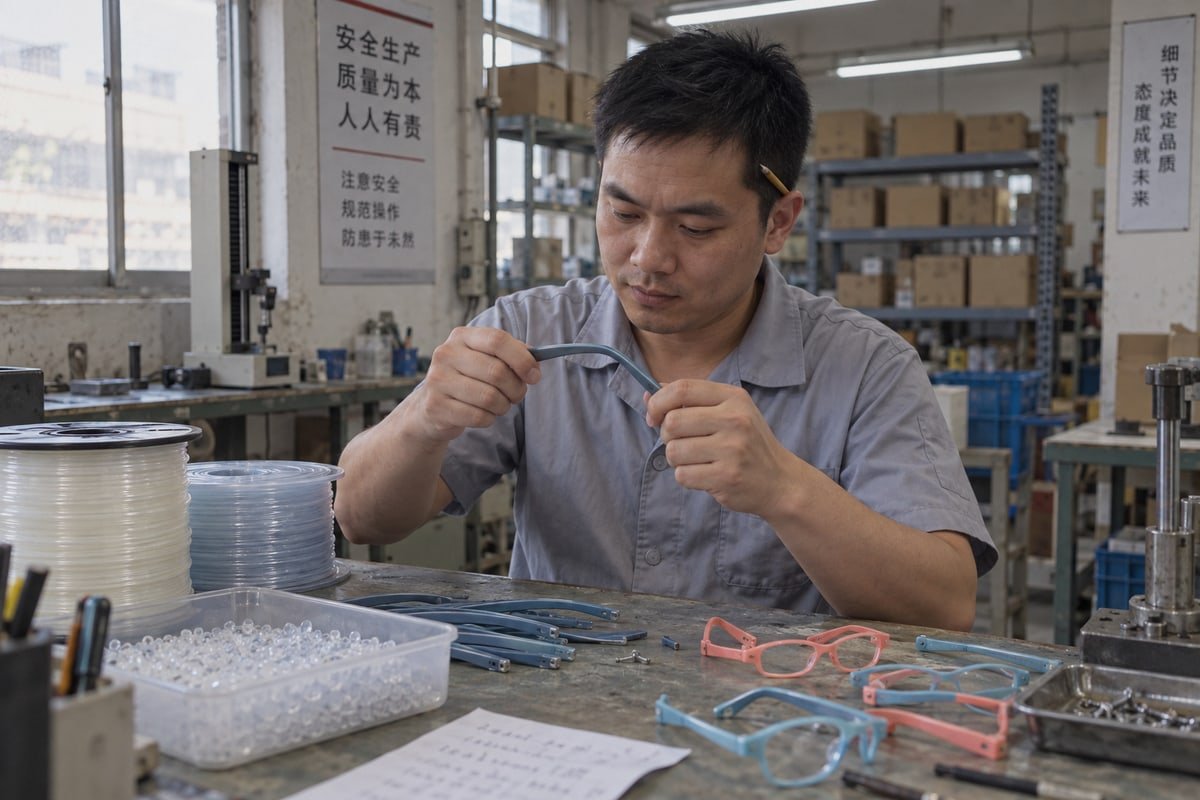
Let me break down why these two materials dominate the lightweight kids' segment.
TR90, often supplied as Grilamid TR90, is a Swiss-developed thermoplastic. It is significantly lighter than traditional acetate or standard polycarbonate frame plastics because of its lower frame density. It also has excellent memory. Bend a TR90 temple arm and it snaps back to shape. That flexibility means we can skip heavy metal spring hinges and still get a frame that survives being sat on.
TPEE goes even further on softness. It is an elastomer, so it feels rubbery and forgiving on the skin. It is the material we recommend for babies and toddlers because a TPEE frame can twist almost flat without cracking. Some industry comparisons place TPEE kids' sunglasses at just 8–14 grams on average, though we treat that as an optimistic benchmark rather than a guarantee, since lens choice and frame size matter too.
There are three more benefits both materials share:
- Impact resistance. Lower mass means lower kinetic energy in a fall or collision, which reduces facial injury risk during active play.
- Thermal stability. TR90 and TPEE hold their structural tension in a hot car or direct sunlight, so the lightweight geometry does not warp.
- سلامة الجلد. Both are available as BPA-free materials with hypoallergenic properties, which matters for children who wear frames against their skin for hours.
TR90 vs TPEE at a glance
| خاصية | TR90 (Grilamid) | TPEE |
|---|---|---|
| Typical kids' frame weight | 12–20 g | 8–15 g (some designs up to 23 g) |
| صلب ولكنه مرن، تأثير الذاكرة | Structured, sporty | Soft, rubbery, very flexible |
| Best age fit | School-age and sports use | Babies and toddlers |
| المرونة | عالية، مع ذاكرة الشكل | Extreme; can twist nearly flat |
| Common pairing | إطار TR90 مع معابد TPEE | Full TPEE construction |
At our workshop we often combine them: a TR90 front for lens stability, with flexible temple arms in TPEE for a softer grip behind the ears. That hybrid gives buyers the best of both weight profiles.
What gram range should I look for when sourcing lightweight kids' sunglasses?
Here is a trade-off we discuss with almost every new brand buyer: chase the absolute lowest gram count, or accept a couple of extra grams for better coverage and grip? The answer depends on your target age group.
Source frames under 20 grams as your general lightweight benchmark. Specify 12–15 grams for toddler lines, 15–20 grams for school-age styles, and up to 22 grams for sports designs with wraparound coverage. Treat anything over 25 grams as too heavy for children.
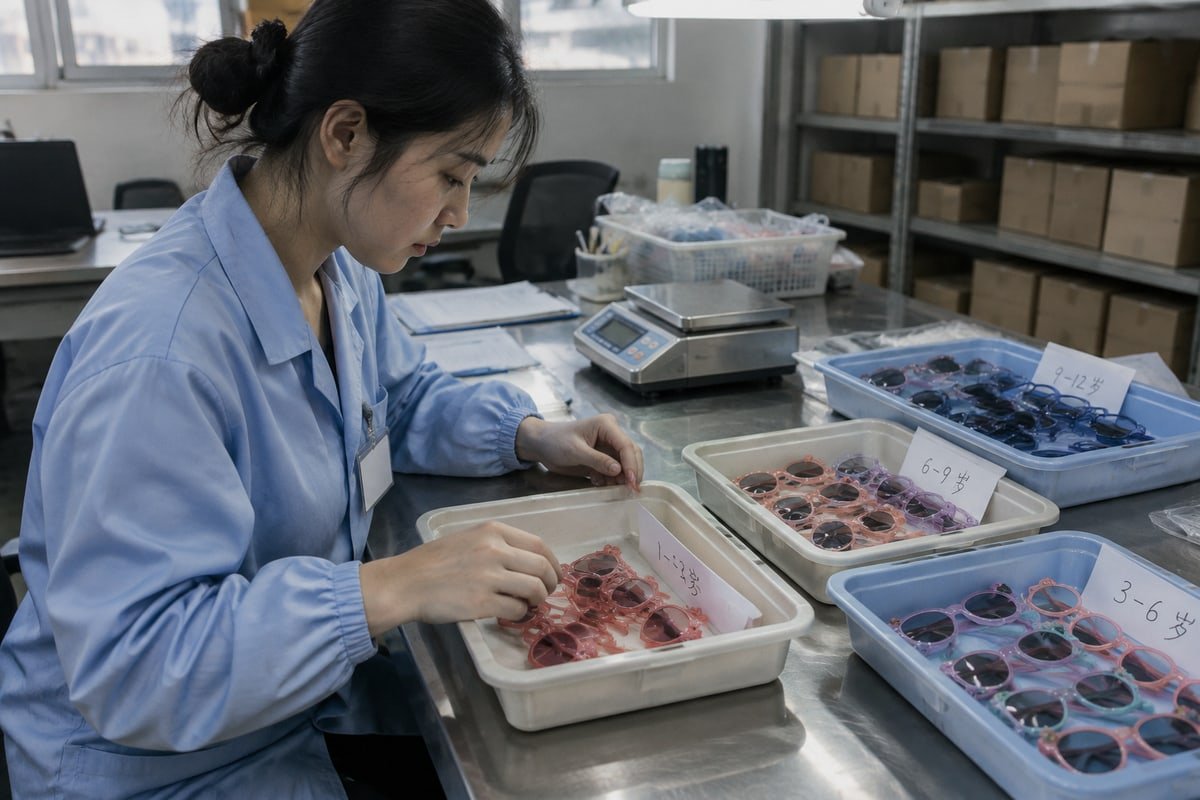
The sub-20-gram figure is now a genuine selling point in the market. Brands increasingly print the gram count on packaging the same way they print polarized UV400 lenses or "unbreakable frame" claims. If your product page cannot state a competitive weight, you are giving that shelf argument to a competitor.
But I want to push back on one temptation, because I have seen it hurt buyers. The lightest possible frame is not automatically the best frame. A 14-gram frame that is too flimsy, or that carries its weight too far forward over the lenses, will slide down a child's nose constantly. Meanwhile, a well-balanced 23-gram TPEE frame — and yes, some TPEE designs do reach 23 grams depending on size and lens package — can stay put and protect better during sport. Weight distribution matters as much as total mass. A balanced center of gravity prevents the nose-heavy sliding effect that frustrates kids most.
Sourcing checklist by product line
| Product line | Target spec | ما يجب التحقق منه مع المورد الخاص بك |
|---|---|---|
| Baby / toddler sunglasses | 12–15 g, full TPEE | Twist test, hypoallergenic material certificate, no small detachable parts |
| Everyday school-age line | 15–20 g, TR90 or hybrid | Balance point near the hinge, flexible temple arms, polarized UV400 lenses |
| Kids' sports line | 18-22 جرام | Wraparound coverage, anti-slip nose pads, strap compatibility |
| Optical frames for kids | Under 20 g before lenses | Frame density data, shatterproof construction, lens groove strength |
One more sourcing note. The material label alone does not fix the weight. Two frames both molded in TPEE can differ by nearly 10 grams because of lens thickness, frame size, and rim design. So write the gram count into your purchase specification, not just the material name. When we develop OEM projects, we lock the target weight with a tolerance during sampling, so production units cannot quietly drift heavier.
Can I test frame weight and comfort before placing a bulk order with my supplier?
Early in my career, I watched a European buyer approve a beautiful sample by photo alone. The bulk goods arrived four grams heavier than expected, and the whole batch felt wrong on small faces. Since then, we insist every buyer physically tests samples first.
Yes. Request physical samples, weigh each frame on a jewelry scale, check the balance point on your finger at the hinge line, flex the temples, and run child wear trials. Then write the confirmed gram weight and tolerance into your bulk order specification.
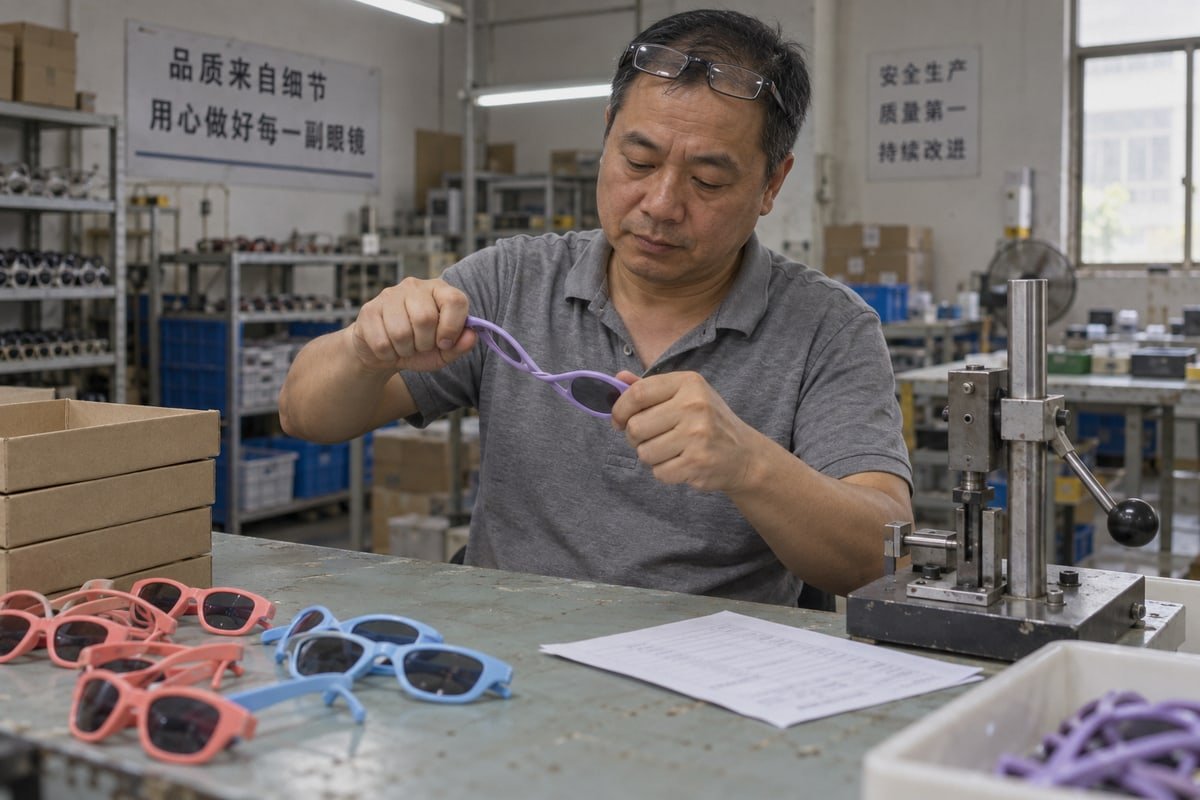
Testing before a bulk order is not complicated, but it needs to be systematic. Here is the process we recommend to the brands we work with across 20+ countries.
A five-step pre-order testing process
- Order counter samples, not renders. Photos hide weight completely. Ask for two or three units per style, ideally from the actual production mold. With around 800 existing styles in our catalog, buyers can sample several weight classes without paying for new tooling.
- Weigh on a precision scale. A cheap 0.01-gram jewelry scale is enough. Weigh with lenses installed, because عدسات مستقطبة 4 add measurable grams over basic tinted ones. Compare the result against the spec sheet.
- Check the balance point. Rest the frame on one finger at the hinge line. If it tips sharply toward the lenses, expect nose-heavy sliding on a child. Good pressure point reduction starts with balance, not just low mass.
- Stress the flexible parts. Twist the temples outward and flex the bridge. TR90 and TPEE should recover instantly with no whitening or creaking. This confirms real thermoplastic quality rather than a mislabeled cheap plastic.
- Run a short wear trial. Put samples on two or three children in your target age range for a full afternoon. Watch for red marks on the nose, complaints, and how often they push the frames back up. Kids give brutally honest QC feedback.
Also ask your supplier hard questions. Request the material datasheet confirming BPA-free materials, ask how they control weight consistency between cavities in the mold, and confirm lenses meet UV400 requirements relevant to pediatric eyewear standards in your market. A factory that answers quickly with real data is a factory that measures. In our 5S-managed workshop, sample weights are recorded at sign-off precisely so bulk production has a fixed reference to match.
الخلاصة
Weight is the comfort trigger that decides whether kids wear their sunglasses. Aim under 20 grams, choose TR90 or TPEE by age, and verify samples before you order.
Interested in sourcing the products mentioned in this article? See details and request a quote here:
ملاحظات ختامية
1. Technical definition of the material class used in lightweight eyewear construction. ↩︎
2. Authoritative FDA guidance on the necessity of UV protection for eye health. ↩︎
3. Clinical perspective on sun protection and eyewear safety for children. ↩︎
4. Authoritative guide from the American Academy of Ophthalmology explaining how polarized lenses function and reduce glare. ↩︎
مقالات أخرى قد تعجبك

هل تبحث عن شريك موثوق به للنظارات للأطفال؟
استكشف أكثر من 800 نمط جاهز ودعم OEM/ODM كامل مصمم خصيصًا لعلامتك التجارية.
اتصل بنا English
  Español de México
  Deutsch
  Français
  日本語
日本語  العربية
  Português do Brasil