Why Do Kids’ Eyes Need More UV Protection, and How Much Can TR90 Sunglasses Help?
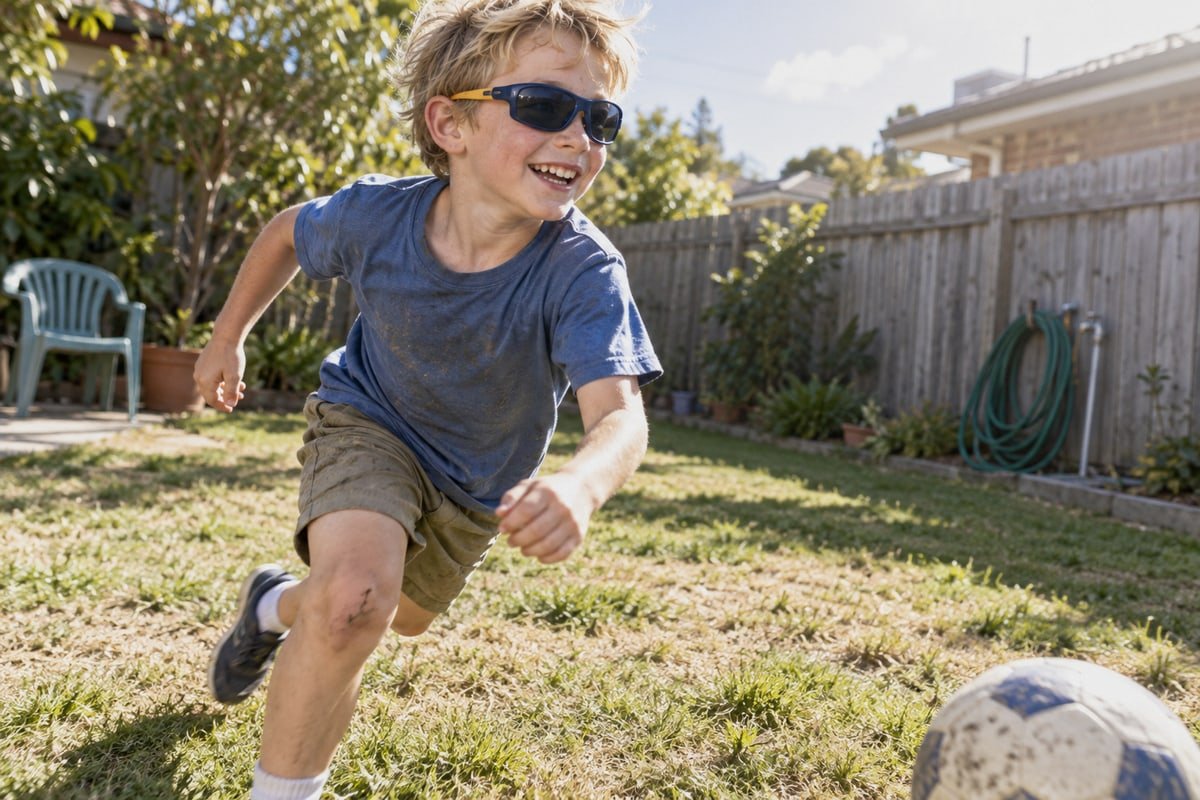
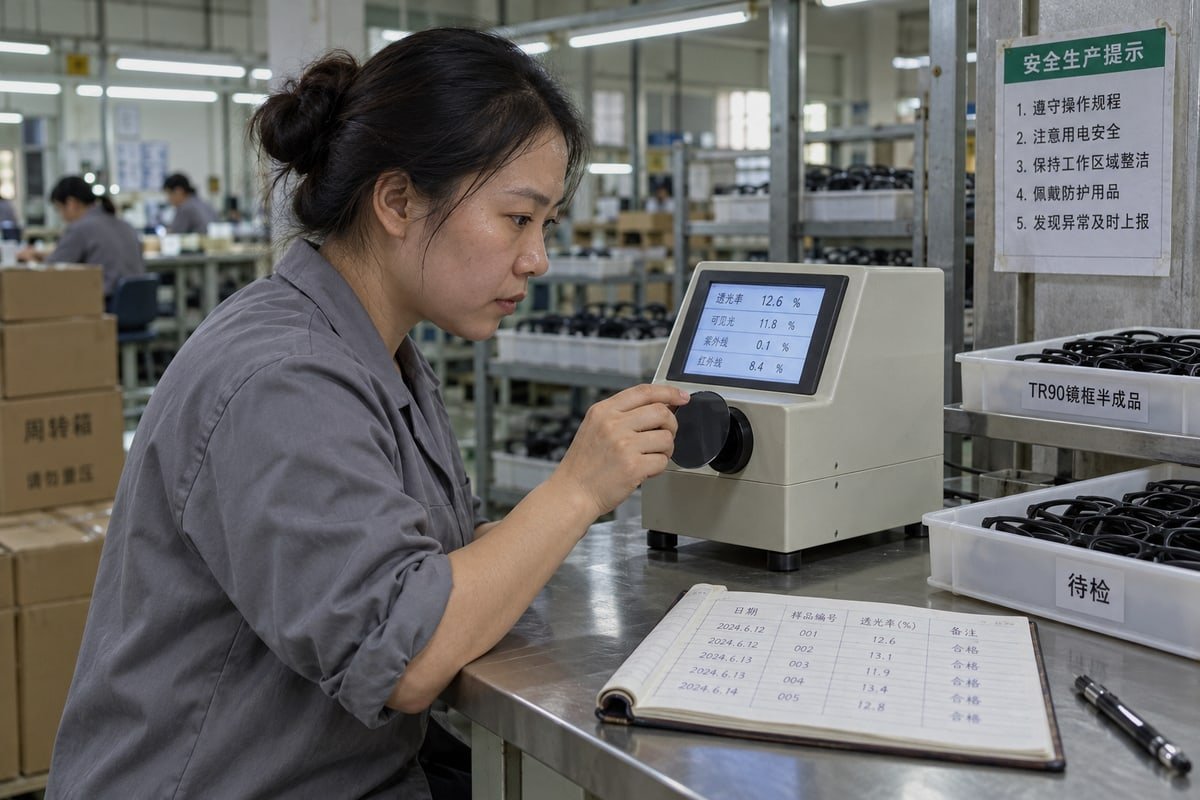
Kids’ eyes need more UV protection than most parents realize. I saw this on our Taizhou production line when a buyer asked us to test a competitor’s unlabeled kids’ sunglasses.
Kids’ eyes need more UV protection because a child’s crystalline lens is clearer and pupils are larger, so more UV reaches the retina. TR90 sunglasses help by keeping lightweight, flexible frames on active kids, but real protection comes only from certified UV400 lenses.
Those competitor lenses looked dark and serious. They blocked almost no UV. That gap between how sunglasses look and what they do is the whole problem. Below, I walk through why children are at higher risk, what TR90 can and cannot do, and how to source kids’ sunglasses that protect for real.
How do I know if my kids' eyewear supplier truly understands UV protection for children?
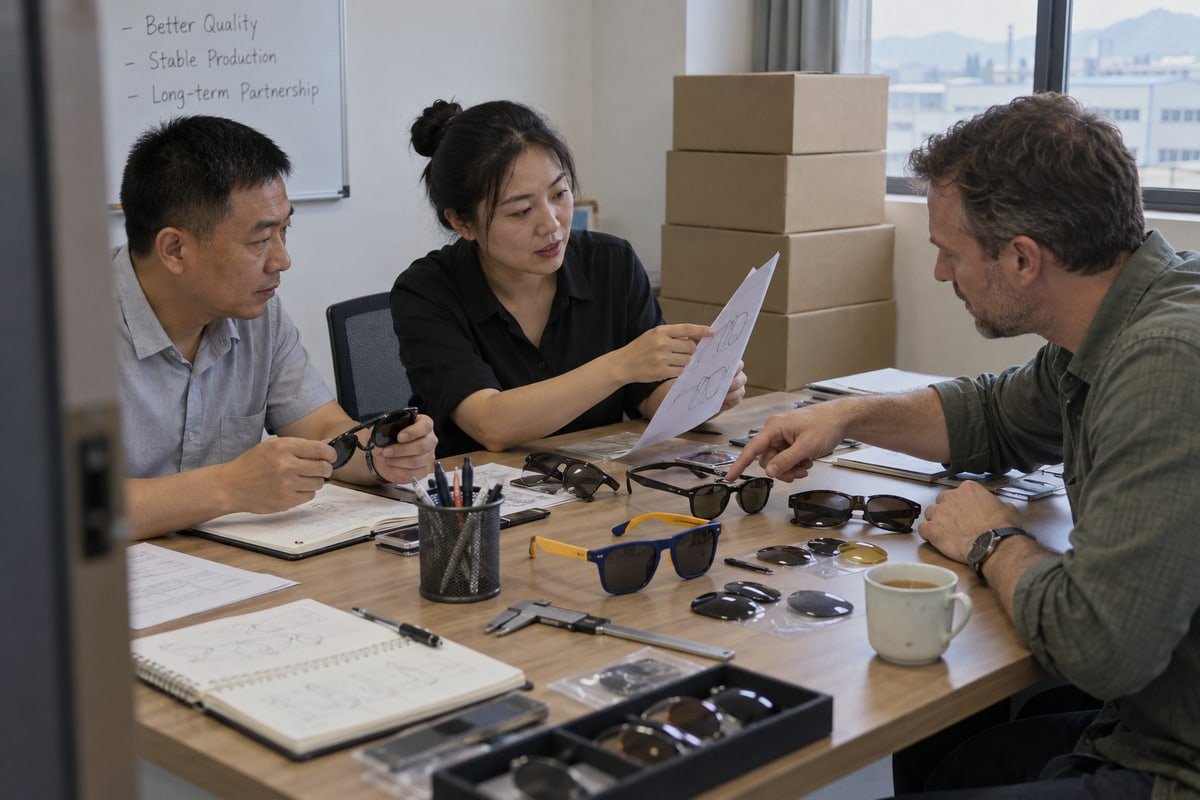
A procurement manager from Australia once sent us a one-line spec: "UV protection." We sent back three questions before quoting, because that phrase alone protects nobody.
A supplier who understands UV protection for children will specify UV400 or 99–100% UVA/UVB blocking in writing, explain that frame material adds no UV protection, test lens transmission on every batch, and discuss fit, side-light coverage, and age guidance without being prompted.
The fastest way to judge a supplier is to listen to what they volunteer. A factory that lives in صحة عيون الأطفال 1 will bring up lens ratings before colors. A trading company will bring up price before anything.
The questions I would ask any kids' eyewear supplier
I have sat on the answering side of these questions for fifteen years. The good buyers ask them every time. The table below shows what each question is really testing.
| سؤال لطرحه | ما الذي يبدو عليه الرد القوي | Red flag answer |
|---|---|---|
| What UV rating are the lenses? | "UV400, blocks wavelengths up to 400 nanometers, 99–100% UVA and UVB." | "Full UV protection." |
| How do you verify it? | "We check lens transmission per production batch and can share reports." | "Our lens supplier guarantees it." |
| Does TR90 frame material block UV? | "No. The frame gives comfort and durability. The lens does the blocking." | "Yes, TR90 is UV resistant." |
| Are the lenses impact resistant? | "Yes, polycarbonate or similar, and we can build to standards such as ANSI." | Silence, or "they are plastic." |
| Is the frame BPA-free? | "Yes, our TR90 and TPEE frames are BPA-free flexible frames." | "It is normal plastic." |
| What about fit for small faces? | Discussion of wraparound coverage, bridge width, and temple grip. | Adult frames scaled down. |
Why vague labels are a business risk, not just a health risk
Consumer guidance is shifting hard toward explicit labeling. Retail buyers in Europe and Japan increasingly reject hangtags that say "UV protection" without a number. If your supplier cannot put حماية UV400 2 in writing, your product may fail a retailer audit before it fails a child. I have seen brands lose a season this way.
What we do differently on our line
Our lens options are UV400 or polarized with UV400, and we state that on the spec sheet before a buyer asks. We also separate the conversation: first the lens, then the thermoplastic material of the frame, then fit. Each has its own job. When a supplier blends them into one vague promise, that is your signal to keep looking.
Why are children's eyes more vulnerable to UV damage than adult eyes?
Early in our fifteen years making eyewear, we treated kids' lenses as small adult lenses. Learning how a child's eye actually handles light changed how we spec every lens.
Children's eyes are more vulnerable because their crystalline lens is clearer and filters less UV, their pupils are larger, they spend more hours outdoors, and exposure accumulates for a lifetime. Their shorter height also places their eyes closer to reflective surfaces like sand and pavement.
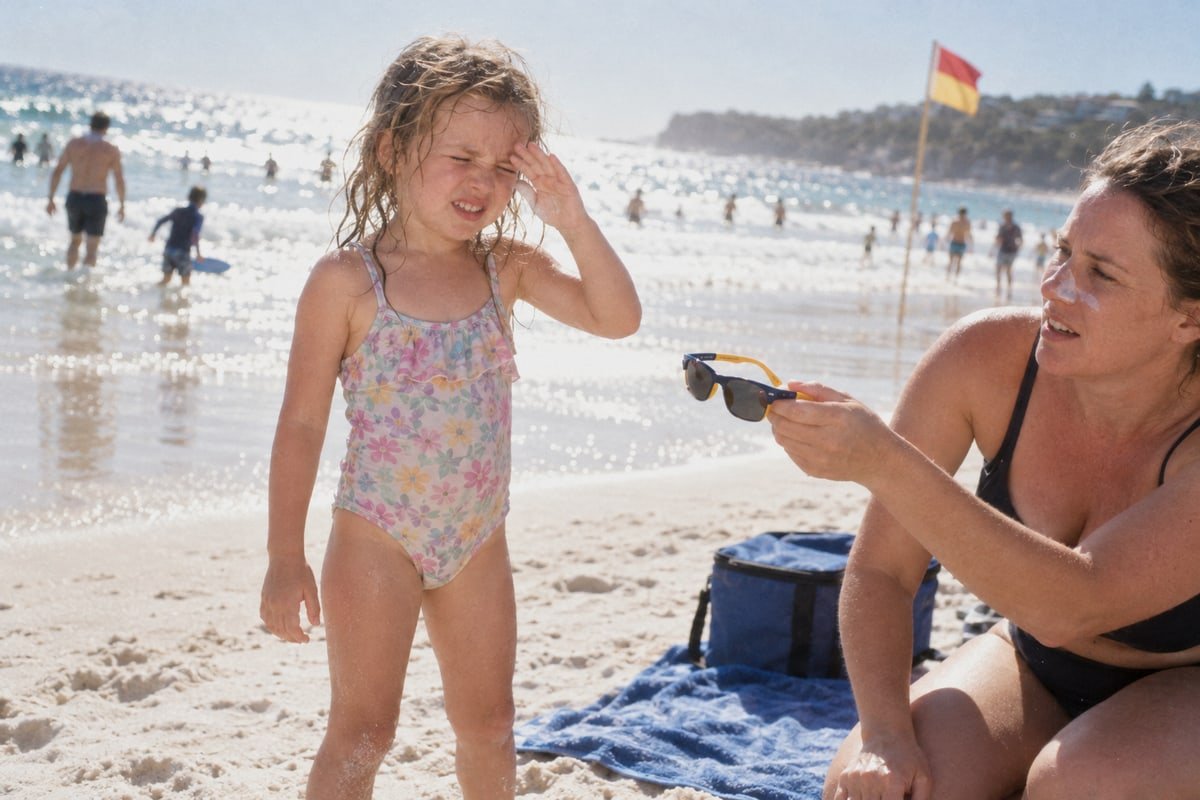
Adults have a built-in filter that children have not yet grown. Understanding this is the reason children's sunglasses are a health product, not a fashion accessory.
Child eye versus adult eye
| العامل | Child's eye | Adult's eye | لماذا هو مهم |
|---|---|---|---|
| Crystalline lens 3 | Very clear, filters little UV | Yellows with age, absorbs more UV | More high-energy UV reaches a child's retina |
| Pupil size | Naturally larger | Smaller | A larger opening lets in a greater volume of UV |
| Time outdoors | Long daily play hours | Usually less | More exposure per year |
| Years ahead | Many decades | أقل | Damage before age 18 is cumulative |
| Eye height | Close to ground | أعلى | Nearer to reflected UV from pavement, water, sand, snow |
What UV can actually do to a young eye
I keep the language plain when I explain this to buyers. Short-term, strong UV can cause photokeratitis, which is basically sunburn of the cornea 4. It hurts, and it is more common than people think after a day on water or snow. Long-term, the picture is worse. Repeated exposure can damage the eyelids, conjunctiva, cornea, and lens. Damage to ocular DNA in childhood is linked to early-onset cataracts and pterygium in adulthood. In young children, whose clear crystalline lens passes more UV through, there is also concern about retinal damage.
Reflected light means shade is not enough
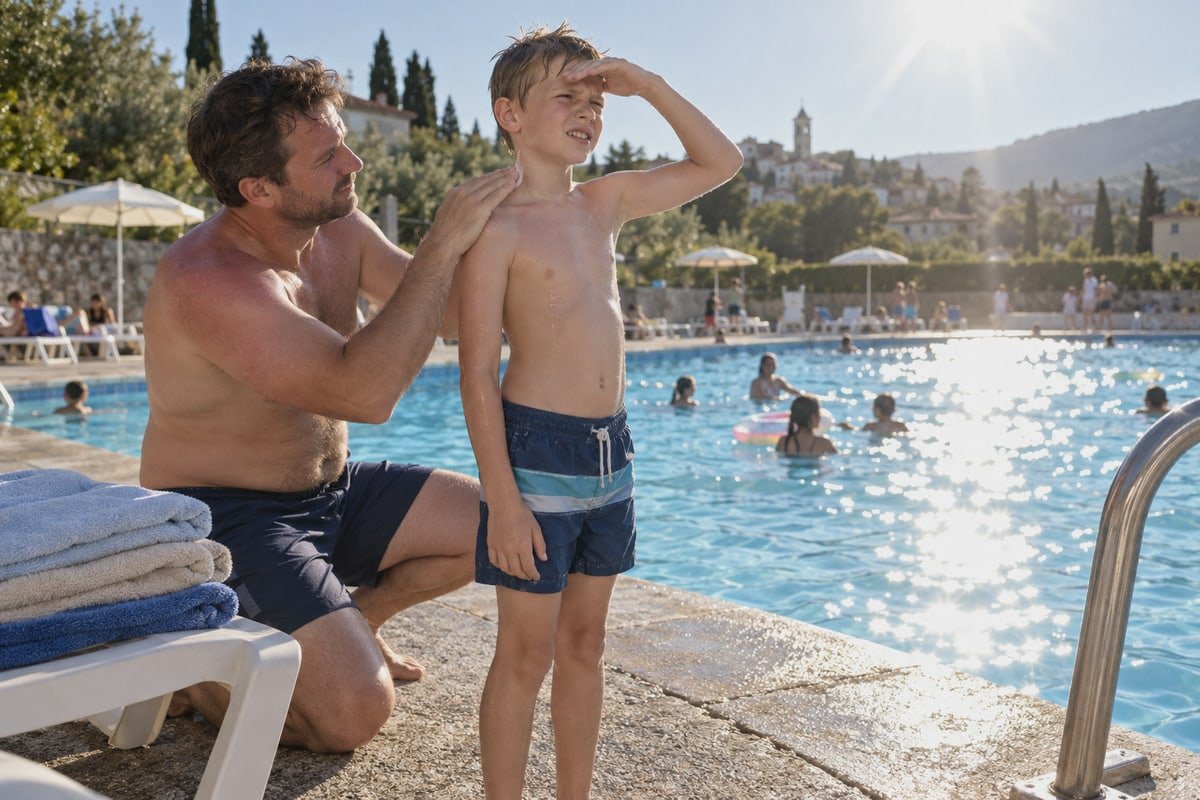
Sunlight bounces. Water, sand, pavement, and snow all reflect UV upward. A child standing at a playground receives UV from above and from below. Because children are shorter, their eyes sit closer to those reflective surfaces. This is why a hat alone leaves a gap, and why we design wraparound shapes for our sport styles.
Age guidance we build around
Pediatric guidance is clear. Infants under 6 months should be kept out of direct sunlight rather than given sunglasses. From 6 months onward, children should wear proper sun protection outdoors. Children who have had cataract surgery 5 or have certain eye conditions need even more careful protection. When we develop a baby range for a buyer, we start from these age lines, not from style trends.
How much UV protection can TR90 sunglasses actually provide for my kids' eyewear brand?
On our QC bench, we bend every TR90 sample temple back flat and watch it spring back. That test tells us plenty about durability and nothing about UV.
TR90 sunglasses provide zero UV protection from the frame itself; the lens does all the blocking. TR90's real contribution is wearability: light, flexible, BPA-free frames that survive rough play and stay on small faces, so children actually keep certified UV400 lenses in front of their eyes.
I want to be honest here, because I sell TR90 every day. TR90 is a frame material. It does not filter light. If a supplier tells you TR90 gives UV protection, they either do not understand the product or hope you do not.
What TR90 does and does not do
| الميزة | TR90 frame delivers this? | Comes from the lens instead? |
|---|---|---|
| Blocks UVA and UVB | لا | Yes, via UV400 protection lens material or coating |
| Reduces glare | لا | Yes, via polarized lenses |
| Survives being sat on | Yes, memory flex returns to shape | لا |
| Lightweight all-day comfort | Yes, low density thermoplastic material | Partly, lens weight matters too |
| Safe on skin during sweat | Yes, hypoallergenic, BPA-free frames | لا |
| Keeps lenses aligned over time | Yes, dimensional stability prevents frame creep | لا |
| Impact resistance on the eye side | Frame absorbs shock | Lens must also be impact resistant |
Why wearability is still a real protection benefit
The best UV400 lens does nothing in a backpack. In our experience shipping to brands in 20+ countries, the single biggest predictor of whether kids' sunglasses protect anyone is whether kids keep them on. That is where TR90 earns its place.
- Memory flex. TR90 frames bend under real pressure and return to shape. A frame that snaps can cut a child's face. A frame that flexes does not.
- Low density. TR90 is much lighter than traditional acetate or standard plastics. Less weight on a small nose means fewer complaints and longer wear.
- سلامة الجلد. TR90 is commonly described as a food-grade thermoplastic material. It is hypoallergenic and BPA-free, which matters when a child sweats through a two-hour football session.
- Dimensional stability. Cheap frames slowly warp. Lenses then sit off the child's visual axis, which can cause headaches. TR90 holds its shape, so the optical center stays where we set it.
How this looks in our existing range
Three styles from our roughly 800 existing designs show the point. Our navy wayfarer with yellow-orange TPEE temples pairs a bold, playful look with flat gray UV400 lenses for everyday wear. Our matte navy wraparound uses a curved aerodynamic TR90 front with gradient gray polarized lenses for sports and side-light coverage. Our glossy black oval retro frame gives a compact fit with opaque dark lenses for a streetwear look. All three share the same rule: the frame handles comfort and impact resistance, and the lens handles UV.
What should I look for when sourcing UV400 TR90 sunglasses from a manufacturer?
Every week we weigh one trade-off with buyers: a darker lens looks more protective in photos, but a properly coated lighter lens protects equally and gets worn longer.
When sourcing UV400 TR90 sunglasses, look for written UV400 or 100% UVA/UVB lens specs, batch-level transmission testing, impact-resistant lenses meeting standards such as ANSI, BPA-free flexible frames, wraparound or large-frame fit, back-surface anti-reflective coating, and a factory offering existing styles plus full OEM/ODM support.
Sourcing well is a process, not a single question. Here is the order I would follow if I were sitting in a buyer's chair in Melbourne, Tokyo, or Berlin.
A seven-step sourcing process
- Fix the lens spec first. Write "UV400" or "blocks 99–100% UVA and UVB" into your purchase order. Do not accept "UV protection" as a spec line.
- Ask for batch testing, not a one-time certificate. Lens coatings vary between lots. A real factory checks transmission per batch. We do this on our 5S-managed workshop floor before assembly.
- Confirm impact resistance separately. UV blocking and shatter resistance are different properties. Ask for impact-resistant lenses and, where your market requires it, compliance with standards such as ANSI.
- Specify frame material and safety. Ask for TR90 or TR90 with TPEE temples, and ask for confirmation that the flexible frames are BPA-free and hypoallergenic.
- Review fit for the target age. Wraparound or large-frame styles limit side-entry light. Check bridge width, temple curve, and whether the frame stays on during running.
- Ask about coatings beyond UV. A back-surface anti-reflective coating stops UV that enters from behind the child from bouncing off the rear lens surface into the eye. Many suppliers skip this.
- Evaluate the partner, not just the sample. A factory with around 800 existing styles lets you launch without mold investment and test a market at lower risk. Full OEM/ODM support means custom colors, logos, lenses, packaging, and accessories arrive retail-ready.
Two objections I hear often, and how I answer them
"Our line is already polarized, so it is protected." Polarized lenses cut glare from water and pavement. That is a comfort and visibility feature. Polarization does not block UV unless the product also states full UVA/UVB or UV400 protection. We offer polarized options, and every one is also UV400. Ask your supplier to confirm both, separately.
"Darker tint means stronger protection." It does not. A near-black lens with no UV filter can be worse than a light gray lens with UV400, because the dark tint relaxes the pupil and lets more UV in. Protection is verified filtering, not shade.
Trends worth building into your next range
Kids' brands are moving toward explicit UV400 labeling, polarized sport styles, and "unbreakable" flexible frames as headline claims. We also see rising demand for 2-in-1 smart lenses that filter high-energy blue light for classroom screens and block 100% UV for recess. Whatever you add, remember that sunglasses are one layer. Hats, shade, sunscreen, and keeping play out of the midday peak complete the routine. A good manufacturing partner will say that on your packaging too.
الخلاصة
Choose verified UV400 lenses first, then TR90 flexible frames for comfort and durability. Together they protect developing eyes and keep kids wearing them. Ask your supplier for both, in writing.
Interested in sourcing the products mentioned in this article? See details and request a quote here:
ملاحظات ختامية
1. Official guidance on children’s vision health from the American Academy of Pediatrics. ↩︎
2. Authoritative FDA source recommending UV400 rating for 100% UV protection. ↩︎
3. Authoritative NIH source explaining the function and vulnerability of the eye’s crystalline lens. ↩︎
4. Medical definition from the American Academy of Ophthalmology regarding photokeratitis and UV damage. ↩︎
5. Authoritative medical overview of cataracts and related eye care from Johns Hopkins Medicine. ↩︎
مقالات أخرى قد تعجبك


هل تبحث عن شريك موثوق به للنظارات للأطفال؟
استكشف أكثر من 800 نمط جاهز ودعم OEM/ODM كامل مصمم خصيصًا لعلامتك التجارية.
اتصل بنا English
  Español de México
  Deutsch
  Français
  日本語
日本語  العربية
  Português do Brasil