Why Do Kids’ Optical Frames Keep Sliding Down—Wrong Size or Poor Fit?
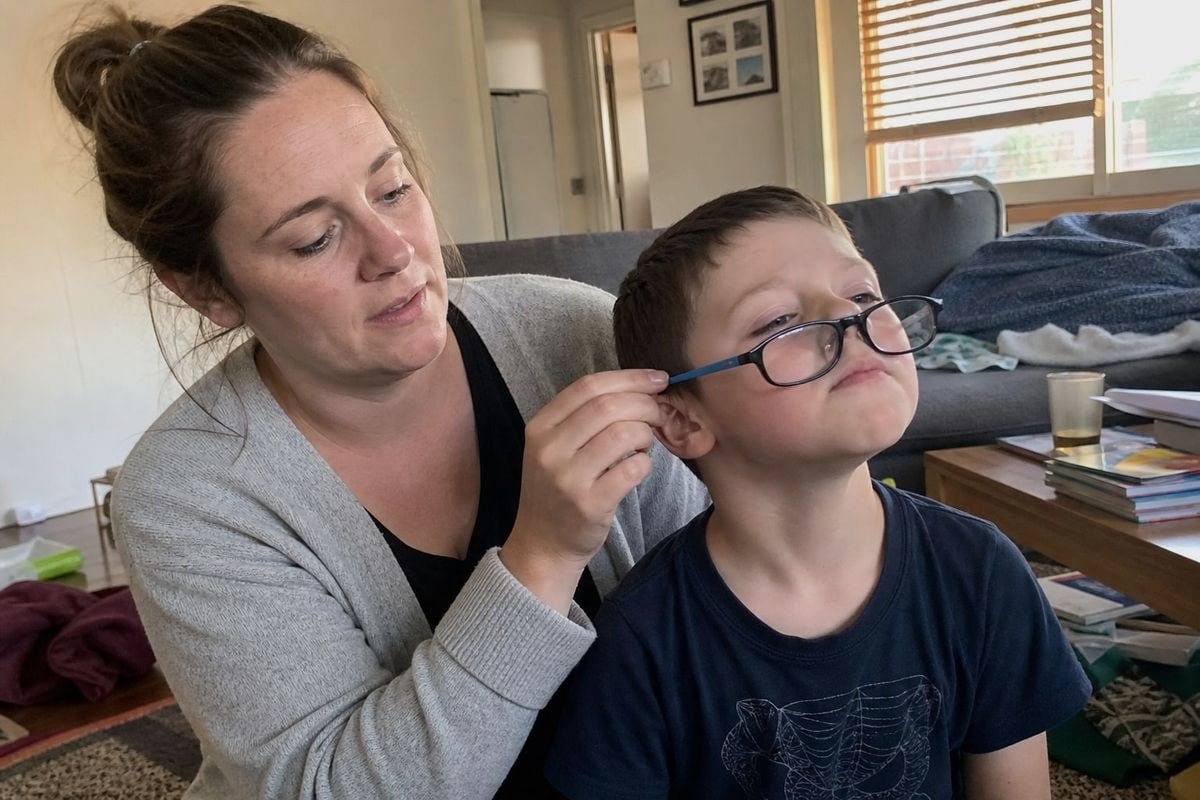
Kids’ optical frame 1s that keep sliding down are the number one complaint our factory hears from buyers. Returns pile up, parents blame the brand, and reorders quietly disappear.
Kids’ optical frames slide down for two overlapping reasons: wrong size and poor fit. Wrong size means the bridge width, frame width, or temple arm length never matched the child’s face. Poor fit means the geometry drifted out of alignment through growth, loose hardware, or rough handling.
The distinction matters for buyers. A sizing error is a sourcing problem you can fix before production. A fit problem is a design problem you must engineer around. This article covers both.
How Do I Know If My Supplier's Frame Sizing Is Actually Right for Kids' Faces?
Last year, a buyer from Australia sent us a competitor's frame that kept slipping on toddlers. Our engineers measured it and found an adult bridge shrunk to kid dimensions.
Correct kids' sizing must match pediatric facial measurements, not scaled-down adult specs. Verify that bridge width suits flatter nasal bridges, temple arm length matches smaller head depth, and frame width creates gentle lateral tension. If a supplier only shrinks adult frames proportionally, the sizing is wrong.
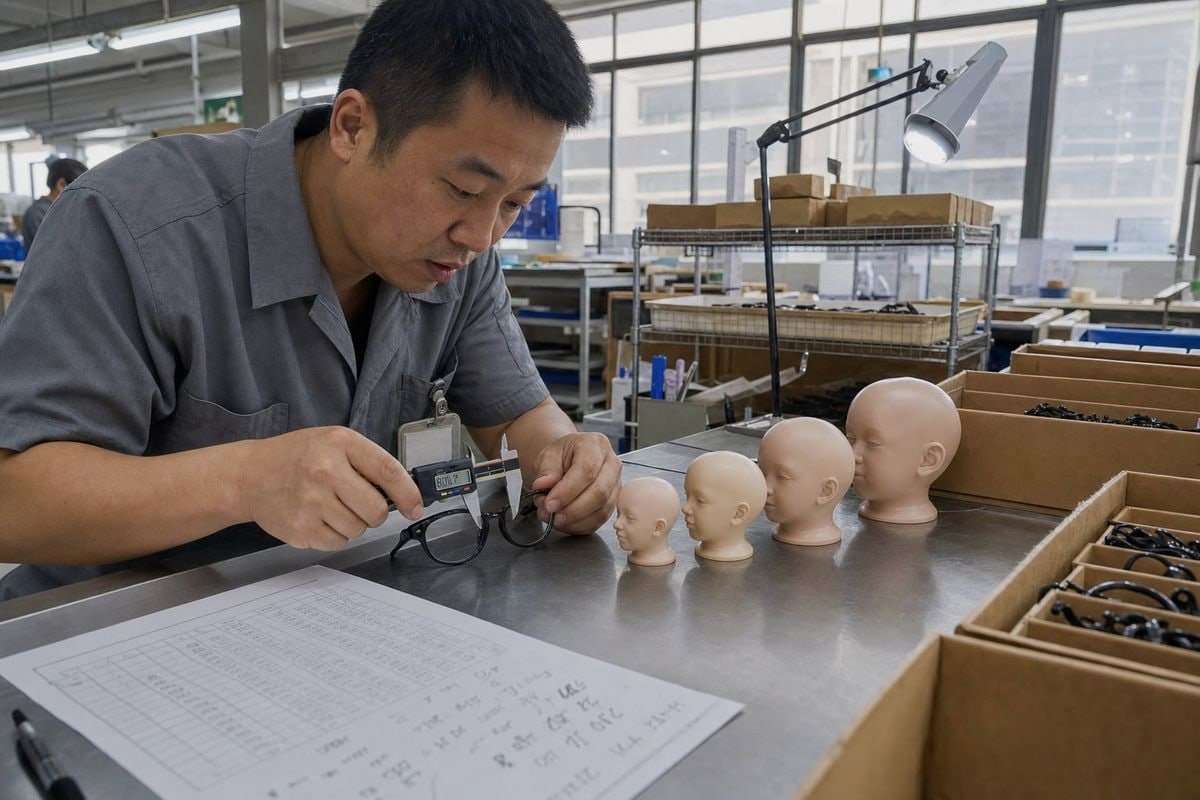
Children are not small adults. Their nasal bridge is flatter and less developed, so it lacks the natural "shelf" that supports standard frames. Their cheekbones sit higher, and their ears sit in a different position relative to the nose. When we develop a new kids' style in our Taizhou workshop, we start from pediatric head data, not from an adult mold library.
The Three Numbers That Matter Most
Every optical frame carries three numbers: lens width, bridge width, and temple arm length. For kids, the bridge and temples do most of the work. A frame can have the "right" lens width and still slide constantly because the bridge is 2mm too wide for a flat nose.
| قياس | لماذا هو مهم للأطفال | Warning Sign of Wrong Sizing |
|---|---|---|
| عرض جسر الأنف | Flat pediatric bridges need narrower, lower bridge contact | Frame rests on cheeks, not nose |
| طول ذراع المعبد | Too long means no "hook" behind the ear | Frame drifts forward when child looks down |
| عرض الإطار | Too wide removes lateral grip at the temples | Frame shifts sideways during play |
| Bridge slope angle 2 | Mismatch creates a "wedge effect" that ejects the frame | Glasses slide even when width looks correct |
The Wedge Effect Nobody Checks
Here is a subtle failure we see often. Even when bridge width is technically correct, a mismatch between the frame's internal bridge angle and the child's actual nasal slope creates a wedge effect. Gravity plus that angle mismatch slowly pushes the frame downward. Ask your supplier whether their bridge geometry is designed as a low bridge fit for pediatric faces. If they cannot answer, that tells you something.
Also ask how sizing changes across age bands. Children's facial structures change every few months. A serious supplier offers graduated sizes—for example, separate geometry for ages 3–5, 5–8, and 8–12—rather than one "kids" size.
Can Flexible TR90 and TPEE Materials Really Stop Frames from Slipping?
There is a trade-off we weigh on every new mold: stiffer material holds its adjusted shape longer, but flexible material survives kids' rough handling. Getting that balance right decides slippage.
Yes, but indirectly. TR90 and TPEE do not grip the face by themselves; they stop slipping by staying lightweight, keeping their shape after bending, and enabling soft anti-slip ear hooks. A flexible frame that returns to its fitted geometry resists the loosening that causes most slippage.

Let me be honest about what material can and cannot do, because some suppliers oversell it. Material choice attacks three of the biggest slippage causes: front weight, shape loss, and behavioral damage.
First, weight. High-prescription lenses shift the center of gravity forward and pull the bridge away from the face. A heavy acetate front 3 makes this worse. TR90 is dramatically lighter, so the front-heavy pull is reduced before the child even moves.
Second, memory. Kids pull frames off one-handed, sit on them, and bend them during play. A rigid frame bends permanently, and once the temple geometry changes, the frame loses its hook behind the ear. TR90 and TPEE flex and return. In our drop and torsion testing, the combination we use most—a TR90 front with TPEE temples—recovers its shape after abuse that would permanently splay a standard frame.
Third, grip surfaces. Flexible TPEE temples let us mold curved ear hooks with embossed dot and swirl textures, like the two-tone navy and sky-blue style on our line. Those textures increase friction exactly where sweat and skin oils normally reduce it during active play.
What Material Solves vs. What It Doesn't
| Slippage Cause | Does TR90/TPEE Help? | What Else Is Needed |
|---|---|---|
| Front-heavy lens weight | Yes, lighter frame front | High-index lenses for strong prescriptions |
| Permanent temple bending | Yes, shape memory resists deformation | Correct temple bend position from the start |
| Sweat and oil friction loss | Partially, via textured silicone tips | Silicone nose pads or grip-textured bridge |
| Wrong bridge width | لا | Correct pediatric sizing |
| Outgrown frame | لا | Graduated size range |
The honest conclusion: flexible materials are necessary but not sufficient. A TR90 frame with adult bridge geometry will still slide. Material and sizing must work together.
What Fit Features Should I Look for When Sourcing Kids' Optical Frames?
A Japanese buyer once asked us why one of our styles outsold another with identical sizing. The answer was three small fit features that parents never see on a spec sheet.
Prioritize five fit features: a low bridge fit or adjustable silicone nose pads for flat noses, anti-slip ear hooks or cable temples for retention, lightweight fronts under a few grams' variance, adjustable temple tips, and compatibility with eyeglass retainers for sport use.

The industry has shifted from "make it work" to "fit the child's anatomy first." Pediatric-specific design is now a genuine selling point, and buyers who source it early gain a real edge. Here is what we recommend checking, in order of impact.
The Fit Feature Checklist
- Bridge design for flat noses. Look for low bridge fit geometry or adjustable silicone nose pads. This addresses the single biggest cause of sliding on young faces.
- Ear retention. Curved anti-slip ear hooks with texture, or full cable temples that wrap behind the ear for the youngest wearers and strong prescriptions.
- Adjustable temple tips. Soft TPEE or silicone tips that an optician can heat and reshape during professional frame adjustment extend the frame's usable life through growth spurts.
- Retainer compatibility. Temple ends should accept eyeglass retainers or straps for sport and toddler use without covering the tips' grip texture.
- Balanced weight. The front should be light enough that the center of gravity sits between the ears, not in front of the nose.
Matching Features to Age Groups
| الفئة العمرية | Priority Feature | لماذا |
|---|---|---|
| 1–3 سنوات | Cable temples or head strap | No developed bridge shelf; maximum retention needed |
| 3–6 years | Silicone nose pads plus soft ear hooks | Flat bridge, very active, rough handling |
| 6-9 سنوات | Low bridge fit with textured temple tips | Growing fast; frame must tolerate adjustment |
| 9-12 سنة | Adjustable nose pads, near-adult geometry | Facial asymmetry emerges; pivot effect risk rises |
One detail worth flagging: subtle asymmetries in ear height can cause a pivot effect, where the frame rotates and loses grip on one side of the bridge. Adjustable pads and reshapeable temple tips are the only practical answers, because no fixed geometry fits both sides of an asymmetric face perfectly. From our catalog of roughly 800 existing styles, the models with independently adjustable contact points consistently generate the fewest fit complaints from distributors.
How Can I Work with a Manufacturer to Fix Sizing Issues Before Mass Production?
The most expensive lesson we ever watched a client learn: approving a pre-production sample based on photos alone, then discovering a bridge slope mismatch after 10,000 units shipped.
Fix sizing before mass production through a staged process: share target-market facial measurements, review 3D files against pediatric anthropometry, wear-test physical samples on real children across the age range, adjust bridge and temple geometry, and lock a golden sample before tooling confirmation.
Good sizing is a collaboration, not a purchase. Over 15 years of exporting to buyers in more than 20 countries, we have refined a validation sequence that catches geometry problems while they still cost nothing to fix.
A Five-Step Pre-Production Validation Process
- Define the target face. Tell your supplier the exact age band and market. Facial measurements differ by region and age; a frame tuned for European 8-year-olds will not fit Southeast Asian 4-year-olds. We ask every OEM client for this data before quoting.
- Review geometry on paper first. Request the bridge width, bridge slope angle, temple arm length, and bend position in writing. Compare them against the checklist from the previous section. Vague answers here predict problems later.
- Wear-test physical samples. Put samples on real children in your target age range for at least a full day of normal activity, including play and reading. Watch for the classic warning signs: constant pushing up, red marks on the nose or behind the ears, looking over the lens tops, and slipping when the child looks down.
- Iterate the contact points. Most fixes are small—shortening the temple arm length by a few millimeters, lowering the bridge, softening the ear hook curve. Because our TR90 and TPEE tooling allows temple and tip changes without a full new mold, these iterations are fast and low-cost.
- Lock a golden sample. Sign off a physical reference sample. Every production batch is then checked against it in our 5S-managed workshop, so the geometry you approved is the geometry that ships.
One more practical tip: ask your supplier to document QC tolerances for bridge and temple dimensions, not just cosmetic checks. Slippage lives in millimeters. A factory that measures geometry on every batch is protecting your return rate; a factory that only checks color and packaging is not.
الخلاصة
Sliding frames destroy reorders quietly. Fix sizing at sourcing, engineer fit with flexible materials and pediatric geometry, and validate with real children before production—then slippage complaints stop.
ملاحظات ختامية
1. Official ISO standard specifying requirements and test methods for unglazed spectacle frames used in ophthalmic optics. ↩︎
2. Clinical guidance from the American Academy of Ophthalmology on ensuring proper bridge fit for pediatric eyewear. ↩︎
3. Technical overview of cellulose acetate, the standard material for rigid optical frames and its weight properties. ↩︎
مقالات أخرى قد تعجبك



هل تبحث عن شريك موثوق به للنظارات للأطفال؟
استكشف أكثر من 800 نمط جاهز ودعم OEM/ODM كامل مصمم خصيصًا لعلامتك التجارية.
اتصل بنا English
  Español de México
  Deutsch
  Français
  日本語
日本語  العربية
  Português do Brasil