Who Owns Kids Optical Frame Molds—Factory or Buyer—and How Does It Affect Supplier Switching?
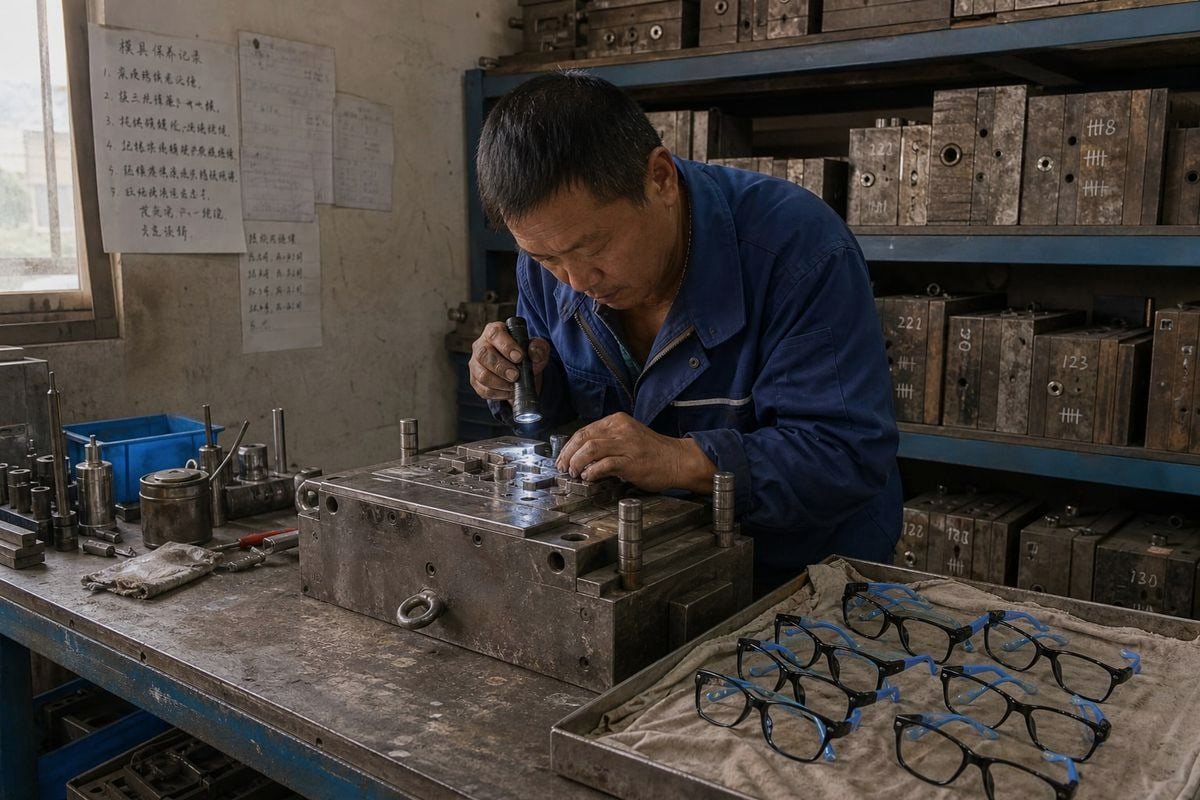
Kids optical frame molds decide who controls your product. In our Taizhou workshop, I have seen buyers discover too late that their bestselling frame legally belongs to someone else. That painful surprise usually surfaces exactly when a brand wants to switch suppliers—and by then, the leverage is gone. The good news: with the right questions asked upfront, this problem is completely avoidable.
Ownership of kids optical frame molds depends on the manufacturing model: in OEM projects where the buyer pays the tooling fee, the buyer typically owns the mold; in ODM or private label eyewear production, the factory retains ownership. Buyer-owned molds make supplier switching feasible; factory-owned molds create dependency and retooling costs.
Let me walk you through how this works in practice. I will cover switching rights, the exclusive-mold versus catalog decision, brand protection, and the exact contract clauses you need before production starts.
What happens to my mold ownership rights if I decide to switch suppliers later?
A buyer from Australia once asked me this question during a factory tour, standing right next to our tooling room. My honest answer surprised him: it depends on paperwork he had probably never signed.
If you paid the full tooling fee under an OEM manufacturing agreement with written ownership terms, you keep the mold and can transfer it. If the factory funded the tooling, or your contract is silent, the factory usually keeps the mold, and switching means paying for new tooling and waiting weeks for retooling.
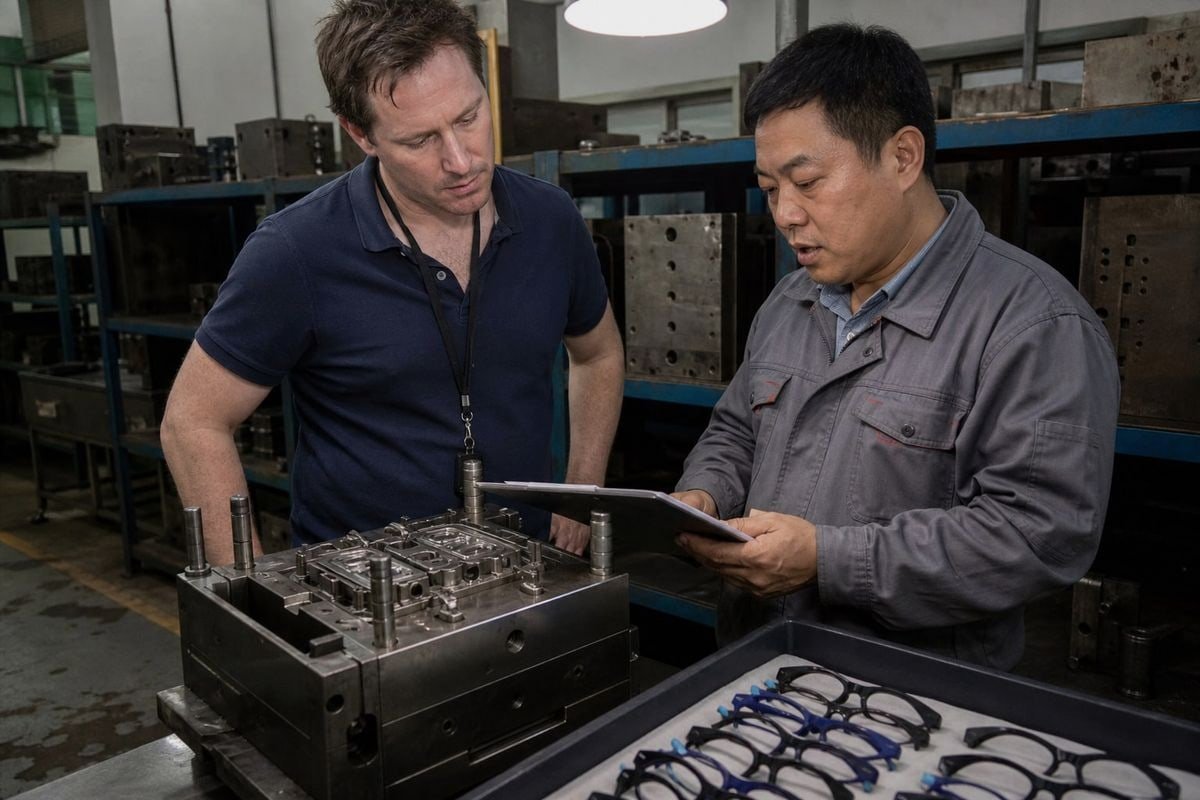
The core issue is simple. Whoever controls the mold controls the switching cost. In fifteen years of TR90 frame production, I have seen this play out in three common scenarios.
Scenario one: you own the mold outright
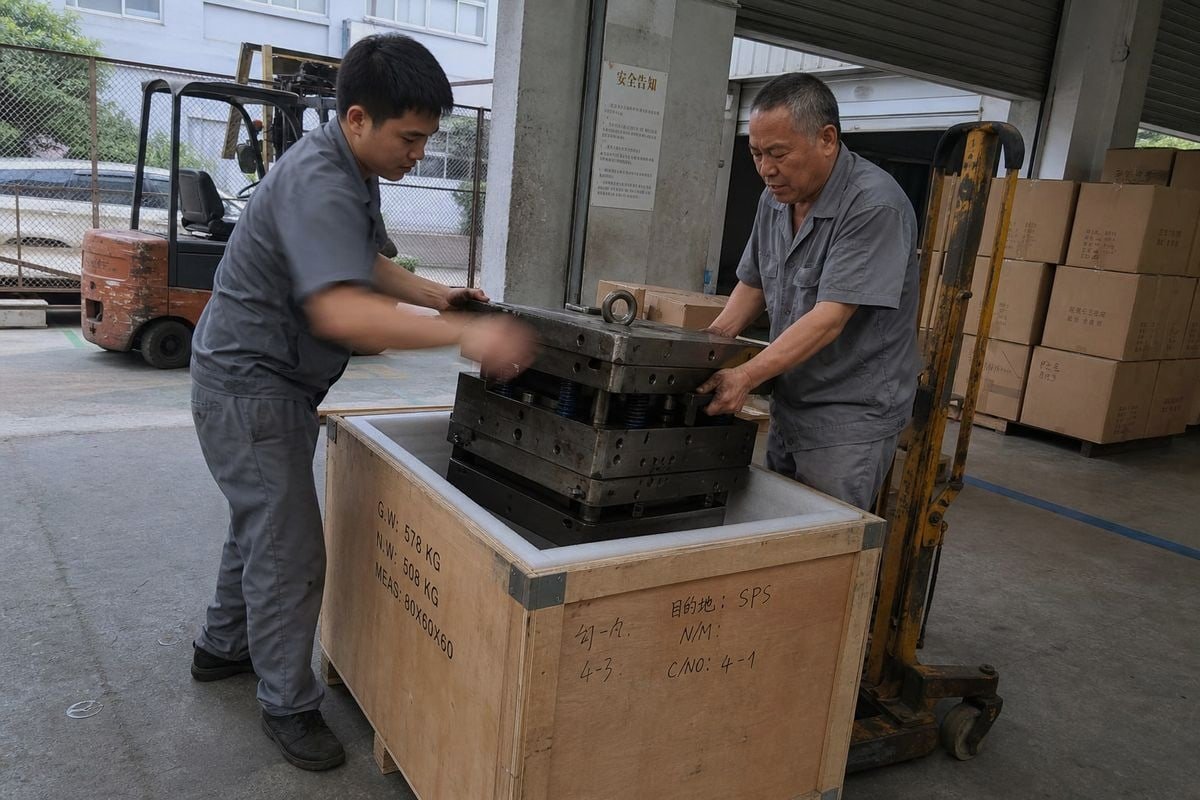
You paid the tooling investment costs, and your contract states the mold is yours. In theory, you can crate it up and ship it to a new factory. In practice, mold transfer logistics are harder than they sound. Molds are optimized for a specific factory's injection molding process 1—cooling channels, tie-bar spacing, pressure settings. A mold that runs perfectly on our machines may produce short shots or flash on someone else's press until they re-tune everything. Expect a tuning period at the new supplier even with a mold you fully own.
Scenario two: the factory owns the mold
Here you are essentially buying finished goods. If you leave, the mold stays behind. You either fund brand-new tooling at the next factory, or you accept a different frame shape. Some contracts even include exit fees or transfer penalties in the range of 15% to 30% of the original tooling cost, specifically designed to discourage switching.
Scenario three: ownership is disputed
This is the worst case. You paid something toward tooling, but nothing was written down. Payment invoices alone are often insufficient to prove ownership in international jurisdictions or to force a factory to release the physical asset.
| الحالة | Can you switch easily? | Typical cost of leaving |
|---|---|---|
| Buyer-owned mold, written agreement | Yes, with retooling adjustments | Shipping plus machine tuning |
| Factory-owned mold (ODM/catalog) | No, shape stays behind | Full new tooling or new design |
| Unclear ownership, no contract | نادرًا | Legal disputes plus new tooling |
One more point buyers often miss: even when you own the physical mold, the factory may still hold the Process Data Sheet—the temperature, pressure, and cycle time settings for materials like TPEE or TR90. Without that data, a new supplier can take months to replicate the flexibility and safety performance your kids' frames need.
Should I pay for exclusive molds or choose from my supplier's existing style library instead?
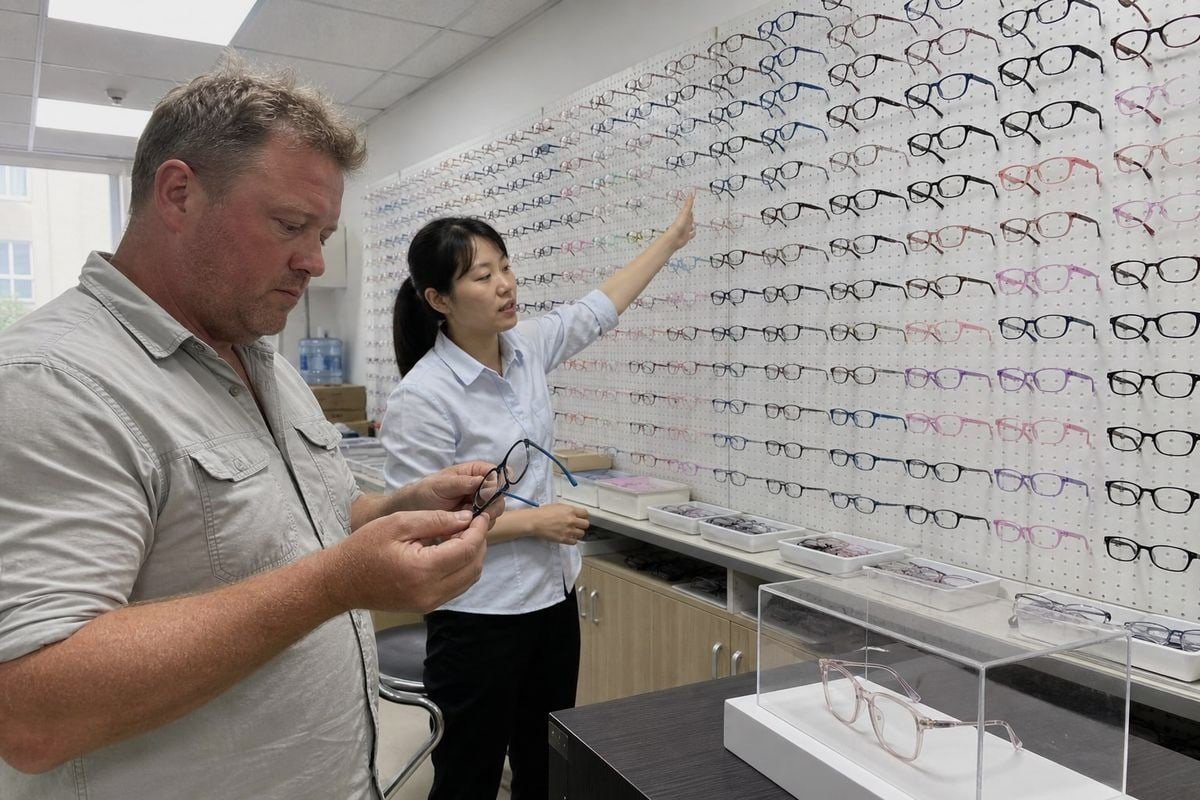
There is a real trade-off I weigh with almost every new brand that contacts us. Our factory keeps roughly 800 existing styles precisely so buyers do not have to make a heavy mold investment on day one.
Choose the existing style library if you are launching, testing markets, or need low minimums and fast timelines. Pay for exclusive molds only when you have proven demand, need true product exclusivity, and can absorb tooling investment costs and longer OEM development timelines.
This is not a question with one right answer. It is a question about where your brand sits in its lifecycle. Here is how I break it down for buyers.
| العامل | Exclusive OEM mold | Existing style library (ODM) |
|---|---|---|
| Mold ownership | Buyer (if paid and contracted) | Factory |
| Upfront tooling cost | Significant, per size and style | لا شيء |
| Development timeline | Longer—design, tooling, prototypes | Fast—sampling to production quickly |
| الحد الأدنى لكمية الطلب | Higher, to justify tooling | Much lower |
| Exclusivity | Full, your shape only | Shared shape, exclusive colors/branding possible |
| Switching freedom | High, if contract is right | Low for exact shape continuity |
When the catalog makes sense
New kids' brands and importers usually start here, and I think that is smart. You test the market with lower risk. You still get custom colors, logos, lenses, and retail-ready packaging—so the frames look fully branded even though the base tooling is ours. Tooling amortization is spread across many customers, which is exactly why ODM pricing and minimums are lower.
When exclusive tooling makes sense
Once a style proves itself, exclusivity starts to matter. Competitors can order the same catalog shape you use. An exclusive mold stops that. For kids' frames specifically, consider modular master molds with interchangeable inserts for different sizes—say 44mm and 46mm eye sizes. If you ever switch suppliers, you move only the lightweight inserts rather than heavy full-mold bases. That single design decision meaningfully reduces supplier transition risks.
The hybrid path most of our long-term buyers take
Start with catalog styles in custom colors. Reinvest early revenue into one or two exclusive molds for your hero styles. Keep the rest of the range on ODM. You get exclusivity where it earns money and flexibility everywhere else.
How can I protect my brand if my factory owns the molds for my kids optical frames?
A lesson I learned early in our export business: brand protection and mold ownership are two different battles. One of our European buyers built a strong brand entirely on factory-owned tooling—because he protected everything around the mold.
Protect your brand by securing exclusivity in writing for colors, branding, and target markets; registering your trademarks and design rights independently; documenting all specifications and compliance data yourself; and negotiating a first-right-to-purchase clause on the tooling if the relationship ends.
Owning the mold is not the only way to defend your position. Intellectual property rights 2 in the frame design are legally distinct from ownership of the physical mold. You can hold one without the other. Here is the layered approach I recommend to buyers who build on our catalog tooling.
Layer one: contractual exclusivity
Even when the factory owns proprietary frame designs, you can negotiate exclusivity for your specific colorways, your logo treatments, and your sales territories. A factory-favorable view says the mold is inseparable from its production system—and there is truth in that. But a fair factory will still grant market-level exclusivity to a committed buyer. We do this regularly for buyers who commit to reasonable annual volumes.
Layer two: own your data, even if you don't own the steel
Keep independent copies of every specification: dimensions, materials, colors, hinge details, and compliance test reports. Savvy buyers go further and include test coupon cavities in custom mold layouts—these produce standardized material samples during every run, which lets you quickly re-verify CPSIA or EN71 3 compliance if you ever transition factories. For children's eyewear, that compliance continuity is not optional; it is the license to sell.
Layer three: digital backup strategies
An emerging option is holding high-fidelity 3D mold-flow simulations—sometimes called a digital twin 4—in escrow. If the original factory ever refuses to release physical tooling, a new supplier can precision-cut a replacement mold via CNC from that data. It is not free, but it converts a total dependency into a bounded cost.
Layer four: relationship structure
Clarify mold maintenance responsibility and expected tooling life in writing. A neglected mold degrades quality slowly, and children's frames have tight fit tolerances where small tooling wear changes comfort and safety. A factory that documents maintenance is protecting your brand whether or not you own the tool.
What mold ownership terms should I include in my manufacturing contract to avoid future disputes?
Our sales team reviews tooling clauses with buyers before any custom project starts, because the cheapest time to solve a mold dispute is before the steel is cut. I have watched a one-page tooling annex prevent arguments that would otherwise cost months.
Your contract should state who owns the mold after payment, where it is stored, your right to move it to another supplier without penalty, return or destruction obligations at relationship end, mold maintenance responsibility, confidentiality on the design, and your right to receive process data and technical drawings.
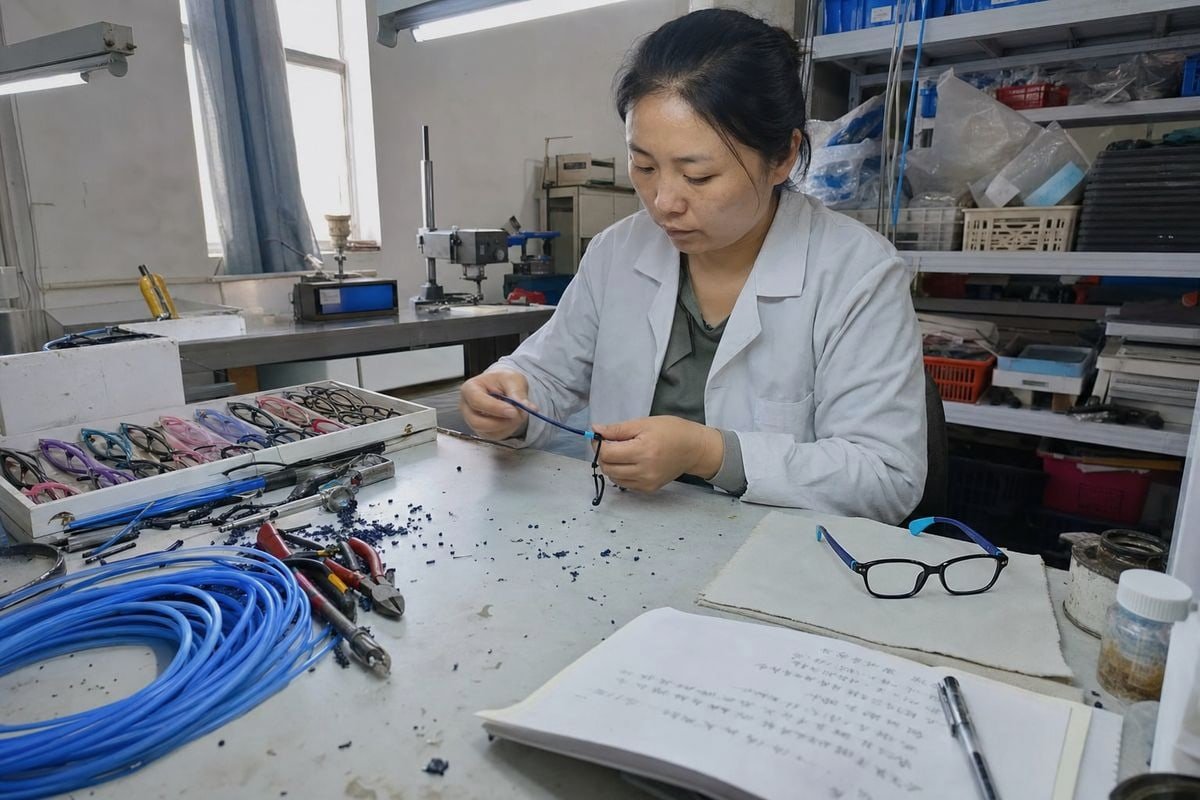
A written Tooling Ownership Agreement is the only reliable protection. Invoices, emails, and verbal promises do not travel well across borders. Below are the manufacturing contract clauses I consider essential, based on the disputes I have seen buyers face.
| Clause | What it must say | لماذا هو مهم |
|---|---|---|
| Ownership transfer | Mold title passes to buyer upon final tooling payment | Prevents the "you paid for development, not the tool" argument |
| Storage and location | Mold stored at named factory; buyer may inspect | You cannot move what you cannot locate |
| Transfer rights | Buyer may relocate mold with defined notice, no exit fee | Blocks 15–30% transfer penalties from appearing later |
| Return/destruction | Mold returned or certified destroyed at contract end | Stops post-relationship production of your frames |
| Maintenance | Factory maintains mold; expected shot life documented | Protects quality consistency over tooling life |
| Process data | Buyer receives Process Data Sheet and 3D files | Makes the mold usable at a new factory |
| Confidentiality | Design and tooling data may not serve other customers | Preserves exclusivity of proprietary frame designs |
Separate the design from the tool
Draft the contract so it covers three distinct assets: the design IP, the physical mold, and the process know-how. A middle-ground arrangement is common in practice—the buyer owns the design rights while the factory retains physical possession unless the contract says otherwise. That is workable, but only if the contract actually says otherwise when you need it to.
Address kids-specific risks explicitly
Children's frames are a special case. They are smaller, fit tolerances are tighter, and safety compliance is stricter. Slight tooling differences can change fit, comfort, or compliance outcomes. Your contract should require that compliance test reports reference specific mold cavities, and that any tooling repair triggers re-verification samples. In our 5S-managed workshop, we log mold maintenance for exactly this reason—buyers can trace every production lot back to a documented tooling state.
Negotiate before paying, not after
Once the tooling deposit is paid, your leverage drops sharply. Every clause above is easy to agree on during quoting and hard to add during a dispute. Treat mold ownership as a sourcing risk issue, not a procurement detail.
الخلاصة
Whoever controls the mold controls the switching cost. Decide ownership before tooling begins, put transfer and data rights in writing, and match OEM or ODM to your brand's actual stage.
ملاحظات ختامية
1. Background explanation of injection molding clarifies why molds are machine-specific and hard to transfer. ↩︎
2. WIPO authoritatively explains IP rights, relevant to design ownership separate from mold ownership. ↩︎
3. Official CPSC statute page for the Consumer Product Safety Improvement Act, directly replacing the broken regulatory link. ↩︎
4. Wikipedia defines digital twin technology, clarifying the mold-flow simulation backup concept discussed. ↩︎
مقالات أخرى قد تعجبك
أغسطس 5, 2026
Bio-Based vs Regular Cellulose Acetate: What's the Difference for Kids' Frames?

أغسطس 5, 2026
How Recyclable Are Kids' Optical Frame Materials, and What Eco-Friendly Alternatives Exist?
أغسطس 5, 2026
Do Kids Optical Frames Whiten or Age in Storage, and How to Control Warehouse Conditions?
هل تبحث عن شريك موثوق به للنظارات للأطفال؟
استكشف أكثر من 800 نمط جاهز ودعم OEM/ODM كامل مصمم خصيصًا لعلامتك التجارية.
اتصل بنا English
  Español de México
  Deutsch
  Français
  日本語
日本語  العربية
  Português do Brasil