Which Kids’ Optical Frame Parts Break Easily and Need Spares?
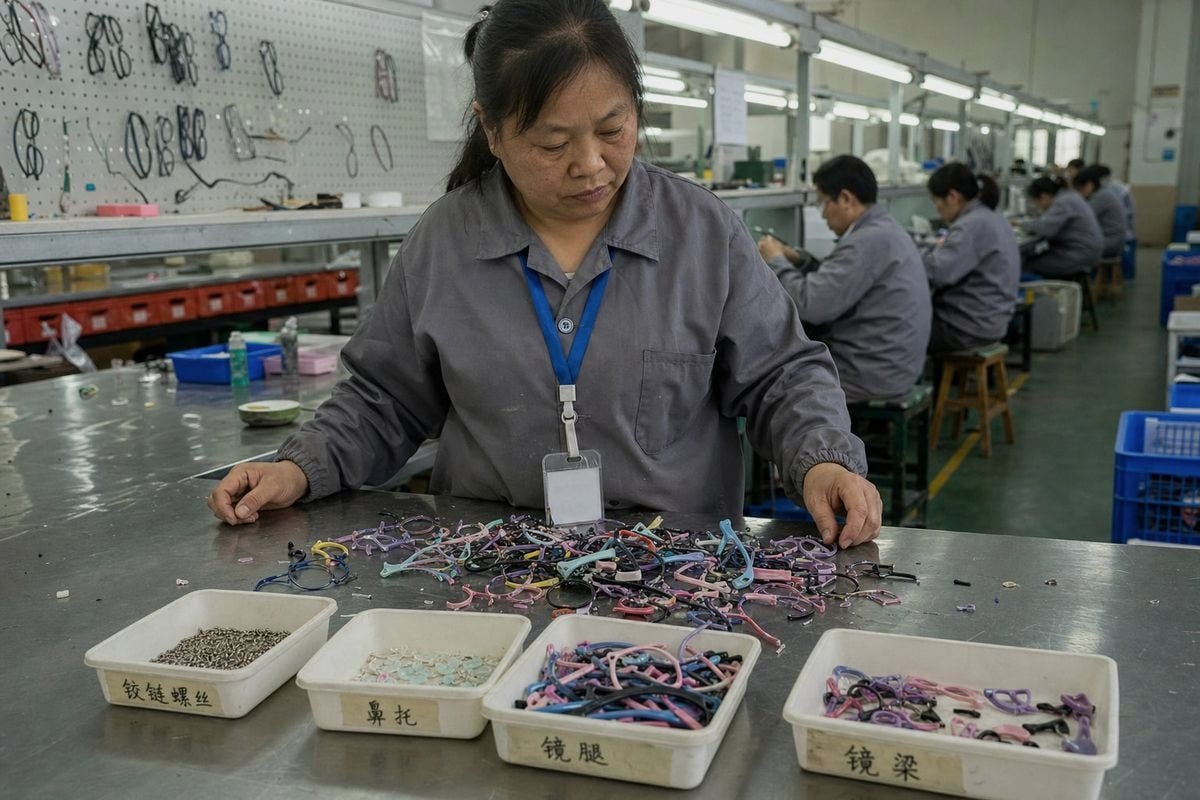
Kids’ optical frame parts fail in predictable places, and our Taizhou factory sees the returns firsthand. A broken hinge or snapped temple frustrates parents, drains your warranty budget, and quietly damages your brand’s reputation.
The kids’ optical frame parts that break most easily are hinges, hinge screws, temple arms, nose pads, and the bridge. Buyers should stock spare hinge screws, silicone nose pads, temple tips, and complete temple assemblies, since these small components fail long before the frame front does.
I want to walk you through where kids’ frames actually break, why it happens, and what spares are worth ordering. This comes from fifteen years of building children’s eyewear on our own production line.
Which Parts of Kids' Optical Frames Fail Most Often During Daily Wear?
Last year, a European buyer sent us a box of returned frames for analysis. When our QC team laid them out, nearly every failure sat in the same four spots.
The most frequent failure points in kids' optical frames are hinge screws that loosen or strip, temple arms that snap near the hinge, nose pads that harden or detach, and bridges that crack on plastic frames. Hinges fail first because they endure thousands of open-close cycles plus rough one-handed removal.
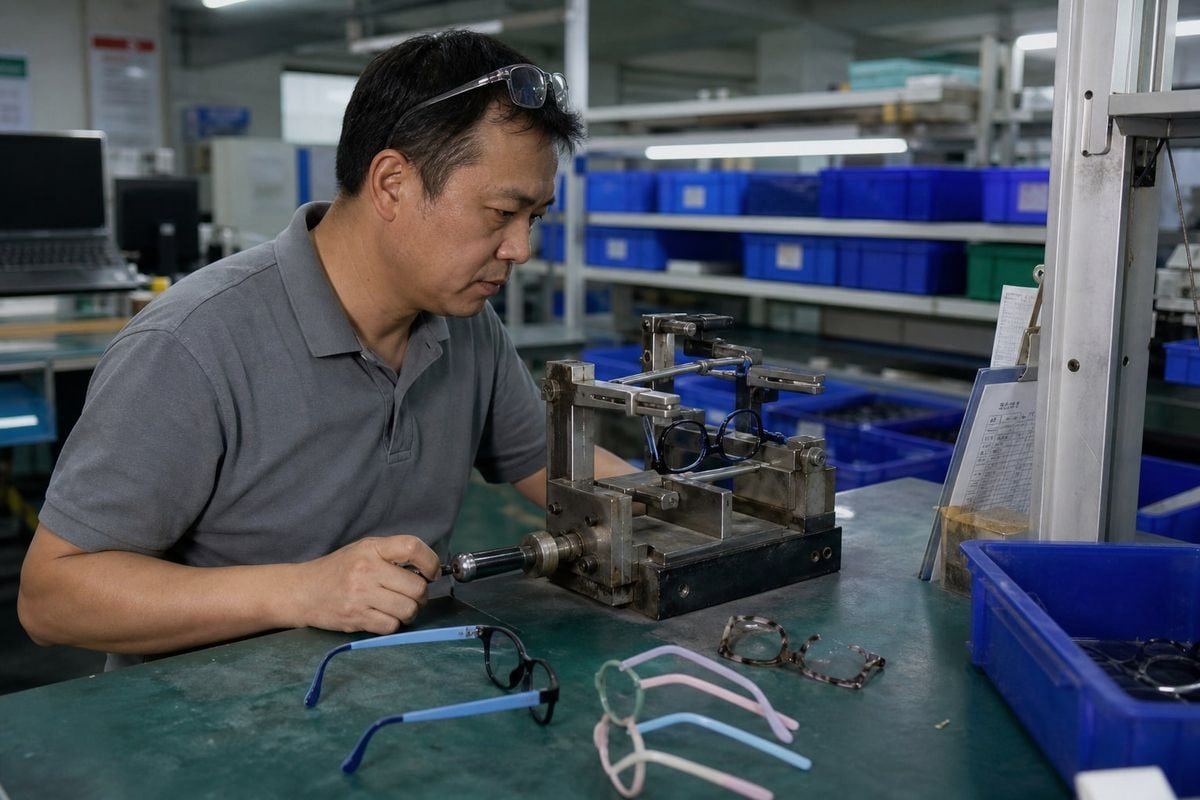
Here is the failure ranking we consistently see across shipments to 20+ countries:
| Rank | Frame Part | Typical Failure | Repairable? |
|---|---|---|---|
| 1 | Hinge screws | Loosen, strip, fall out | Yes, easily |
| 2 | Hinges / spring hinges 1 | Bent barrels, internal spring failure | Sometimes |
| 3 | Temple arms | Snap near hinge, bend mid-section | Rarely, on plastic |
| 4 | Nose pads | Yellowing, hardening, detachment | Yes, easily |
| 5 | Bridge | Cracks on acetate/plastic frames | Almost never |
| 6 | Temple tips | Wear down, lose grip, get chewed | Yes, easily |
Why the Hinge Takes the Most Punishment
A child does not remove glasses gently. They yank them off with one hand, which twists one temple far past its normal range. That stress concentrates directly on the hinge barrel and the tiny hinge screws. Loose screws are usually the first fixable warning sign. If ignored, the threads strip or the barrel bends, and the whole temple assembly must be replaced. Note that kids' hinge screws are often miniature M1.0 to M1.2 sizes, which differ from standard adult hardware, so generic screws will not always fit.
Temples, Bridges, and Nose Pads
Temple arms snap most often right beside the hinge, where bending force concentrates. Kids also chew on temple tips, which weakens the material over time. On plastic and acetate fronts, the bridge is the classic snap point during rough play or when glasses get stepped on. Bridge failures are usually permanent, because adhesives rarely hold under daily flexing. On metal frames, silicone nose pads bend, loosen, or fall off, and their screws disappear easily. One useful distinction: a lens pop-out often signals frame distortion or poor lens retention, not just a single impact.
How Can I Reduce Warranty Claims by Choosing More Durable Frame Components?
There is a trade-off we weigh on every new kids' style: a stiffer frame feels premium in hand, but a flexible frame survives real children. We almost always choose flexibility.
To reduce warranty claims, choose spring hinges or flexible TR90 and TPEE frames, one-piece molded temples instead of thin screw-mounted arms, molded nose bridges rather than glued pads, and impact-resistant polycarbonate lenses. Flexible materials bend under stress instead of cracking, cutting breakage-related returns significantly.
Material choice decides the failure pattern. Plastic and acetate frames crack suddenly at the bridge, hinge, or lens rims. Metal frames bend, loosen, and develop weak points at soldered joints and screw connections. That is the core contrast: a repairable bend versus a breakable crack. Memory metal frames and modern flexible polymers push most failures into the "bend" category, which is exactly where you want them.
The Component Choices That Matter Most
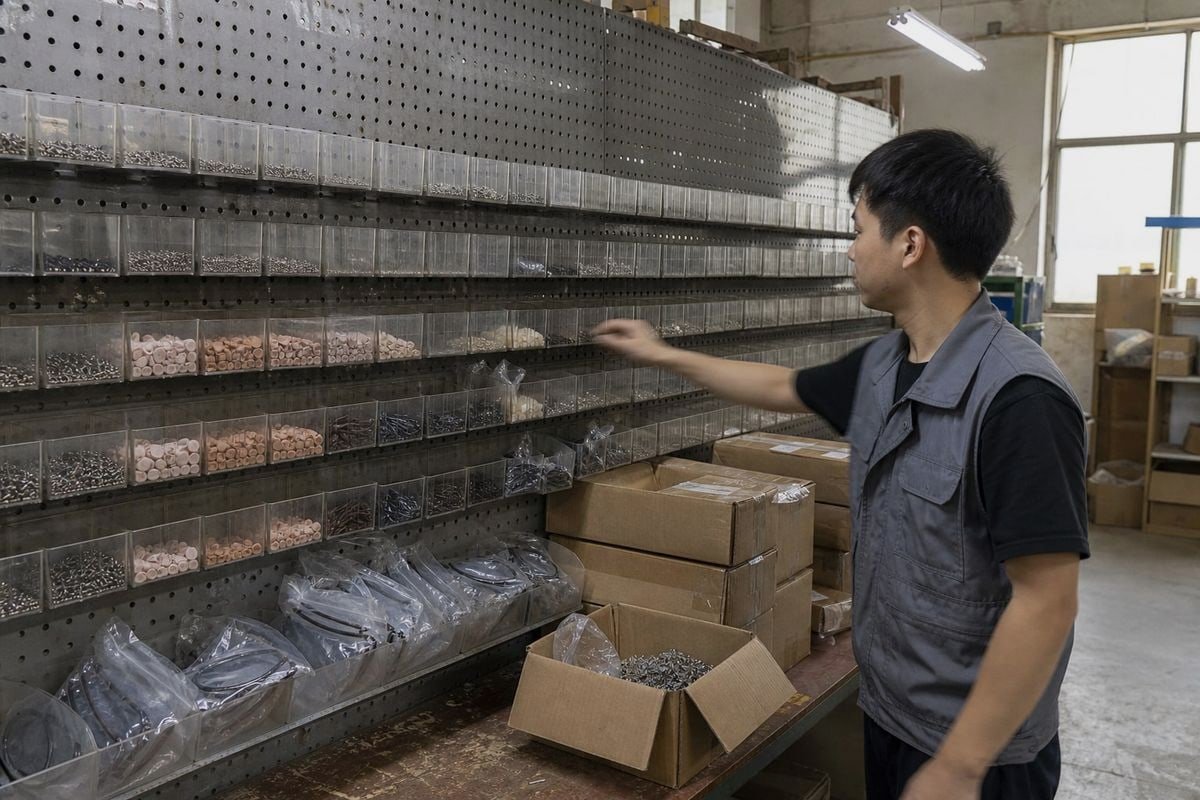
TR90 material 2 is our default recommendation for kids' frame fronts because it flexes and recovers instead of snapping. We often pair TR90 fronts with soft TPEE temples, which is the construction on many of our roughly 800 existing styles. Spring hinges deserve special attention. They let the temples flex outward during one-handed removal, absorbing the stress that would otherwise strip a screw or crack the frame. But be honest with your buyers: a spring hinge that gets over-extended repeatedly can fail internally, and when it does, the entire temple assembly needs replacement, not just a screw.
| Component Choice | Warranty Risk | Better Alternative |
|---|---|---|
| Rigid acetate front | High (bridge cracks) | TR90 material front |
| Standard barrel hinge | Medium (screw loss) | Spring hinges or flex construction |
| Glued-on nose pads | Medium (detachment) | Molded silicone nose pads or saddle bridge |
| Thin plastic temples | High (snapping) | TPEE temples or cable temples |
| Glass or CR-39 lenses | High (impact) | Polycarbonate lenses |
Fit Is a Durability Feature
Some buyers assume breakage is purely a material problem. It is not. Bridge failures often signal poor fit, not bad luck. A frame that is too small or too stiff puts constant tension on the bridge every time the child wears it. Proper pediatric sizing, adjustable ear hooks, and cable temples for very young children reduce the daily stress that causes repeat breakage. When we develop OEM styles for baby and toddler brands, we treat sizing curves as seriously as material specs.
Should I Stock Spare Hinges, Temples, and Nose Pads for My Kids' Eyewear Line?
A distributor in Australia once asked us to add a small spares bag to every retail box. Her return rate on "broken" glasses dropped noticeably, because parents fixed loose screws themselves.
Yes, stock spares, but prioritize small consumables over structural parts. Order spare hinge screws, silicone nose pads, nose-pad screws, temple tips, and a limited number of complete temple assemblies. These pieces loosen or disappear long before the frame front fails, and they resolve most customer complaints cheaply.
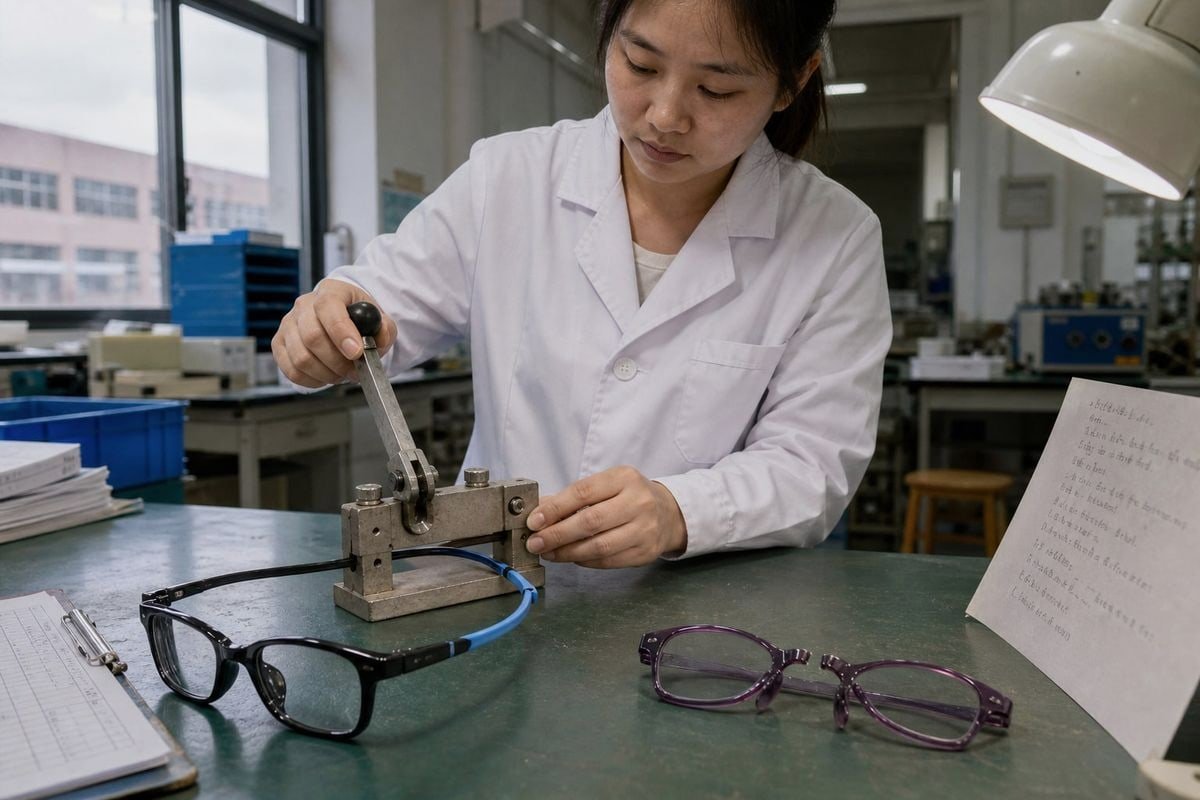
The economics here are simple. A spare screw costs almost nothing. A warranty replacement costs you a full frame plus shipping plus an unhappy parent. So the smart move is stocking the parts most likely to fail, in proportion to how often they fail.
A Practical Spares Ratio
Based on what we see across bulk orders, here is a sensible starting ratio per 1,000 frames sold:
| Spare Part | Suggested Quantity per 1,000 Frames | لماذا |
|---|---|---|
| Hinge screws (M1.0–M1.2) | 200–300 pcs | Most frequent failure; often lost, not broken |
| Silicone nose pads + screws | 100–150 pairs | Pads yellow, harden, or detach with wear |
| Temple tips / ear hooks | 80–120 pcs | Chewing and grip wear are constant |
| Complete temple assemblies | 30–50 pcs | Covers snapped arms and failed spring hinges |
| Frame fronts | 10–20 pcs | Bridge cracks need full front replacement |
Consumables First, Structures Second
Notice the pattern: quantities drop as parts get more structural. Hinge screws vanish constantly, so stock them deep. Bridge replacement, by contrast, is really a frame front swap, so you only need a small buffer. Also consider hygiene-driven replacement, not just breakage. Silicone nose pads and temple tips sit against a child's skin all day. They yellow and harden over months, and some premium spare kits now use silver-ion antimicrobial silicone 3 to limit skin irritation and bacterial growth. Offering fresh pads as an accessory turns a maintenance cost into a small revenue line. Finally, include a basic eyeglass repair kit with a precision screwdriver in your retail packaging or as a counter item for opticians. It empowers parents to handle the easy fixes at home, so only genuine structural failures reach your warranty desk. At our factory, we can bundle these spares into your branded, retail-ready packaging during production, which is far cheaper than sourcing them separately later.
What Should I Ask My Manufacturer About Replacement Parts Before Placing a Bulk Order?
Early in my export career, a Japanese buyer taught me a lesson: he asked for the hinge screw specification sheet before he asked for the price. Frames get discontinued; screws should not.
Ask your manufacturer to confirm screw sizes and thread specs, whether temples and nose pads are cross-compatible across styles, how long spare parts stay available after the style ends, minimum order quantities for spares, and whether spares can ship inside your branded retail packaging.
These questions protect you two or three years down the road, when a parent contacts your support team about a frame you no longer stock. Here is the checklist I recommend to every new B2B buyer we onboard:
- What are the exact hinge screw specs? Get the size in writing, ideally M1.0 or M1.2 4 with thread pitch. Generic adult screws frequently do not fit kids' frames.
- Are components standardized across your styles? If the same temple assembly fits ten styles, your spares inventory works much harder. We deliberately share hardware across families of our styles for this reason.
- How long will you supply spares after discontinuation? Ask for a written commitment. Two years of parts availability is a reasonable baseline for children's optical frames.
- What is the MOQ for spare parts alone? Some factories only sell parts with full frame orders. Confirm you can reorder screws, nose pads, and temple tips independently.
- Can spares be included in retail packaging? A small branded pouch with a screw, spare silicone nose pads, and a cleaning cloth signals quality and cuts support tickets.
- Are tool-free options available? Newer modular designs use snap-in hinges so parents can replace a broken arm instantly without precision screwdrivers. Ask whether the factory offers or can develop this construction.
- How are spare parts quality-controlled? Spares should pass the same checks as production parts. Our 5S-managed workshop runs spare components through the same inspection flow as the frames themselves.
Also ask about future-facing options if your brand targets premium retail: 3D-printed bridge shims that adapt a standard frame to a child's developing nasal bridge, and temple sleeves with integrated pockets for micro-tracking chips to prevent loss. Neither is mainstream yet, but they are useful differentiators in mature markets. A factory that engages seriously with these questions is telling you something important about how it will handle your account after the deposit clears.
الخلاصة
Kids' frames break at hinges, temples, nose pads, and bridges. Stock the small consumables, specify flexible components, and question your factory early. I'm happy to help you plan both.
ملاحظات ختامية
1. Explains hinge mechanics relevant to spring-loaded eyewear temples absorbing stress. ↩︎
2. Background on nylon-based copolymers used for flexible, break-resistant eyewear frame fronts. ↩︎
3. CDC provides authoritative context on antimicrobial materials limiting bacterial growth on skin-contact parts. ↩︎
4. Authoritative Wikipedia entry explaining the ISO metric screw thread standards for small fasteners. ↩︎
مقالات أخرى قد تعجبك

أغسطس 5, 2026
Bio-Based vs Regular Cellulose Acetate: What's the Difference for Kids' Frames?

أغسطس 5, 2026
How Recyclable Are Kids' Optical Frame Materials, and What Eco-Friendly Alternatives Exist?

أغسطس 5, 2026
Do Kids Optical Frames Whiten or Age in Storage, and How to Control Warehouse Conditions?
هل تبحث عن شريك موثوق به للنظارات للأطفال؟
استكشف أكثر من 800 نمط جاهز ودعم OEM/ODM كامل مصمم خصيصًا لعلامتك التجارية.
اتصل بنا English
  Español de México
  Deutsch
  Français
  日本語
日本語  العربية
  Português do Brasil