ماذا تعني الأرقام والأحرف على عصي النظارات الطبية للأطفال؟

هذه الرموز الصغيرة على عصي النظارات الطبية للأطفال تربك العديد من المشترين الذين أتحدث معهم. اطلب المقاس الخاطئ مرة واحدة، وقد لا يناسب حاوية كاملة من الإطارات سوقك. في خط الإنتاج الخاص بنا في تايتشو، نقوم بختم هذه العلامات لسبب ما - وبمجرد أن تتمكن من قراءتها، يصبح التوريد أقل خطورة بكثير.
تُظهر الأرقام والأحرف الموجودة على عصي النظارات الطبية للأطفال حجم الإطار وطرازه ولونه ومادته. رمز مثل 48□16-130 يعني عرض العدسة 48 مم، وعرض الجسر 16 مم، وطول الذراع 130 مم. تحدد الأحرف عادةً رقم الطراز أو رمز اللون أو المادة مثل TR90.
دعني أفصل كل جزء. سأوضح لك كيفية قراءة رمز الحجم، وماذا تعني علامات المواد، وكيفية استخدام كليهما عند توريد إطارات الأطفال.
كيف أقرأ أرقام المقاسات المختومة على ذراع نظارات الأطفال؟
خلال فحص لمراقبة الجودة في الربيع الماضي، قام مفتش جديد بتمييز دفعة لأن ختم الذراع قرأ 46□15-125 بدلاً من 48□16-130 للعينة. أنقذ هذا الاكتشاف إطلاق عميل - المقاسان يناسبان مجموعات مختلفة جدًا فئة عمريةأعمار.
اقرأ الرمز المكون من ثلاثة أرقام على أنه عرض العدسة، وعرض الجسر، وطول الذراع، كلها بالمليمتر. في 48□16-130، عرض العدسة 48 ملم، وعرض الجسر 16 ملم، وطول الذراع 130 ملم. المربع الصغير هو مجرد فاصل، وليس قياسًا.
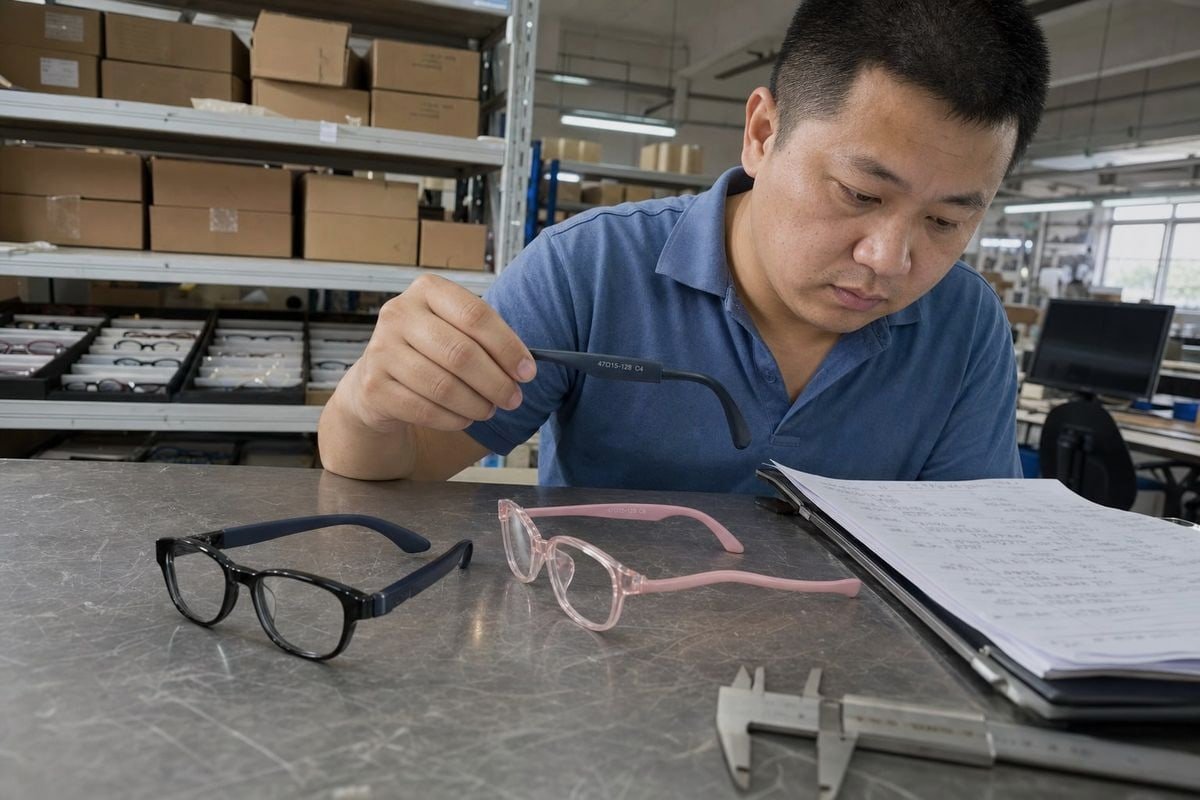
الأرقام الثلاثة هي قلب العلامة. إنها تتبع اتفاقية عالمية، لذا يمكن مقارنة إطار 48□16-130 من مصنعنا مباشرة بإطار من أي مورد آخر. إليك ما يخبرك به كل رقم.
القياسات الأساسية الثلاثة
| موضع | الاسم | ما يقيسه | نطاق الأطفال النموذجي |
|---|---|---|---|
| الرقم الأول | عرض العدسة (حجم العين) | العرض الأفقي لعدسة واحدة | 40-50 ملم |
| الرقم الثاني | عرض الجسر (قياس DBL) | المسافة بين العدستين عند الأنف | 14–18 ملم |
| الرقم الثالث | طول الذراع الجانبي | طول الذراع من المفصل إلى الطرف | 120-135 ملم |
للمرجع، غالبًا ما تكون إطارات البالغين مقاس 52-18-140 - مما يعني عرض عدسة 52 مم، وجسر 18 مم، وذراع 140 مم. إطارات الأطفال تكون في الطرف الأصغر. تتراوح عرض عدسات النظارات بشكل عام تقريبًا من 40 مم إلى 60 مم، وتقع أطوال الذراع عادةً بين 120 مم و 150 مم، مع ميل إطارات الأطفال إلى أن تكون أقصر.
رمز المربع
هذا المربع الصغير بين الرقمين الأولين يسمى رمز المربع. يشير إلى أن عرض العدسة تم قياسه باستخدام نظام التغليف 1 - مستطيل وهمي مرسوم حول العدسة. يفترض العديد من المشترين أنه يخفي قياسًا رابعًا. لا يفعل. إنه ببساطة فاصل موحد.
أحد الفروق الدقيقة التي نشاركها دائمًا مع العملاء: تحقق من جانبي الإطار. تقوم بعض العلامات التجارية بختم بيانات الحجم على ذراع واحدة ووضع رقم الطراز ورمز اللون على الأخرى. تضع بعض التصميمات حجم الجسر 2 على الجسر نفسه. لا تفترض أبدًا أن ذراعًا واحدة تحكي القصة بأكملها.
ماذا تخبرني علامات المواد مثل TR90 أو TPEE عن جودة الإطار؟
المرونة مقابل الصلابة هي المقايضة التي نزنها في كل تصميم جديد للأطفال. يحافظ الإطار الصلب على العدسات بدقة ولكنه ينكسر تحت سوء الاستخدام. هذا هو السبب بالضبط في أننا نصنع معظم إطارات الأطفال لدينا من TR90 و TPEE - ونقوم بختم تلك الأسماء على الذراع.
علامات المواد مثل TR90 أو TPEE تحدد البوليمر المستخدم في الإطار. TR90 عبارة عن نايلون خفيف الوزن ومرن يقاوم الكسر. TPEE عبارة عن مطاط صناعي أكثر نعومة يستخدم غالبًا في الأذرع. كلاهما يشير إلى إطار متين وآمن للأطفال بدلاً من البلاستيك القياسي الهش.

علامات المواد هي إشارات جودة، وهي مهمة أكثر في إطارات الأطفال من أي مكان آخر في مجال النظارات. يقوم الأطفال بلف نظاراتهم والجلوس عليها وإسقاطها يوميًا. بعد 15 عامًا من تصنيع نظارات الأطفال، نتعامل مع علامة المادة كوعد للمشتري.
مقارنة رموز المواد الشائعة
| العلامة | المواد | خاصية رئيسية | أفضل استخدام على إطارات الأطفال |
|---|---|---|---|
| TR90 | نايلون حراري | مرن، يحتفظ بالشكل، خفيف جدًا | واجهات الإطار والإطارات الكاملة |
| TPEE | مطاط بوليستر حراري | مطاطي، ناعم، قابل للانحناء بدرجة عالية | الأذرع والأجزاء ذات الملمس الناعم |
| CP / أسيتات | بلاستيك قائم على السليلوز | ألوان غنية، قابلة للتعديل | تصميمات الأطفال العصرية |
| سي | علامة الامتثال | تفي بمتطلبات السلامة في الاتحاد الأوروبي | مطلوب للأسواق الأوروبية |
مزيج شائع ننتجه يجمع بين واجهة TR90 وأذرع TPEE. تظل الواجهة مستقرة الأبعاد بحيث تحتفظ العدسات بموضعها البصري، بينما تنحني الأذرع بزاوية تزيد عن 90 درجة وترتد دون تشوه دائم. أحد أنماطنا ذات اللونين - واجهة TR90 سوداء لامعة مع أذرع TPEE زرقاء داكنة تنتهي بأطراف أذن سيليكون ناعمة باللون الأزرق السماوي - تُظهر هذه المقارنة قيد التنفيذ.
علامات السلامة بخلاف اسم المادة
يطلب المشترون في أوروبا وأستراليا واليابان بشكل متزايد أكثر من مجرد المرونة. مضاد للحساسية و علامات السلامة الكيميائية 3 — مما يؤكد خلو الإطارات من BPA والفثالات والرصاص — تظهر على معابد الأطفال لأن الأطفال الصغار يمضغونها. بالنسبة للنظارات الرياضية، فإن تقييمات مقاومة الصدمات مثل ASTM F803 4 تصديق الإطارات للصدمات عالية السرعة. إذا لم يتمكن المورد من شرح ما تعنيه علامة مادته، فاعتبر ذلك علامة حمراء. نحن نوفر وثائق المواد مع كل طلب OEM لأن العلامات التجارية الجادة تحتاج إليها للامتثال للاستيراد.
لماذا يجب أن أهتم بهذه الرموز عند الحصول على إطارات من الشركة المصنعة؟
أرسلت لنا مديرة مشتريات من أستراليا ذات مرة صورًا لعلامات معابد منافس، تطلب منا فك رموزها قبل أن تضع طلبها الأول. أقنعتني تلك المحادثة بأن كل مشترٍ يجب أن يتعلم هذه المهارة قبل التوقيع على أمر شراء.
تسمح لك رموز الصدغ بالتحقق من الأحجام ومقارنة الإطارات عبر الموردين وتأكيد المواد وإعادة الطلب بدقة. بدون قراءتها ، تخاطر بشراء إطارات ذات حجم خاطئ لسوقك أو مخزون بديل غير متطابق أو مواد تفشل في متطلبات بلدك لسلامة الأطفال.

إليك توتر يستحق المعالجة بصدق. يعامل بعض المشترين الأرقام المطبوعة على أنها الكلمة الأخيرة في الملاءمة. يجادل آخرون بأن الأرقام لا تهم تقريبًا لأن الملاءمة الحقيقية تعتمد على شكل الإطار. كلا الطرفين يسببان مشاكل. موقفي، المبني على التصدير إلى أكثر من 20 دولة: الرموز هي أداة الفحص الخاصة بك، واختبار الملاءمة في العالم الحقيقي هو تأكيدك. أنت بحاجة إلى كليهما.
ما تفعله الرموز من أجلك كمشترٍ
- التحقق من اتساق الإنتاج. عندما نجري مراقبة الجودة في ورشة العمل التي نديرها بنظام 5S، يتحقق المفتشون من أن الأحجام المختومة تتطابق مع العينة المعتمدة. يجب عليك فعل الشيء نفسه عند فحص الوصول.
- المقارنة بين الموردين. يمكن مقارنة 47□16-128 من مصنع وآخر على الورق قبل أن تدفع ثمن العينات.
- إعادة الطلب دون تخمين. يسمح لك رقم الطراز ورمز اللون بتكرار رمز SKU دقيق بعد أشهر — وهو أمر بالغ الأهمية عندما تباع الموضة بشكل جيد.
- إثبات الامتثال. تدعم علامات المواد والعلامات مثل CE أوراق جماركك وتدقيقات تجار التجزئة.
- تخطيط سلم الحجم. مع حوالي 800 نمط موجود في كتالوجنا، يستخدم المشترون رموز الأحجام لبناء نطاق متماسك — على سبيل المثال، أحجام عيون 44 مم للأطفال الصغار حتى 49 مم للمراهقين — دون الاستثمار في قوالب جديدة.
الاعتراض الذي أسمعه أكثر: "ألا يمكنني فقط تقدير الإطارات بالعين؟" يمكنك ذلك، حتى تتلقى 5000 وحدة وتكتشف أن عرض الجسر خاطئ بمقدار 2 مم بالنسبة لمظهر الأنف النموذجي لسوقك. اثنان ملم عند الجسر يغيران مكان جلوس الإطار بأكمله. توجد الرموز حتى لا تعتمد أبدًا على التقدير بالعين وحده.
كيف يمكنني استخدام علامات الصدغ لاختيار المقاس المناسب لمختلف الفئات العمرية؟
في وقت مبكر من تاريخ تصديرنا، تعلمنا درسًا قاسيًا: طلب عميل أوروبي مقاسًا واحدًا للأعمار من ثلاثة إلى عشرة. علمتنا المرتجعات أن وجوه الأطفال تتغير بسرعة كبيرة للتفكير بمقاس واحد، ورموز المعابد هي الطريقة التي تخطط بها حول ذلك.
طابق رمز المقاس مع الفئة العمرية: عرض عدسة تقريبي يتراوح بين 39-43 ملم للأطفال الصغار، و 44-47 ملم للأعمار من أربعة إلى سبعة أعوام، و 47-50 ملم للأعمار من ثمانية إلى اثني عشر عامًا. أعط الأولوية لعرض الجسر وطول الصدغ، حيث يحددان الثبات على وجه ينمو.
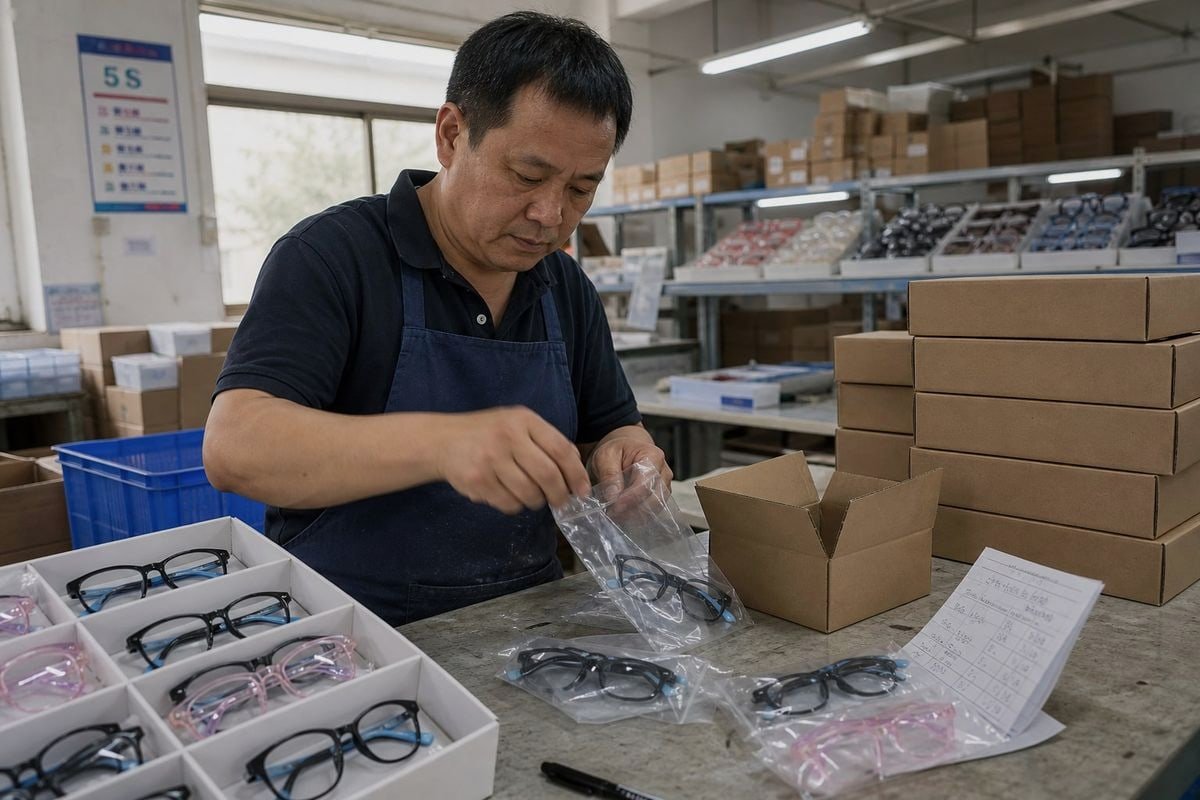
قياس الأطفال يختلف عن قياس البالغين. وجه البالغ ثابت؛ وجه الطفل هدف متحرك. لذا يبدأ تركيب نظارات الأطفال بالرموز ولكنه يجب أن يأخذ في الاعتبار النمو وتطور الأنف وموضع الأذن.
دليل مقاسات عملي حسب العمر
| الفئة العمرية | عرض العدسة | عرض الجسر | طول الذراع |
|---|---|---|---|
| 1–3 سنوات | 39-43 ملم | 14–15 ملم | 115-125 مم |
| 4-7 سنوات | 44–47 مم | 15–16 ملم | 120-130 مم |
| 8–12 سنوات | 47-50 ملم | 16–18 ملم | 125-135 مم |
اعتبر هذا خريطة بداية، وليس قانونًا. رقم طول المعبد مفيد ولكنه ليس مطلقًا — انحناء الإطار وتصميم خطاف الأذن ومرونة المادة كلها تغير كيفية جلوس الإطار فعليًا. أحد أنماط الأسيتات الشفافة ذات اللون الوردي الفاتح لدينا يناسب بشكل أكبر قليلاً من رمزه المختوم بسبب هندسته المستطيلة المستديرة ومنحنى أنعم عند الأطراف.
أي الأرقام مهمة للأطفال
عرض الجسر يأتي أولاً. الأطفال الصغار لديهم جسور أنف منخفضة وغير متطورة، لذا فإن الجسر الذي يزيد عرضه عن 1-2 مم ينزلق باستمرار. طول المعبد يأتي ثانيًا. قصير جدًا، ويغرز الذراع خلف الأذن؛ طويل جدًا، وينزلق الإطار للأمام أثناء اللعب. عرض العدسة مهم بشكل أساسي للتغطية — يجب أن يقع البعد البؤبي للطفل بالقرب من المركز البصري لكل عدسة، والتي سيؤكدها شركاء أخصائي البصريات لديك أثناء التوزيع.
ابحث أيضًا عن ميزات التصميم المذكورة في رقم الطراز أو ورقة المواصفات. مفصلات الزنبرك تغفر السحب الخارجي الذي يقوم به الأطفال عند إزالة النظارات بيد واحدة. خطافات الأذن المنحنية والقابلة للتعديل — مثل أطراف السيليكون المنقوشة التي نصنعها على معابد TPEE ذات اللونين — تضيف قبضة للارتداء النشط. يستخدم بعض الموردين رموز قياس متكيفة مع النمو لتصاميم تناسب النمو، حيث يمكن تعديل أطراف المعبد أو استبدالها مع نضوج وجه الطفل. قم ببناء نطاقك عبر خطوتين أو ثلاث خطوات مقاس على الأقل, ، واستخدم الرموز المختومة للحفاظ على اتساق كل خطوة من طلب إلى آخر.
الخلاصة
تخبرك رموز المعابد بحجم الإطار وطرازه ولونه ومادته بنظرة سريعة. تعلم قراءتها، والتحقق منها عند الفحص، وربطها باختبار الملاءمة الفعلي — هذه هي الطريقة التي تعمل بها مصادر نظارات الأطفال الواثقة.
ملاحظات ختامية
يحدد ISO 12870 متطلبات إطارات النظارات وتطبيق نظام الصناديق. ↩︎
تنظم إدارة الغذاء والدواء تصميم وأحجام الأجهزة الطبية مثل النظارات لضمان الملاءمة المناسبة. ↩︎
تتطلب لوائح الجمارك الأوروبية علامات سلامة محددة والامتثال الكيميائي للمنتجات المستوردة للأطفال. ↩︎
ASTM F803 هو المواصفات القياسية لواقيات العين التي يستخدمها لاعبو الرياضات المختلفة. ↩︎
مقالات أخرى قد تعجبك


هل تبحث عن شريك موثوق به للنظارات للأطفال؟
استكشف أكثر من 800 نمط جاهز ودعم OEM/ODM كامل مصمم خصيصًا لعلامتك التجارية.
اتصل بنا English
  Español de México
  Deutsch
  Français
  日本語
日本語  العربية
  Português do Brasil