What GPSR Labels & Records Are Needed for Kids Optical Frames Imported From China?
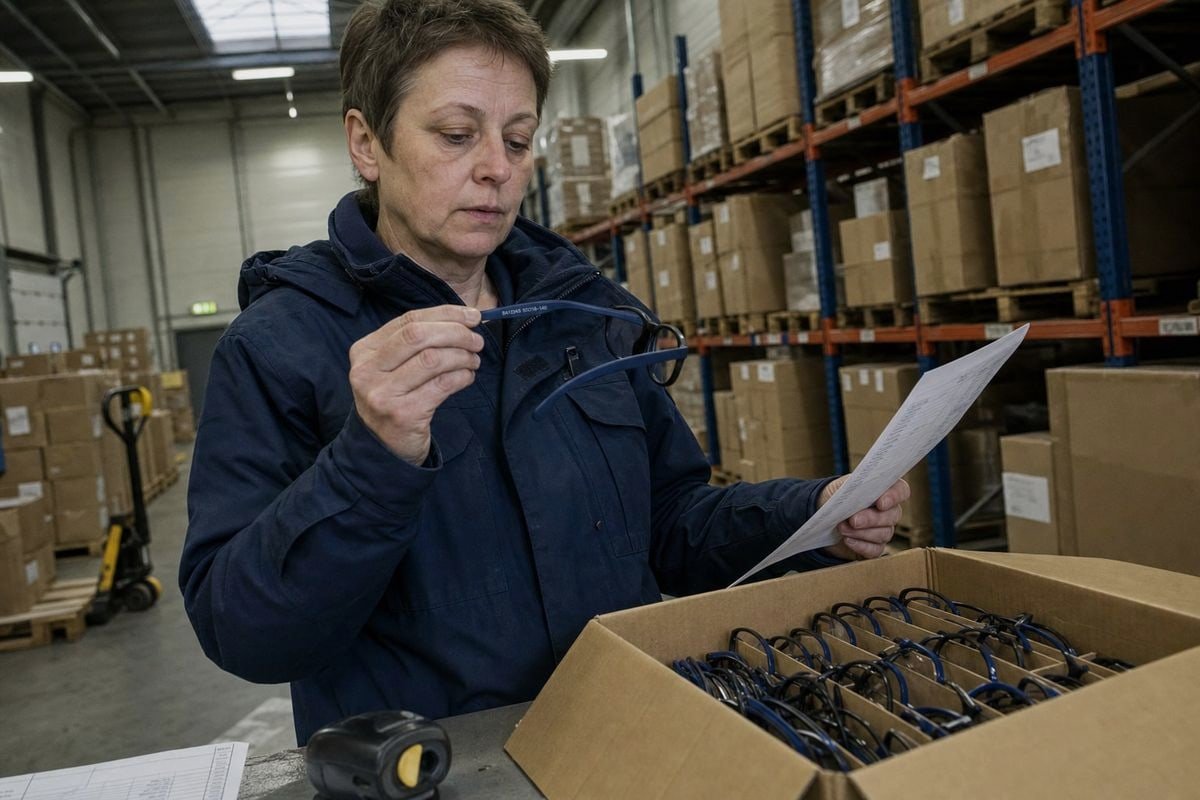
GPSR labels and records for kids optical frames confuse many buyers BPA and phthalates 1. I see shipments held at EU customs because our clients assumed a CE sticker was enough. It never is.
Kids optical frames imported from China need a traceability label with model and batch number, manufacturer name and contact details, EU responsible person details, importer identification, relevant warnings, plus retained records: a technical file, risk assessment, test reports, and a declaration of conformity kept for ten years.
That is the short answer. Below, I break down each document, each label element, and each record you must keep, based on what actually works for our EU buyers.
What GPSR Documents Do I Need to Import Kids Optical Frames From China?
Last spring, a German buyer asked us to rush a shipment of our TR90 kids optical frames. Their freight forwarder flagged missing GPSR paperwork. We rebuilt the document pack together in a week, and the lesson stuck with me.
To import kids optical frames from China under GPSR, you need a technical file with product description and risk assessment, safety test reports, a declaration of conformity, traceability records linking each batch to the factory, and documented EU responsible person and importer details.

GPSR is the EU product safety regulation (EU) 2023/988 2. It has been fully applicable since 13 December 2024. It covers consumer products that are not fully governed by more specific EU law. Kids optical frames sit in an interesting spot. Frames intended for prescription lenses are often treated as أجهزة طبية من الفئة الأولى, which brings علامة CE 3 into play. But GPSR still shapes traceability, online listing information, and safety expectations. So in practice, you need both sets of thinking.
Here is the core document set we prepare with our buyers before any container leaves Taizhou:
| وثيقة | What it contains | Who holds it |
|---|---|---|
| Technical file | Product description, materials, components, drawings, manufacturing details | Manufacturer + importer copy |
| Risk assessment (GPSR) | Child-specific hazard analysis: small parts, breakage, sharp edges, misuse | Manufacturer, reviewed by importer |
| تقارير الاختبار | EN ISO 12870 4 frame testing, chemical safety results | Manufacturer, shared with importer |
| إعلان المطابقة | Formal statement of compliance, signed | Importer and manufacturer |
| Traceability records | Batch codes, production dates, purchase orders, shipping documents | Both parties, 10 years |
| Label artwork records | Approved versions of frame marking, packaging, inserts | Both parties |
Why kids frames get extra scrutiny
Children's eyewear is not a toy, but market surveillance authorities treat child-use products more strictly. Any failure in hinge retention, lens retention, or temple breakage creates child-specific hazards. Your risk assessment must reflect a child user, not a generic adult. That means considering chewing, dropping, sitting on the frame, and pulling the temples apart. Our TPEE and TR90 material choices exist precisely because rigid, brittle frames fail these scenarios.
Keep the technical documentation ready before shipment, not after. Authorities can request it at any time, and the common expectation is retention for around ten years.
How Do I Get My Chinese Manufacturer to Provide Compliant GPSR Labels?
There is a trade-off we weigh on every kids frame project: buyers want clean, minimal frames, but GPSR wants durable identification on the product itself. Balancing the two is where good artwork planning matters.
Send your supplier a written label specification covering model number, batch code, manufacturer identity, EU responsible person, and importer details. Approve artwork for the frame, packaging, and inserts before production, and confirm placement follows the GPSR hierarchy: product first, then packaging, then documents.
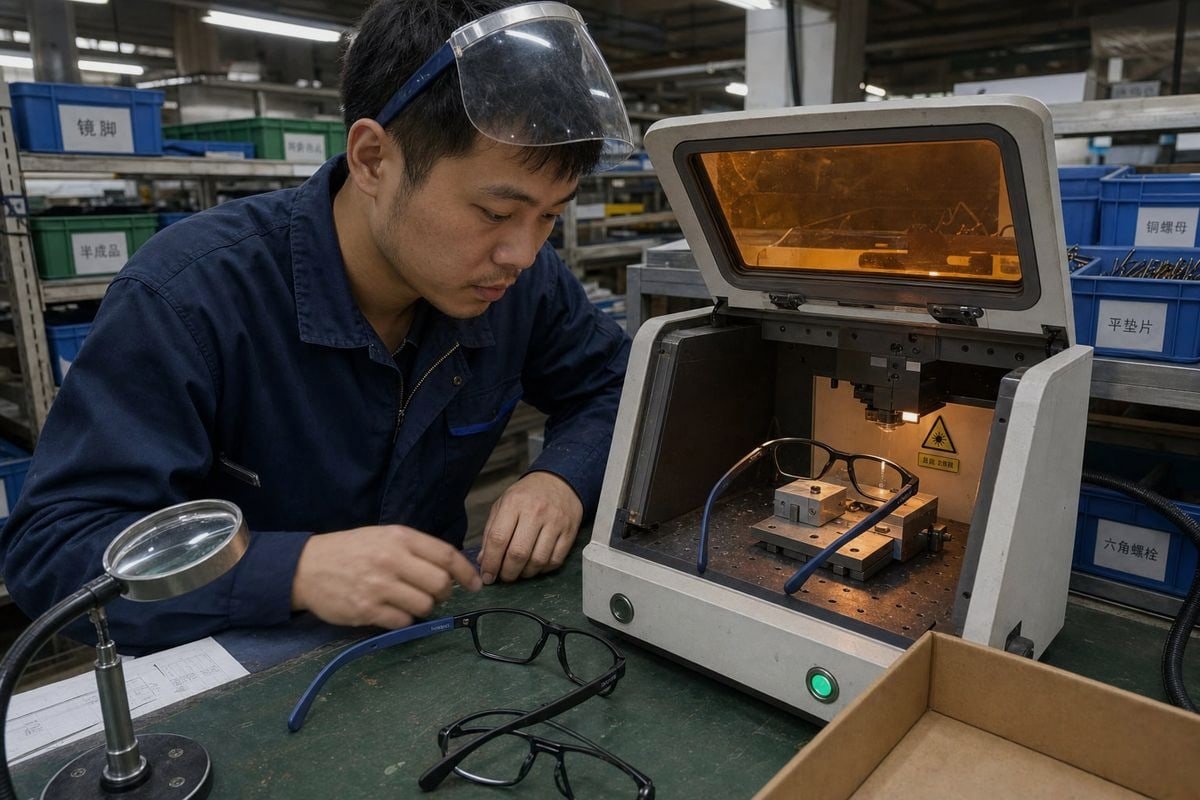
GPSR sets a clear placement hierarchy. The preferred location for traceability information is on the product itself. If the product is too small or marking is impractical, the information can move to the packaging. If that still does not work, it can go into accompanying documents. But you need a defensible reason for each step down that ladder.
For kids optical frames, the inner temple arm is your friend. On our TR90 kids optical frames, we laser-mark or pad-print the model and batch code on the inner arm. It survives cleaning, sweat, and daily handling. The manufacturer and importer contact details usually go on the packaging and insert card, because a child-sized temple simply cannot carry a full address legibly.
A practical process with your supplier
- Send a label brief listing every required data field before you confirm the order.
- Ask which fields can physically fit on the frame, and where.
- Approve digital artwork for frame marking, box, and insert together, as one set.
- Request pre-production samples showing the actual marking, not just renders.
- Keep the approved artwork files in your records with version numbers and dates.
What must appear where
| Information | إطار | التعبئة والتغليف | Insert / documents |
|---|---|---|---|
| Model + batch/serial number | Yes, preferred | نعم | Backup only |
| Manufacturer name + postal + email address | If space allows | نعم | نعم |
| EU responsible person details | Rarely fits | نعم | نعم |
| Importer identification | لا | نعم | نعم |
| Warnings and safe-use instructions | لا | Key warnings | Full text |
One important caution: a QR code or URL can supplement the physical label, but it cannot replace it. Digital-only traceability does not satisfy GPSR. We tell every buyer this early, because "just put a QR code on the temple" is the most common request we have to push back on.
What Traceability Records Should I Keep for Kids Optical Frames Under GPSR?
A buyer from the Netherlands once asked me to trace a single pink acetate-look frame back to its production week, eighteen months after delivery. Because our batch codes tie into our workshop records, it took us one afternoon. That is what product traceability should feel like.
Keep records linking every batch code to production dates, material lots, purchase orders, test reports, and shipment documents. Retain supplier invoices, packing lists, artwork versions, and customer distribution records for ten years, so any frame can be traced from EU shelf back to the factory line.
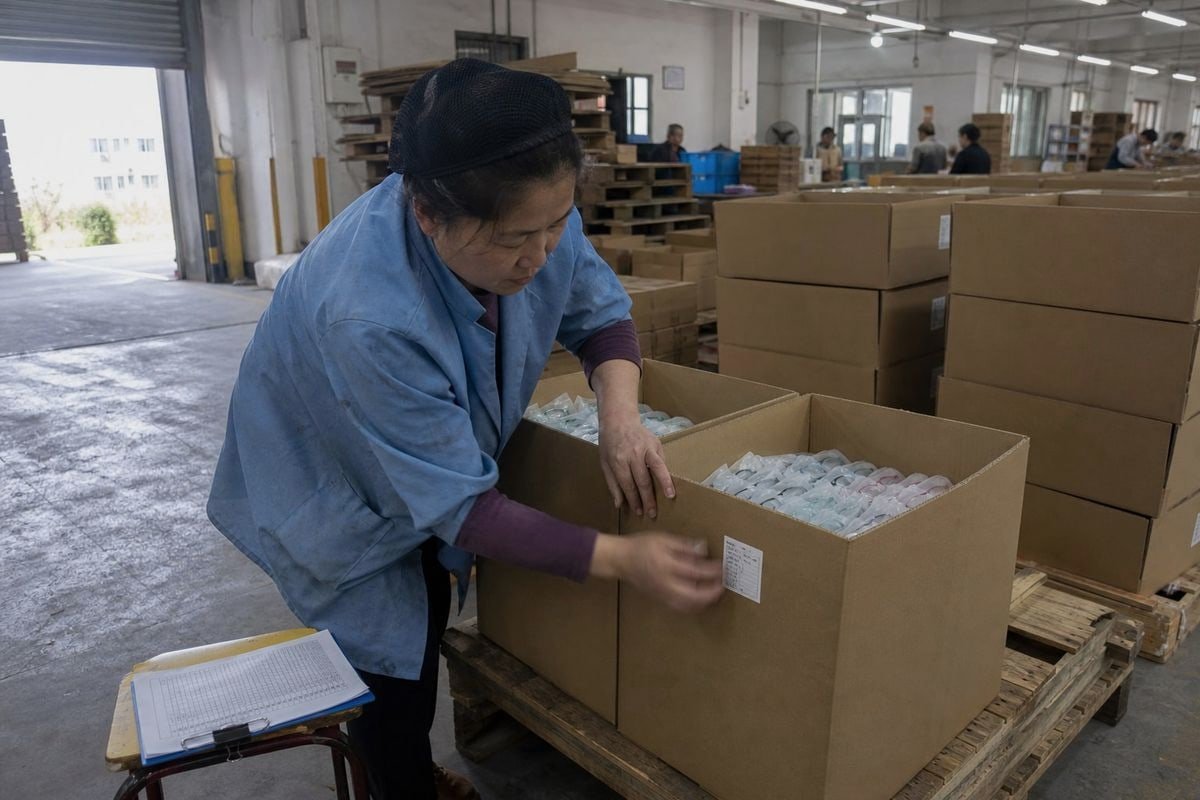
Traceability under GPSR works in two directions. Authorities may ask you to trace forward: which retailers received a suspect batch? And backward: which factory, which materials, which production run made this frame? Your records must answer both quickly. If a recall ever happens, speed limits the damage to your brand.
Here is the record structure we recommend to importers, and mirror on our side as the factory:
| Record type | What to capture | لماذا هو مهم |
|---|---|---|
| Batch register | Batch code, model, production date, quantity | Links the frame marking to real production data |
| Material records | TR90, TPEE, silicone lots and supplier certificates | Supports chemical safety claims, including BPA and PFAS concerns |
| Order documents | PO, proforma invoice, packing list, bill of lading | Proves the import chain and importer obligations |
| Quality records | Inspection reports, torque and flex checks, AQL results | Backs up the risk assessment with evidence |
| Distribution records | Which customers or channels received which batches | Enables targeted recalls instead of blanket ones |
| Artwork archive | Every label and packaging version, dated | Shows which units carried which information |
Do not forget your online listings
Distance selling falls under GPSR too. If you sell kids frames on Amazon, Shopify, or a marketplace, the listing itself must show the manufacturer details, the EU responsible person contact, and product identifiers. A compliant box is not enough if the listing is blank. Keep screenshots or exports of your listing information as part of your records, with dates. Many buyers overlook this, and it is one of the easiest things for market surveillance to check remotely.
Looking ahead, the Digital Product Passport will push even more supply chain data into structured digital records. Building clean batch-level records now makes that transition painless later.
Which Safety Certificates Should I Request From My Kids Eyewear Supplier for GPSR Compliance?
Early in my export career, I learned that "we have certificates" means very little until you see the actual reports, with your model numbers on them. Now our team shares test documentation proactively, because serious kids' brands always ask.
Request EN ISO 12870 test reports for frame durability, chemical safety reports confirming no restricted substances such as BPA or phthalates, material declarations for TR90 and TPEE, the supplier's declaration of conformity, and evidence supporting the child-specific risk assessment.
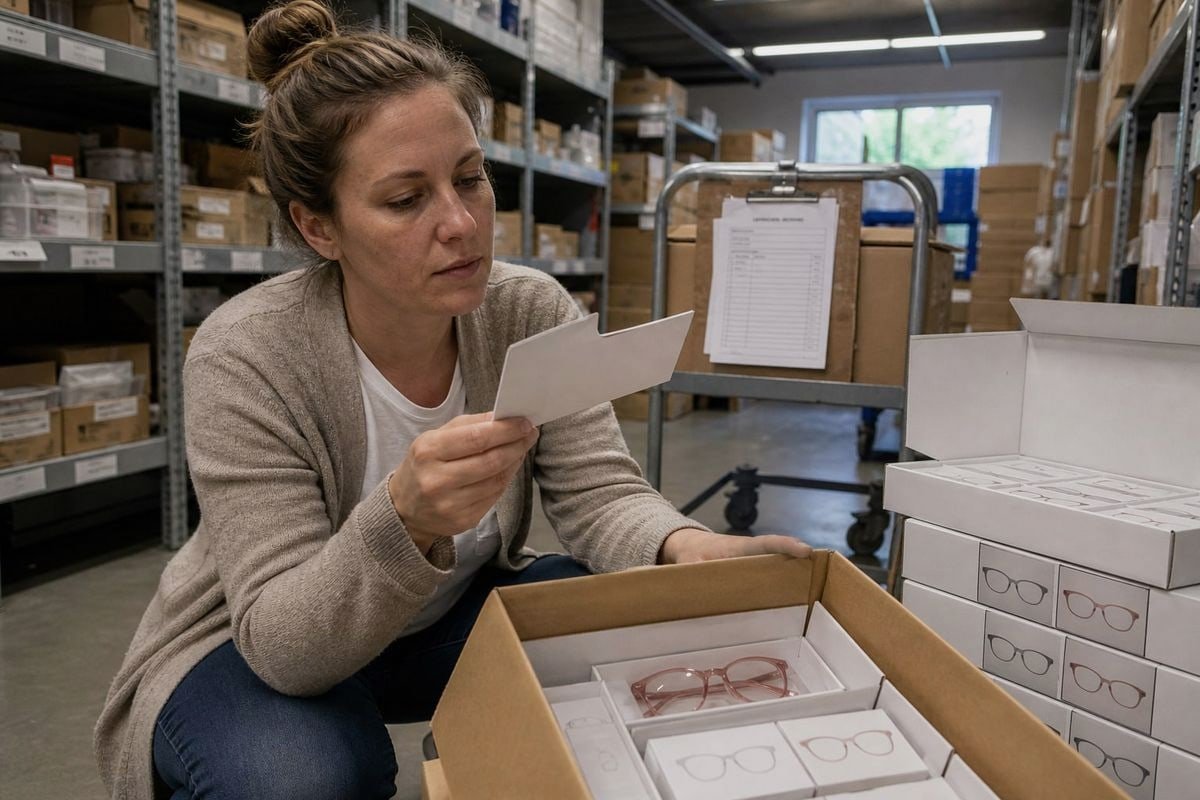
GPSR does not hand you a single named certificate for optical frames. Instead, it asks whether the product is safe and whether you can prove it. Compliance with harmonized European standards gives you a presumption of conformity, which is why EN ISO 12870 for spectacle frames is the backbone of your evidence pack. It covers dimensional stability, bridge deformation, temple endurance, and resistance to perspiration.
For children's eyewear standards, go further than the baseline. Ask your supplier for:
- EN ISO 12870 test reports matching your exact models, not a generic frame.
- Chemical test reports covering restricted substances 5. EU rules on chemicals in children's products keep tightening, so BPA-free and phthalate-free confirmation matters, and PFAS is worth asking about now.
- Material declarations identifying the actual polymers. Our frames use TR90 fronts with TPEE temples because both materials flex instead of snapping, which directly reduces breakage and sharp-edge hazards in the risk assessment.
- Nickel-release results if any metal parts, such as hinges or screws, touch the skin.
- A signed declaration of conformity referencing the applicable legislation, especially where frames are placed as Class I medical devices.
Reading the reports critically
Check three things on every report. First, the model number must match what you are buying. Second, the report date should be recent enough to reflect current production. Third, the testing lab should be identifiable and credible. A ten-year-old report for a different frame protects nobody. When we develop a new style from our catalog of roughly 800 existing designs for a customer, we align the test documentation with their chosen models before mass production, so the certificate pack and the shipment always match.
Also remember the role split. The manufacturer generates most evidence. But under importer obligations, you must verify it exists and is adequate before placing the frames on the EU market. If your supplier hesitates to share reports, treat that as a serious warning sign.
الخلاصة
Missing GPSR labels or records can strand your kids frames at customs or trigger recalls. Build the label set, technical file, and traceability records before shipment, and importing becomes routine.
ملاحظات ختامية
1. EU Directive specifically restricting phthalates in toys and childcare articles. ↩︎
2. Official text of the General Product Safety Regulation (GPSR) from the European Union’s legal database. ↩︎
3. Official EU information on CE marking, its purpose, and the obligations for manufacturers. ↩︎
4. Replaced HTTP 403 link with an authoritative page from the British Standards Institution (BSI) detailing the EN ISO 12870 standard for ophthalmic optics and spectacle frames. ↩︎
5. Information from ECHA on hazardous chemicals and restricted substances in children’s products. ↩︎
مقالات أخرى قد تعجبك
أغسطس 5, 2026
Bio-Based vs Regular Cellulose Acetate: What's the Difference for Kids' Frames?
أغسطس 5, 2026
How Recyclable Are Kids' Optical Frame Materials, and What Eco-Friendly Alternatives Exist?
أغسطس 5, 2026
Do Kids Optical Frames Whiten or Age in Storage, and How to Control Warehouse Conditions?
هل تبحث عن شريك موثوق به للنظارات للأطفال؟
استكشف أكثر من 800 نمط جاهز ودعم OEM/ODM كامل مصمم خصيصًا لعلامتك التجارية.
اتصل بنا English
  Español de México
  Deutsch
  Français
  日本語
日本語  العربية
  Português do Brasil