On-Site vs Third-Party Factory Audits: How to Approve Kids’ Sunglasses Suppliers in China?

Choosing between on-site and third-party factory audits confuses many buyers. I know, because visiting brands walk through our Taizhou workshop asking exactly this question — often after a bad supplier experience elsewhere.
Use both, in sequence. Start with remote document screening to filter suppliers, then commission an independent third-party on-site audit before approval. For kids’ sunglasses, the audit must verify safety compliance, material traceability, quality systems, and labor practices — not just production capacity or pricing.
The two options are not opposites. A third-party firm can conduct the on-site visit for you. Below, I will walk through how to decide, what to check, and when to walk away.
How do I decide between an on-site visit and hiring a third-party auditor for my China supplier?
A procurement manager from Australia once told me she had "audited" her previous supplier entirely over video calls. The factory she saw on screen was not the factory that shipped her goods. That story shaped how I advise buyers today.
Decide by risk and order value. Use remote screening and virtual audits as early filters. For meaningful orders — especially child-facing products or single orders above roughly $50,000 — commission an ISO 17020-accredited third-party firm to conduct an on-site audit, because independence plus physical verification is the most defensible combination.
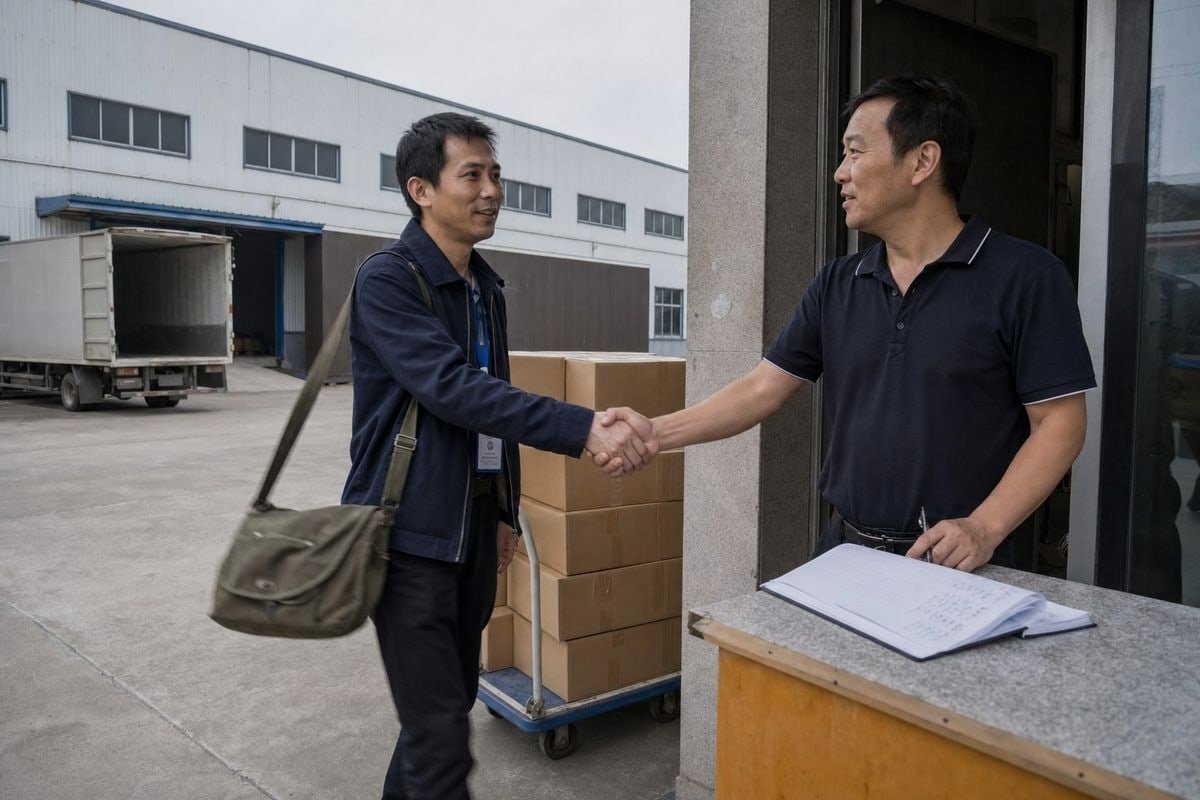
The real question is not "on-site or third-party." An on-site audit can be self-conducted or done by an independent firm. The useful comparison covers four methods, each with different strengths.
| Audit Method | التكلفة النموذجية | ما الذي يتحقق منه | Main Weakness |
|---|---|---|---|
| Remote document review | Lowest cost | Business license, export rights, certificates | Documents can be fabricated |
| Virtual/video audit | Roughly $0–$700 | Live view of the factory | Supplier controls what you see |
| Self-conducted on-site visit | Travel costs plus time | Physical conditions, firsthand impressions | Depends on your technical expertise; visits can be staged |
| Independent third-party on-site audit | About $400–$900 per audit day; some full-scope audits run $800–$2,500 | Physical conditions, records, worker interviews, hidden subcontracting | Highest upfront cost |
When a virtual audit is enough
Virtual checks work well early. If you are comparing ten potential suppliers, video walkthroughs help you cut the list to two or three without spending thousands. In our experience hosting virtual tours for buyers in Japan and Europe, they are genuinely useful for confirming that a factory exists, sees real production, and communicates professionally.
When only on-site verification is acceptable
But virtual audits rely on supplier self-presentation. A camera never wanders into the unventilated spray room or the subcontractor's workshop down the road. On-site auditors can verify actual headcount, equipment condition, calibration records, fire exits, and whether production truly happens at the stated address. For a child-facing product, that physical proof matters. Some buyers object that third-party audits are an unnecessary cost. I disagree — one recalled shipment of non-compliant kids' sunglasses costs far more than any audit day. A supplier verification service is insurance, not overhead.
Why independence matters
A third-party auditor 1 has no commercial relationship with the factory. Their findings carry weight with your insurers, retailers, and regulators. Factory-provided reports often quietly omit failures or shadow subcontracting.
What should I check first when auditing a kids' sunglasses factory for safety and quality?
Every week at our 5S-managed workshop, we run the same internal checks we expect auditors to demand of us. Fifteen years in eyewear taught our team a simple truth: a factory's discipline shows in small things first.
Check legal legitimacy first: verify the Unified Social Credit Code against government databases and confirm the business scope says eyewear manufacturing, not trading. Then audit the Quality Management System, safety certifications, chemical handling, social compliance, and child-specific controls like hinge tension and material safety.
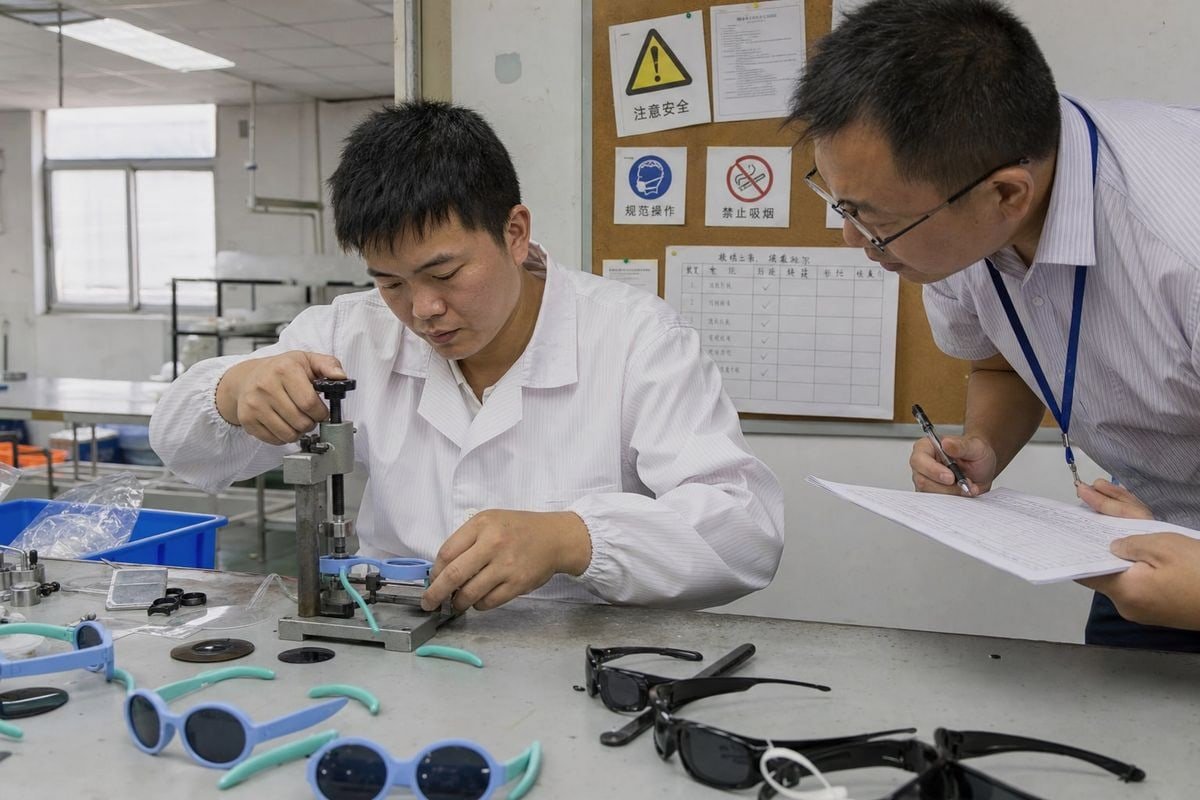
Kids' sunglasses are not fashion accessories. They are compliance-sensitive products that sit on a child's face for hours. Your audit checklist must reflect that higher bar.
Start with legal legitimacy
Cross-reference the factory's رمز الائتمان الاجتماعي الموحد 2 with official Chinese government records. Confirm the registered business scope includes eyewear manufacturing. Many "factories" online are actually trading companies. A trader adds margin and removes your visibility into production. When buyers visit us in Taizhou, we show our license, our export authorization, and our roughly 120 workers on the floor — because paper claims and physical reality must match.
Then verify the quality and safety systems
An auditor should walk the full flow: injection molding, lens insertion, assembly, finishing, and packaging. Along the way, they should confirm:
- ISO 9001 certification and whether the Quality Management System 3 is actually practiced, not just framed on a wall.
- In-Process Quality Control (IPQC) records for critical safety points — hinge tension, screw security, and lens retention on children's frames.
- Incoming material control and calibration records for test equipment.
- UV400 protection standards testing capability, ideally with an in-house lens transmission meter.
- Fire exits, ventilation, and compliant storage of acetone and coating chemicals.
Do not skip social compliance
Major eyewear brands increasingly require a social compliance audit under frameworks like BSCI or SEDEX. A current BSCI audit report 4 verifies employee ID checks, working hours, and the absence of child or forced labor. For a kids' brand, sourcing from a factory with labor violations is a reputational time bomb. Ask for the report before you fly anyone anywhere.
How can I verify a factory's material and production claims before placing my first order?
There is a trade-off we weigh constantly in our own sourcing: virgin TR90 and TPEE pellets cost more than regrind scrap plastic, but regrind compromises the flexibility and durability that keep children's frames from snapping. Buyers rarely see this decision — unless they audit for it.
Verify claims through Tier-2 traceability and batch testing. Audit the raw material suppliers behind the factory, demand batch-specific CPSIA and REACH test reports, match production batches to approved gold samples, and confirm chemical management protocols that prevent cross-contamination of paints and coatings.
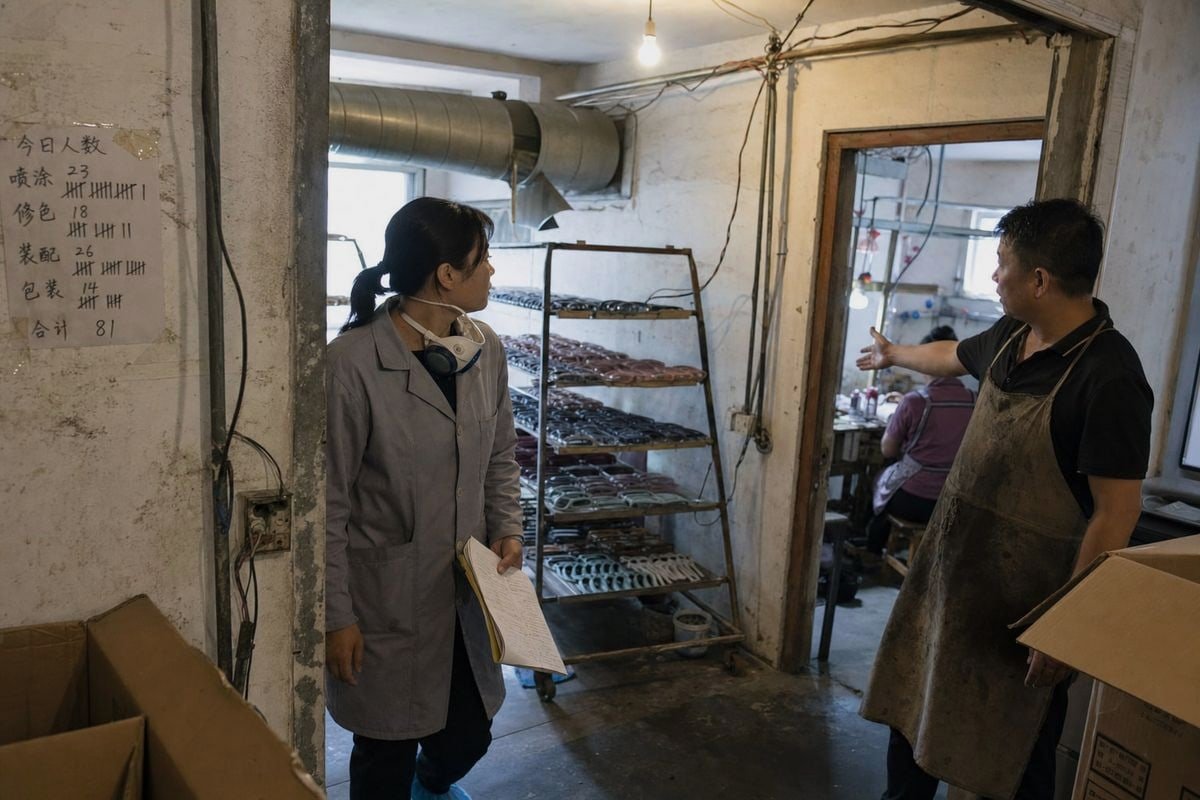
Documents alone cannot prove what goes into an injection molding machine. You need a layered verification approach that connects paper, pellets, and product.
Trace materials back to Tier-2 suppliers
Ask the factory to name its TR90 and TPEE pellet producers, then request purchase records and material certificates. Unauthorized regrind is the most common hidden substitution in plastic eyewear. At our factory, we keep pellet lot numbers linked to production batches precisely so buyers can trace any frame back to its raw material source. If a supplier cannot show this chain, treat their material claims as unverified.
Demand batch-specific test reports
Generic certificates prove little. Require batch-specific اختبارات امتثال CPSIA 5 for the US and REACH testing for the EU, focused on lead, phthalates, and cadmium in paints and plastics. For Europe, EN 71 safety standards 6 testing is also relevant for younger children's products. Confirm reports come from accredited labs and match your actual production batch numbers.
| Verification Layer | ما يجب طلبه | علامة حمراء |
|---|---|---|
| Material source | Tier-2 pellet supplier records, material certificates | Vague answers, no purchase records |
| السلامة الكيميائية | Batch-specific CPSIA/REACH/EN 71 reports | Old or generic reports reused across batches |
| أداء العدسة | UV400 transmission test data | No in-house testing equipment |
| Batch integrity | QR-coded or digitally tracked batches from molding stage | No link between batches and gold samples |
| Cross-contamination | Written chemical management protocol for shared lines | Shared paint lines with no segregation procedure |
Lock the gold sample
Approve a physical gold sample, then require digital chain-of-custody — QR-coded batching from injection molding onward — so production materials provably match what you signed off. When we develop custom colors and lenses for OEM clients, we seal gold samples on both sides. It removes ambiguity later.
Which audit findings should stop me from approving a supplier for my kids' eyewear brand?
Years ago, a European importer asked our team to review a competing quotation that seemed too cheap. The attached audit summary mentioned undisclosed subcontracting in a footnote. He almost missed it. That lesson stuck with me: buyers must know which findings are fixable and which are deal-breakers.
Reject suppliers on any of these findings: child or forced labor, fabricated test reports, hidden subcontracting, business scope mismatch, lead or phthalate failures, no functioning quality system, or refusal of independent audits. These indicate systemic dishonesty or safety risk that no corrective action plan reliably fixes.
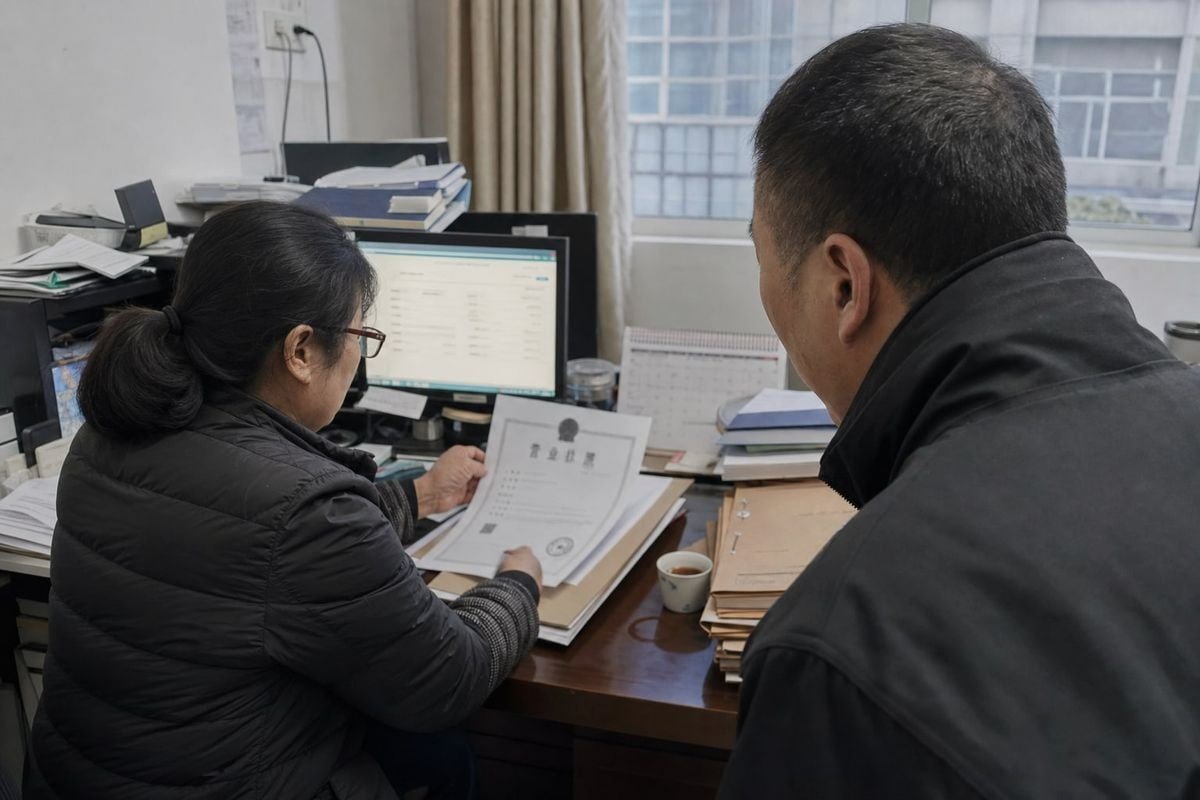
Not every negative finding should kill a deal. Good factories have minor non-conformities too. The skill is separating fatal flaws from fixable gaps.
Deal-breakers versus fixable findings
| Finding | الخطورة | Recommended Action |
|---|---|---|
| Child labor or falsified employee IDs | Fatal | Walk away immediately |
| Fabricated or altered test reports | Fatal | Walk away; dishonesty spreads to everything |
| Undisclosed subcontracting of production | Fatal | Walk away or fully re-audit the real site |
| Heavy-metal or phthalate test failures | Fatal for kids' products | Do not approve until root cause is proven fixed and retested |
| Business scope mismatch (trader posing as factory) | Fatal for direct-factory strategy | Renegotiate transparency or exit |
| Incomplete calibration records | Fixable | Corrective action plan with follow-up audit |
| Minor 5S or housekeeping gaps | Fixable | Timeline for improvement, verify at pre-shipment inspection |
| Missing wastewater documentation for plating | Serious | Require evidence of compliant treatment before approval |
Why the fatal findings are fatal
Findings like fabricated records reveal character, not capability. A factory that forges one report will forge the next one under delivery pressure. Some buyers argue a great price justifies overlooking "paperwork issues." I push back on that every time. For kids' eyewear, your brand absorbs the liability, the recall cost, and the headlines — the supplier does not.
Approval is layered, not a single event
Even a clean audit is not the finish line. Run a manufacturing capability assessment against your actual product specs, place a trial order, and use AQL-based pre-shipment inspection 7 to confirm the factory performs under real production pressure. Also look forward: audit energy efficiency and waste management, since green import regulations and carbon-border measures for plastic goods are coming. A supplier ready for those rules is a supplier built to last.
الخلاصة
Approving a kids' sunglasses supplier is a layered process, not one event. Screen remotely, audit on-site through an independent firm, test batches, then verify with trial orders. Your brand's safety reputation deserves nothing less.
ملاحظات ختامية
1. Official ISO standard for bodies performing inspection, ensuring competence and impartiality in third-party audits. ↩︎
2. Wikipedia reference for the standard identification system used for all businesses and organizations in mainland China. ↩︎
3. Authoritative Wikipedia overview of ISO 9001 Quality Management System standards. ↩︎
4. Official page for the amfori BSCI social auditing methodology used to monitor supply chain social performance. ↩︎
5. Official U.S. government resource for the Consumer Product Safety Improvement Act regarding children’s product safety. ↩︎
6. Wikipedia overview of the European Union’s safety requirements for toys and children’s products. ↩︎
7. Wikipedia entry for Acceptable Quality Level (AQL), the industry standard for statistical sampling in inspections. ↩︎
مقالات أخرى قد تعجبك
هل تبحث عن شريك موثوق به للنظارات للأطفال؟
استكشف أكثر من 800 نمط جاهز ودعم OEM/ODM كامل مصمم خصيصًا لعلامتك التجارية.
اتصل بنا English
  Español de México
  Deutsch
  Français
  日本語
日本語  العربية
  Português do Brasil