Integrated Nose Bridge vs Silicone Pads: How to Choose TR90 Kids Sunglasses?
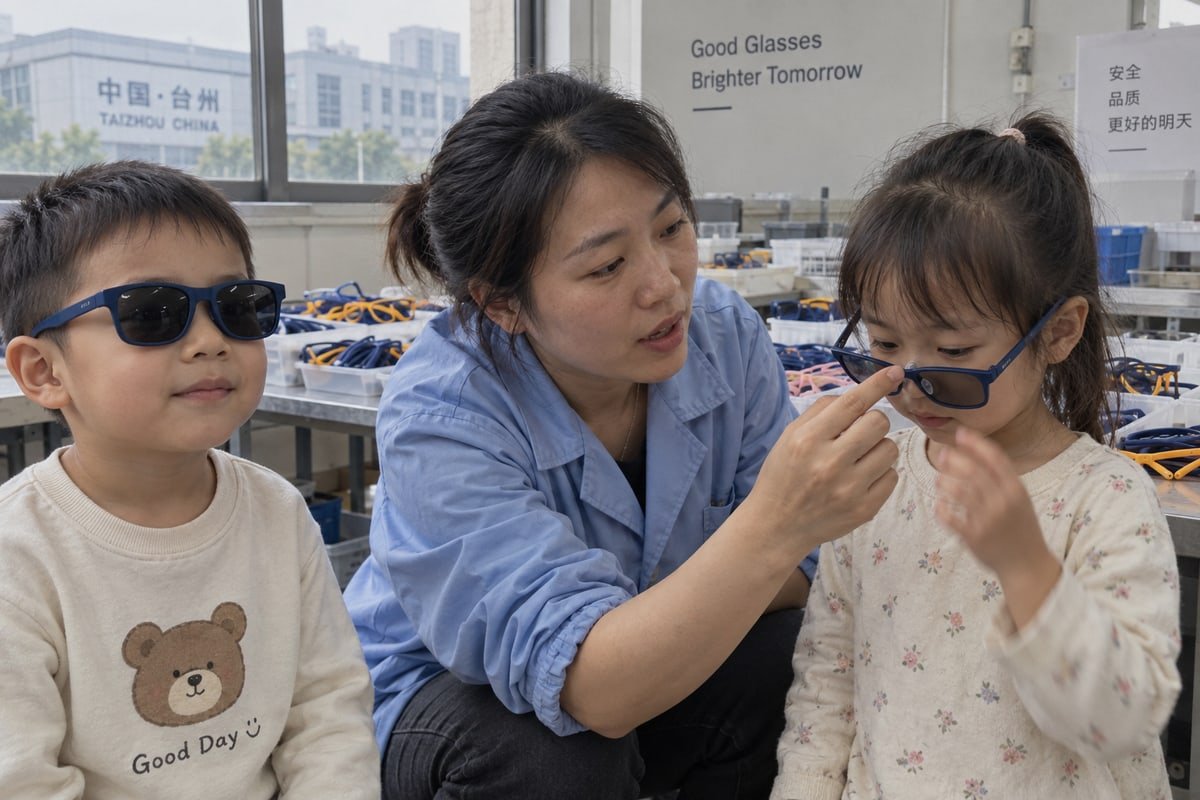
Buyers visiting our Taizhou factory ask the same question about TR90 kids sunglasses: integrated nose bridge vs silicone pads? Pick wrong, and frames slide, pinch, and get abandoned.
Choose an integrated nose bridge for TR90 kids sunglasses when the frame already sits securely and the child is under five or dislikes anything touching the nose. Choose silicone pads when the child has a low or narrow bridge, slips frames during play, or needs pressure relief.
That is the short version. The longer version depends on nose shape, age, and how hard the child plays. I will walk through each factor below, then show how we help brands build both options into one product line.
How do I know if my child needs an integrated nose bridge or silicone pads for TR90 sunglasses?
During fit trials on our sample line, we put the same TR90 front on two children of the same age. One frame stayed put; the other slid within minutes.
Check three things: nose shape, age, and slipping. A child with a defined bridge who keeps frames in place after looking down does well with an integrated bridge. A child with a flat or narrow bridge, or frames that drop forward, needs silicone pads or a strap.
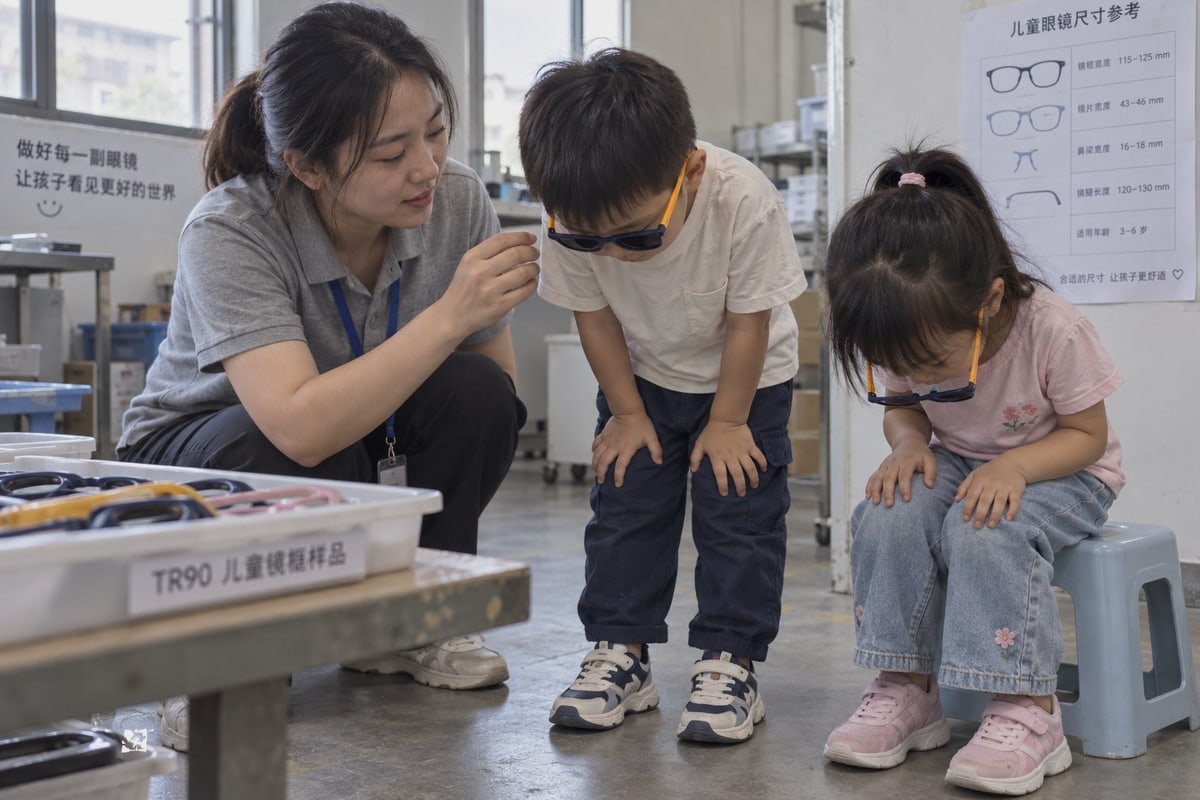
The fastest way to decide is to match what you see on the child's face to a bridge style. Here is the quick reference we share with product managers before they sample.
| What you observe | السبب المحتمل | Better bridge choice |
|---|---|---|
| Frame stays put when the child looks down | Bridge shape matches nose | Integrated bridge |
| Frame drops forward when the child looks down | Bridge too wide or nose too flat | Silicone pads or integrated bridge plus strap |
| Red marks on both sides of the nose | Pressure on a narrow contact area | Integrated saddle bridge or softer pads |
| Frame tilts or gaps at one side | Asymmetric fit or wrong frame width | Adjustable silicone pads |
| Child under five with no defined bridge | Nasal crest still developing | واسع saddle bridge design 1 |
The look-down test
Ask the child to put the sunglasses on, then look at their feet for five seconds. If the frame slides down or drops forward, the bridge or retention system is not doing its job. This is the single most useful test for toddlers, because they cannot tell you what feels wrong. We run this test on every new front shape before it goes into our style library.
Age and the nasal crest development stage
Children under five often lack a defined nose bridge. Pinpoint silicone pads have very little to grip on a flat surface. A wide saddle bridge design, molded as one piece with the front, spreads contact across the whole upper nose and stays more stable. Once the bridge becomes more pronounced, usually in early school years, pads start to make more sense for children who fall between sizes.
Measure the face, not the age label
Age is only a starting point. Common sizing references for kids' frames include lens width, bridge width, and temple length. One widely cited range puts lens width around 46 to 49 mm for ages four to seven, but two children of the same age can differ by a full size. Because TR90 is a thermoplastic memory polymer 2, the frame flexes and springs back, which forgives small errors in width. It does not forgive a bridge that is simply the wrong shape. Ergonomic frame design starts with the correct bridge, and everything else follows.
What comfort and safety differences should I consider between these two nose bridge designs?
Every gram we shave off a TR90 front changes how the bridge behaves. Lighter frames need less grip, but a low-bridge nose still wants something to hold onto.
An integrated TR90 bridge spreads weight over a wider area, avoids metal pad arms, and is easier to keep clean. Silicone pads add anti-slip grip and cushion pressure points, but they add small parts, need cleaning, and can irritate if positioned poorly.
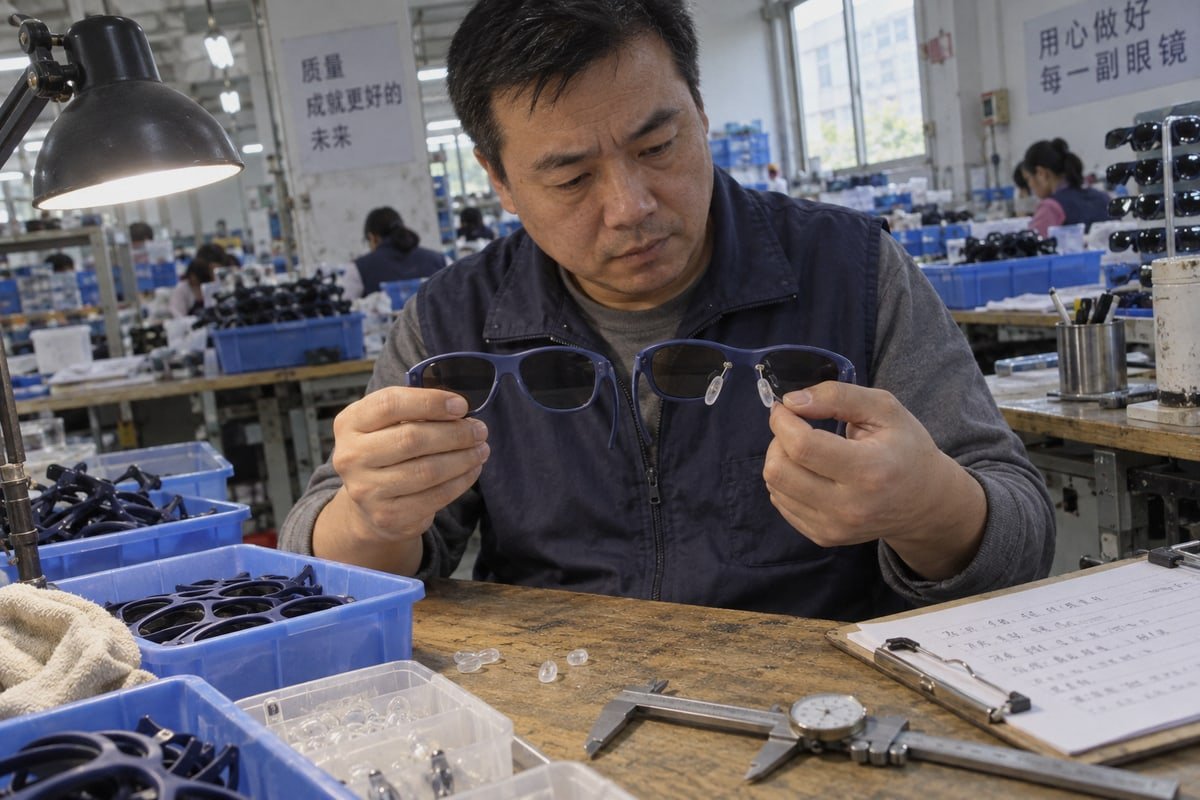
Comfort and safety overlap more than most buyers expect. A frame that hurts gets taken off, and a frame that gets taken off provides no UV400 protection at all. So I treat both together.
| العامل | Integrated TR90 bridge | Silicone nose pads |
|---|---|---|
| Weight distribution | Broad contact area, fewer deep red marks | Two smaller contact points, cushioned by soft material |
| Grip | Relies on frame shape and temple fit | High-friction surface resists sliding in sweat and humidity |
| سلامة التأثير | Single-piece crumple zone, no metal arms | Metal pad arms can bend toward the face in a fall |
| Hygiene | Smooth surface, no crevices | Sweat and oils collect around pad mounts |
| Sensory comfort | Consistent, broad tactile feedback | Localized pressure some children find distracting |
| Adjustability | None after molding | Can be repositioned or replaced |
Pressure and red marks
An integrated bridge wins on pressure distribution by design. It spreads the frame's weight across a larger surface, so deep pressure marks are less likely. Silicone pads work differently. They concentrate contact but soften it with optical grade silicone. Both can be comfortable. The difference is which child you are fitting. A child with a defined bridge and a well-matched frame may never notice an integrated bridge. A child whose nose is narrower than the frame will feel the edges dig in, and pads relieve that.
Impact safety during play
Here I hold a firm view. Impact-resistant frames matter most when a child falls face-first. An integrated TR90 bridge acts as one continuous crumple zone. There are no metal pad arms or screws that can bend inward and cause secondary injury to the eye or skin. When we do specify pads on a sport style, we prefer pads molded directly into a TR90 or TPEE seat 3 rather than attached to wire arms. We also use BPA-free materials across our children's ranges, because the bridge sits against skin for hours.
Hygiene and sensory sensitivities
Pad mounts create tiny crevices. Sweat and skin oil collect there, and parents rarely clean them. An integrated bridge wipes clean in one pass. For children with sensory processing sensitivities, that broad and consistent contact is often less distracting than the poking sensation of two small pads.
One objection I hear often is that silicone pads are always more comfortable. They are not. They improve grip and pressure relief when sizing is right. When the frame is too wide, the pads sit in the wrong place and still slip. And low-quality pads harden with age, which turns a comfort feature into an irritant.
Which nose bridge style holds up better for active kids and long-term durability?
One lesson from fifteen years of eyewear work: the part that fails first is rarely the frame. It is usually the smallest attached component.
Integrated TR90 bridges last longer because there are no pads to yellow, harden, or fall off, which suits hand-me-down use. Silicone pads win for stability during sweaty, high-energy play, but expect to replace them over time and inspect the mounts regularly.
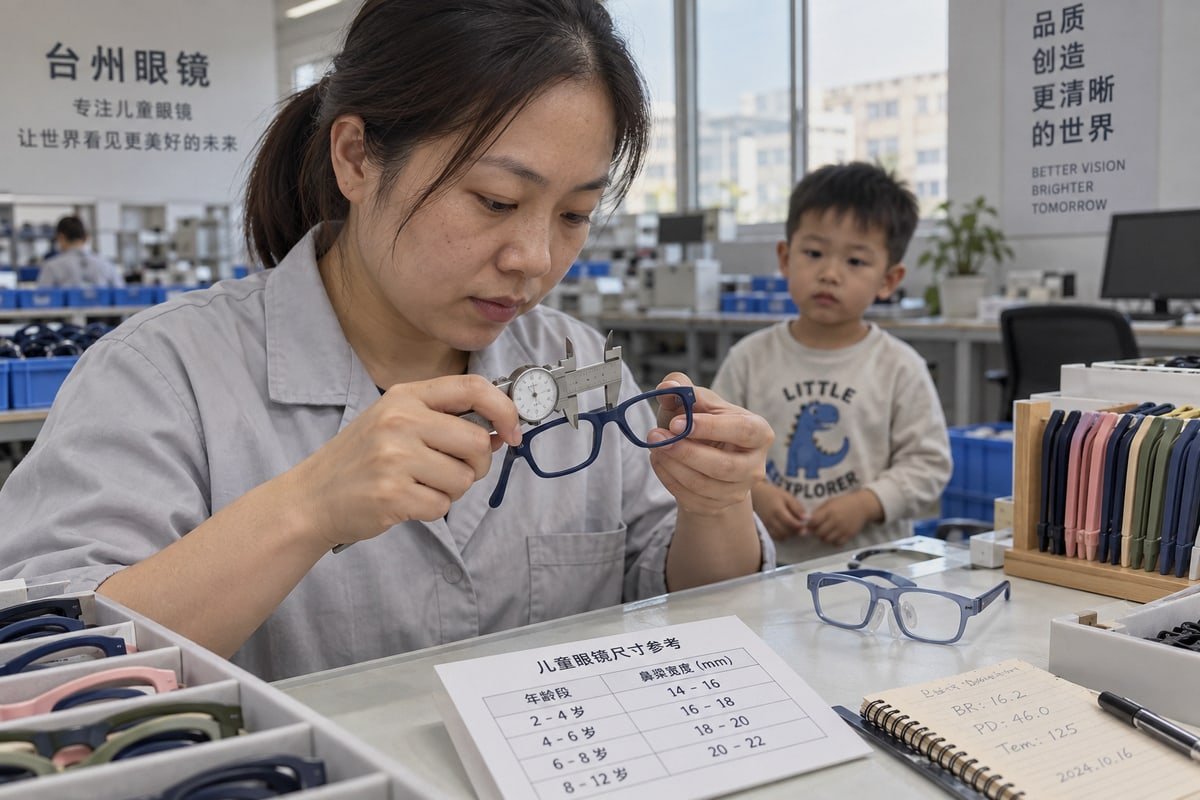
Durability for kids' eyewear has two meanings. The first is surviving impact. The second is surviving time, including a second child inheriting the frame. The two bridge styles perform differently on each.
What wears out first
Based on returns and QC feedback across our export markets, the failure order on a typical kids' frame looks like this:
- Silicone pads discolor or harden, usually from sunscreen, sweat, and UV exposure.
- Pad mounts loosen, and a pad detaches.
- Temple tips scuff or lose their soft feel.
- Hinges loosen, which is why we rely on flexible hinge technology and TPEE temples that bend rather than snap.
- The TR90 front itself, which almost never fails under normal child use.
An integrated bridge removes the first two items from the list entirely. That is the whole durability argument in one sentence. There is nothing to replace because there is nothing separate.
Sport use, sweat, and humidity
Now the counterargument, and it is a fair one. For a child running around in humid weather, silicone provides a high-friction, anti-slip grip 4 that a smooth TR90 surface cannot match. On our wraparound sport style with the matte navy rubberized finish, the curved shape and grippy temple arms do most of the holding. Even so, some buyers in hot markets ask for silicone contact points at the bridge as well, and that request is reasonable for a dedicated sport line.
The trade-off I weigh with every buyer is this. Add pads, and you gain stability today but accept maintenance later. Skip pads, and you gain longevity but must get the bridge shape exactly right from the start.
Pad quality is the hidden variable
Not all silicone ages the same. One parent-tested review of a kids' product reported that the pads stayed soft over a 90-day test and helped prevent red marks. That is the standard to hold a supplier to. Cheap pads yellow within a season. Optical grade silicone, molded into a proper seat rather than glued, holds up far longer. If your line will use pads, ask for aged samples, not just fresh ones.
For a hand-me-down use case, where a brand markets frames to families with several children, I recommend the integrated bridge without hesitation. Structural integrity stays consistent, and the frame looks nearly new when it reaches the second child.
How do I choose the right supplier to customize nose bridge options for my kids' sunglasses line?
A buyer from Australia once sent us two competitor frames and asked which bridge to copy. We asked instead who her end customers were and how old they were.
Pick a real factory with flexible-material expertise, an existing style library so you can test both bridge types without new molds, and full OEM/ODM support for colors, logos, lenses, and packaging. Ask for samples, fit data by age, and clear QC documentation.
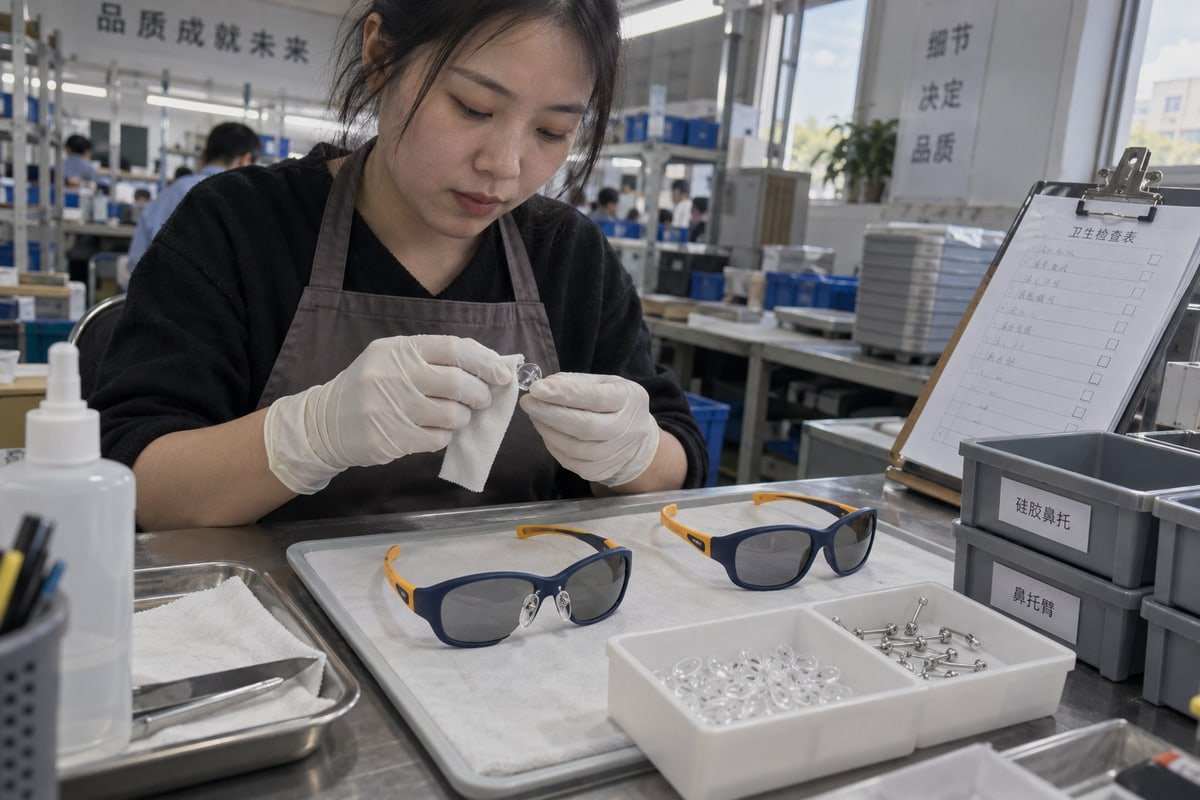
The bridge decision is only useful if your supplier can actually deliver both options at consistent quality. Here is how I suggest evaluating that.
| سؤال لطرحه | لماذا هو مهم | ما الذي تبحث عنه |
|---|---|---|
| Do you own the factory? | Trading companies cannot control bridge tolerances | Worker count, workshop photos, 5S or similar management |
| How many existing styles carry each bridge type? | Lets you test the market before paying for molds | A library of several hundred styles across ages |
| What materials do you mold the bridge in? | Flexibility and skin contact depend on it | TR90 fronts, TPEE temples, optical grade silicone pads |
| Can you show fit results by age group? | Confirms the saddle bridge design works on small noses | Sample fitting notes, not just size charts |
| What lens options come standard? | Fit protects nothing if the lens is weak | UV400 protection, polarized TAC lenses on request |
| What is included in OEM/ODM? | Retail-ready presentation saves you a second vendor | Colors, logos, lenses, packaging, cases, straps |
Start from existing styles
New brands often assume they must open a mold to get the bridge they want. Usually they do not. Our library holds roughly 800 existing styles, and it already covers both approaches. The navy wayfarer with yellow-orange temples uses an integrated bridge, because that classic shape sits well on most school-age faces. The glossy black oval has a low-profile bridge built in, which suits younger and flatter-bridged children. The matte navy sport wraparound can be specified either way. A brand can order small quantities of each, test with real customers, and only then invest in tooling.
A practical customization path
- Share your target age range and market. Fit needs in Japan differ from northern Europe.
- Select two or three base styles, ideally one with each bridge type.
- Confirm materials: TR90 front, TPEE temples, BPA-free materials throughout.
- Choose lens spec, colors, and logo placement.
- Review pre-production samples with real children, using the look-down test.
- Approve packaging and accessories such as straps or cases.
- Lock QC checkpoints before bulk production.
We run this process for brands in more than twenty countries from our workshop of about 120 people. The point is not speed for its own sake. It is that every step has a decision behind it, so the frames that reach your shelf stay on the children who wear them.
الخلاصة
TR90 gives your kids' sunglasses lightness and durability. The bridge decides whether they stay on. Match bridge style to nose shape, age, and activity, and children actually keep wearing them.
Interested in sourcing the products mentioned in this article? See details and request a quote here:
ملاحظات ختامية
1. Research on the anatomical development of the pediatric nasal bridge and facial structure. ↩︎
2. Technical definition and properties of thermoplastic polymers used in high-performance eyewear manufacturing. ↩︎
3. International standard for thermoplastic elastomers, ensuring material quality and safety in manufacturing. ↩︎
4. Scientific explanation of friction and grip, relevant to the performance of silicone nose pads. ↩︎
مقالات أخرى قد تعجبك


هل تبحث عن شريك موثوق به للنظارات للأطفال؟
استكشف أكثر من 800 نمط جاهز ودعم OEM/ODM كامل مصمم خصيصًا لعلامتك التجارية.
اتصل بنا English
  Español de México
  Deutsch
  Français
  日本語
日本語  العربية
  Português do Brasil