How to Write a Clear Requirements Sheet for Sourcing Kids’ Optical Frames?

A vague requirements sheet for sourcing kids’ optical frames causes remakes, delays, and returns pediatric measurements 1. On our production line in Taizhou, I have seen unclear briefs sink promising launches before retail.
A clear requirements sheet for sourcing kids’ optical frames defines safety and material standards first, then age-based sizing, technical specs like hinge type and tolerances, and finally branding, packaging, and labeling. Write it as a measurable procurement spec, not a style wish list, so suppliers can quote accurately.
Below, I break the sheet into four sections. Each one maps to a real conversation you will have with your factory. Get these right, and sampling goes fast.
What information should I include when defining frame material and safety requirements?
A buyer from Australia once sent us a brief that said only "safe plastic, kid-friendly." Our engineers had to ask eleven follow-up questions before we could even quote her project.
Your material and safety section should name the exact frame material, require hypoallergenic and BPA-free compounds, ban sharp edges and small detachable parts, and list mandatory compliance standards such as CPSIA and REACH, backed by third-party lab test reports for every production batch.
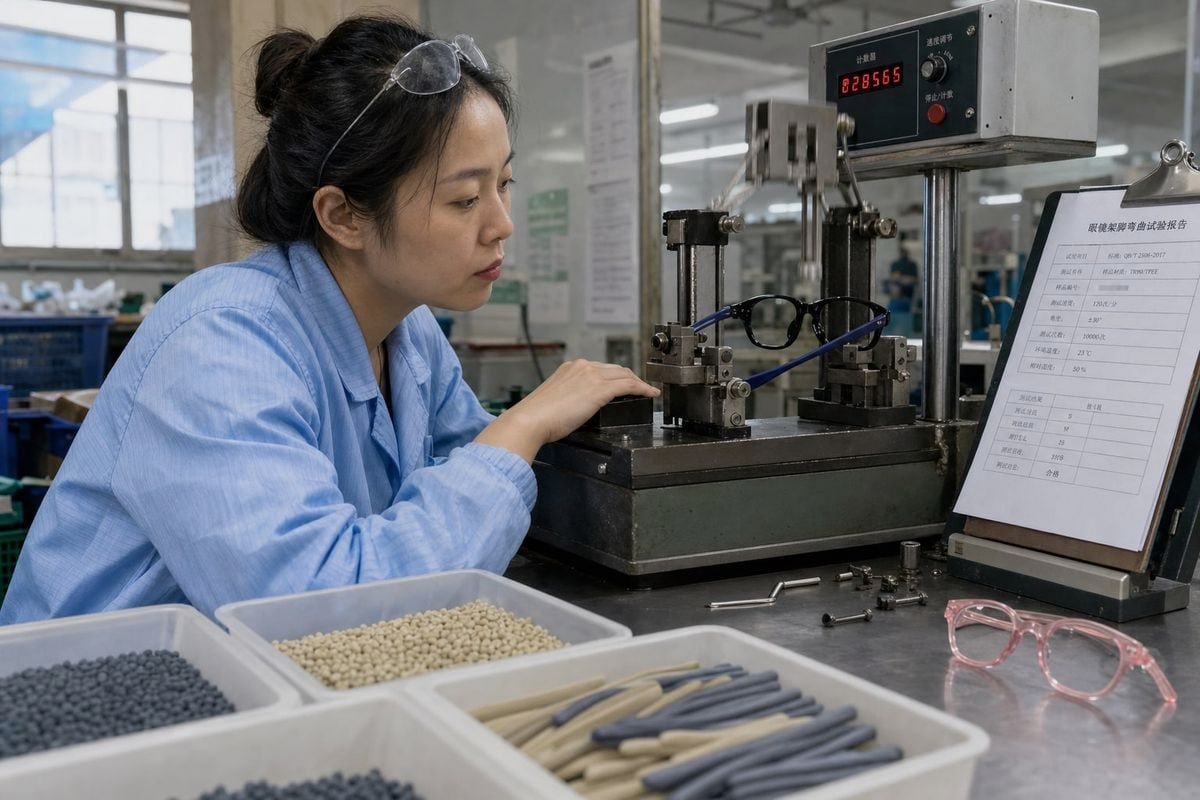
Material choice drives everything else in children's eyewear. So this section must come first in your sheet, and it must be specific. In our fifteen years of building kids' frames, the briefs that work always name materials by grade, not by feeling.
Name the material, not the adjective
"Durable plastic" means nothing to a factory. "TR90 front with TPEE temples, matte finish, مواد إطارات مضادة للحساسية 2 only" is something we can quote and manufacture against. TR90 material specifications should cover flexibility, memory recovery, and colorant safety. If you want soft-touch or bio-based acetate options for sustainability-focused parents, say so explicitly. We produce both, but they carry different costs and lead times.
Write safety rules as testable statements
Avoid subjective language. Instead, write requirements a quality control inspection can verify:
- لا sharp edges or protrusions anywhere on the frame.
- All components corrosion-resistant and nickel-free.
- Frame must survive repeated flexing of the temples without cracking.
- No small parts that can detach under a defined pull force.
- Materials must be BPA-free and free of restricted phthalates.
List compliance by target market
If you sell into the US, cite معايير السلامة CPSIA 3 and confirm whether FDA medical device registration applies to your optical frames. For the EU, cite REACH. Then require documentation: third-party test reports from accredited labs, component-level material certificates, and a traceability protocol linking each batch to its raw material records. When we export to 20+ countries, buyers who ask for this paperwork up front never face customs surprises later. Buyers who skip it sometimes do.
How do I specify sizing and fit details for different children's age groups?
The hardest trade-off I weigh with new brands is fit versus shelf simplicity. One universal size is cheaper to stock, but a four-year-old and a ten-year-old have completely different faces.
Specify sizing in age brackets using pediatric measurements: eye size, bridge width, temple length, lens height, total frame width, and boxed center distance. Require a low, wide bridge splay for young children, and reject oversized "grow into it" frames that break pupil alignment.
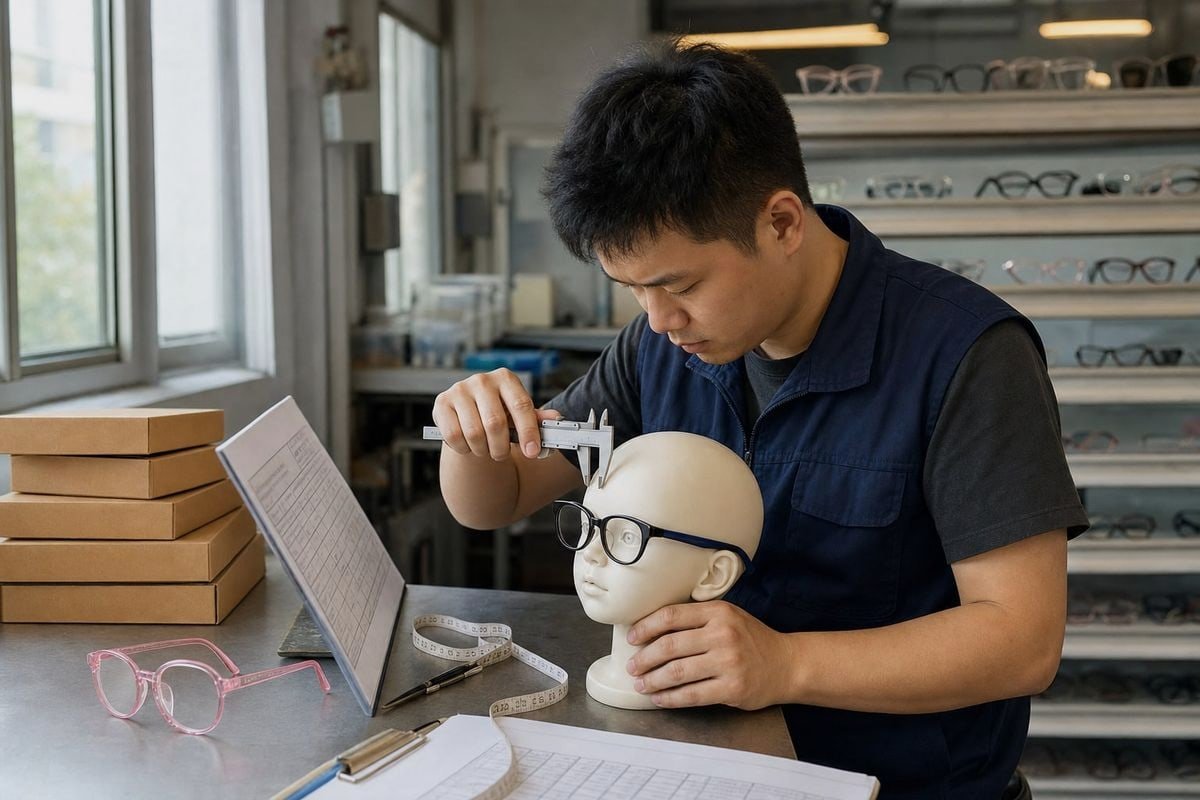
Fit geometry matters more than "small size." A scaled-down adult frame still fails on a child's face because the جسر أنفهم 4 is flatter and less developed. That is why our kids' molds use pediatric bridge geometry with a lower, wider splay angle, not shrunken adult curves. Your sheet should reflect the same thinking.
Use age-bracketed measurement fields
Give your supplier a table, not a paragraph. Here is a starting framework we share with buyers; adjust it to your market's growth data:
| الفئة العمرية | Eye size (mm) | Bridge width (mm) | Temple length (mm) | Typical fit priority |
|---|---|---|---|---|
| 2-4 سنوات | 38–42 | 13–15 | 115–120 | Flexible bridge, strap or ear-hook retention |
| 5-7 سنوات | 42–46 | 14–16 | 120–125 | Stable bridge, slip resistance during play |
| 8–12 سنوات | 46–49 | 15–17 | 125–135 | Secure temple wrap, lens height for reading zones |
These bridge and temple dimensions are a reference range. Your final numbers should come from your target demographic and prescription profile.
Write fit requirements in measurable language
Weak briefs say "must fit comfortably." Strong briefs say:
- Frame width must match the child's face width with only minor side clearance.
- Bridge must prevent eyelash contact with the lens and minimize sliding.
- Optical center must sit close to the visual axis, with decentration limits stated.
- Lower rim must not touch the cheeks when the child smiles.
- Temples must wrap securely behind the ear without pressure points on developing mastoid areas.
Reject the "grow into it" mindset
Some buyers push for larger frames to extend wear time. I resolve this objection with a simple point: an oversized frame misaligns the pupils with the optical centers, adds lens thickness and weight, and slides during activity. It costs you returns. Match the frame to the face today, and offer the next size up as a separate SKU.
What technical specs should I confirm with my manufacturer before placing an order?
Early in my career at our Taizhou factory, we produced a sample run where the buyer never confirmed hinge type. The remake cost three weeks. I never let a spec sheet leave that field blank again.
Before ordering, confirm hinge construction and cycle durability, nose pad type, lens retention strength, frame depth for prescription lenses, dimensional tolerances, technical drawing requirements, and the prototype sample approval process, including photo and measurement sign-off before mass production begins.
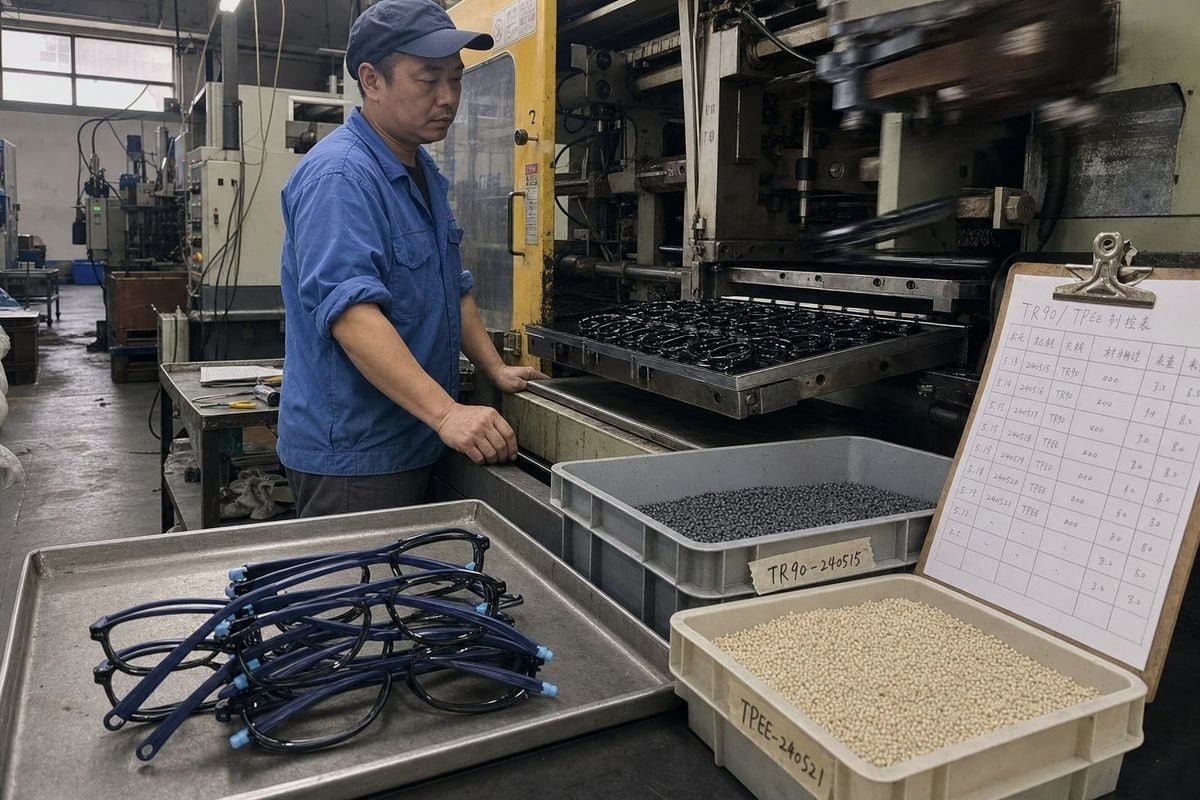
Technical specs are where clinical fit meets manufacturing reality. Our engineers have found that most disputes between buyers and factories trace back to specs that were assumed, not written. Put every one of these in your sheet.
The hardware checklist
| بند المواصفات | What to state in your sheet | لماذا هو مهم للأطفال |
|---|---|---|
| المفصلات | 180-degree spring hinges or screwless flexible joints; state cycle expectations | Children pull glasses off one-handed; spring hinge durability prevents early breakage |
| Nose fit | Molded pediatric bridge or adjustable silicone nose pads | Flat nasal bridges need low, wide support to stop slipping |
| تثبيت العدسة | Retention strength under defined pressure | Lenses must not pop out during impact or play |
| Lens compatibility | Frame must accept polycarbonate or Trivex; state minimum frame depth | Impact-resistant lenses are the standard of care for children |
| أطراف الذراعين | Replaceable, soft, curved ear hooks; strap compatibility if required | Retention during sport and school activity |
| Tolerances | Dimensional tolerance on eye size, bridge, and temple length | Consistency across reorders and colorways |
Documentation and approval workflow
Attach a proper tech pack. Your technical drawing requirements should include front, side, and top views with all dimensions labeled, plus material callouts per component. Some advanced buyers now add 3D anthropometric fit-zone data from head scans; we can work from that, but even a clean 2D drawing prevents most errors.
Then define the prototype sample approval process in writing: sample quantity, review criteria, measurement verification against the drawing, and a rule that no mass production 5 starts before your signed approval. In our 5S-managed workshop, that signed sample becomes the golden reference for every quality control inspection afterward.
How can I clearly communicate branding, packaging, and labeling needs in my requirements sheet?
A Japanese baby-brand buyer once told me her previous supplier shipped perfect frames in packaging she could not put on a shelf. The product was fine. The launch still failed.
State your logo placement and application method, required colorways, retail packaging structure and artwork ownership, age-grade labeling capability, market-specific label content, spare parts, and inserts. Include approval steps for packaging samples, just as you do for frame samples.
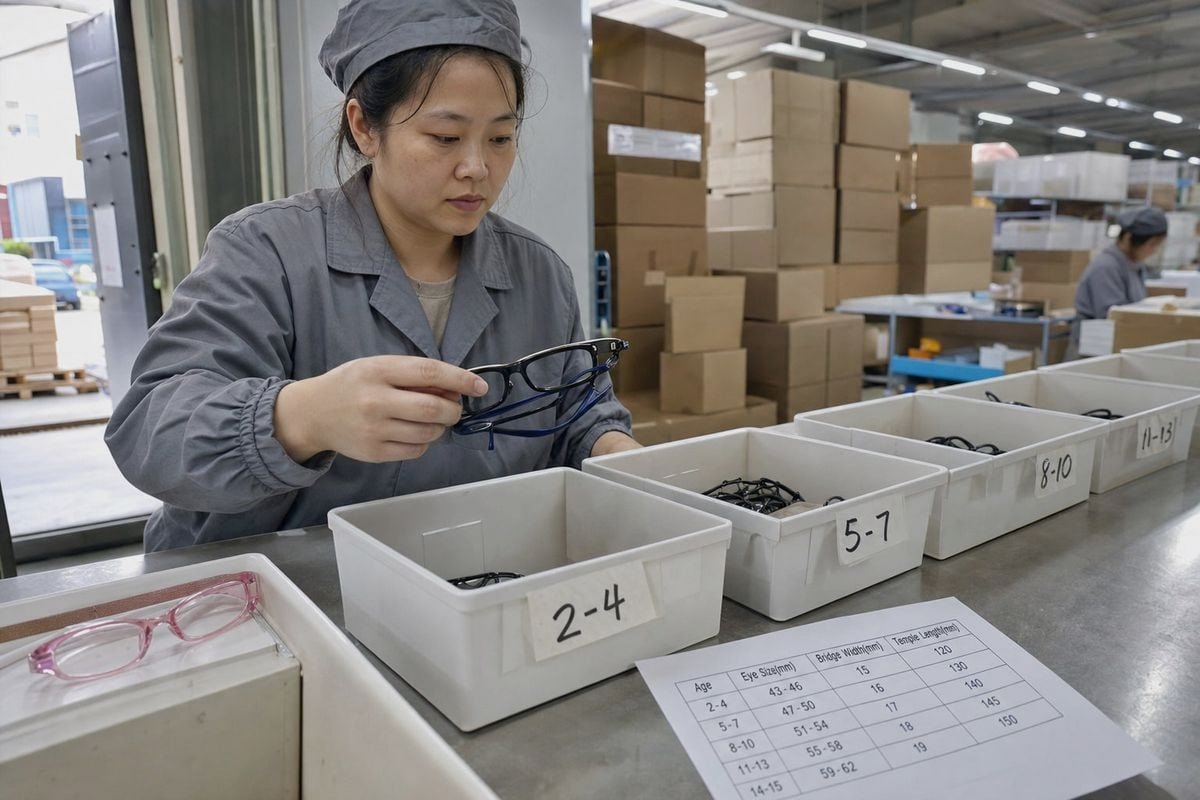
Branding and packaging are commercial requirements, but they belong in the same sourcing document as fit and safety. When we run OEM/ODM projects — custom colors, logos, lenses, packaging, and accessories — the smoothest launches come from buyers who specified all of it before the first sample.
Branding specifics to lock down
State the logo application method 6 for each surface: pad printing, laser engraving, or embossed molding on temples. Each behaves differently on flexible TPEE versus rigid TR90 surfaces, so name the material and the method together. Define exact رموز بانتون 7 for your colorways. "Soft pink" produced three different pinks across three factories for one of our buyers before she standardized her codes with us.
Packaging and labeling fields
| حقل | ما يجب تحديده |
|---|---|
| تغليف البيع بالتجزئة | Box or pouch type, dimensions, artwork files, material finish |
| وضع العلامات | Age-grade labeling, country of origin, compliance marks per market |
| Inserts | Care card, warranty card, brand story insert |
| Accessories | Cleaning cloth, case, sports strap, replaceable temple tips |
| Spare parts | Quantity per shipment and packing method |
| Master cartons | Units per carton, carton markings, barcode placement |
Tie it to commercial terms
Close the sheet with your minimum order quantity expectations, sample and packaging approval steps, lead time, defect tolerance, and reorder consistency requirements. If you are testing a new market, ask whether the factory supports launching from existing styles first — we keep roughly 800 open styles exactly so brands can validate demand before investing in custom molds.
الخلاصة
A strong requirements sheet turns saf
مقالات أخرى قد تعجبك

هل تبحث عن شريك موثوق به للنظارات للأطفال؟
استكشف أكثر من 800 نمط جاهز ودعم OEM/ODM كامل مصمم خصيصًا لعلامتك التجارية.
اتصل بنا English
  Español de México
  Deutsch
  Français
  日本語
日本語  العربية
  Português do Brasil