How to Verify Kids Optical Frames Passed Fatigue, Sweat, and Corrosion Tests?

Verifying kids optical frames against fatigue, sweat, and corrosion tests is a question I face weekly on our production line, because a “durable” claim without proof can sink a brand’s reputation fast.
To verify kids optical frames passed fatigue, sweat, and corrosion tests, request laboratory test reports citing ISO 12870 or GB/T 14214-2019, check the cycle counts, temperatures, and pass/fail criteria stated, confirm the tested sample matches production, and commission third-party lab testing before bulk orders.
That answer sounds simple. In practice, buyers get stuck on what documents to ask for, how to spot fake reports, and which standards actually apply. Let me walk you through each step.
What Documents Should I Request to Confirm Fatigue, Sweat, and Corrosion Test Results?
A buyer from Australia once asked me for "proof of durability" on one of our TR90 kids optical frames. When I sent the full report pack, she told me most suppliers had only sent product photos.
Request the full laboratory test report naming the exact standard, the fatigue cycle count and opening angle, the artificial sweat temperature and duration, post-test inspection photos of skin-contact areas, salt spray results for metal parts, and a Declaration of Conformity linking the report to your specific model.
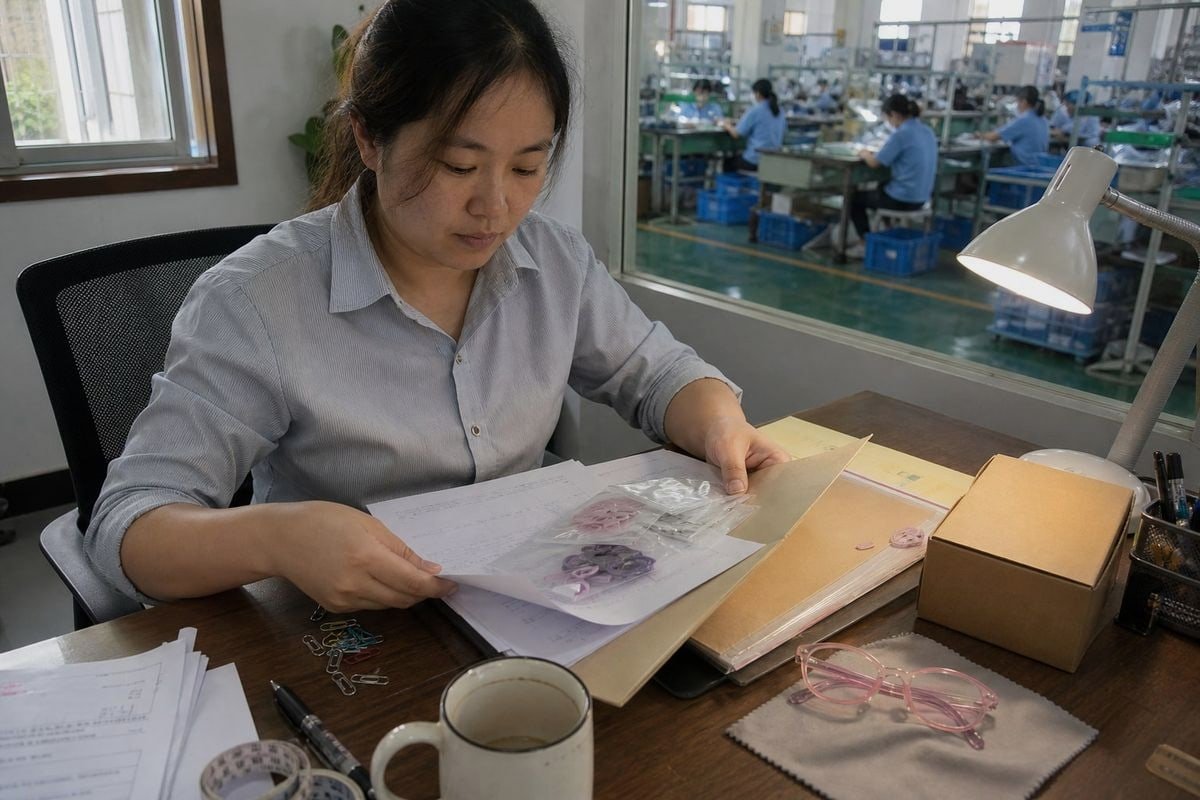
Generic quality statements are worthless. A real verification pack contains specific documents, each covering a different risk. In our experience exporting to 20+ countries, buyers who ask for the right paperwork upfront avoid almost every post-shipment dispute.
The Core Document Checklist
Here is what I recommend every procurement manager request before believing any test claim:
| وثيقة | What It Must Contain | لماذا هو مهم |
|---|---|---|
| Full lab test report | Standard number, method, conditions, results | Proves the test actually happened |
| Fatigue/endurance data | Cycle count (e.g., 500+ cycles), opening angle, failure criteria | "Passed durability test" alone is too vague |
| Artificial sweat report | 55 ± 5°C temperature, 8-hour and 16-hour stages, inspection notes | Confirms artificial perspiration resistance was tested properly |
| Corrosion report | Salt spray testing hours for metal components | 48 hours of exposure simulates roughly two years of real wear |
| إعلان المطابقة | Model number, standard, signature, date | Legally links the claim to your product |
| صور العينة | Before and after images of temples, bridge, coatings | Lets you see cosmetic change versus real failure |
Why the Details in Each Document Matter
A fatigue report should specify how the frame was mounted, how many open-close cycles it survived, and whether any permanent deformation exceeded the allowed threshold. Under ISO-style endurance testing 1, frames must complete 500 cycles of temple opening and closing without fractures or permanent deformation exceeding 2%. If the report just says "pass" with no numbers, push back.
The sweat test report should describe the two-stage method: frames sit in artificial sweat at about 55 ± 5°C, are removed after 8 ± 0.5 hours, washed, dried, and inspected, then returned for another 16 ± 0.5 hours to complete 24 hours total. Inspectors then check the inner sides of the temples, the lower frame, and the inner bridge area for spotting, color change, corrosion, or coating separation. When we run spectacle frame quality control at our Taizhou factory, these skin-contact zones get the closest scrutiny, because that is exactly where an active child's sweat attacks first.
How Do I Know If a Manufacturer's Test Reports Are Authentic and Not Outdated?
Early in my fifteen years in eyewear, I learned a hard lesson: a report can be genuine yet meaningless. A supplier once showed me a passing report — for a frame version two plating changes old.
Verify authenticity by checking the report date, the lab's accreditation number, and the tested model against your actual order; contact the lab directly to confirm the report exists; and require that the tested sample matches current production materials, plating, hinges, and coatings.

An outdated or mismatched report is the most common weak point in supplier documentation. A design can pass in one version and fail after a materials or plating change. So authenticity has two layers: is the report real, and is it still relevant?
Step-by-Step Authentication Process
- Check the report date. Reports older than one to two years should trigger a retest request, especially if materials or suppliers changed.
- تحقق من المختبر. Accredited third-party labs like SGS, Intertek, or QIMA 2 carry far more weight than internal factory testing. Look up the lab's accreditation number.
- Contact the lab. Reputable labs will confirm whether a report number is genuine. Many now offer online verification portals, and some suppliers are adopting Digital Product Passports with blockchain-backed QR codes for instant, batch-specific verification.
- Match the model. Compare the report's model number, material description, and photos against the frame you are actually buying. A TR90 front with TPEE temples tested last year does not cover a new acetate version.
- Ask about production representativeness. The tested sample should come from mass production or use identical materials, plating, and hinges — not a hand-finished golden sample.
Red Flags I Tell Buyers to Watch For
Watch for reports with no lab letterhead, missing report numbers, blurry scans, results pages without method pages, or "pass" conclusions with no stated acceptance criteria. Another warning sign is a supplier who publishes test descriptions on their website but cannot produce the actual batch-specific laboratory test reports. At our factory, we keep test records tied to production batches precisely because our brand customers audit this. If a supplier hesitates when you ask which batch a report covers, that hesitation tells you everything.
Remember the recovery nuance too. Under the referenced sweat method, if discoloration appears, the frame may rest for a day and be re-checked; if it returns to original condition, it can still pass. An authentic report will document this re-check honestly rather than hiding it.
Which International Standards Should My Supplier's Kids Optical Frames Comply With?
When we develop a new kids optical frame — like our glossy black TR90 style with soft silicone temple tips — the first engineering question is never color. It is which standard the target market requires.
Kids optical frames should comply with ISO 12870 / EN ISO 12870 for endurance, perspiration resistance, and mechanical stability, plus GB/T 14214-2019 in China, nickel release limits for metal parts, and secondary child-safety rules such as EN 71 or CPSIA where applicable.

Standards matter because they bundle multiple performance checks into one verifiable framework. ISO 12870 standards cover dimensional stability, artificial perspiration resistance, bridge deformation test requirements, endurance, lens retention, ignition resistance, optical radiation resistance, and nickel release testing 3. For children's frames, the most relevant subset is hinge endurance, sweat resistance, coating adhesion, and nickel release where metal contacts skin.
Standards Comparison at a Glance
| معيار | Region/Scope | Key Tests for Kids Frames |
|---|---|---|
| ISO 12870 / EN ISO 12870 | International / EU ophthalmic optics requirements | Endurance (500 cycles), perspiration, bridge deformation, nickel release |
| GB/T 14214-2019 | China national method | Comparable mechanical and sweat resistance protocols |
| EN 71 | EU toy safety (secondary) | Small parts, sharp edges, chemical migration |
| قانون تحسين سلامة المنتجات الاستهلاكية | US children's products | Lead, phthalates, mandatory third-party testing |
| ISO 10993 | Biocompatibility (emerging for premium frames) | Cytotoxicity, skin irritation under heavy perspiration |
What Each Standard Actually Protects Against
The endurance clause protects against loose or snapped temples — critical for spring hinge durability if your design uses spring hinges. The bridge deformation test verifies the frame front will not permanently distort under load, which matters when a child sits on their glasses. Nickel release testing prevents allergic skin reactions from metal components. And where a buyer's market treats kids' eyewear like a children's product, EN 71 or الامتثال لـ CPSIA 4 regulates small parts, sharp edges, and chemical safety around lead and phthalates.
For the EU market, ask for a CE declaration of conformity alongside the technical reports. One objection I often hear: "our frames are metal-free plastic, so most of this doesn't apply." That is only half true. TR90 material properties give excellent flexibility and memory, but plastics and coatings can still discolor, roughen, or peel under sweat exposure. Metal-free does not mean sweat-safe. We test our TPEE and TR90 frames against the sweat protocol regardless, because coating adhesion on flexible substrates is its own challenge. Some labs are even piloting multi-stress protocols that apply UV radiation and artificial sweat during mechanical fatigue cycles, simulating a playground environment, plus hyper-flex benchmarks testing temples to 180-degree hyperextension for pediatric handling.
Can I Request Third-Party Lab Testing Before Placing a Bulk Order?
One of our long-term European customers has a standing rule: no bulk PO until an independent lab confirms pre-production samples. We build that lead time into every project plan for them, and honestly, I respect the discipline.
Yes — you can and should request third-party testing before a bulk order. Send production-representative samples to an accredited lab such as SGS, Intertek, or QIMA, specify ISO 12870 fatigue, sweat, and corrosion protocols, and make the purchase order conditional on passing results.
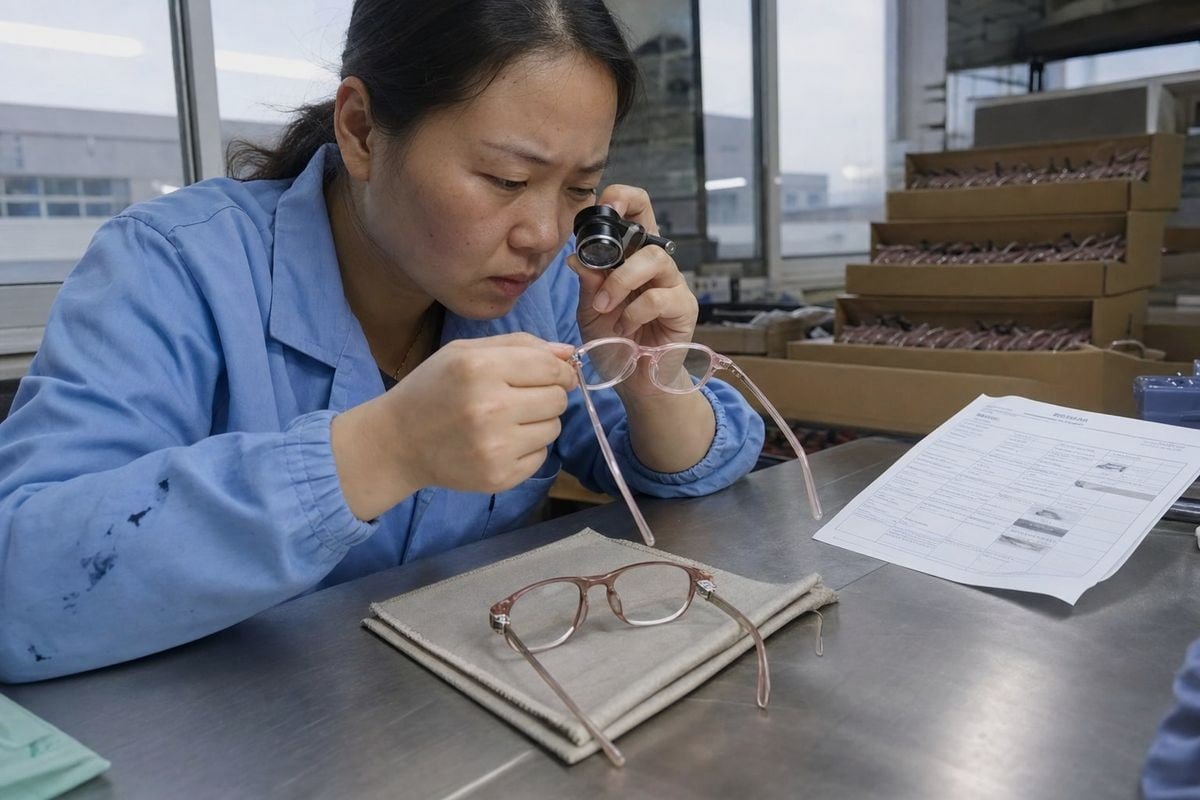
Any reputable factory will agree to this. In fact, refusal is itself a red flag. Here is how I advise buyers to structure the process so it protects them without delaying launch.
A Practical Pre-Order Testing Workflow
| خطوة | إجراء | Typical Timing |
|---|---|---|
| 1 | Approve pre-production samples for design and fit | Week 1 |
| 2 | Pull test samples from the same material batch and plating run | Week 1–2 |
| 3 | Submit to accredited lab with specified standards and clauses | Week 2 |
| 4 | Lab runs fatigue cycling, 24-hour sweat exposure, salt spray on metal parts | Week 2–4 |
| 5 | Review full report; release bulk PO only on pass | Week 4–5 |
How to Scope the Test Request
Do not just write "test to ISO 12870." Specify the clauses that matter for your frame construction. For a plastic frame with a metal-core hinge, request the endurance test, the artificial sweat method, salt spray testing on the hinge, and nickel release if any metal touches skin. For premium positioning, some brands now add ISO 10993 biocompatibility screening 5 to confirm materials cause no cytotoxicity or skin irritation during heavy perspiration — a growing expectation for baby and toddler eyewear.
Also negotiate who pays. Common practice splits it: the buyer pays lab fees, the factory supplies samples and documentation free. On our side, we support this by pulling samples directly from the production batch under our 5S-managed workshop process, so the lab tests exactly what will ship. One more tip from experience: test one sample per colorway if platings or coatings differ, because a navy-blue coated temple and a translucent pink acetate front can behave differently under the same sweat exposure. Mechanical stability may be identical across colors, but surface chemistry rarely is.
الخلاصة
Do not trust "durable" claims for kids optical frames. Demand named standards, dated third-party reports, matched production samples, and conditional purchase orders — that is real verification, not marketing.
ملاحظات ختامية
1. Official ISO page for spectacle frame endurance and performance requirements. ↩︎
2. Leading global testing and certification provider for the eyewear industry. ↩︎
3. Provides a stable, comprehensive overview of the EU REACH restrictions and testing requirements for nickel. ↩︎
4. US government guide on safety standards for children’s products and chemical regulations. ↩︎
5. Authoritative FDA guidance page explaining the application of the ISO 10993-1 standard for medical devices. ↩︎
مقالات أخرى قد تعجبك

أغسطس 5, 2026
Bio-Based vs Regular Cellulose Acetate: What's the Difference for Kids' Frames?

أغسطس 5, 2026
How Recyclable Are Kids' Optical Frame Materials, and What Eco-Friendly Alternatives Exist?
أغسطس 5, 2026
Do Kids Optical Frames Whiten or Age in Storage, and How to Control Warehouse Conditions?
هل تبحث عن شريك موثوق به للنظارات للأطفال؟
استكشف أكثر من 800 نمط جاهز ودعم OEM/ODM كامل مصمم خصيصًا لعلامتك التجارية.
اتصل بنا English
  Español de México
  Deutsch
  Français
  日本語
日本語  العربية
  Português do Brasil