How to Shorten Reorder Cycles for Bestselling Kids’ Optical Frames from the Factory?
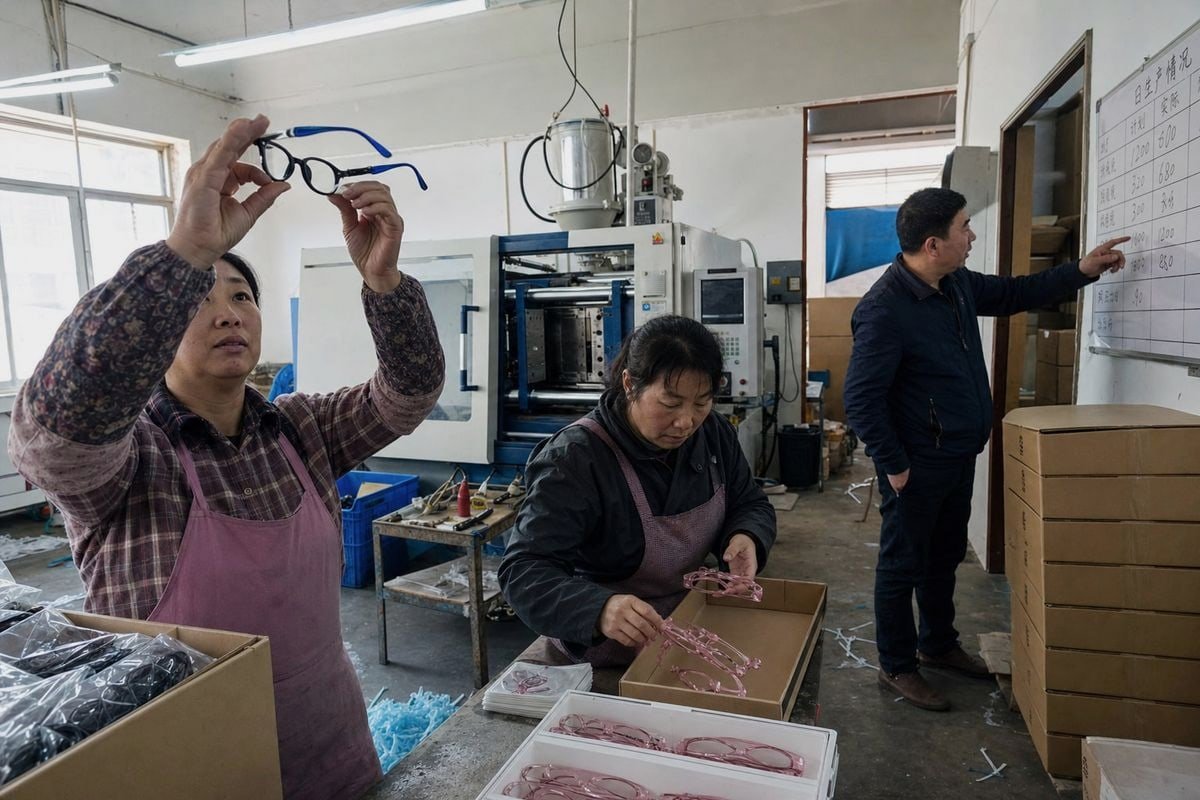
Shortening reorder cycles for bestselling kids’ optical frames is a question our Taizhou production team hears constantly SKU-level reorder points 1. A hot frame sells out, the reorder crawls, and revenue quietly disappears.
To shorten reorder cycles for bestselling kids’ optical frames, set SKU-level reorder points, review sell-through weekly, share forecasts with your factory, reorder from existing molds and approved specs, and negotiate reserved production capacity. Together, these steps can compress replenishment from months to weeks.
Below, I break this down into four practical questions reorder point formula 2. Each one covers a lever you control: inventory discipline, lead-time expectations, factory selection, and repeat-order quality.
How can I keep bestselling kids' optical frame styles in stock without overordering?
A buyer from Australia once told me she lost three weeks of sales on a translucent pink kids' frame because she waited for her monthly board check golden sample system 3. That delay was avoidable.
Keep bestsellers in stock by tracking each frame variant at the SKU level, applying the reorder point formula of average daily sales multiplied by lead time plus safety stock, holding two to three weeks of buffer for top sellers, and reviewing those items weekly, not monthly.
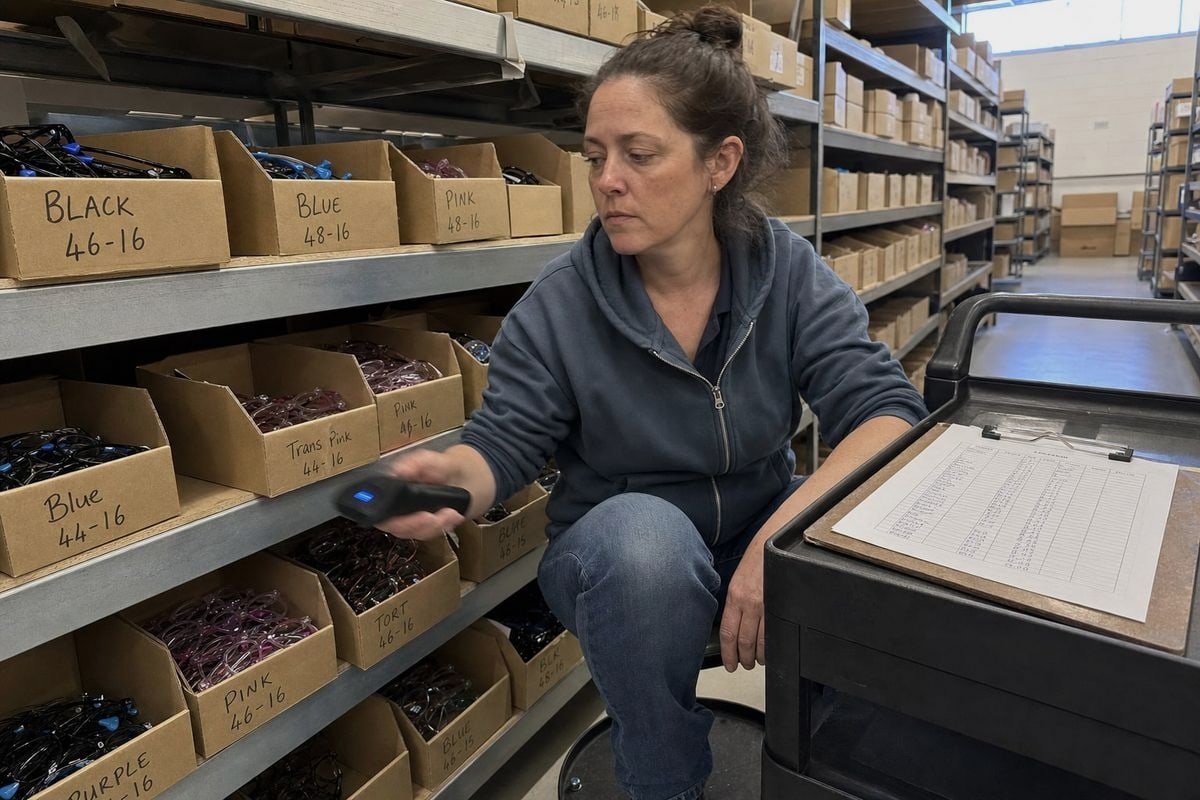
The core problem is that most stores treat a kids' collection as one item. In reality, each shape, color, and size behaves like a separate product. Our glossy black frame with royal blue silicone temples and its pink acetate sister style can sell at completely different speeds. If you only track the collection total, you will miss the moment your true bestseller runs dry. That is why solid inventory management starts with barcoding and SKU-level demand forecasting.
Start with ABC segmentation
Use ABC analysis 4 to find the frames that matter most. In most optical accounts, roughly the top 20 percent of SKUs drive about 80 percent of revenue. Those "A items" deserve tighter rules than the rest of the board.
| Tier | Share of SKUs | Review cadence | Safety stock |
|---|---|---|---|
| A (bestsellers) | ~20% | Weekly | 2–3 weeks of sales |
| B (steady movers) | ~30% | Bi-weekly | 1–2 weeks of sales |
| C (slow movers) | ~50% | Monthly | Minimal or none |
Apply the reorder point formula
The math is simple: reorder point = (average daily sales × lead time in days) + safety stock. If a frame sells 2 units a day and your factory lead time is 30 days, you reorder when stock hits 60 units plus buffer. Notice something important here. Shorter lead times directly lower the reorder point, which means less cash tied up in stock. Stockout prevention and capital efficiency are not enemies; they both improve when lead time shrinks.
One objection I hear often: won't frequent small orders create administrative burden? Yes, if you manage them by email and memory. But with basic inventory software 5, automated reorder alerts, and a fixed weekly ordering rhythm, the workload barely grows while stockouts drop sharply. Weekly cycle counts by zone keep your on-hand data honest, so your reorder triggers fire on real numbers, not guesses.
What lead times should I expect when reordering proven frame styles from my factory?
When we quote reorder lead times at our workshop, I always separate two numbers: production time and total lead time. Buyers who confuse them plan their reorder points wrong.
Reorders of proven kids' frame styles typically take 25–45 days total: a few days for order processing, 15–30 days for production from existing molds and approved specs, and 7–30 days for shipping depending on air or sea freight.
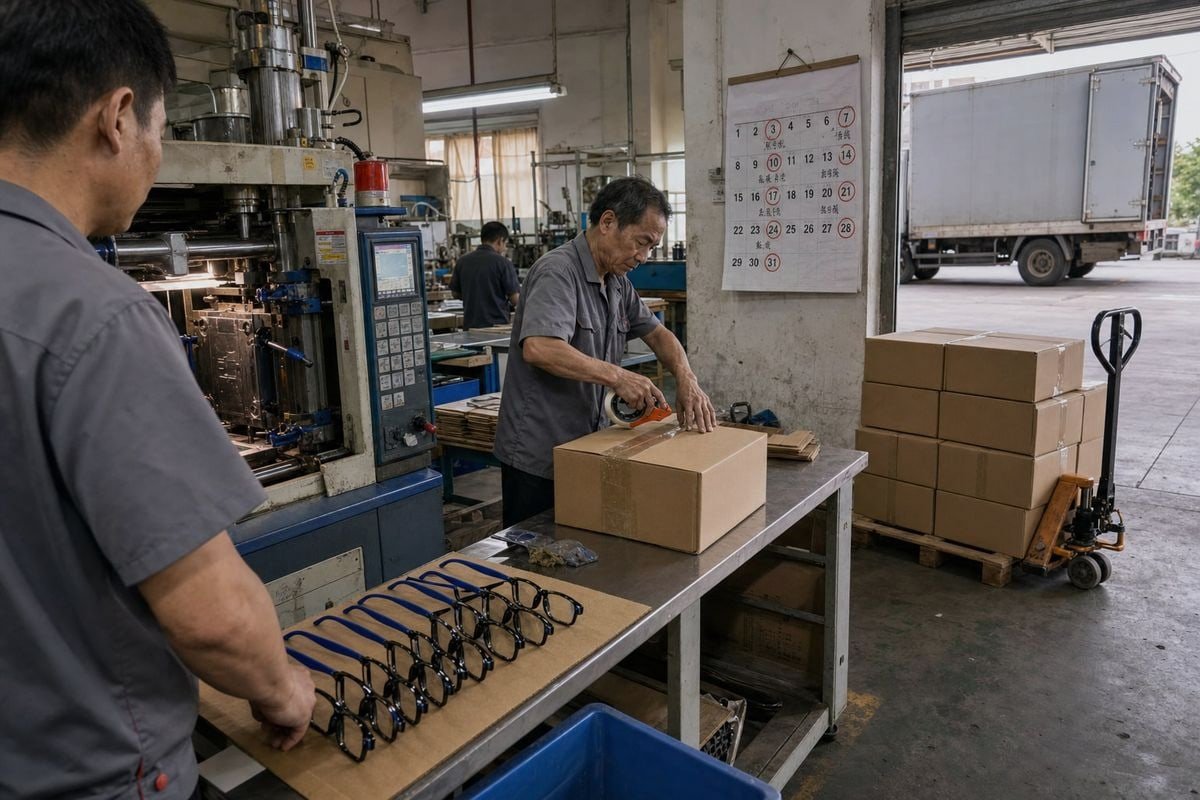
Lead time is not one block of time. It is a chain of stages, and each stage can be shortened separately. This is the single most useful mental shift for lead time reduction. When one of our European distributors mapped their real reorder timeline, they discovered that internal approval took longer than our TR90 injection molding 6 did. The factory was not the bottleneck; their own purchase-order sign-off was.
Break the lead time into parts
| المرحلة | Typical duration | Who controls it | How to shorten it |
|---|---|---|---|
| Internal approval & PO creation | 2–10 days | المشتري | Pre-approved reorder rules for A items |
| Order processing & confirmation | 1–3 days | Both | Standing specs, no re-quoting on repeats |
| Production | 15–30 days | Factory | Existing molds, reserved capacity, material pre-buy |
| Shipping & customs | 7–30 days | Logistics | Air for urgent fills, sea for planned batches |
| Receiving & shelving | 1–5 days | المشتري | Barcode receiving, priority unpacking for A items |
Why proven styles reorder faster
A repeat order skips the slowest phases of a new development: mold making, sampling, and design revisions. Because the tooling already exists and the specs are locked, production can start almost immediately if raw material is on hand. This is where supplier collaboration pays off. When buyers share SKU-level forecasts with us, we pre-purchase TPEE and TR90 material and hold it against their expected reorders. That alone can cut a week or more from production.
Some buyers push back: doesn't nearshoring solve this better? Moving production closer to market does cut transit time, and it is a fair strategy for emergency fills. But for children's eyewear, the flexible-material expertise, existing tooling, and unit economics usually still favor a responsive Asian factory paired with smart logistics management — sea freight for planned replenishment, air freight reserved for genuine urgency. Phased delivery helps too: launch with a smaller first batch, then trigger replenishment batches from real sales data instead of guessing the full season upfront.
How do I choose a factory partner that supports fast, reliable reorder cycles?
Fifteen years of running eyewear production lines has taught me one thing: reorder speed is designed into the partnership before the first PO is ever placed.
Choose a factory with a large library of existing styles and molds, transparent lead-time commitments in writing, willingness to reserve capacity for your bestsellers, documented quality control on repeats, and responsive communication that answers reorder confirmations within one business day.
Not every factory is built for replenishment. Some are optimized for large one-off runs; they quote a great price on 10,000 units but stall on a 1,500-unit reorder. For a children's eyewear market driven by fast-moving sizes and colors, you need a partner whose whole workflow supports supply chain optimization 7 for repeat business.
The evaluation checklist
| ماذا تفحص | Why it matters for reorders |
|---|---|
| Existing style and mold library | Reordering from ~800 ready styles skips tooling entirely and lowers launch risk |
| Written reorder MOQ | A reasonable minimum order quantity (MOQ) on repeats enables smaller, more frequent batches |
| Reserved capacity terms | Guaranteed slots protect your bestsellers during peak season crunch |
| Expedited options with clear fees | You need a priced fast lane before an emergency, not during one |
| Spec retention system | Locked color codes, materials, and tolerances prevent re-sampling delays |
| Communication speed | A confirmed reorder within 24 hours starts production days earlier |
Negotiate the reorder relationship, not just the price
The strongest buyers I work with negotiate three things upfront: guaranteed lead times for repeat styles, a lower MOQ for replenishment batches versus first orders, and reserved production capacity backed by a rolling forecast. In exchange, they give us visibility — SKU-level forecasts, promotion calendars, and expected demand spikes. That trade is fair on both sides. We plan material purchasing and production efficiency better; they get priority when the schedule tightens.
Here is a real tension worth addressing. Consolidating volume with one factory earns you leverage, priority slots, and consistent quality. But single sourcing carries dependency risk. My honest advice: consolidate your core kids' program with one proven partner for speed and consistency, and keep a vetted backup source qualified for emergency fills on your two or three highest-velocity SKUs. That structure gives you leverage without fragility, and it is the same logic behind just-in-time inventory done safely.
Can I lock in consistent quality when reordering the same frame style repeatedly?
The trade-off we manage on every repeat batch is speed versus verification. Skipping checks saves days; skipping the wrong checks costs a customer. Our 5S-managed workshop exists to resolve exactly that tension.
Yes. Consistent repeat-order quality comes from locked golden samples, documented material and color specifications, batch-level inspection records, and stable production teams. Ask your factory to confirm specs against the approved sample before every reorder and to share inspection reports on completion.
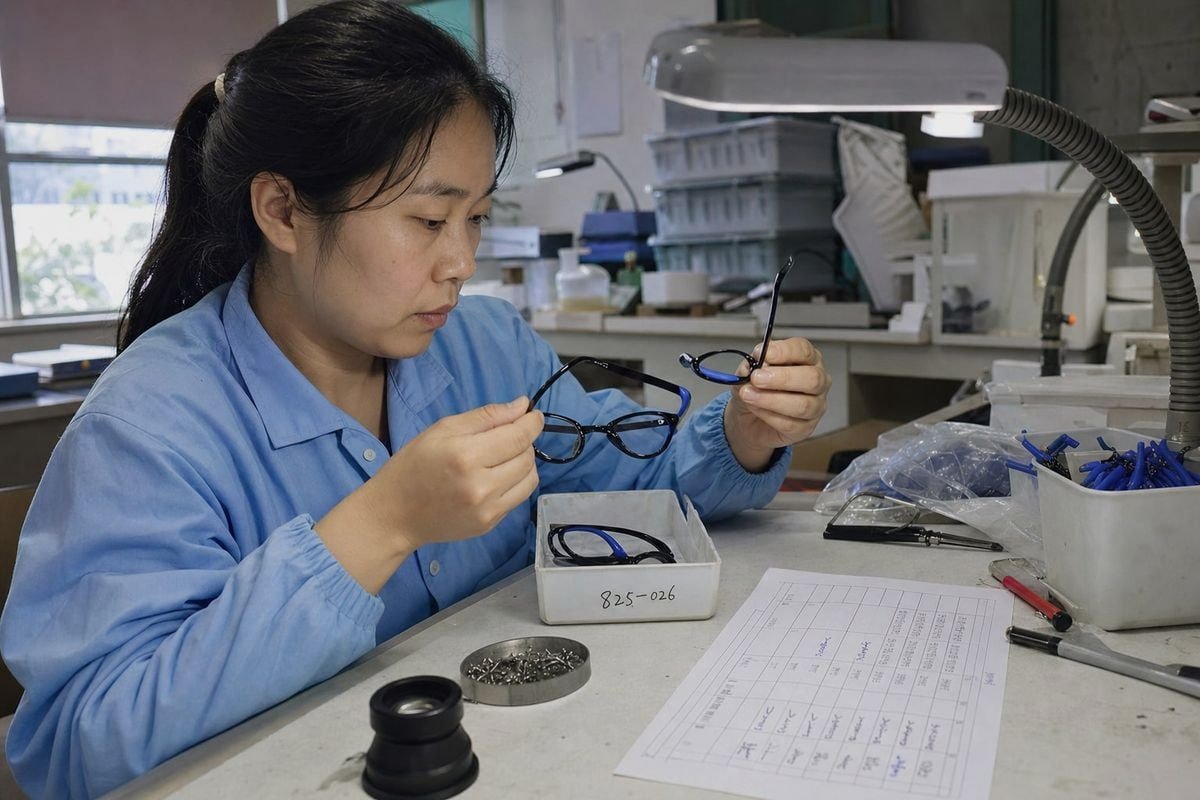
Quality drift is the hidden enemy of fast reorder cycles. If batch three of your black-and-blue silicone-temple frame arrives with a slightly different blue, or the temple flex feels stiffer, you face returns, complaints, and a painful re-sampling loop that destroys the speed you worked to build. Prevention is far cheaper than correction.
The golden sample system
Every approved style should have a sealed reference sample held by both sides. On our lines, repeat production for a TR90 frame with TPEE temples is checked against that golden sample for color, dimensions, hinge tension, temple flexibility, and surface finish. Because children's frames must survive bending, dropping, and daily abuse, we also re-verify flexibility and safety behavior on each batch, not just the first one. Material consistency matters just as much: the same TPEE and TR90 grades from the same suppliers, batch after batch, because a cheaper substitute resin can pass a visual check and still fail on a child's face.
Freeze specs, then leave them frozen
Detailed specifications provided upfront — and left unchanged after approval — are one of the biggest quiet accelerators of reorder speed. Every mid-stream design tweak restarts sampling and confirmation. If you genuinely need a change, treat it as a new version with its own approval, and keep the original SKU running untouched in the meantime.
Some buyers assume advanced technology is the answer here — automated inspection systems, digital production simulation, even blockchain traceability. These tools are emerging and genuinely useful for defect detection and supply chain transparency. But for most kids' eyewear programs, the fundamentals deliver 90 percent of the result: a locked sample, disciplined incoming-material control, in-process checks at molding and assembly, and a final inspection report you can actually read. Ask for that report with every repeat batch. A factory that hesitates to share it is telling you something important.
الخلاصة
Fast reorder cycles for bestselling kids' optical frames come from SKU-level data, weekly rhythms, decomposed lead times, a collaborative factory partner, and locked specifications. Build the system once; every reorder gets easier.
ملاحظات ختامية
1. Explains how SKU-level reorder points optimize inventory management for replenishment. ↩︎
2. Defines and explains the reorder point formula for effective inventory control. ↩︎
3. Details the importance of a golden sample system in maintaining consistent product quality. ↩︎
4. Replaced with a Wikipedia article providing a comprehensive and authoritative definition of ABC analysis in inventory management. ↩︎
5. Replaced with a Wikipedia article offering an authoritative definition of inventory management software. ↩︎
6. Explains the process and properties of TR90 injection molding specifically for eyewear frames. ↩︎
7. Defines and elaborates on the concept of supply chain optimization and its importance. ↩︎
مقالات أخرى قد تعجبك
أغسطس 5, 2026
Bio-Based vs Regular Cellulose Acetate: What's the Difference for Kids' Frames?

أغسطس 5, 2026
How Recyclable Are Kids' Optical Frame Materials, and What Eco-Friendly Alternatives Exist?
أغسطس 5, 2026
Do Kids Optical Frames Whiten or Age in Storage, and How to Control Warehouse Conditions?
هل تبحث عن شريك موثوق به للنظارات للأطفال؟
استكشف أكثر من 800 نمط جاهز ودعم OEM/ODM كامل مصمم خصيصًا لعلامتك التجارية.
اتصل بنا English
  Español de México
  Deutsch
  Français
  日本語
日本語  العربية
  Português do Brasil