How to Set Carton Specs, Shipping Marks & Packing Lists for Kids Optical Frames?
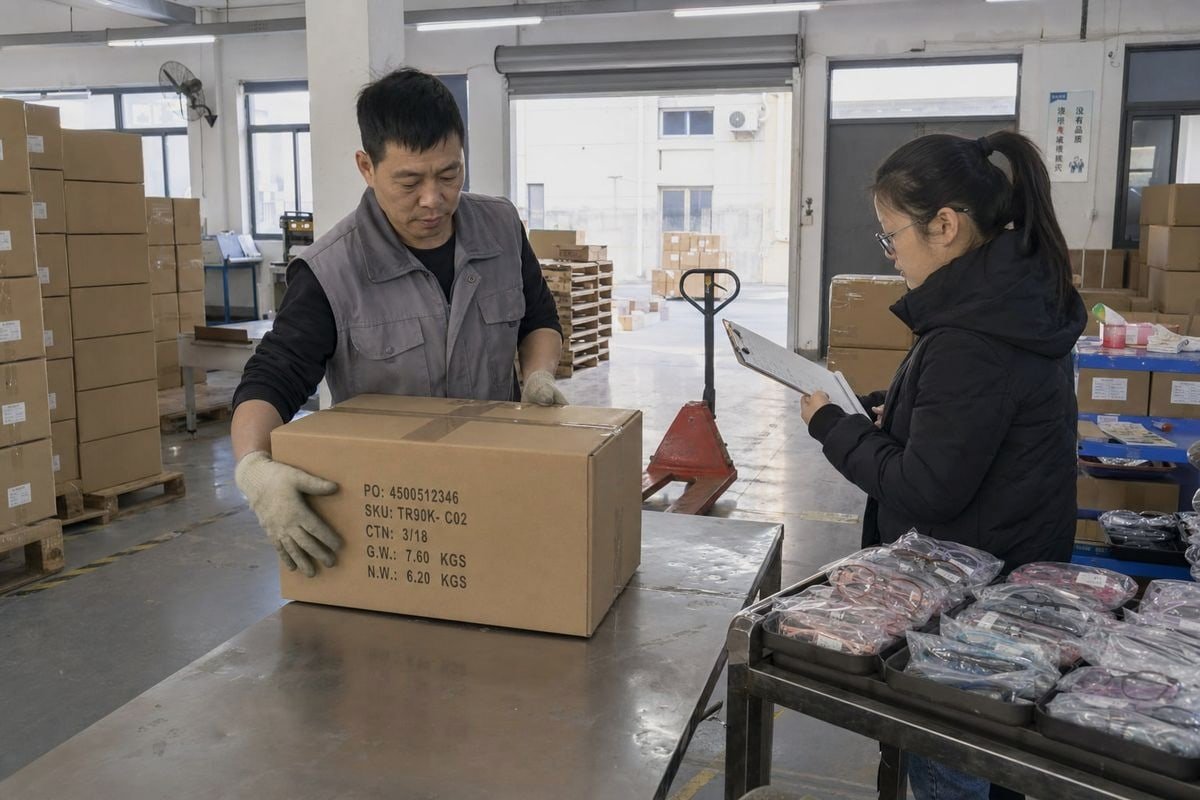
Carton specs, shipping marks, and packing lists for kids optical frames decide whether your shipment sails through receiving or sits in a dispute. On our packing line, we have seen both outcomes.
Set carton specs, shipping marks, and packing lists for kids optical frames by defining a 5-ply corrugated master carton with a weight limit, printing PO, SKU, carton sequence, and gross and net weight on two sides, then matching every packing list field to the carton marks exactly.
That is the short answer. Below, I break each part down so you can build a complete carton-marking system for your next order.
How do I choose the right carton dimensions and weight limits for kids optical frame shipments?
A few years ago, our warehouse team unpacked a returned trial shipment and found warped TR90 fronts. The frames were fine. The oversized carton was not. That lesson shaped how we spec cartons today.
Choose a 5-ply corrugated master carton sized so inner boxes fit snugly with no shifting, keep gross weight between 8 and 15 kg for easy handling, and check volumetric weight so you are not paying air freight for empty space inside the box.
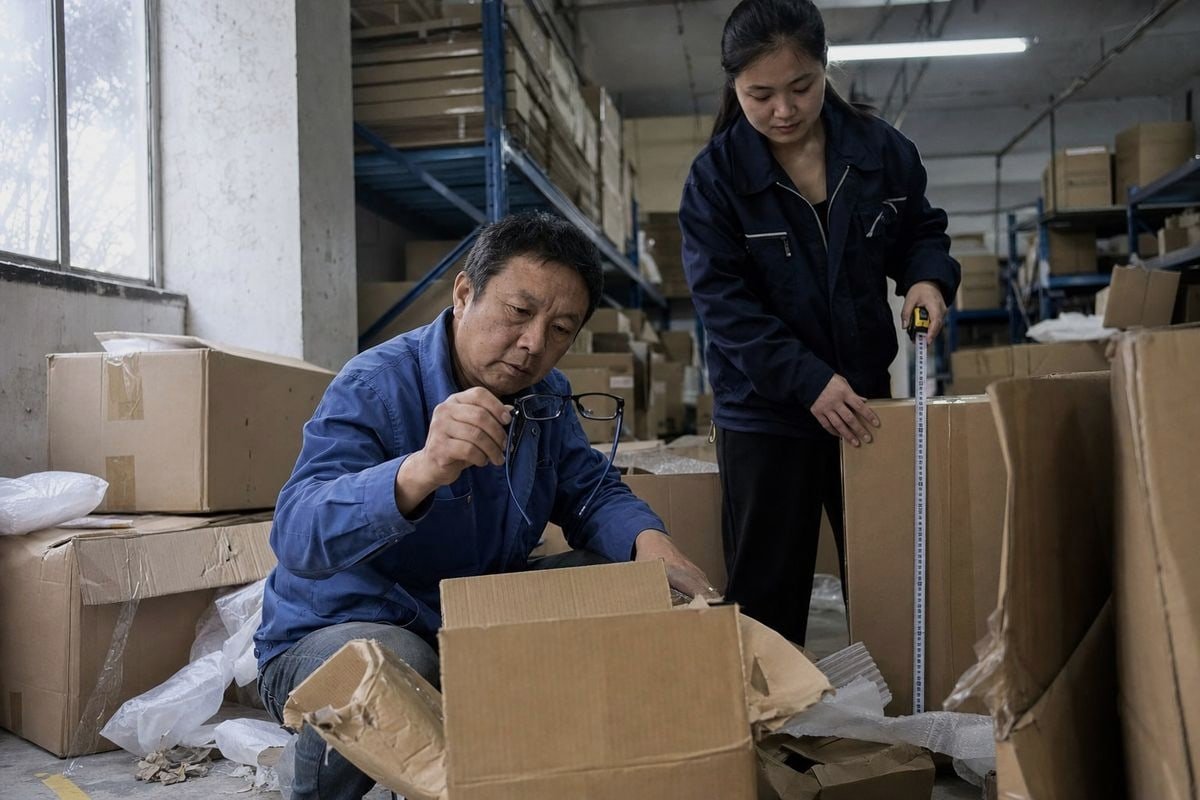
Kids optical frames are light but shape-sensitive. Acetate fronts can bloom, TR90 can warp under sustained pressure, and hinges can loosen if frames rattle around. So the carton spec must do two jobs at once: protect shape and finish, and keep handling easy at the destination warehouse.
Start with the inner pack, not the outer carton
At our factory in Taizhou, we always size from the inside out. Each frame goes into a polybag or sleeve, then into an inner box, then into the master carton. If the frames nest cleanly in inners of 10 or 20 pieces, the master carton dimensions follow naturally. We also place a small silica desiccant pack 1 inside each polybag for acetate styles. Moisture trapped in dense kids-frame cartons is a real cause of white "blooming" on acetate surfaces.
Balance strength, weight, and freight cost
Buyers often ask why we recommend 5-ply corrugated cartons 2 when the product weighs almost nothing. The reason is stacking. Kids frame cartons often sit under heavier adult eyewear or general cargo in a consolidated container. A 3-ply carton crushes, and crushed cartons mean deformed temples. At the same time, an oversized carton wastes money. Freight forwarders charge by actual or volumetric weight calculation 3, whichever is higher, so dead air inside the box is a direct cost.
Here is the spec sheet structure we use with buyers:
| Spec Field | Recommended Value for Kids Frames | لماذا هو مهم |
|---|---|---|
| Carton material | 5-ply double-wall corrugated | Resists crushing when stacked |
| Max gross weight | 8–15 kg (well under 65 lb retail ceilings) | Safe one-person handling |
| Units per master carton | 100–200 pcs (in inners of 10 or 20) | Easy counting at receiving |
| SKU mix | Single-SKU per carton where possible | Faster receiving, fewer errors |
| Protective inner packaging | Polybag + inner box + dividers | Prevents scratches and hinge stress |
| Fill rule | Snug fit, carton closes flat, no bulging | Shape retention for frames |
One more point. If your buyer has a routing guide with a board strength test standard or a hard weight ceiling, that instruction always overrides our generic recommendation. We ask for the routing guide before we print a single carton.
What shipping mark information should I include to avoid customs delays?
When we prepare export cartons for buyers in Europe and Australia, our QC team checks marks against the PO character by character. One transposed digit in a PO number once cost a client three days at receiving. We never skipped that check again.
Include the consignee name, PO number, style or SKU, carton sequence number, quantity, gross and net weight, dimensions, country of origin, and handling symbols like Fragile. Print the marks on at least two opposite sides in large, high-contrast text.
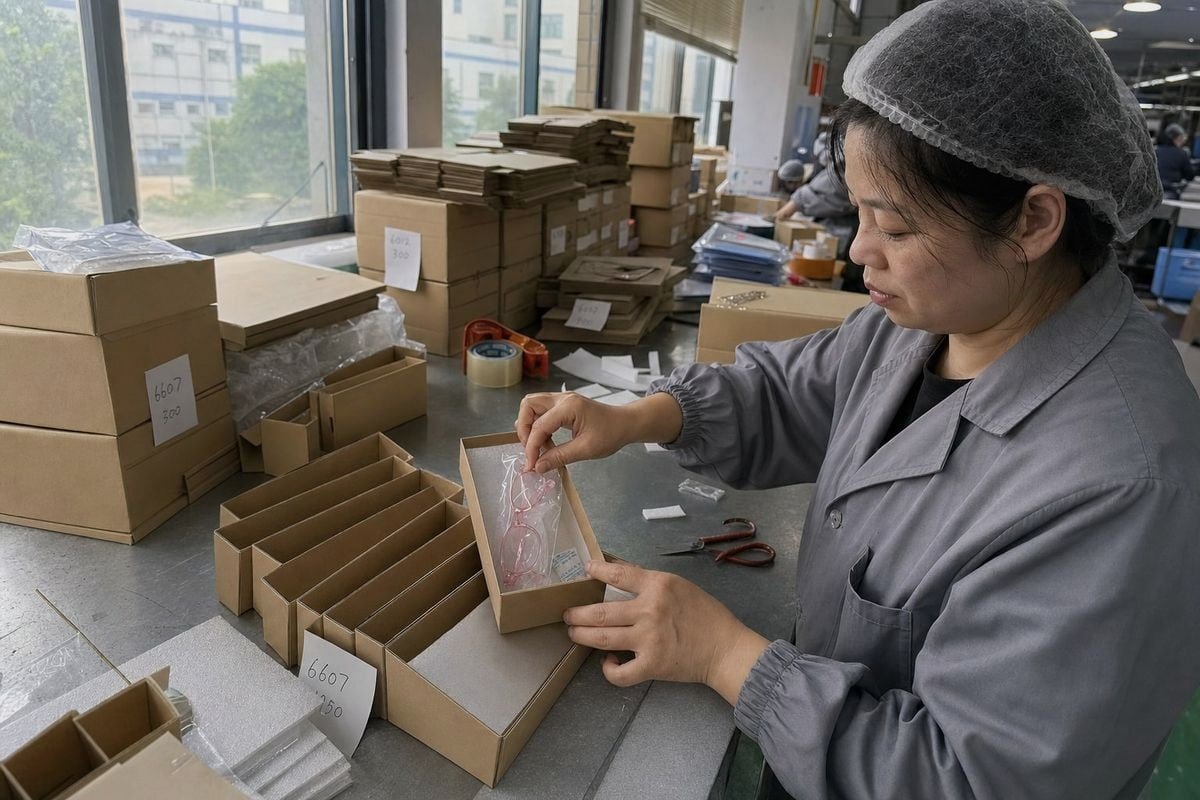
Shipping marks are not decoration. They are the identity of the carton at every handoff: the forwarder, the customs officer, and the receiving clerk all read them before anyone opens the box. For children's eyewear, which can be classified as a compliance-sensitive product depending on the destination, clean master carton markings reduce the chance that an inspector pulls your goods for a closer look.
Use a dual-marking system
We split marks into two blocks, and I recommend every buyer standardize this way:
| Mark Block | المحتويات | Placement |
|---|---|---|
| Main mark | Consignee name, PO number, style/SKU, color, quantity, carton No. (e.g., 7/20) | Long side, both opposite faces |
| Side mark | Gross and net weight, dimensions, country of origin 5 (Made in China), destination code | Short side |
| Handling marks | Fragile, This Side Up, Keep Dry symbols | All four faces or per buyer rule |
Details that prevent customs friction
Country of origin must appear clearly and match your commercial invoice. If your destination treats optical frames as a منتج منظم 6, keep your compliance references consistent: your paperwork should carry the correct HS code classification 7, and marks should never contradict the invoice description. For US-bound children's products, CPSIA compliance labeling requirements sit on the product and retail packaging level, but we still make sure the carton-level data traces back to the correct batch so the شهادة منتجات الأطفال 8 can be matched quickly if customs asks.
Font size matters more than people think. Retail guidelines commonly call for large stencil-style print, sometimes covering 20% of the carton face. Small marks get missed when cartons are stacked four high. We print in black on the kraft face, keep the mark position identical on every carton in the order, and never let tape or labels cover the mark block.
Finally, carton sequence numbers should run consecutively by PO and SKU. A run like 1/20 through 20/20 lets anyone spot a missing carton in seconds, at customs or at the buyer's dock.
How detailed should my packing list be for smooth import clearance?
A procurement manager from a Japanese kids brand once told me her broker rejected a competitor's shipment paperwork because the packing list said "children glasses, assorted." Assorted is not a description. We write packing lists so a stranger could audit the container.
Your packing list should show the PO number, date, each style and SKU, color, units per carton, carton number range per SKU, total cartons, total units, and gross and net weight plus dimensions per carton, using the exact same names printed on the cartons.
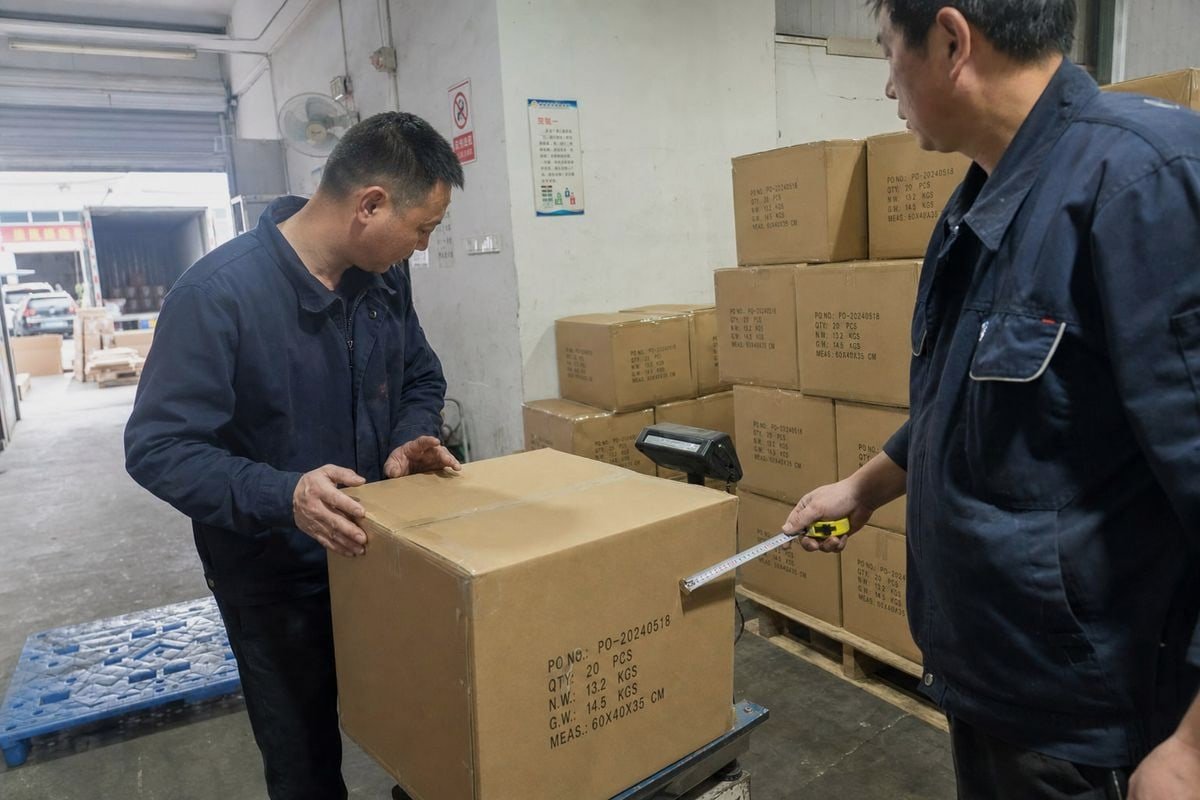
The packing list is the reconciliation document. Customs uses it to verify that what is declared matches what is packed. The receiving warehouse uses it to check counts without opening every box. If either party finds a mismatch, your shipment stops moving. In our experience exporting kids optical frames to 20+ countries, most clearance delays trace back to mismatched data, not damaged goods.
Build the list carton by carton
A summary line like "2,000 pcs kids frames" is not enough. We break the list down so every carton number maps to a specific SKU, color, and quantity. Here is the row structure we use:
| Carton No. | Style / SKU | Color | Units/Carton | Gross Wt (kg) | Net Wt (kg) | Dimensions (cm) |
|---|---|---|---|---|---|---|
| 1–8 of 20 | OK-K512 | Glossy Black/Navy | 120 | 11.5 | 9.8 | 58×38×32 |
| 9–14 of 20 | OK-K512 | Translucent Pink | 120 | 11.5 | 9.8 | 58×38×32 |
| 15–20 of 20 | OK-K530 | Clear/Blush | 100 | 10.2 | 8.6 | 58×38×32 |
Match naming conventions exactly
If the carton mark says "Style OK-K512," the packing list must say "OK-K512," not a shortened internal code. If the carton shows a color name, do not switch to a color number on the list unless the buyer requires it. This sounds trivial, but naming drift between documents is the single most common failure point we see.
Two more details help clearance. First, an accurate item description supports correct HS code classification, which your broker needs for duty calculation on plastic optical frames. Second, if the buyer sorts by age range, add an SKU breakdown by age tier, such as toddler versus school-age styles, since some destinations apply age-specific safety rules to children's products. And attach the physical packing list where the buyer's routing guide specifies, often on the last carton loaded for that PO.
Can OKAY EYEWEAR help me standardize packaging specs across multiple frame styles?
Every season, buyers pick five or ten styles from our catalog of roughly 800 existing designs, and their first packaging question is always the same: can all of these ship under one carton standard? Yes, and we build that standard with you.
Yes. OKAY EYEWEAR standardizes carton dimensions, inner pack counts, shipping mark templates, and packing list formats across all your chosen frame styles, then locks the spec into your order file so every reorder ships with identical, buyer-compliant packaging.
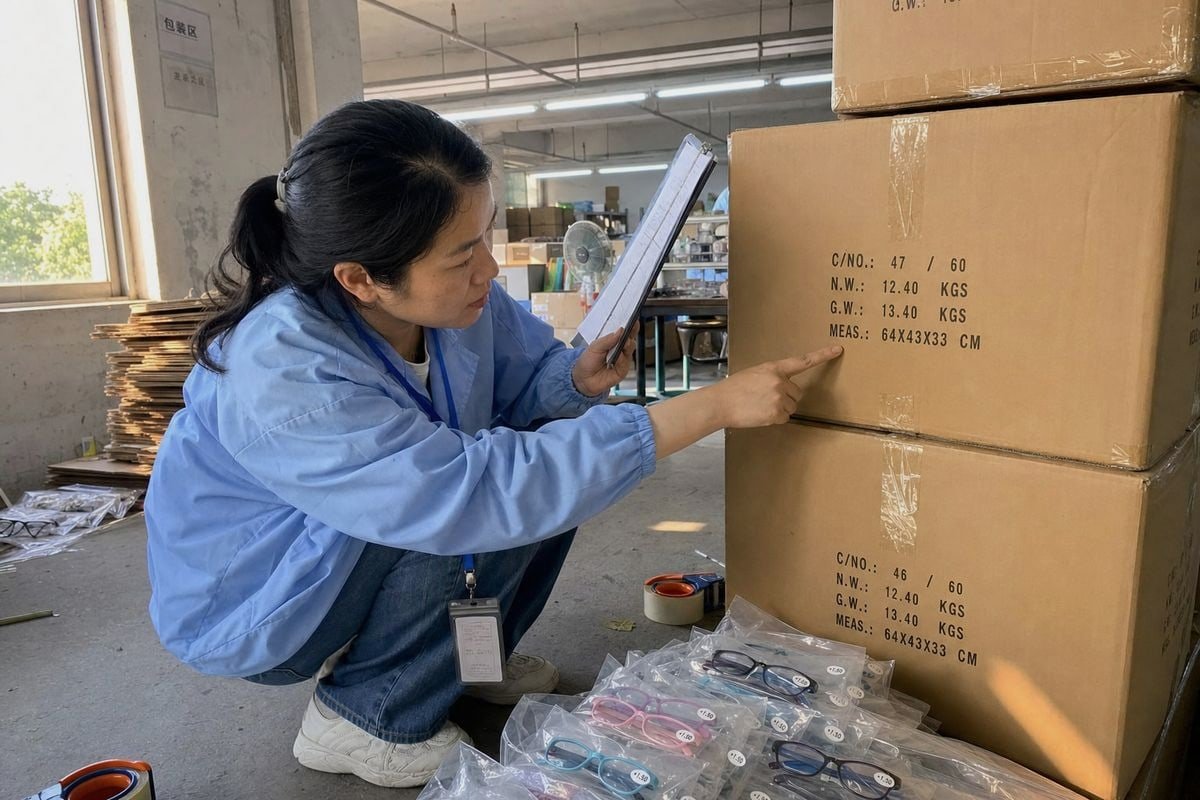
Standardization is where a factory partner earns its keep. Because our TR90 and TPEE kids frames share similar sizes and weights, we can usually fit multiple styles into one master carton footprint. That gives you uniform pallets, predictable volumetric weight calculation, and a receiving process your warehouse can run on autopilot.
Here is how we set it up, step by step:
- Collect your rules first. We ask for your routing guide, PO format, and any retailer requirements before packing begins. Buyer instructions always override our defaults.
- Define one carton family. We select one or two master carton sizes in 5-ply corrugated cartons that fit all your styles, with inner boxes of 10 or 20 pieces and dividers as protective inner packaging.
- Create a mark template. One layout for the main mark, side mark, and handling symbols, reused across every style. Only the variable fields change: SKU, color, carton sequence, weights.
- Add traceability. We can print GS1-128 barcode symbology labels or a QR code on each master carton that links carton data to the batch, so your Children's Product Certificate and lab test records are easy to match. For frames with demo lenses, we keep impact resistance certification records tied to the same batch numbers.
- Customize the retail layer. Full OEM/ODM support covers branded inner boxes, cases, cloths, and hangtags with your CPSIA compliance labeling where required, so cartons arrive retail-ready.
- Lock and repeat. The approved spec goes into your customer file. Your second order ships exactly like your first, without renegotiating packaging.
Our 5S-managed workshop runs a pre-shipment check that reconciles carton marks against the packing list line by line. For a new brand testing the market with our existing styles, this means professional, consistent packaging from the first container, without mold investment or packaging trial and error.
الخلاصة
Weak carton specs damage frames, and mismatched marks delay shipments. Define the carton, standardize the marks, reconcile the packing list, and every kids optical frame order will clear receiving cleanly.
ملاحظات ختامية
1. Authoritative chemical database entry for silica gel used as a desiccant in packaging. ↩︎
2. Explains the material structure and strength of corrugated boxes used in shipping. ↩︎
3. Defines how shipping costs are calculated based on package volume versus actual weight. ↩︎
4. Provides general information on the types and uses of boxes in logistics and packaging. ↩︎
5. Official US Customs and Border Protection guide on rules of origin for imported goods. ↩︎
6. Official FDA guidance on how medical devices, including optical frames, are classified and regulated. ↩︎
7. Official government resource for international product classification codes used in customs. ↩︎
8. Authoritative guide on the required certification for importing children’s goods into the US. ↩︎
مقالات أخرى قد تعجبك

أغسطس 5, 2026
Bio-Based vs Regular Cellulose Acetate: What's the Difference for Kids' Frames?

أغسطس 5, 2026
How Recyclable Are Kids' Optical Frame Materials, and What Eco-Friendly Alternatives Exist?

أغسطس 5, 2026
Do Kids Optical Frames Whiten or Age in Storage, and How to Control Warehouse Conditions?
هل تبحث عن شريك موثوق به للنظارات للأطفال؟
استكشف أكثر من 800 نمط جاهز ودعم OEM/ODM كامل مصمم خصيصًا لعلامتك التجارية.
اتصل بنا English
  Español de México
  Deutsch
  Français
  日本語
日本語  العربية
  Português do Brasil