How Do Sampling Inspection vs Resident QC Compare for Kids’ Optical Frames?
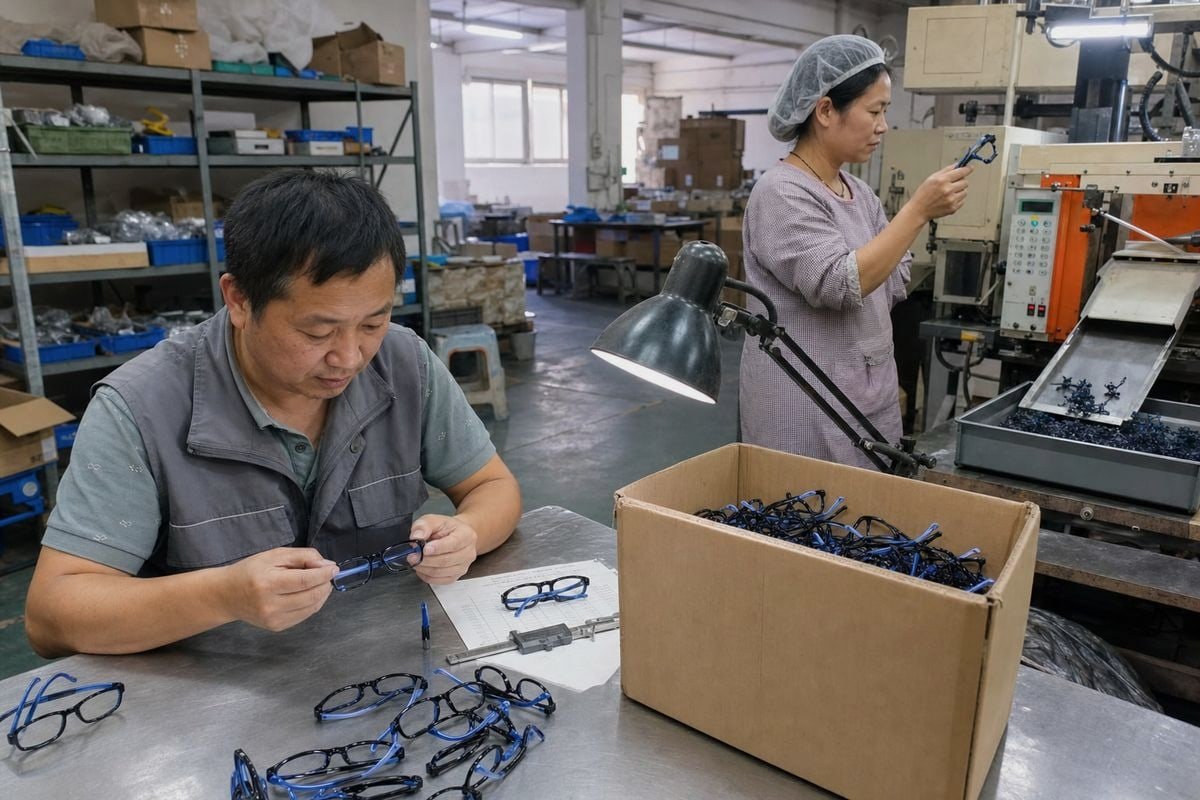
Sampling inspection vs resident QC is a question I hear weekly from buyers touring our Taizhou workshop. One bad batch of kids’ frames can wreck a brand. The good news: the right QC mix prevents it.
Sampling inspection checks a random portion of a finished lot against AQL standards to decide if it ships. Resident QC places an inspector inside the factory to prevent defects during production. For kids’ optical frames, sampling verifies shipments; resident QC prevents safety defects at the source.
Both methods have a place. But they answer different questions. Let me walk you through how they differ, what they cost, and when each one earns its money.
How do sampling inspection and resident QC differ in catching safety defects before shipment?
A buyer from Australia once asked me why our final inspection report looked so different from our in-line QC log. That question gets to the heart of this comparison.
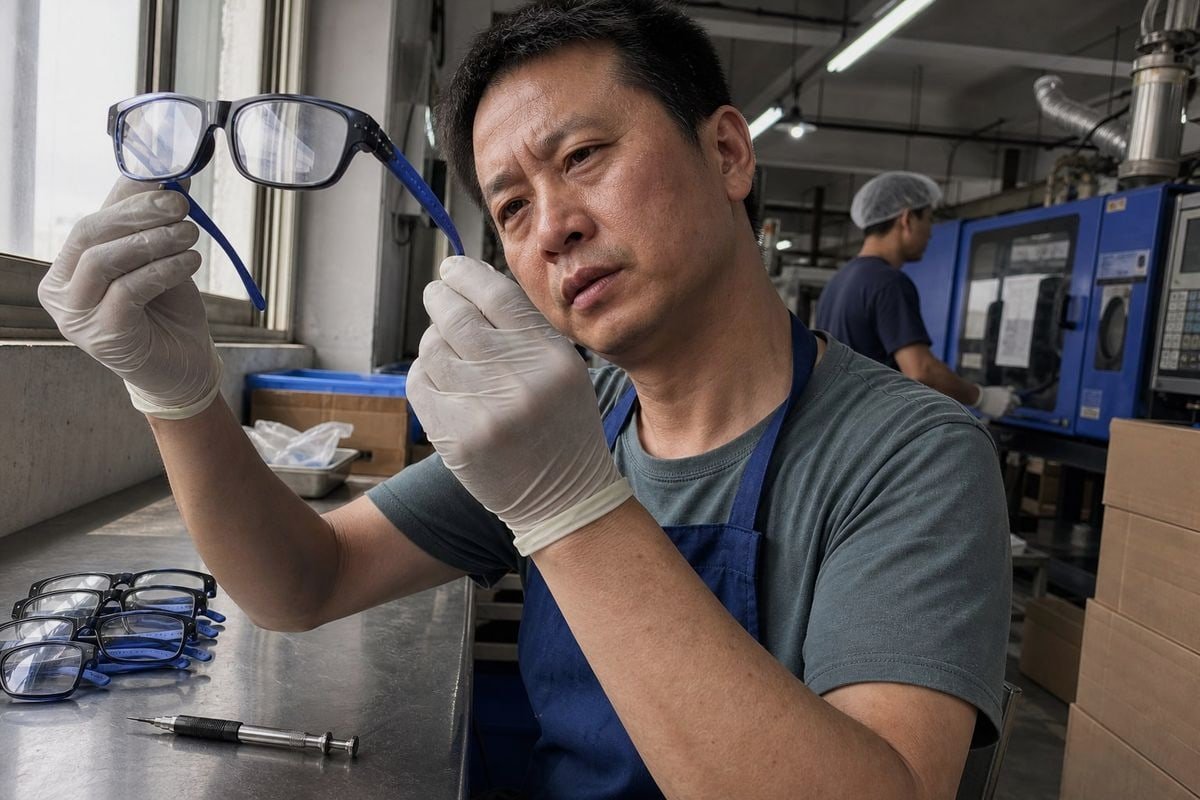
Sampling inspection detects defects after production, checking a statistical sample under ISO 2859-1 to accept or reject the lot. Resident QC catches defects during production through on-site monitoring of materials, first articles, and line output — stopping loose screws or sharp edges before thousands of units exist.
Here is the quickest way to see the difference:
| العامل | Sampling Inspection | Resident QC |
|---|---|---|
| التوقيت | After production, before shipment | During production, in real time |
| Coverage | Random sample from the lot | Continuous process oversight |
| Statistical basis | AQL plans per ISO 2859-1 / ANSI/ASQ Z1.4 | First-article checks, in-process audits |
| Core question | Should this lot ship? | How do we stop defects from happening? |
| Defect escape risk | Some defective units can pass | Lower, but not a shipment-level guarantee |
| Typical trigger | Production ~100% complete, ~80% packed | Starts at material intake and first molding |
What each method actually catches
Sampling inspection is a lot-based acceptance decision. An inspector pulls a random sample, measures frames against the golden sample, checks hinge torque, screw tightness, temple alignment, cosmetics, labeling, and packaging. Then the AQL math says accept or reject. It is fast and economical. But it cannot inspect what it does not sample. If 1% of frames have a loose hinge screw — a real hazard for a five-year-old — some will slip through.
Resident QC works upstream. In our 5S-managed workshop, in-line inspectors verify raw TR90 and TPEE material lots, approve first articles from each injection mold, and watch assembly stations. When a mold starts producing flash on temple edges, they catch it at unit fifty, not unit five thousand. That is the fundamental trade: sampling gives you a defensible shipment decision; on-site production monitoring gives you defect rate reduction before the defects pile up.
For kids' frames, timing matters more than for adult fashion frames. A sharp edge or a detachable small part is a safety issue, not a cosmetic one.
Which quality control method should I choose for my order volume and budget?
Budget conversations come up in almost every first call with new importers. I always weigh the same trade-off with them: the cost of prevention versus the cost of a rejected shipment.
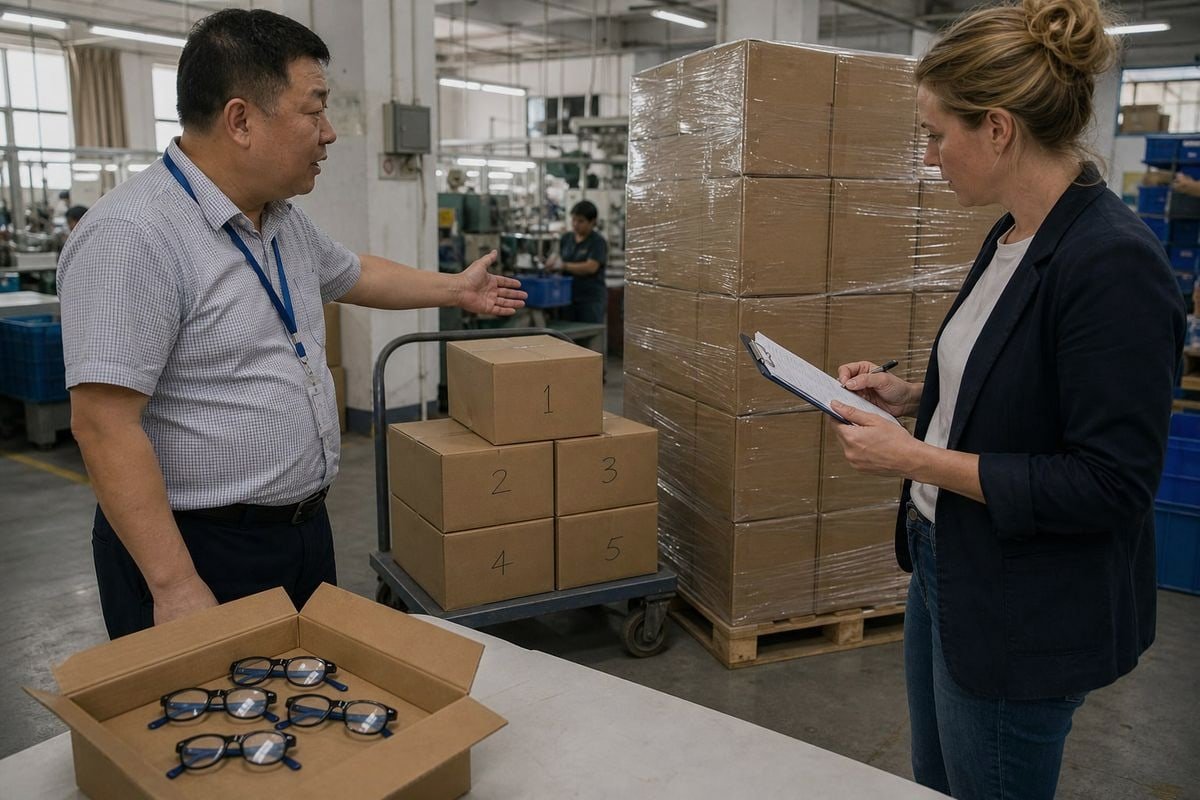
Choose sampling inspection for repeat orders from proven suppliers, small-to-mid volumes, and tight budgets — it costs a fraction of resident QC. Choose resident QC for first orders, large kids' programs, or new tooling, where a single failed lot would cost far more than continuous oversight.
Matching QC method to your order profile
There is no universal answer, but there are clear patterns. Here is the decision matrix I sketch for buyers:
| Your Situation | Recommended Approach | لماذا |
|---|---|---|
| First order, new supplier | Resident QC + final AQL inspection | No quality history to trust yet |
| Repeat order, stable specs | Sampling inspection only | Track record reduces process risk |
| Large volume, new tooling | Resident QC during ramp-up | New molds drift; catch it early |
| Small trial order (500–2,000 units) | Sampling with tightened AQL | Resident QC cost per unit is too high |
| Safety-critical toddler frames | Layered: resident QC + AQL final | Zero tolerance for critical defects |
The budget reality
Third-party inspection for a sampling visit is usually a one-day fee. Resident QC means a salaried presence for days or weeks. On a 1,000-unit order, that per-unit cost is hard to justify. On a 50,000-unit program for a children's brand, it is cheap insurance.
Our ~800 existing styles change this math for many buyers. Because these designs run on proven, mature tooling, process risk is already low. A buyer testing the market with an existing style rarely needs resident QC — a well-defined AQL sampling plan 1 with clear critical, major, and minor defect classes does the job. Common eyewear practice sets AQL 2.5 for major defects and 4.0 for minor defects, with critical defects at zero. Custom OEM projects with new molds and new colorways are different. There, in-process oversight during the first runs pays for itself.
Years ago, a distributor came to us after a painful lesson elsewhere: a passed pre-shipment inspection, then a recall triggered by a batch of frames with brittle hinges. The sampling plan never touched those units.
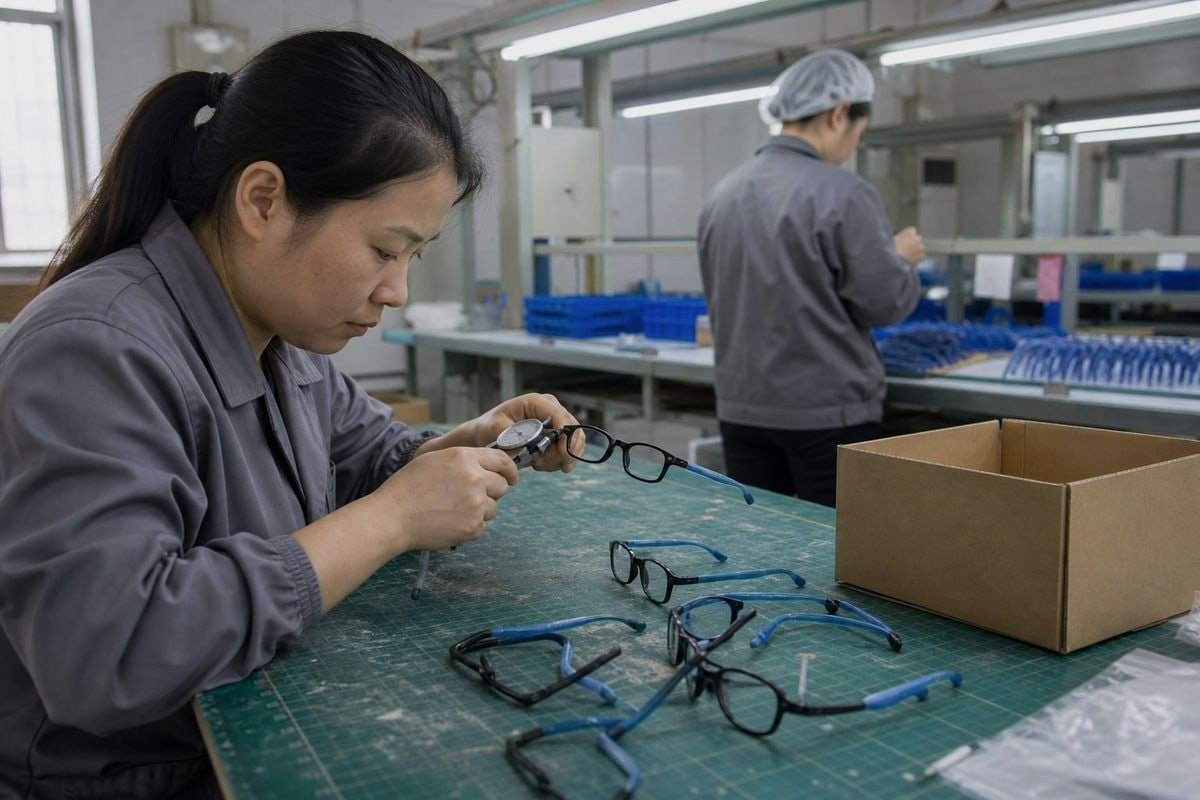
Sampling-only QC carries hidden costs: defective units legally pass within AQL limits, systemic defects surface too late to fix cheaply, rejected lots trigger rework delays and missed launch dates, and safety escapes on children's products risk recalls, CPSIA compliance failures, and lasting brand damage.
The costs nobody puts on the quotation
The inspection fee is the visible cost. The invisible costs show up later:
- Accepted defects. An AQL 2.5 plan, by definition, tolerates a small percentage of major defects. On adult sunglasses, a stiff hinge is an annoyance. On kids' optical frames, a loose screw is a potential small-parts hazard.
- Late discovery. Sampling happens when production is essentially complete and largely packed. If the lot fails, your choices are rework, re-inspection, or rejection — all of them expensive, all of them late. A four-week delay can kill a back-to-school launch.
- No corrective feedback loop. A pass/fail report tells you what happened, not why. Without a corrective action plan tied to root causes, the same defects return next order.
- التعرض التنظيمي. Children's eyewear sold into the US must meet الامتثال لـ CPSIA 2 requirements, including limits on lead and phthalates. Material safety certification lives in documentation and material control — things a one-day sampling visit can verify on paper but cannot police at the raw-material intake stage. FDA guidance 3 on eyewear also points to statistically significant sampling methods such as ANSI/ASQ Z1.4 and ISO 2859-1, which is exactly why sampling remains necessary — but not sufficient — for pediatric products.
Sampling answers one question well. The risk comes from asking it to answer questions it was never designed for. Pediatric frames need dimensional precision too — a few millimeters of bridge or temple drift can interfere with visual development because the child simply stops wearing the frame correctly.
When does it make sense to invest in resident QC for my kids' eyewear production?
One lesson fifteen years of eyewear production has taught our team: the most expensive defects are the ones built into thousands of units before anyone looks.
Invest in resident QC when launching a new supplier relationship, running high-volume children's programs, commissioning new molds, or producing safety-sensitive toddler frames. It pays off wherever defects are systemic, process-driven, or too dangerous to leave to statistical acceptance limits.
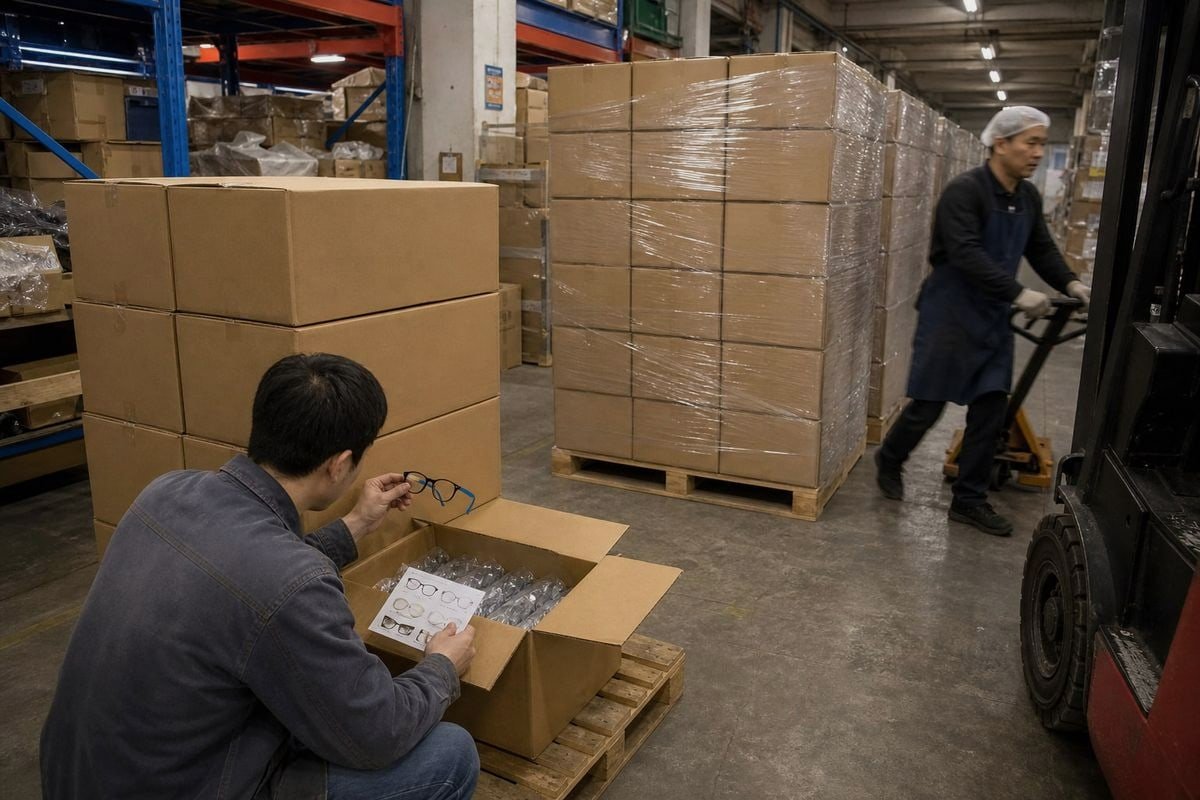
The scenarios where on-site oversight earns its cost
Resident QC is an investment, so target it where prevention beats detection:
| Trigger | What Resident QC Prevents |
|---|---|
| New injection molds | Flash, burrs, and dimensional drift in early shots |
| New material lots (TR90 / TPEE) | Brittleness or color variation from unverified resin |
| Complex assembly (spring hinges) | Loose screws, misaligned temples at scale |
| Toddler / baby frames | Sharp edges, small-part risks under a zero-defect policy |
| First order with any factory | Deviation from the golden sample before it multiplies |
What modern resident QC actually looks like
This is not a person with a clipboard anymore. Advanced setups now integrate AI-enhanced visual inspection to detect microscopic surface fractures in high-flex polymers — flaws invisible to the human eye during standard sampling. Predictive tooling maintenance tracks the shot-count of each injection mold so worn components get replaced before flash appears, instead of after a final sample fails. Some programs even use digital twin verification, comparing physical frames against 3D CAD models with AR overlays to hold pediatric ergonomic curves within sub-millimeter tolerances.
On our own lines, the practical core is simpler but just as important: first-article approval against the golden sample, in-line checks of hinge function and temple flexibility, and batch testing protocols aligned with ISO 12870 standards 4 for frame durability, plus impact resistance testing where lens specs require it. For toddler styles with soft TPEE temples, emerging chew-durability and saliva-resistance testing checks coating stability under prolonged biting and moisture — a scenario every parent recognizes.
The best model is layered: lock the spec and golden sample, run resident QC through production, then close with a final AQL inspection and a documented corrective action plan for anything found. Prevention plus verification. Not one or the other.
الخلاصة
Sampling inspection decides whether a lot ships. Resident QC stops defects from being built. For kids' optical frames, the safest and most cost-effective strategy layers both.
Sampling alone leaves safety gaps; resident QC alone lacks a shipment-level verdict. Match the method to your risk: proven styles and repeat orders can rely on disciplined AQL sampling, while new tooling, new suppliers, and toddler-safe programs deserve in-process oversight. If you are planning a children's eyewear line and want a partner who builds quality in rather than inspecting it in at the end, our team at OKAY EYEWEAR is happy to walk you through how we structure QC for orders like yours — just reach out to Alan Kong at sales@okayeyewear.com.
ملاحظات ختامية
1. Authoritative Wikipedia entry explaining AQL standards and statistical sampling. ↩︎
2. Official US government site for consumer product safety regulations affecting children’s products. ↩︎
3. Regulatory authority providing oversight and standards for medical devices, including optical frames. ↩︎
4. International organization that develops and publishes technical standards for ophthalmic optics and spectacle frames. ↩︎
مقالات أخرى قد تعجبك

أغسطس 5, 2026
Bio-Based vs Regular Cellulose Acetate: What's the Difference for Kids' Frames?
أغسطس 5, 2026
How Recyclable Are Kids' Optical Frame Materials, and What Eco-Friendly Alternatives Exist?
أغسطس 5, 2026
Do Kids Optical Frames Whiten or Age in Storage, and How to Control Warehouse Conditions?
هل تبحث عن شريك موثوق به للنظارات للأطفال؟
استكشف أكثر من 800 نمط جاهز ودعم OEM/ODM كامل مصمم خصيصًا لعلامتك التجارية.
اتصل بنا English
  Español de México
  Deutsch
  Français
  日本語
日本語  العربية
  Português do Brasil