How to Require Suppliers to Cover Warranty Repair Costs for Kids’ Optical Frames?

Getting suppliers to cover warranty repair costs for kids’ optical frames is a question our factory in Taizhou hears from almost every new brand buyer معايير مراقبة الجودة 1. Unclear terms drain margins fast.
To require suppliers to cover warranty repair costs for kids’ optical frames, put defect coverage in writing before ordering: define manufacturer defects, set a 12–24 month warranty clause, agree on photo-based claims, specify remedies like replacements or credit notes, and document every defect with photos and batch data.
That is the short answer. The longer answer involves contract language, claims workflow, and knowing what a real defect looks like factory audit 2. Let me walk you through each piece.
What warranty terms should I include in my supplier contract to cover kids' frame repairs?
A buyer from Australia once sent me a supplier agreement with a single line about quality. One line. When hinge failures appeared eight months later, that line settled nothing.
Your supplier contract should include a clear definition of manufacturing defects, a 12–24 month warranty period starting from retail sale, agreed remedies (replacement, repair, or credit note), a photo-based claim procedure, response-time SLAs, a spare parts allowance, and explicit accidental damage exclusions.

Strong warranty clauses do three jobs at once. They tell you what you can claim, they tell the supplier what they must pay, and they prevent arguments later. In my experience reviewing supplier agreements with buyers from 20+ countries, the weakest contracts fail on definitions, not on intent. Everyone agrees defects should be covered. Nobody agrees on what a defect is — until it is written down.
The clauses that actually protect you
Start with the defect definition. List concrete failure modes for eyewear components: hinge failure, frame delamination, lens coating peeling, temple tips detaching, and color fading beyond an agreed standard. Then list what is excluded: loss, theft, unauthorized repairs, and normal wear. This split between manufacturer defects 3 and accidental damage exclusions is the single most negotiated point in vendor contract negotiation for children’s eyewear.
Next, fix the clock. Some suppliers start the warranty at the shipment date. That can burn six months of coverage while frames sit in your warehouse. Push for the warranty to start at retail sale to the end customer, or at least at your receipt date plus a grace period.
| Contract Term | Weak Version | Strong Version |
|---|---|---|
| Warranty period | 12 months from shipment | 12–24 months from retail sale |
| Defect definition | "Quality problems" | Named failures: hinges, delamination, coatings |
| Remedy | Supplier's discretion | Replacement, repair, or credit note — buyer's choice |
| Claim evidence | Physical return required | Photos/video accepted for most claims |
| Response SLA | لا شيء | Acknowledge in 5 days, resolve in 30 |
| Spare parts | لا شيء | 3–5% buffer stock shipped with each order |
Finally, negotiate a spare parts buffer. At our factory, we often ship 3–5% extra temples, hinges, and screws with orders. This lets your retail partners fix minor issues in-store without opening a formal warranty claim process at all. It is cheaper for everyone, and parents get a same-day fix.
How do I verify a supplier will honor warranty claims before placing my first order?
Trade-offs come up constantly in our sales conversations. A buyer can pick the cheapest quote, or pick the supplier who answers defect questions in writing. Rarely both.
Verify a supplier before ordering by requesting their written warranty policy, checking product liability insurance and compliance certificates, asking for references from long-term B2B clients, testing their response speed with a mock claim question, and reviewing their quality control standards during a factory audit.

A supplier's willingness to honor claims shows up long before the first defect. It shows up in how they answer hard questions during sampling. When buyers visit our 5S-managed workshop, I encourage them to ask uncomfortable things: What happens if 2% of a batch has loose hinges? Who pays return shipping? How fast do you issue a credit note? A factory with fifteen years of eyewear experience will have real answers. A trading company reselling someone else's frames usually will not, because they cannot control the production line that caused the defect.
A practical verification checklist
- Request the warranty policy in writing. If a supplier only offers verbal promises, that tells you how claims will go later.
- Check insurance and certifications. Ask for proof of product liability insurance 4 and market-specific compliance, such as CPSIA documentation for children's products sold in the US. This protects your brand, not just your margin.
- Run a mock claim. Send a hypothetical: "A customer reports temple discoloration at month nine. What do you need from us, and what do we get?" Time the response. Judge the clarity.
- Audit quality control standards. Look for incoming material inspection, in-line checks, and final QC with defined tolerances. Defect rates start on the production floor, not in the contract.
- Talk to existing clients. A supplier serving brands across multiple countries for years has a track record you can check.
- Confirm they are a factory. Factories can fix root causes. Traders can only forward complaints.
One more signal I always point out: does the supplier ask you questions about your market and child usage patterns? Suppliers who understand how kids actually treat glasses — sat on, pulled off with one hand, dropped in schoolyards — design more durable frames. That understanding upstream means fewer claims downstream.
What defects and damage should my kids' optical frame warranty actually cover?
During a QC review last year, our team spread out a batch of returned children's frames on the inspection table. Roughly half showed true material failures. The other half showed bite marks.
A kids' optical frame warranty should cover manufacturing defects: hinge and screw failure, frame delamination, lens coating peeling, temple detachment, and material cracking under normal use. It should exclude loss, theft, bite marks, crushing, unauthorized repairs, and ordinary wear from daily handling.
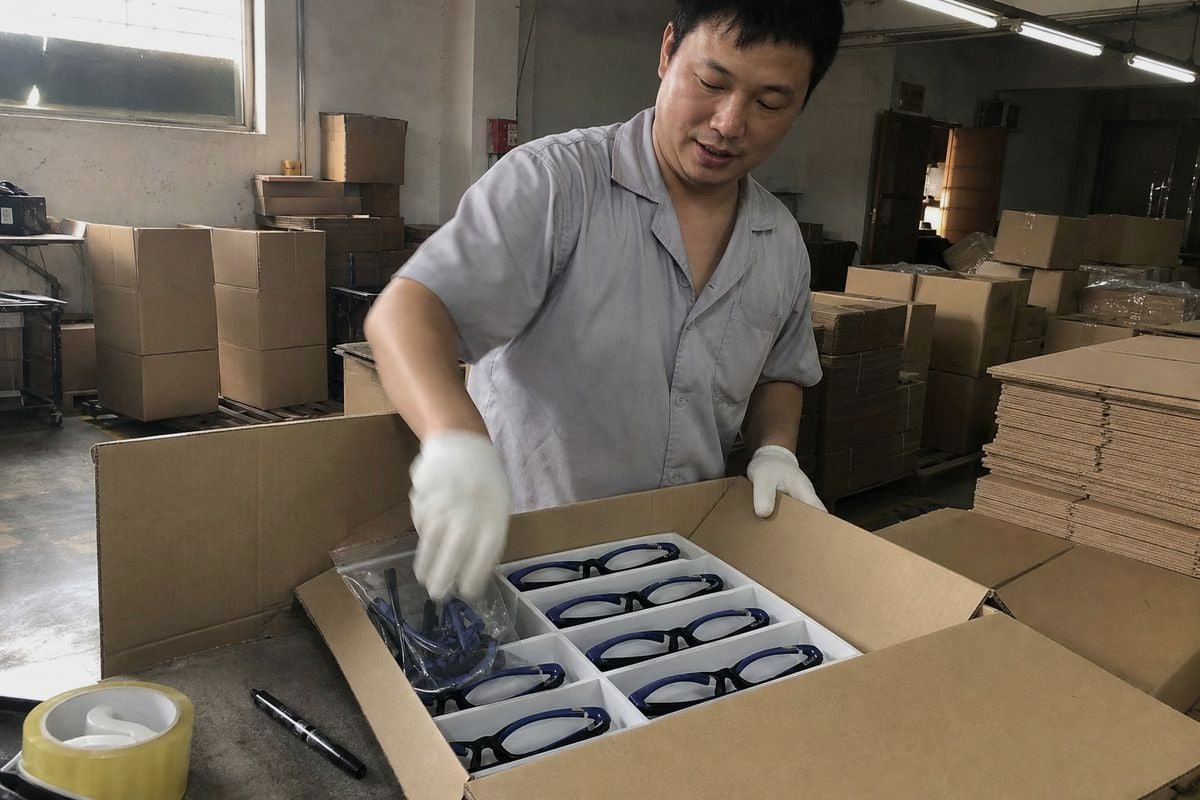
Children's eyewear durability is a special problem. Kids bend, twist, drop, and chew their glasses in ways adults never do. That is exactly why we build most of our optical frames in TR90 with flexible TPEE temples 5 — the materials absorb abuse that would snap rigid acetate. But even flexible materials have limits, and your warranty needs to draw the line between a frame that failed and a frame that was defeated.
Defect versus damage: the practical line
The test I give buyers is simple: would this failure have happened to a careful adult wearer within the warranty period? If yes, it is likely a manufacturer defect. If the failure required force, impact, or heat, it is likely accidental damage.
| Failure Type | Covered? | لماذا |
|---|---|---|
| Hinge loosens or breaks under normal opening | نعم | Assembly or component defect |
| Coating peels off lenses | نعم | Material or process defect |
| Frame delaminates or discolors early | نعم | Material defect |
| Temple tip silicone detaches on its own | نعم | Bonding defect |
| Frame snapped after being sat on | لا | Impact damage |
| Bite marks and chewed temple tips | لا | Misuse, however adorable |
| Scratched lenses from daily wear | لا | Normal wear and tear |
| Lost or stolen frames | لا | Not a product failure |
The gray zone: a wear-and-tear allowance
Some failures sit in between. Repeated flexing of a temple is normal for a child; a temple that cracks at month four from flexing suggests weak material. One practical compromise is a wear-and-tear allowance in the supplier agreement — a small pre-agreed credit or parts quota that covers borderline cases without a causation debate on every claim. Suppliers resist unlimited coverage because broad language invites abuse, and honestly, that resistance is reasonable. A defined allowance gives both sides predictability. It also lets you offer parents a low-cost replacement fee for non-defect damage, so your customer-facing policy stays generous even where the supplier owes nothing.
How can I handle warranty disputes with my supplier without delaying my brand's orders?
Years of export work taught me one hard lesson: a dispute that blocks production hurts the buyer more than the supplier. Your shelves go empty either way.
Handle warranty disputes by separating claims from orders: keep production running while the claim proceeds, document defects with photos, batch numbers, and dates, escalate through a defined contract process, and settle through credit notes or replacement shipments on the next order rather than cash refunds.
The worst dispute pattern I see is the payment standoff. The buyer withholds a full invoice over a partial defect. The supplier halts the next production run. Both sides lose weeks, and the buyer's retail customers wait. A better structure treats warranty recovery as an accounting workflow — closer to a chargeback than a fight.
A dispute workflow that keeps orders moving
- Intake and classify. When a defect report arrives, classify it immediately: manufacturing, material, assembly, or customer damage. Do not let claims pile up as unstructured customer-service noise.
- Document to claim standard. Collect clear photos or video, the SKU and batch number, purchase date, and a short defect description. Objective evidence wins claims; frustration does not.
- Submit through the agreed channel. Use the claim procedure written into your warranty clauses. Batch small claims monthly instead of sending them one by one.
- Reconcile financially, not emotionally. Confirmed defects get resolved as credit notes against the next invoice, replacement units added to the next shipment, or offsets. Cash refunds are slow and adversarial; credits keep the relationship and the production schedule intact.
- Escalate on process, not volume. If the supplier stalls, escalate per the contract: named contacts, then management review, then the dispute clause. Keep the current order out of it.
When disputes signal a deeper problem
If the same defect keeps returning batch after batch, you no longer have a claims problem — you have a quality control problem. At that point, ask for a corrective action report, not just credits. On our production line, a repeated defect triggers a process review, because refunding a symptom forever is worse for both sides than fixing the cause once. A supplier who welcomes that conversation is a long-term partner. A supplier who only ever offers discounts is telling you the defect will happen again.
الخلاصة
Supplier-paid warranty repairs for kids' optical frames come down to written warranty clauses, verified suppliers, clear defect definitions, and a claims process that never blocks your orders.
ملاحظات ختامية
1. Describes procedures and standards ensuring products meet specified requirements. ↩︎
2. Explains systematic evaluation of manufacturing facilities for quality and compliance. ↩︎
3. Found an authoritative legal definition of manufacturing defects from Cornell Law School’s Legal Information Institute. ↩︎
4. Explains how product liability insurance protects businesses from claims. ↩︎
5. Found an article directly comparing TR90 and TPEE materials for kids’ eyewear, highlighting their flexibility and relevance to the original anchor text. ↩︎
مقالات أخرى قد تعجبك

أغسطس 5, 2026
Bio-Based vs Regular Cellulose Acetate: What's the Difference for Kids' Frames?

أغسطس 5, 2026
How Recyclable Are Kids' Optical Frame Materials, and What Eco-Friendly Alternatives Exist?
أغسطس 5, 2026
Do Kids Optical Frames Whiten or Age in Storage, and How to Control Warehouse Conditions?
هل تبحث عن شريك موثوق به للنظارات للأطفال؟
استكشف أكثر من 800 نمط جاهز ودعم OEM/ODM كامل مصمم خصيصًا لعلامتك التجارية.
اتصل بنا English
  Español de México
  Deutsch
  Français
  日本語
日本語  العربية
  Português do Brasil