How to Require “Made in China” Origin Labels on Kids’ Optical Frames for Australian Customs?

Getting “Made in China” origin labels on kids’ optical frames right for Australian customs 1 sounds simple — until a shipment sits in a bonded warehouse over a missing mark. I have watched buyers scramble to re-sticker thousands of frames at the port, burning margin and launch dates. On our production line in Taizhou, we solved this by building origin marking into the tooling stage, not the shipping stage.
To require “Made in China” origin labels on kids’ optical frames for Australian customs, instruct your manufacturer in writing to permanently mark the frame (typically laser-engraved or pad-printed inside the temple arm) in legible English, verify the frames underwent last substantial transformation in China, and match the label to your customs declarations and origin documentation.
That is the short answer. The details matter, though. Below, I walk through the regulations, the label placement, the marking methods, and the paperwork — step by step.
How do I know which Australian customs regulations apply to "Made in China" labeling for kids' optical frames?
A procurement manager from Melbourne once emailed me a single question: "Does your factory guarantee Australian labeling compliance?" It took a two-page reply to answer honestly, because Australia layers several rules on top of each other.
Australia applies three overlapping rules: trade description requirements under customs marking regulations enforced by the Australian Border Force, truth-in-origin rules under Australian Consumer Law overseen by the ACCC, and origin documentation rules under ChAFTA for tariff preference. Importers must satisfy all applicable layers, not just one.
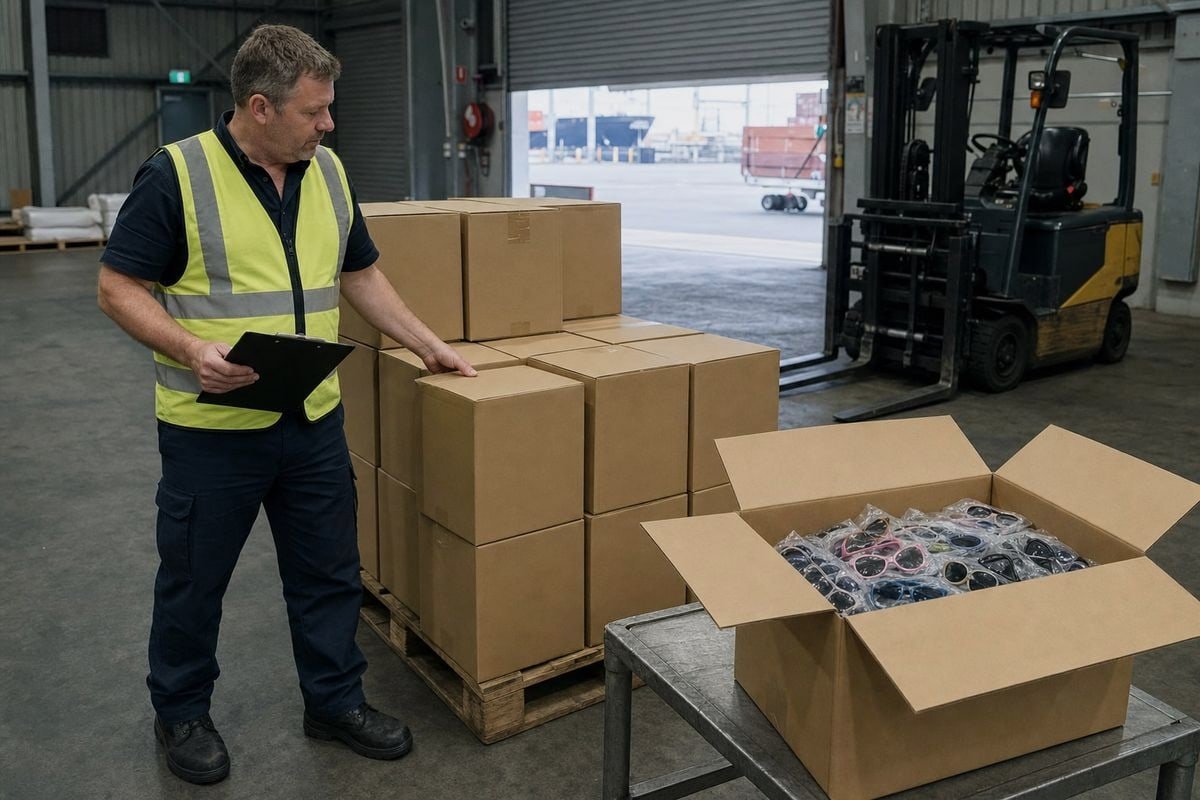
Let me unpack those layers, because confusing them is the single most common mistake I see from first-time importers of children's eyewear.
The three compliance layers explained
First, there is the customs marking layer. Australian import regulations list categories of goods that must carry a trade description — including the country where the goods were made or produced. If your kids' optical frames fall within those categories, the Australian Border Force 2 (ABF) can question or hold goods that arrive unmarked or falsely marked during the customs clearance process.
Second, there is the consumer-law layer. The ACCC 3's guidance under Australian Consumer Law (ACL) says a "made in" claim is only safe if the good underwent its last substantial transformation 4 in the claimed country. This applies to the frame, the case, the packaging, and even your website copy.
Third, there is the tariff layer. Under ChAFTA 5, a Certificate of Origin or Declaration of Origin can reduce or eliminate import duty Australia would otherwise charge. That paperwork is separate from the physical label, but the two must never contradict each other.
| Compliance Layer | Who Enforces It | ما يغطيه | Typical Evidence |
|---|---|---|---|
| Trade description / country of origin labeling (COOL) | Australian Border Force | Physical marking on goods or packaging | Legible "Made in China" mark |
| قانون المستهلك الأسترالي | ACCC | Truthful origin claims to consumers | Substantial transformation records |
| ChAFTA tariff preference | ABF at clearance | Duty rates and tariff classification | Certificate or Declaration of Origin |
One misconception is worth killing early. Customs does not "require" your frames to say Made in China simply because you would like them to. The rule is the reverse: if a marking is required or applied, it must truthfully identify where the goods were made. You cannot pick an origin for convenience. In our fifteen years of exporting children's eyewear, every clean clearance we have supported started with the buyer confirming which layer applied to their exact product and sales channel before production began.
Where exactly should the origin label be placed on children's optical frames to meet compliance requirements?
Placement is where design and compliance collide. When we developed a TR90 kids' frame with soft TPEE temples, we spent a full sampling round just deciding where the origin mark could live without touching a child's skin or getting worn off.
Place the "Made in China" marking on the inside surface of the temple arm, in legible English characters, where inspectors can find it without disassembly. Repeat the origin statement on the case and retail packaging so the claim survives even after the packaging is discarded.
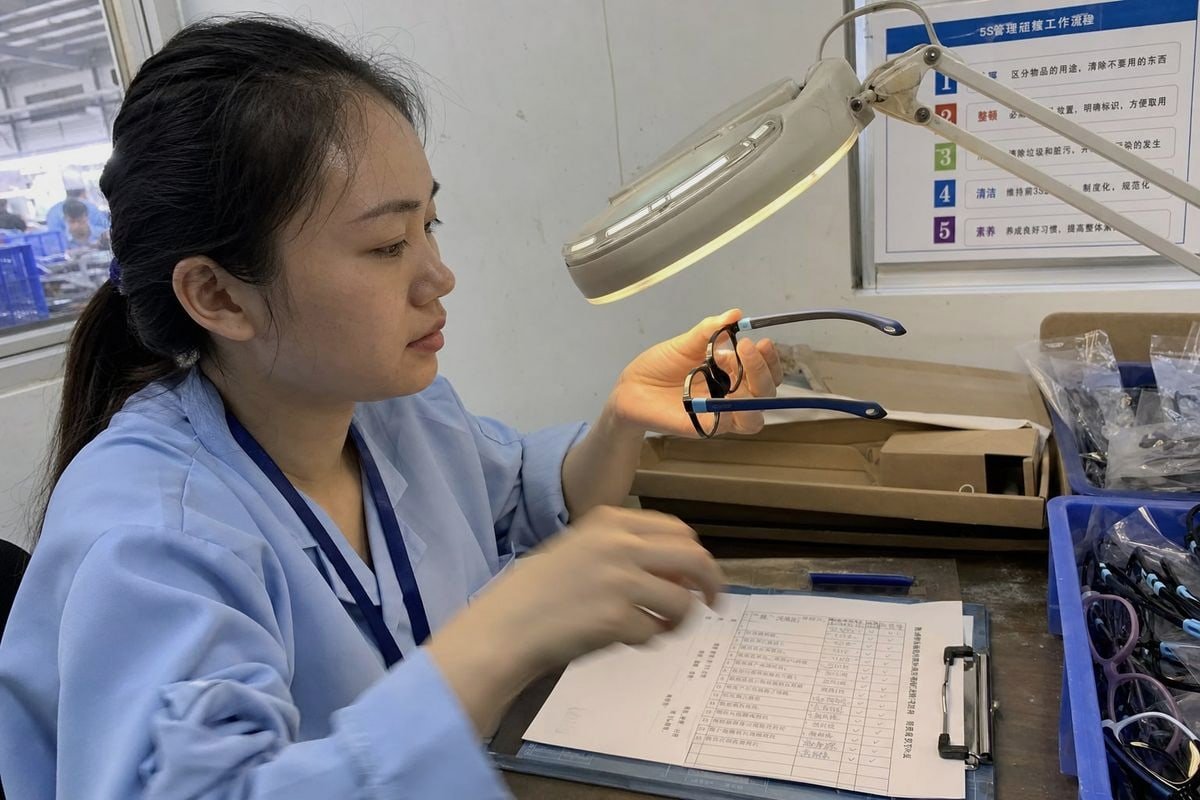
The inside temple arm is the industry-standard location for a reason. It is visible when the frame is opened for inspection, it does not interfere with the child's face, and it sits on a flat, stable surface that holds engraving or printing well. On most of our roughly 800 existing styles, the origin mark shares the inner temple with the size code and model number, so a customs officer or retail auditor can verify everything in one glance.
Product, case, or packaging — or all three?
Industry guidance for optical importers is clear: think about what must appear on the product itself and what must appear on the packaging. My advice, built from shipments to twenty-plus countries, is to treat this as a belt-and-braces exercise.
| Location | Recommended Marking | لماذا هو مهم |
|---|---|---|
| Inside temple arm | "Made in China" + model + size | Permanent, inspectable, survives the product's life |
| Demo lens sticker | Optional origin note | Visible at retail, removed at dispensing |
| Case / pouch | Printed origin line | Backs up the frame mark |
| Retail box or hang tag | Origin + supplier identification | Meets consumer-facing mandatory labeling requirements |
| كرتون رئيسي | Origin + quantity + HS code reference | Speeds ABF inspection at clearance |
Special considerations for children's frames
Kids' optical frames are smaller than adult frames, so print area is tight. We hold minimum character heights that stay legible even on a 41mm eye-size frame. On flexible TPEE temples, the mark must also survive bending — a child will twist those temples daily. That rules out flat inks on flexing zones and pushes us toward engraving or molded-in text on the more rigid TR90 sections near the hinge.
One buyer in Brisbane once asked us to hide the origin mark under the temple tip sleeve for aesthetics. We declined and explained why: a mark that requires disassembly to see is a mark an inspector may treat as absent. She agreed once she saw how discreet a fine laser engraving looks on the inner temple.
Can my manufacturer permanently mark "Made in China" without compromising the frame's safety or comfort?
There is a real trade-off here, and I weigh it on every new kids' project: the more permanent the mark, the more it interacts with the material. Get it wrong, and you create a sharp edge or a stress point on a frame worn by a five-year-old.
Yes. Competent factories use in-mold text, laser engraving, or pad printing to permanently mark "Made in China" without creating sharp edges, weak points, or skin irritation. The right method depends on the frame material — molded or engraved marks suit TR90, while flexible TPEE zones need shallow, smooth-finished marking.

Permanence and children's eyewear safety are not in conflict — but only if the marking method matches the material. Here is how we think it through on our line.
Matching the marking method to the material
| Marking Method | الأفضل لـ | Permanence | Safety Notes |
|---|---|---|---|
| In-mold (molded-in text) | TR90 fronts and temples, planned at tooling | Excellent — part of the frame | Zero added edges; must be decided before mold making |
| Laser engraving | TR90, acetate, post-molding flexibility | ممتازة | Shallow depth avoids stress risers; smooth to the touch |
| Pad printing | Flat inner temple surfaces | Good with curing | Must pass abrasion and sweat-resistance checks |
| Hot stamping | Acetate temples | جيد | Traditional optical finish; heat settings matter |
| Stickers | Nothing permanent | ضعيف | Fine for cartons, never for the frame itself |
On flexible TPEE temples — the soft, bendable sections we build for active kids — deep engraving can become a flex-fatigue point. So we keep engraving shallow there, or we shift the origin mark to the rigid TR90 zone near the hinge. On our two-tone rubber temples, molded-in text set during tooling gives the cleanest, safest result: the text is literally part of the frame, so it cannot chip, peel, or scratch.
Timing is everything
The lesson we learned years ago: marking is a tooling decision, not a shipping decision. If you approve "Made in China" wording, font size, and placement at the sample stage, the mark costs almost nothing and looks factory-clean. If you decide after production, you are stuck with stickers or risky rework. Our sampling process includes a marked pre-production sample photographed for buyer sign-off, and our QC team checks mark legibility on every inspection, alongside hinge torque and temple flex tests. Product safety standards and origin marking get verified in the same pass.
What documentation should I request from my supplier to prove country-of-origin compliance for customs clearance?
Paperwork saved one of our Australian customers a full week of clearance delay. Their broker requested origin evidence mid-clearance, and because we had issued the documents pack with the shipment, the file went back the same afternoon.
Request a ChAFTA Certificate of Origin or Declaration of Origin, a manufacturer's declaration confirming last substantial transformation in China, the commercial invoice and packing list showing origin and tariff classification, pre-shipment inspection photos of the marked frames, and applicable safety test reports from an accredited lab.
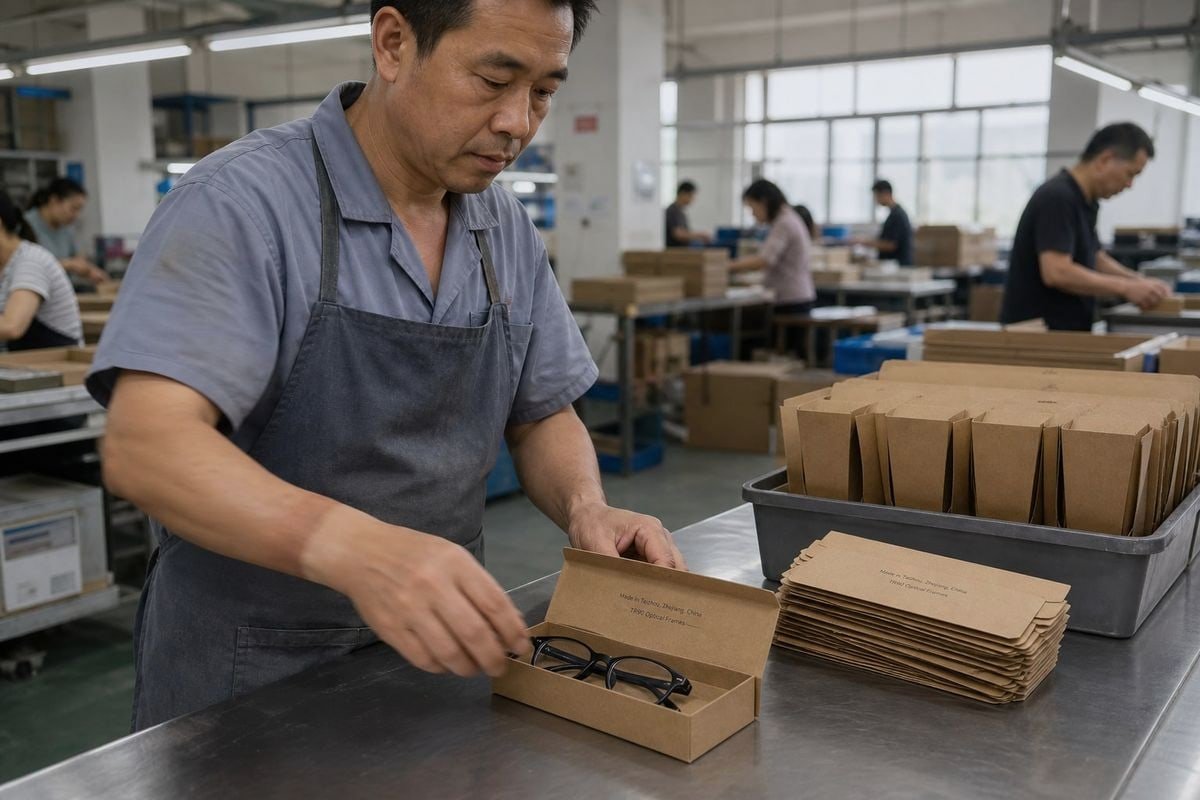
Documentation splits into two families, and your customs broker will thank you for keeping them straight. The first family proves origin for duty purposes. The second family proves the label and the product are compliant.
Your document checklist, in order of priority
- ChAFTA Certificate of Origin or Declaration of Origin. This supports your claim for preferential import duty under the China–Australia agreement. It is transaction-specific, so request it for every shipment, not just the first.
- Manufacturer's origin declaration. A signed statement from the factory confirming the frames underwent their last substantial transformation in China. This is your substantiation file if the ACCC ever questions the "made in" claim under Australian Consumer Law.
- Commercial invoice and packing list. Both should state the country of origin and the correct tariff classification (HS code) for optical frames. Mismatches between invoice, label, and customs declaration are the fastest way to trigger an ABF query.
- Pre-shipment inspection report with photos. Ask for close-up photos of the origin mark on the actual production frames, not the sample. We include these as standard in our QC reports.
- Safety test reports. For children's eyewear, accredited-lab reports covering the relevant product safety standards matter. Sunglasses sold in Australia fall under the mandatory Consumer Goods Safety Standard referencing AS/NZS 1067.1:2016 6, which also requires supplier identification; optical demo frames follow a different path, but retailers increasingly ask for material safety evidence either way.
- Production records. Keep supplier warranties, molding records, and component sourcing notes on file. Import regulations Australia enforces reward importers who can substantiate claims quickly.
Some buyers now go further and add QR codes on packaging linking to compliance certificates. We support this on OEM packaging projects — it does not replace the physical mark, but it makes verification faster for brokers and reassures retail partners. If you are new to the market, engage a customs broker who knows optical goods before your first order ships. It is the cheapest insurance in this whole process.
الخلاصة
Origin labeling failures are avoidable. Verify the rules, confirm substantial transformation, specify permanent marking before tooling, and collect documentation with every shipment. Our team at OKAY EYEWEAR builds all four steps into every kids' frame order.
ملاحظات ختامية
1. Official information on importing goods to Australia. ↩︎
2. Official website of the Australian Border Force. ↩︎
3. Official website of Australia’s competition and consumer regulator. ↩︎
4. Explains the internationally recognized principle of substantial transformation for origin. ↩︎
5. Official Australian government information on the China-Australia Free Trade Agreement. ↩︎
6. Australian government information on the standard for sunglasses and fashion spectacles. ↩︎
7. Official Australian government information on Certificates of Origin. ↩︎
مقالات أخرى قد تعجبك
أغسطس 5, 2026
Bio-Based vs Regular Cellulose Acetate: What's the Difference for Kids' Frames?
أغسطس 5, 2026
How Recyclable Are Kids' Optical Frame Materials, and What Eco-Friendly Alternatives Exist?
أغسطس 5, 2026
Do Kids Optical Frames Whiten or Age in Storage, and How to Control Warehouse Conditions?
هل تبحث عن شريك موثوق به للنظارات للأطفال؟
استكشف أكثر من 800 نمط جاهز ودعم OEM/ODM كامل مصمم خصيصًا لعلامتك التجارية.
اتصل بنا English
  Español de México
  Deutsch
  Français
  日本語
日本語  العربية
  Português do Brasil