How to Prevent Deformation and Crush Damage in Kids Optical Frames During Shipping?
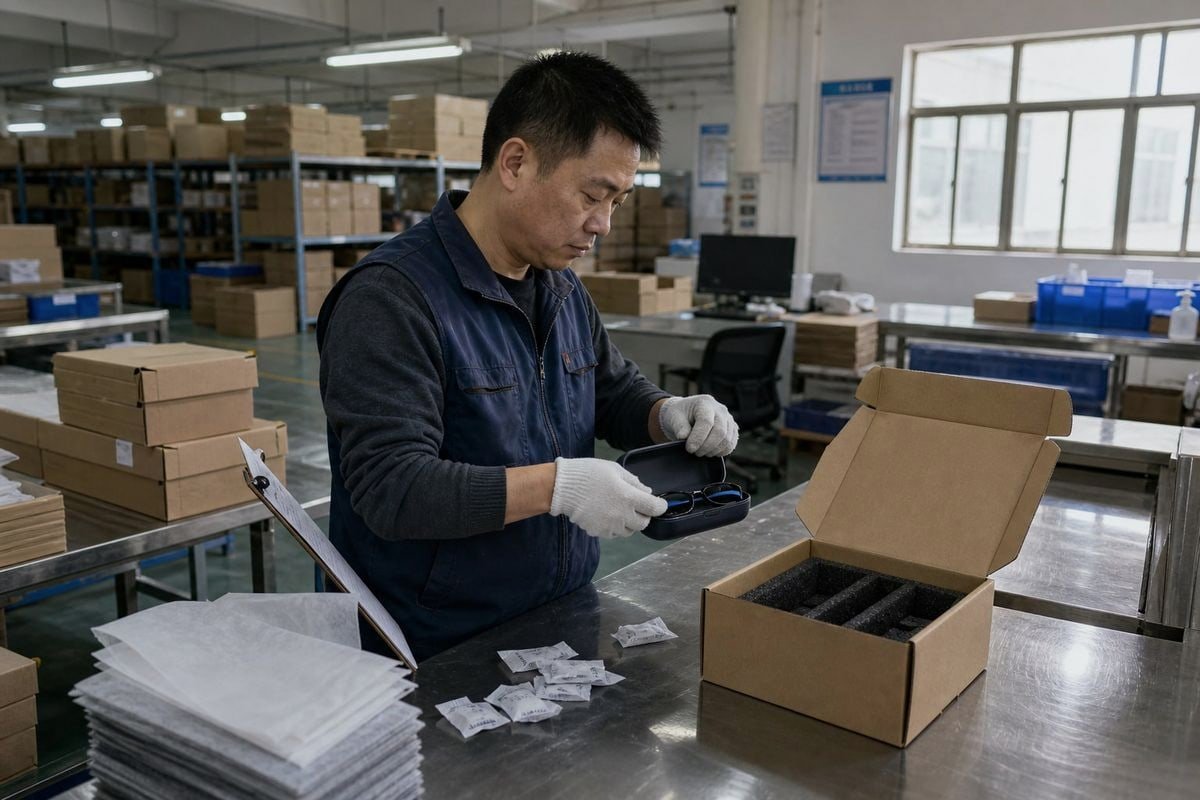
Deformation and crush damage in kids optical frames during shipping cost our buyers real money before we rebuilt our packing system at our Taizhou factory. Warped bridges mean returns, remakes, and angry parents.
To prevent deformation and crush damage in kids optical frames during shipping, wrap each frame individually, place it in a rigid hard case or molded insert, immobilize it with void fill inside a double-walled corrugated box, and validate the packaging with ISTA-style drop and vibration testing.
That is the short answer. Below, I will break down the exact materials to request, how to test TR90 frames, which [QC checkpoints](https://okayeyewear.com/how-create-inspection-checklist-purchasing-kids-optical-frames/) matter, and how to judge a supplier.
What packaging materials should I request from my manufacturer to protect kids optical frames during long-distance shipping?
A few years ago, a distributor in Australia opened a container from us and found flattened temple tips on two cartons. That single claim reshaped our entire packing specification.
Request individually wrapped frames in acid-free tissue or sealed polybags, protective hard cases or molded pulp cradles per unit, double-walled 5-ply corrugated outer cartons, precision void fill such as foam inserts or air pillows, and silica gel desiccant packets in every shipment.
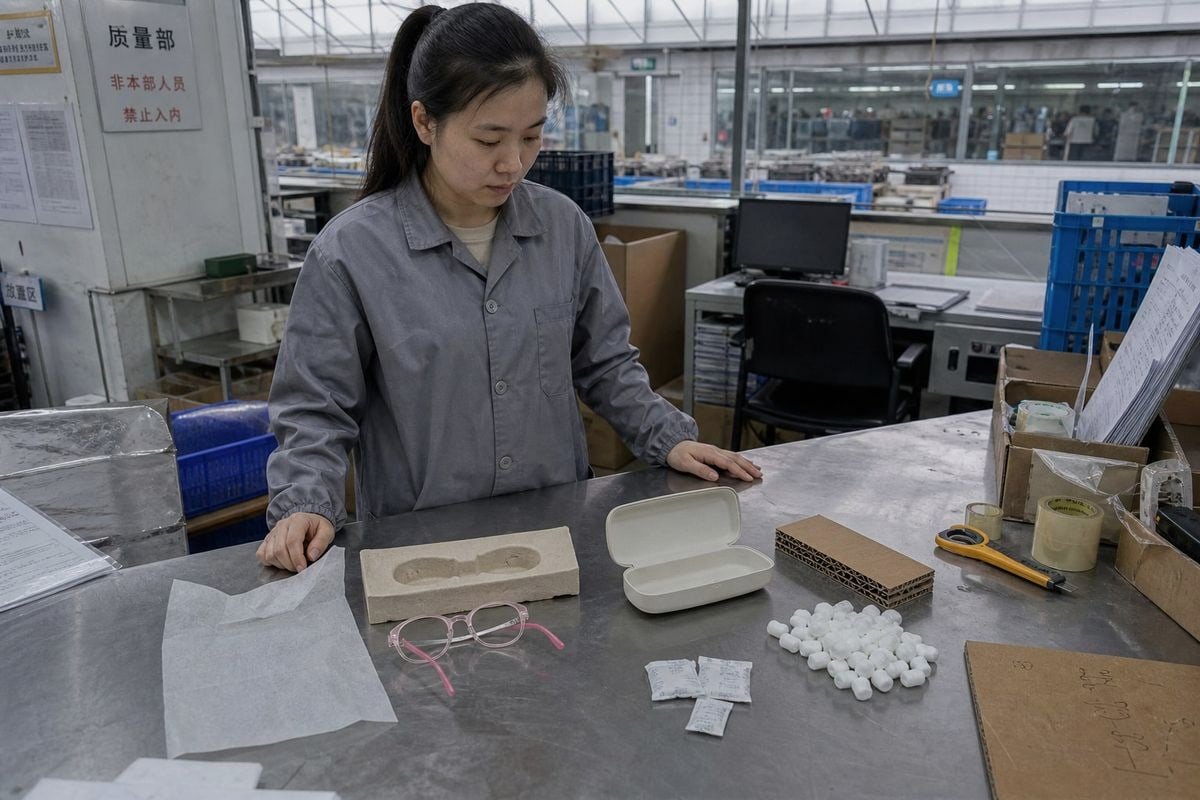
The core principle is simple: make the frame a rigid, immobilized unit inside a rigid outer box. Movement and external compression are the two main damage mechanisms. Everything you specify should attack one of those two.
The packaging hierarchy that works
The most defensible structure runs frame → protective wrap → hard case or rigid inner shell → cushioned small box → strong outer shipper. Each layer has one job. The wrap prevents abrasion. The hard case gives the frame a rigid boundary so nothing presses on the bridge or temples. The outer carton resists crushing under pallet stacks.
| Layer | Material to request | What it prevents |
|---|---|---|
| Frame wrap | Acid-free tissue or sealed polybag | Surface scratches, chemical reactions with packaging |
| Rigid shell | High-density EVA hard case or geometric-lock molded pulp cradle | Bending, crush transfer, frame collapse |
| Cushioning | Honeycomb paper or bubble wrap around the case | Shock from drops and vibration |
| Void fill | Air pillows, kraft paper, or custom foam inserts | Internal movement and rattle |
| Outer carton | Double-walled or 5-ply corrugated box with high edge-crush resistance | Stacking compression during bulk eyewear logistics |
| Climate control | Silica gel desiccant packets | Humidity damage and stickiness on rubberized or TPEE coatings |
Two details often get missed. First, ask for temporary bridge-reinforcement supports cut from recycled cardboard. These hold frame geometry on ultra-flexible children's materials so the bridge cannot warp under sustained pressure. Second, request tension-relief bands on the temples, which keep spring hinges in a neutral position and prevent hinge fatigue on long ocean transits. On our line, we add both for flexible TPEE-temple styles because those frames bend easily by design — that flexibility protects a child's face, but it also means the packaging must supply the rigidity the frame itself does not have. Many of our buyers now also request recyclable cushioning like molded pulp instead of plastic bubble wrap, and it performs just as well.
How can I test whether TR90 frames will hold their shape after repeated impacts in transit?
There is a real trade-off we weigh every time we develop a new kids style: TR90 memory plastic 1 recovers from bending beautifully, but repeated impacts under load behave very differently from a single flex test.
Test TR90 frames with ISTA 3A-certified drop and vibration sequences that simulate last-mile courier handling, then measure frame alignment before and after. Add repeated flex cycling on temples and bridge, plus heat exposure checks, since transit conditions combine impact, vibration, and temperature.
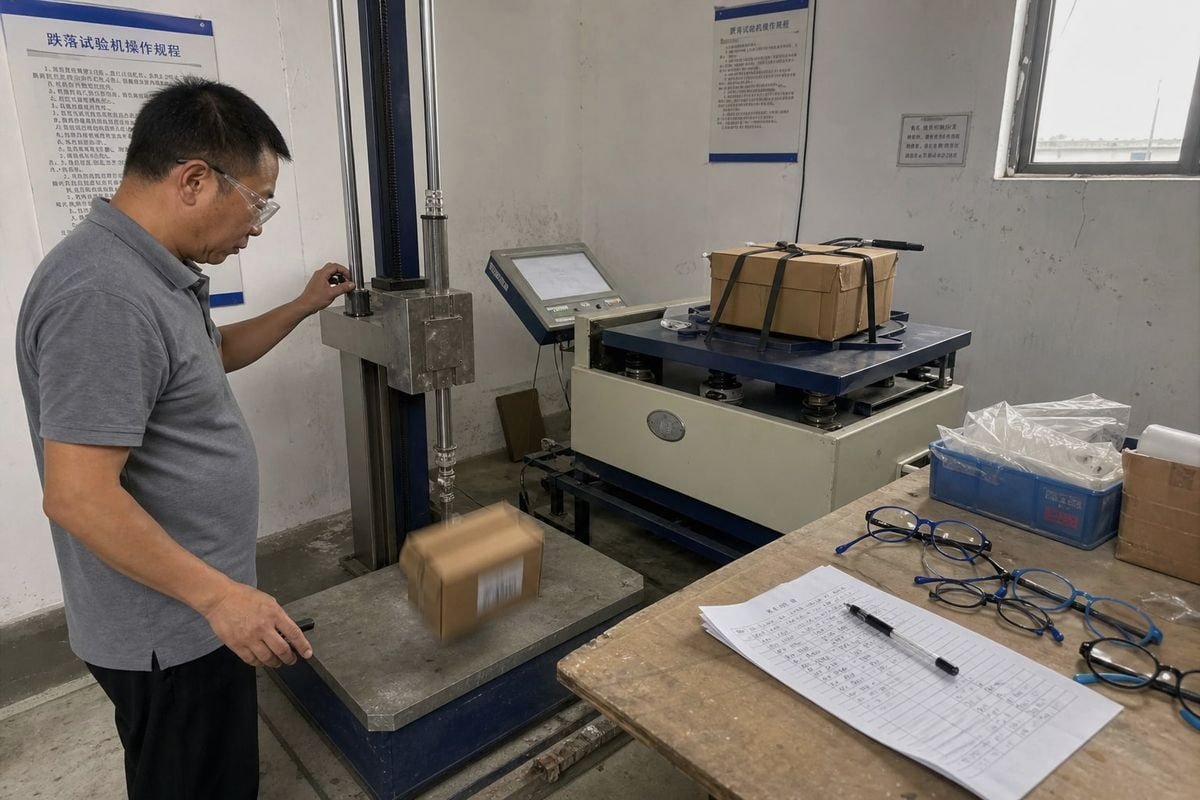
TR90 memory plastic is forgiving. That is why we build most of our children's optical frames from it. But a buyer once asked me, "If TR90 bounces back, why test at all?" The answer is that shipping damage rarely comes from one clean bend. It comes from thousands of small vibrations while the frame sits pressed against a case wall, or from a drop that drives a hinge screw into the frame front. Memory plastic cannot recover from a cracked hinge barrel or a lens popped out of its groove.
A practical test sequence
Here is the process we run before approving packaging for a new SKU:
- Pack production samples exactly as they will ship, including void fill packaging and inner cases.
- Run an ISTA 3A-calibrated sequence: multiple drops on corners, edges, and faces, plus random vibration that mimics high-frequency last-mile courier handling.
- Unpack and check frame alignment on a flat surface — temples parallel, lenses on the same plane, no bridge twist.
- Flex-cycle the temples repeatedly to confirm the hinges and TPEE temple sections still return to position.
- Repeat the packed-shake test: if you shake the sealed box and hear the frame move, the packaging fails, regardless of the drop results.
We also run a heat check. TR90 tolerates warmth better than acetate, but a container crossing the equator gets hot, and warped acetate demo lenses 2 can distort a TR90 frame front. Testing the whole packed unit, not just the frame, is what catches these combined risks. When a sample fails, we adjust the insert geometry first, then retest — cheaper than changing the frame mold.
Which quality control checkpoints should I add before export to catch deformation risks early?
The hardest lesson from fifteen years of eyewear production is this: shipping damage claims often start on the workshop floor, not in the container.
Add checkpoints for post-assembly frame alignment, hinge tension, individual wrap and case fit, an internal rattle test on sealed boxes, carton compression inspection, and pre-seal photography. Also verify storage conditions, since heat and stacked weight can warp frames before they ever ship.
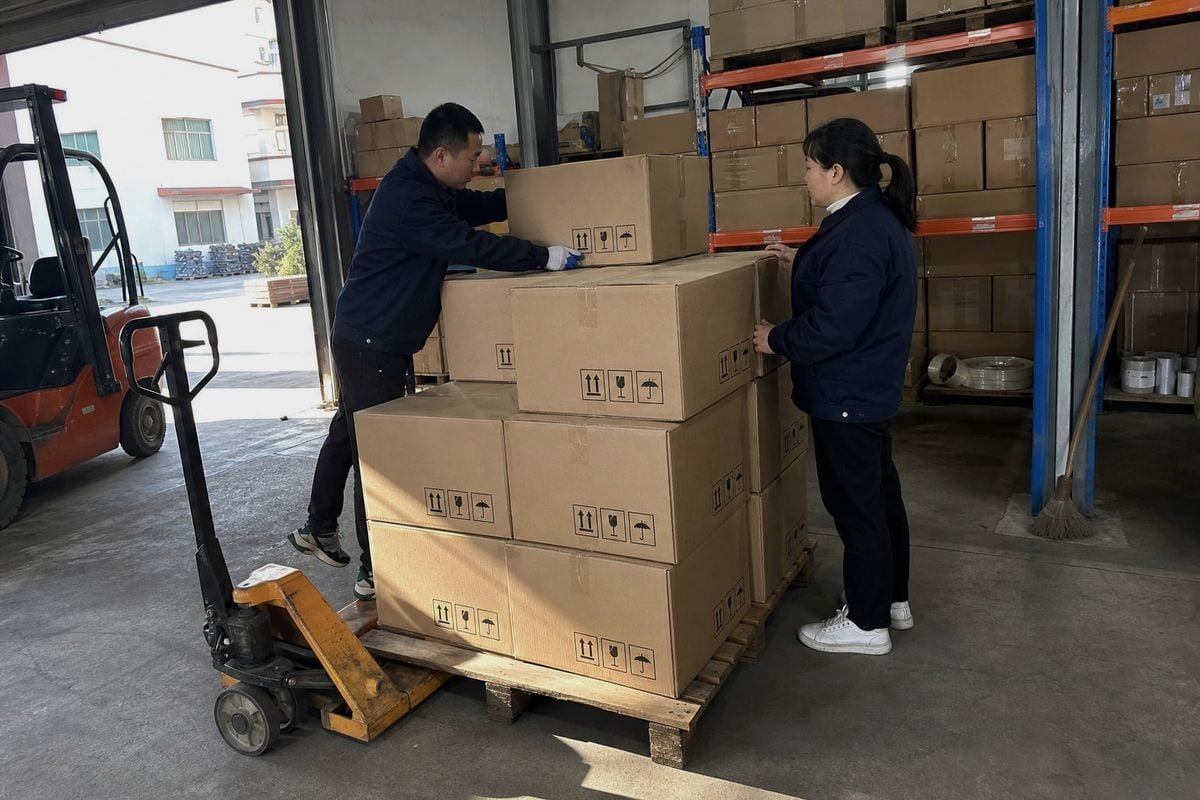
Clean and inspect every frame before packing. This matters for a reason beyond quality assurance standards 3: hidden factory damage gets blamed on shipping later, and then nobody can tell where responsibility sits. A photograph of each packed batch before sealing protects both sides in a claim.
Checkpoints that catch deformation risk
| Checkpoint | ماذا تفحص | لماذا هو مهم |
|---|---|---|
| Frame alignment | Temples parallel, no bridge twist, lenses seated | Frame alignment issues worsen under transit pressure |
| Hinge and temple check | Spring hinges neutral, TPEE temple tips undamaged | Stressed hinges fatigue during long transits |
| Fold and prep | Temples folded correctly, add-ons removed | Prevents pressure points inside the case |
| Case fit | Frame sits snug in the hard case with no rattle | Internal movement causes impact and bending |
| Shake test | Sealed inner box makes no sound when shaken | Confirms void fill has eliminated all movement |
| Carton spec | Double-walled corrugated mailer boxes, seams fully taped | Weak cartons transfer stacking loads to frames |
| Storage audit | No heavy cartons stacked on eyewear stock, no heat exposure | Compression and heat warp frames pre-shipment |
| Photo record | Image of packed unit before sealing | Supports damage claims and traceability |
In our 5S-managed workshop, we treat the shake test as a hard gate. Any box that rattles goes back for repacking, no exceptions. We also cap stacking height in the warehouse, because compression can warp frames even before shipping — a risk many buyers never think to ask about. If your supplier cannot describe their storage stacking rules, that is a gap worth probing. Finally, standardize carton sizes across SKUs where possible. Consistent cartons make void fill predictable, and predictable packing is what keeps damage rates low across thousands of units in bulk eyewear logistics.
How do I choose a supplier whose frame materials and packaging design already prevent crush damage?
When a Japanese kids brand audited us last year, their first questions were not about price. They asked what our frames were made of and how we packed them — in that order.
Choose a supplier with proven flexible-material expertise in TR90 and TPEE, per-unit protective hard cases or molded inserts as standard, double-walled export cartons, documented drop-test validation, and full OEM packaging support. Ask for their damage-rate history and a packed sample before committing.
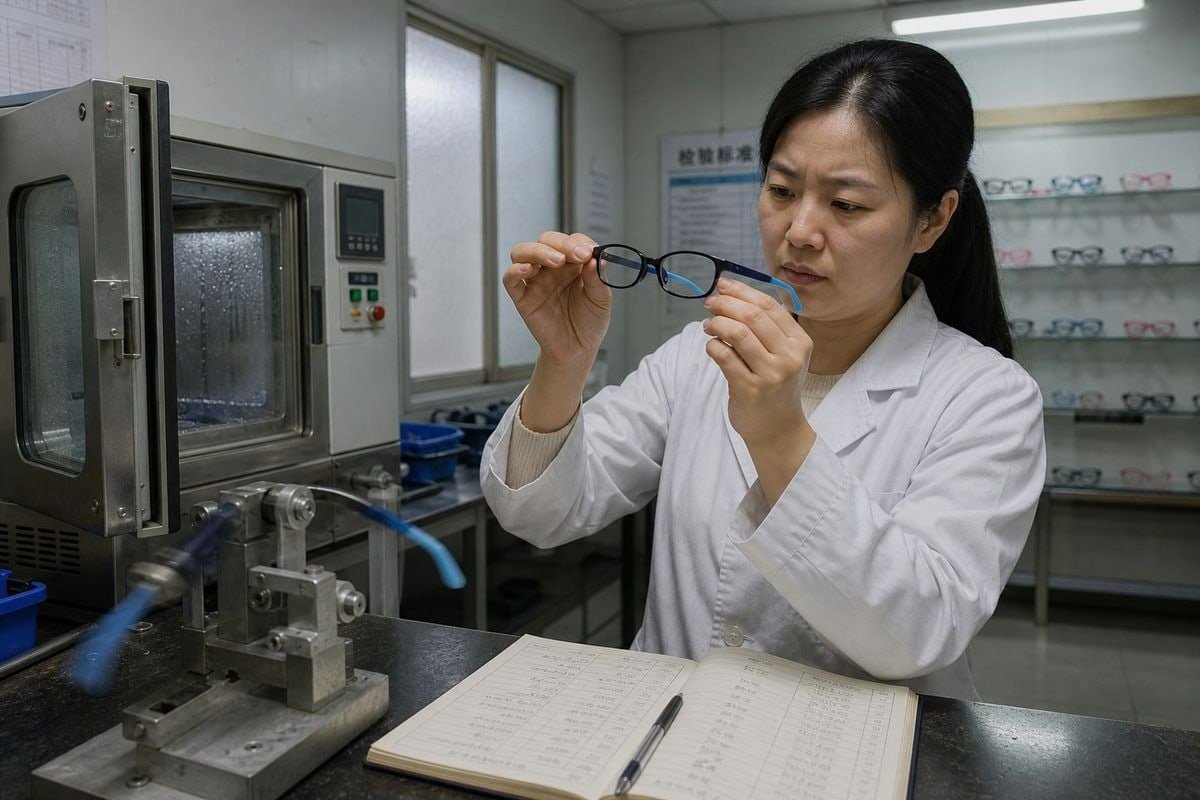
Material choice is your first line of defense, before any packaging is added. Thin metal frames bend easily and demand fixed packaging with anti-shake fill. Acetate looks premium but warps under heat. TR90 memory plastic with TPEE temples gives you a frame that flexes and recovers, which means the packaging carries less of the burden. At our factory, we chose these materials for child safety and comfort first, but the shipping durability is a genuine second benefit. A frame that survives a toddler will survive a courier van more often than not — as long as the packaging removes sustained pressure.
Questions that separate real suppliers from resellers
Ask these directly:
- What is your standard inner protection? The answer should be a hard case, geometric-lock molded pulp cradle, or custom foam — never "bubble wrap only."
- Can you show packaging test records? Look for ISTA drop testing or an equivalent documented drop-and-vibration protocol.
- Do you design packaging per SKU? Kids frames vary in size; one generic insert cannot immobilize an 39mm toddler frame and a 48mm teen frame equally well.
- Can you support retail-ready branded packaging that still protects? Full OEM/ODM support should cover custom colors, logos, and packaging together, so protection and presentation are designed as one system. For children's eyewear specifically, the retail packaging should also open safely, with no sharp edges — soft pouches are fine for a child's daily storage, but rigid packaging must do the shipping work.
- How do you protect temples specifically? Temple arm protection — tension-relief bands, folded-position inserts — is a small detail that signals real experience.
One buyer objection I hear often: "Hard cases add cost and bulk — can't we just use padded mailers?" For storage at home, soft is fine. For transit, the cautious guidance is consistent: rigid wins, because a mailer transfers stacking pressure straight to the frame. With around 800 existing styles, we can usually match a buyer to a frame-and-packaging combination that is already validated, so they test the market without new mold or packaging development risk. That is what a long-term manufacturing partner should offer: shock absorption materials, packaging design, and material expertise as one integrated answer, not three separate line items.
الخلاصة
Deformed frames destroy margins and trust. Rigid inner cases, immobilizing void fill, double-walled cartons, tested with ISTA-style protocols, and disciplined QC checkpoints keep kids optical frames arriving straight and sellable.
ملاحظات ختامية
1. Technical reference for the polyamide material properties that provide flexibility and durability in optical frames. ↩︎
2. Scientific overview of the acetate material commonly used in eyewear and its sensitivity to environmental factors. ↩︎
3. Global authority providing standards for quality management and manufacturing consistency in industrial production. ↩︎
مقالات أخرى قد تعجبك
أغسطس 5, 2026
Bio-Based vs Regular Cellulose Acetate: What's the Difference for Kids' Frames?
أغسطس 5, 2026
How Recyclable Are Kids' Optical Frame Materials, and What Eco-Friendly Alternatives Exist?
أغسطس 5, 2026
Do Kids Optical Frames Whiten or Age in Storage, and How to Control Warehouse Conditions?
هل تبحث عن شريك موثوق به للنظارات للأطفال؟
استكشف أكثر من 800 نمط جاهز ودعم OEM/ODM كامل مصمم خصيصًا لعلامتك التجارية.
اتصل بنا English
  Español de México
  Deutsch
  Français
  日本語
日本語  العربية
  Português do Brasil