How to Develop a Slow-Moving Item Exchange Policy for Kids’ Optical Frames?

A slow-moving item exchange policy 1 for kids’ optical frames saved one of our importer clients from writing off an entire season of stock. Dead stock 2 quietly eats margin. Our Taizhou production line sees this pattern every year.
To develop a slow-moving item exchange policy for kids’ optical frames, define slow-moving with SKU-level aging data, negotiate credit-based exchange terms with your manufacturer, select replacement styles from existing catalog molds, and confirm quality and packaging standards in writing before any swap ships.
That is the short version. The details decide whether the policy protects your cash flow or just moves the problem around. Let me walk you through each step, drawing on what actually works between factories and eyewear brands.
How can I set clear criteria for identifying slow-moving kids' optical frames before they become dead stock?
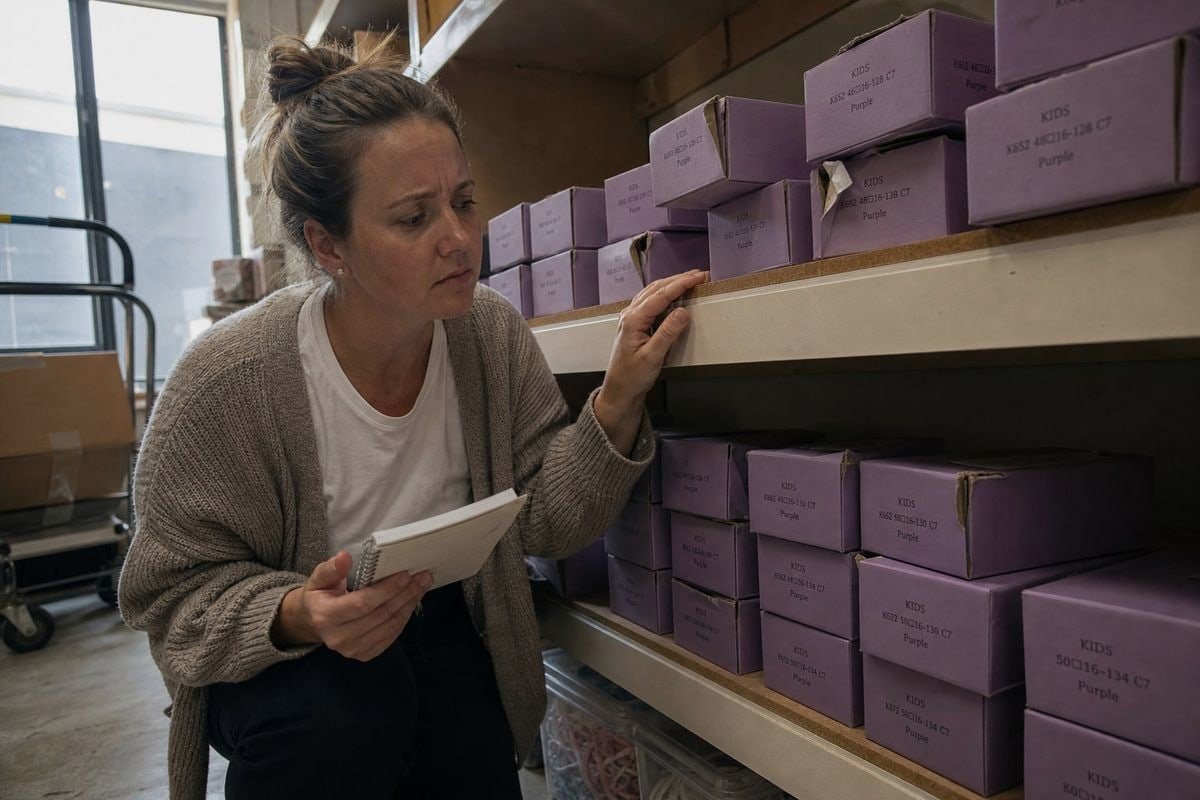
A buyer from Australia once emailed me a photo of a shelf full of small-size purple frames, two years old, still boxed. She asked what went wrong. My answer: nobody defined slow-moving until it was too late.
Set clear criteria by tracking SKU-level sell-through rates and defining slow-moving as any kids' frame with under 30–40% sell-through after 90–120 days, or zero sales in 60 days. Run a monthly aging inventory report and flag frames before they cross 180 days.
Kids' frames age faster than adult lines. Children's eyewear follows short trend cycles. Colors, cartoon-adjacent styles, and seasonal shapes can go cold in one school year. So your threshold for pediatric optical frames 3 should be shorter than for adult stock. Many of our brand clients use 90–120 days as the trigger, while their adult lines use 180 days.
Use data, not gut feeling
جيد optical inventory management 4 starts with SKU-level tracking. If you only track by collection or category, one strong seller can hide five dead SKUs beneath it. Track each frame by size, color, and style code. Then review three numbers every month:
| مقياس | ما يخبرك به | Warning level for kids' frames |
|---|---|---|
| معدل البيع | Units sold vs. units received | Below 30–40% at 90–120 days |
| Days on hand | How long stock has been sitting | Over 120 days with no sales trend |
| Inventory turnover rate | How often stock cycles per year | Below 2x annually for a kids' line |
Segment before you flag
Not every slow SKU is a failure. In our experience shipping children's eyewear to 20+ countries, some slow movers are structural, not stylistic. A 41mm extra-small frame may sell slowly but serve a real segment of toddlers. Separate your flagged frames into three groups: wrong style (candidates for exchange), wrong size depth (candidates for rebalancing), and niche-but-needed (keep a minimal level). Only the first two groups should enter your exchange pipeline. This segmentation is what turns dead stock management 5 from panic markdowns into a controlled process.
Also, document everything. When you later ask your supplier for an exchange, an objective aging inventory report is your strongest negotiating evidence. Screenshots of your system beat verbal complaints every time.
What exchange terms should I negotiate with my manufacturer to protect both cash flow and margins?
There is a trade-off I weigh with every partner brand: generous exchange terms build trust, but open-ended terms punish the factory and eventually raise everyone's prices. The best agreements balance both sides honestly.
Negotiate a credit-note model instead of cash refunds, an exchange cap of 10–20% of the original order value, a modest restocking fee of 5–15%, and eligibility limited to unworn frames with intact demo lenses. Request tiered terms that improve with reorder volume.

Frame vendor programs vary widely, so anchor the conversation with a clear structure. Here is the framework we offer our long-term buyers, and it maps closely to what healthy frame vendor programs look like across the industry:
| المصطلح | Weak position | Balanced position | لماذا هو مهم |
|---|---|---|---|
| Reimbursement type | Cash refund | Store credit toward new stock | Credit protects supplier cash flow and keeps you stocked |
| Exchange cap | Unlimited | 10–20% of original order | Caps prevent the factory from absorbing your forecasting risk |
| Restocking fees | 25%+ | 5–15%, or waived for reorders | Covers inspection and repacking without punishing you |
| Eligibility window | Open-ended | 6–12 months from delivery | Kids' styles rotate fast; old molds lose relevance |
| Approval process | Verbal requests | Documented workflow with aging data | Objective proof reduces disputes on both sides |
Why credit beats cash for both sides
Some buyers push hard for cash refunds. I understand the instinct. But a credit note 6 usually gets you better terms elsewhere: a lower or waived restocking fee, a higher cap, or freight support. From the factory side, credit means the relationship continues and the money stays in productive stock. From your side, it converts frozen inventory into fresh, sellable children's eyewear without new capital outlay. That directly supports optical practice profitability if you sell to opticians, because your downstream customers see fresher assortments too.
Ask about tiered and trial terms
Two extras are worth negotiating. First, tiered terms: high-volume or long-standing partners deserve higher exchange caps and reduced restocking fees. We structure this deliberately, because loyalty should be rewarded with flexibility, not just price. Second, a try-on or trial allowance for new collections: a more lenient first-order exchange window encourages you to test bolder styles without betting the season on them. Some buyers also raise consignment frames as an option. Full consignment is rare in kids' eyewear manufacturing because of sizing complexity, but a trial allowance achieves much of the same risk reduction with far less administrative friction.
One caution: a strict no-exchange supplier is not automatically the enemy, and an ultra-generous one is not automatically your friend. Terms that are too loose often hide inflated unit prices. Judge the whole package.
How do I choose replacement styles from my supplier's catalog without ordering new molds?
When we were developing our current catalog, we made a deliberate decision to maintain around 800 existing styles. The reason is exactly this scenario: a brand exchanging slow movers should never be forced into mold investment just to refresh stock.
Choose replacements by matching your best-sellers' size and shape profile against the supplier's existing catalog, prioritizing proven molds in new colorways. Request sales-rank data from your manufacturer, order small mixed quantities, and use custom colors or logos on stock molds instead of new tooling.
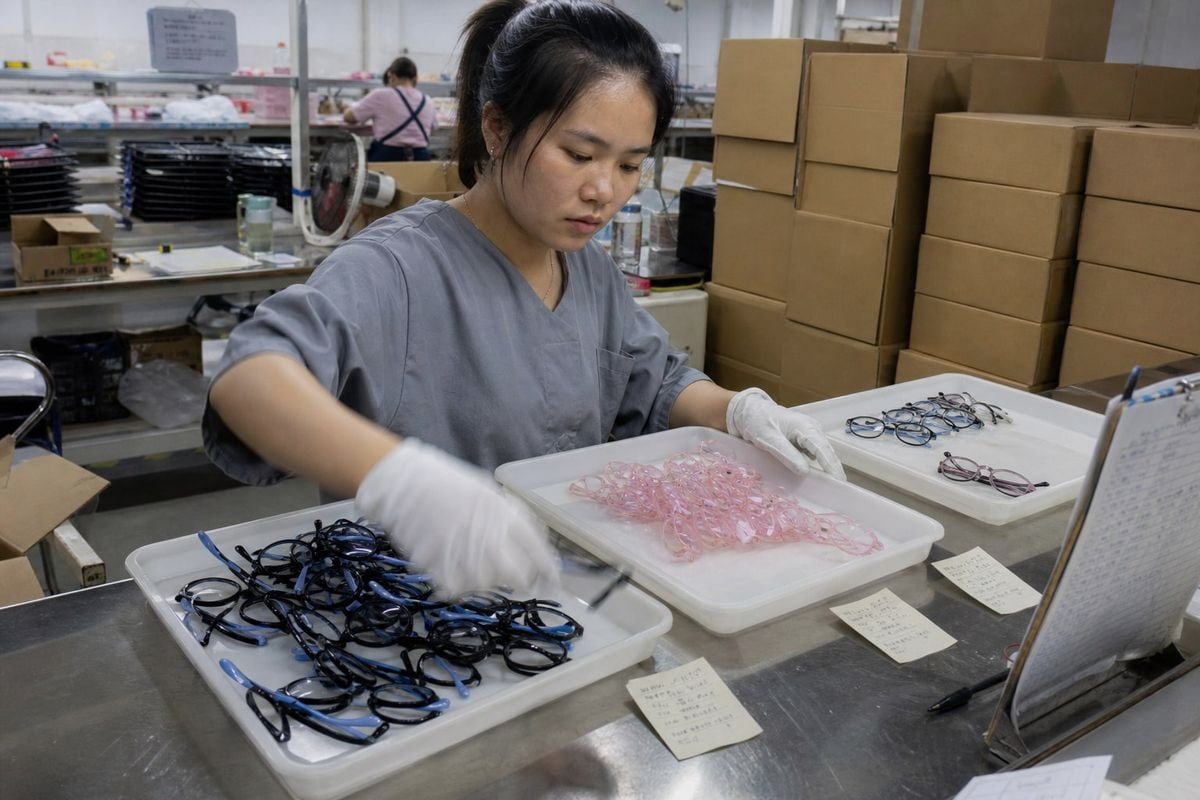
New molds cost thousands of dollars and add weeks of lead time. For an exchange, that defeats the purpose. The smarter path is working within the supplier's existing tooling. Here is the process I recommend, in order:
- Profile your winners first. Before opening the catalog, list the lens width, bridge size, temple length, and material of your top three sellers. Fit drives repurchase in pediatric optical frames far more than fashion does.
- Ask for the supplier's sales-rank data. A factory shipping to many markets knows which molds reorder consistently. When buyers ask us, we share which TR90 kids optical frames and TPEE-temple styles perform across regions. That data de-risks your selection.
- Match to your market, not the whole catalog. A rounded rectangular frame in glossy black with flexible navy TPEE temples suits a sporty, unisex positioning. A translucent blush-pink acetate-look frame with pastel temple tips suits a softer, feminine range. Pick replacements that fill gaps in your assortment rather than duplicating what already sells.
- Refresh with colorways, not tooling. The same proven mold in two or three new colors behaves like a new product on shelf. Custom colors on stock molds cost a fraction of new mold development.
- Order mixed, order small. Use the exchange credit across four to six styles in modest quantities. This restores a healthy inventory turnover rate instead of creating the next slow mover.
Balance flexibility and durability in the mix
For active kids, prioritize flexible-material construction. Frames combining a rigid front with bendable TPEE or silicone temple tips survive playground abuse and reassure parents. Include at least one such style in every exchange selection. Durability-led frames tend to have longer shelf lives than trend-led ones, which stabilizes your future eyewear return policy exposure as well.
What quality and packaging standards should I confirm before exchanging slow-moving inventory for new frames?
A lesson our QC team learned early in our 15 years: exchanges fail at inspection more often than at negotiation. Both directions of the swap need agreed standards, or goodwill evaporates at the receiving dock.
Confirm that returned frames must be unworn, unmodified, with intact demo lenses and original packaging, and that replacement frames meet written standards for material safety, hinge function, surface finish, and retail-ready packaging. Put inspection criteria and rejection procedures in the exchange agreement itself.

An exchange is really two shipments, and each needs its own checklist. The frames you send back must be resalable or at least reworkable. The frames you receive must meet the same bar as a fresh order. Skipping either side creates disputes.
Standards for the frames you return
Suppliers can only credit stock they can do something with. Expect these conditions, and audit your stock against them before shipping:
| Condition | معيار | Why the factory requires it |
|---|---|---|
| Wear state | Unworn, no lens fitting marks | Fitted or worn frames cannot be restocked |
| Demo lenses | Intact and unscratched | Missing demos require rework labor |
| التعبئة والتغليف | Original bags, boxes, and tags | Retail-ready presentation must be restorable |
| Modifications | None — no adjusted temples or drilled parts | Altered frames fail QC for resale |
| Prescription lenses | Excluded entirely | Custom lenses make frames final-sale by nature |
Frames that fail these checks are not worthless. Ask about sustainability routes: donation programs or material recycling for non-resalable stock, sometimes with a small credit or documentation for tax purposes. That keeps dead stock management responsible instead of wasteful.
Standards for the replacement frames
Hold replacements to full new-order standards. In our 5S-managed workshop, exchange orders pass the same inspection as regular production: material safety documentation 7 for TPEE and TR90 components, hinge cycle checks, surface finish inspection, and temple flexibility verification. Confirm packaging specifications in writing too — polybags, branded boxes, cleaning cloths, barcode labels, and carton markings. If your original order had custom logos or branded packaging, the replacements should match exactly, so the new stock slots straight into your retail channel.
Finally, agree on the inspection and dispute process before anything ships. Define who inspects, within how many days of arrival, what photographic evidence is required, and how rejected units are handled. Clear procedure beats good intentions.
الخلاصة
Slow-moving kids' frames drain cash quietly until they become dead stock. A clear exchange policy — data-driven criteria, credit-based terms, catalog-based replacements, and written quality standards — turns aging inventory into a second chance.
ملاحظات ختامية
1. Discusses supplier collaboration and flexible return policies for reducing dead stock. ↩︎
2. Replaced HTTP 404 with a working, authoritative article from NetSuite defining dead stock. ↩︎
3. Offers guidelines on fitting glasses for children, including frame and lens considerations. ↩︎
4. Offers best practices for managing inventory specifically in optical practices. ↩︎
5. Replaced HTTP 404 with a working, authoritative article from Sage discussing dead stock management and avoidance. ↩︎
6. Provides a comprehensive definition and explanation of a credit note in business transactions. ↩︎
7. Replaced HTTP 404 with a working, authoritative OSHA (.gov) page on Safety Data Sheets (SDSs), which are the current form of material safety documentation. ↩︎
مقالات أخرى قد تعجبك
أغسطس 5, 2026
Bio-Based vs Regular Cellulose Acetate: What's the Difference for Kids' Frames?

أغسطس 5, 2026
How Recyclable Are Kids' Optical Frame Materials, and What Eco-Friendly Alternatives Exist?
أغسطس 5, 2026
Do Kids Optical Frames Whiten or Age in Storage, and How to Control Warehouse Conditions?
هل تبحث عن شريك موثوق به للنظارات للأطفال؟
استكشف أكثر من 800 نمط جاهز ودعم OEM/ODM كامل مصمم خصيصًا لعلامتك التجارية.
اتصل بنا English
  Español de México
  Deutsch
  Français
  日本語
日本語  العربية
  Português do Brasil