هل تتشوه نظارات الأطفال المصنوعة من TPEE في سيارة ساخنة؟ ما هي حدود مقاومتها للحرارة؟
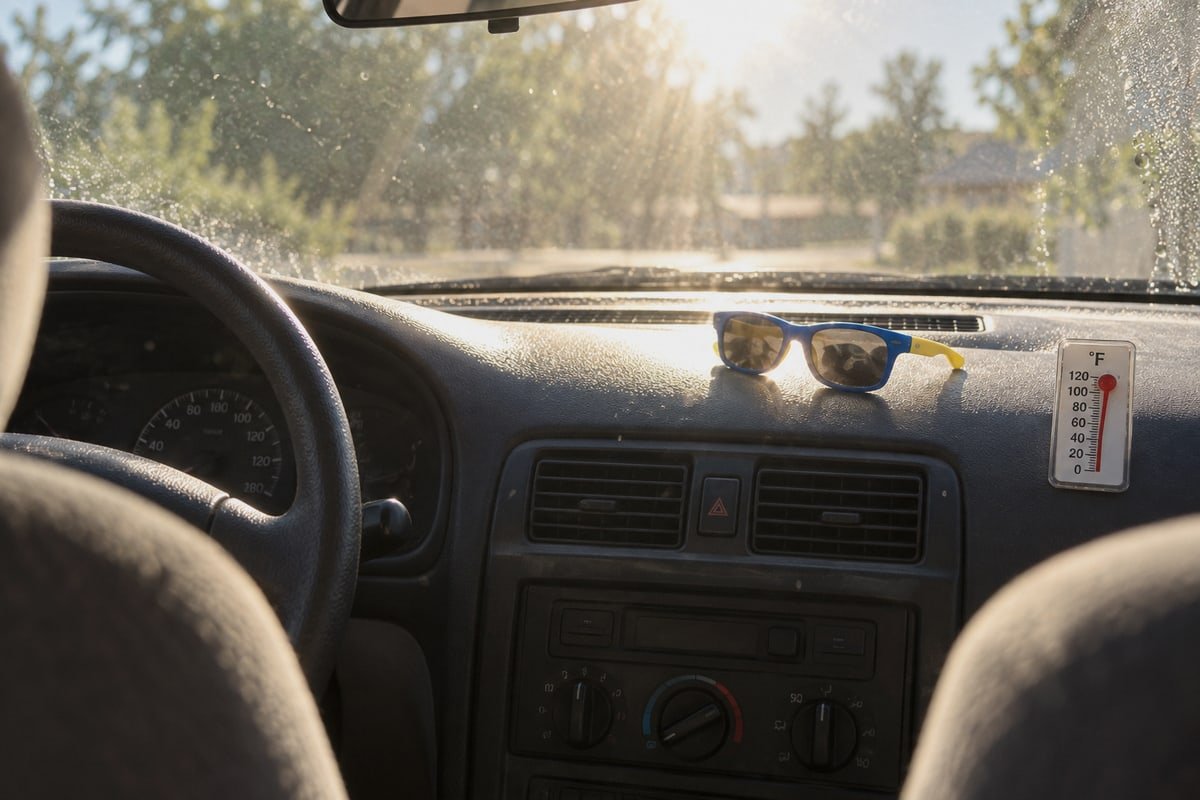
كل صيف، يجد أحد الوالدين في مكان ما نظارات أطفال من TPEE منحنية على لوحة القيادة الساخنة. يصل هذا الخوف إلى خط إنتاج Taizhou لدينا كسؤال من مشترٍ، لذلك نأخذه على محمل الجد.
نظارات الأطفال المصنوعة من مادة TPEE لن تذوب في سيارة ساخنة، لأن مادة TPEE تذوب عند 180-220 درجة مئوية بينما تصل درجات الحرارة القصوى داخل السيارة إلى حوالي 90 درجة مئوية. ومع ذلك، تبدأ بعض درجات مادة TPEE في التلين حول 70 درجة مئوية، لذا فإن التعرض المطول يمكن أن يسبب تشوهًا مؤقتًا، أو عدسات مفكوكة، أو ثباتًا دائمًا تحت الضغط.
هذا الجواب المختصر يخفي الكثير من التفاصيل. السؤال الحقيقي ليس ما إذا كانت الإطارات تذوب. إنه يتعلق بمكان هامش الأمان، وكيف يمكنك تأكيده قبل أن تطلب آلاف الأزواج. أدناه، سأستعرض الاختبارات وحدود درجات الحرارة ومقارنات المواد والأسئلة التي سأطرحها على أي مورد.
كيف يمكنني اختبار ما إذا كانت إطارات TPEE ستحافظ على شكلها في حرارة الصيف الشديدة؟
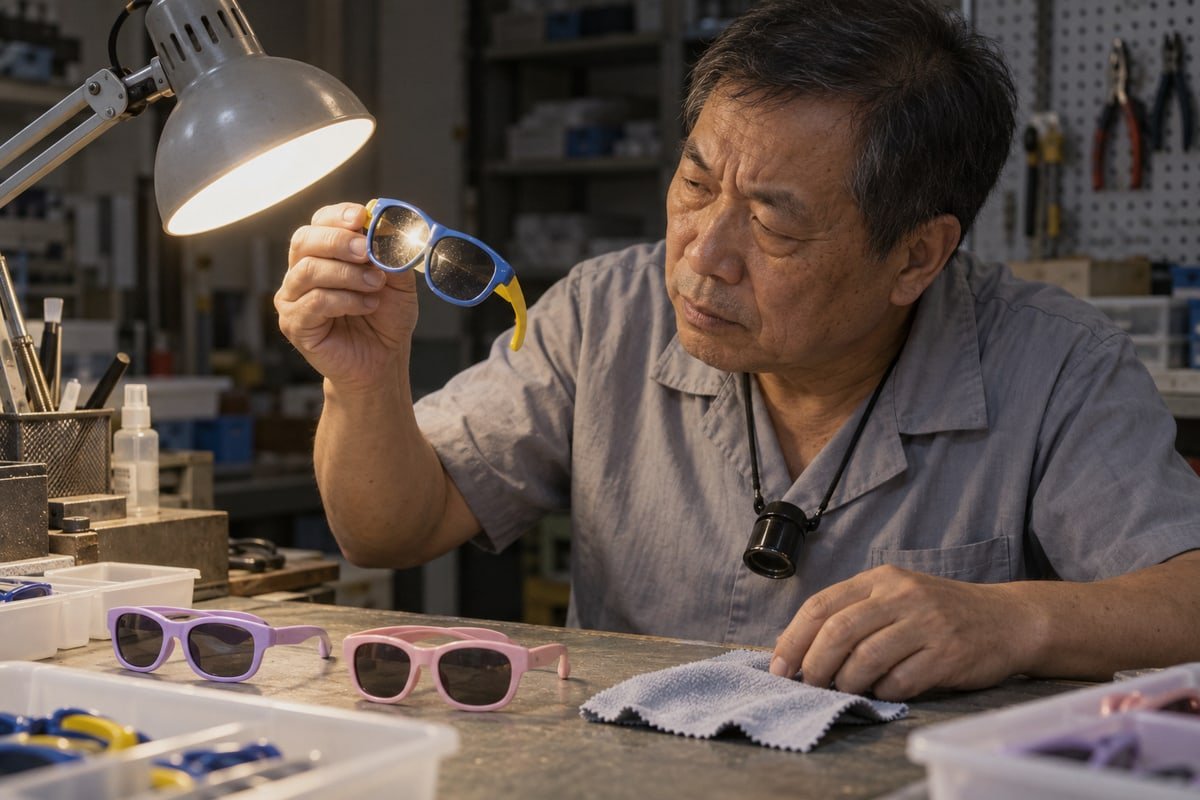
يحتفظ أحد مفتشي مراقبة الجودة لدينا بفرن صغير بجوار طاولة ورشة عمل 5S. قبل شحن تصميم جديد لمعبد TPEE، يقضي فترة ما بعد الظهيرة هناك.
اختبر إطارات TPEE عن طريق تسخينها في فرن متحكم فيه عند 70 درجة مئوية و 80 درجة مئوية و 90 درجة مئوية لمدة ساعتين إلى أربع ساعات لكل منها، ثم قياس انتشار الصدغ وعرض الجسر واحتفاظ العدسة بعد التبريد. كرر الدورة عدة مرات وحمل عينة تحت الوزن للتحقق من مجموعة الضغط الدائمة.
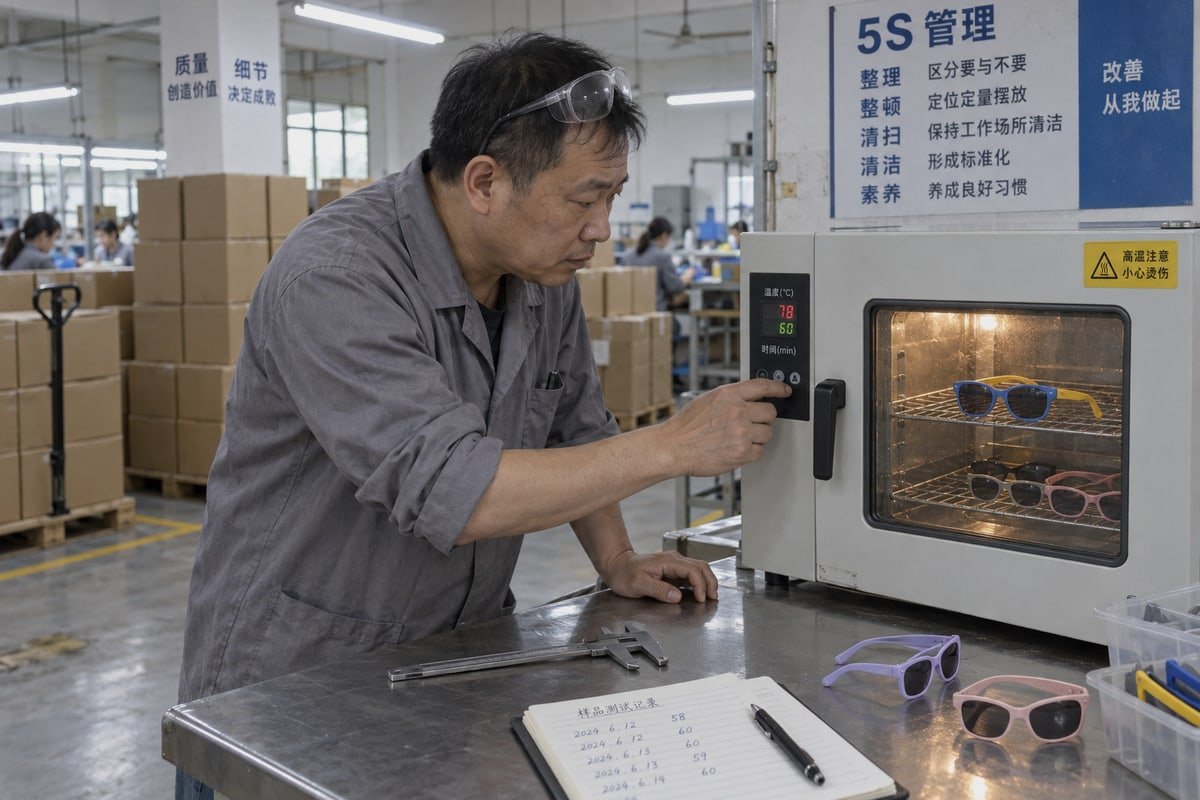
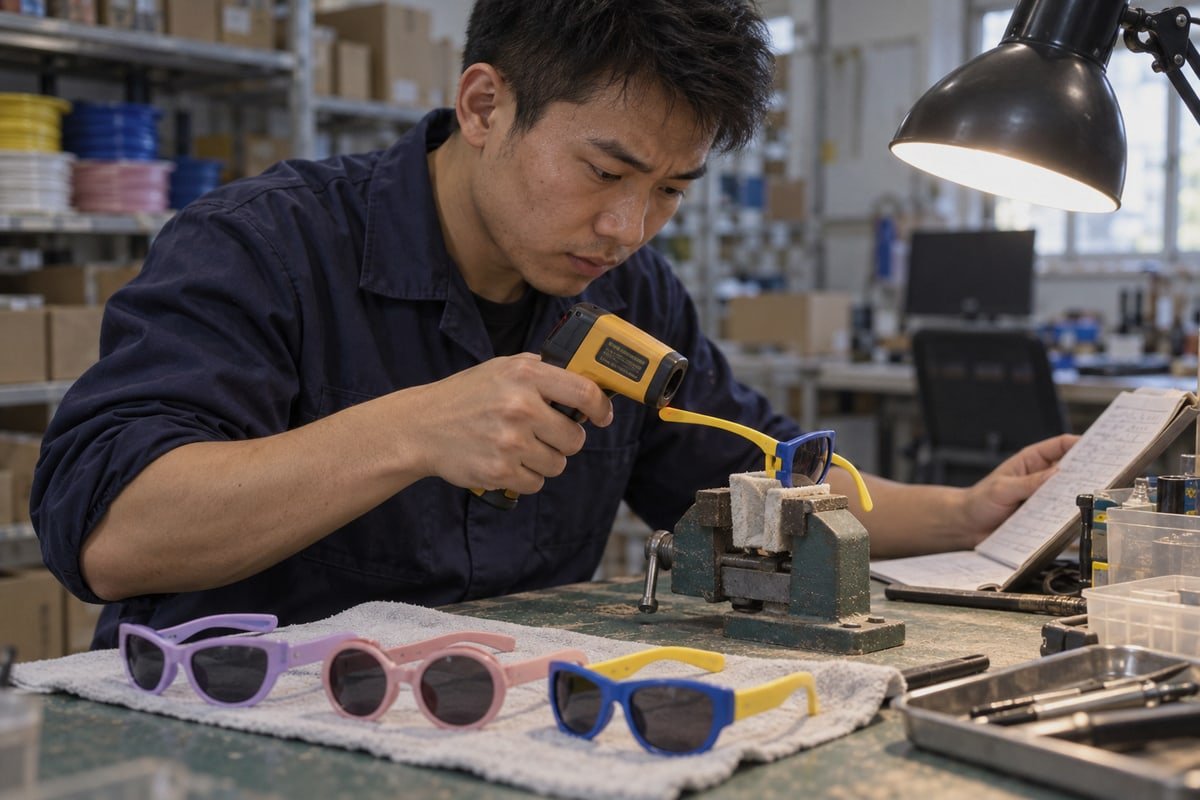
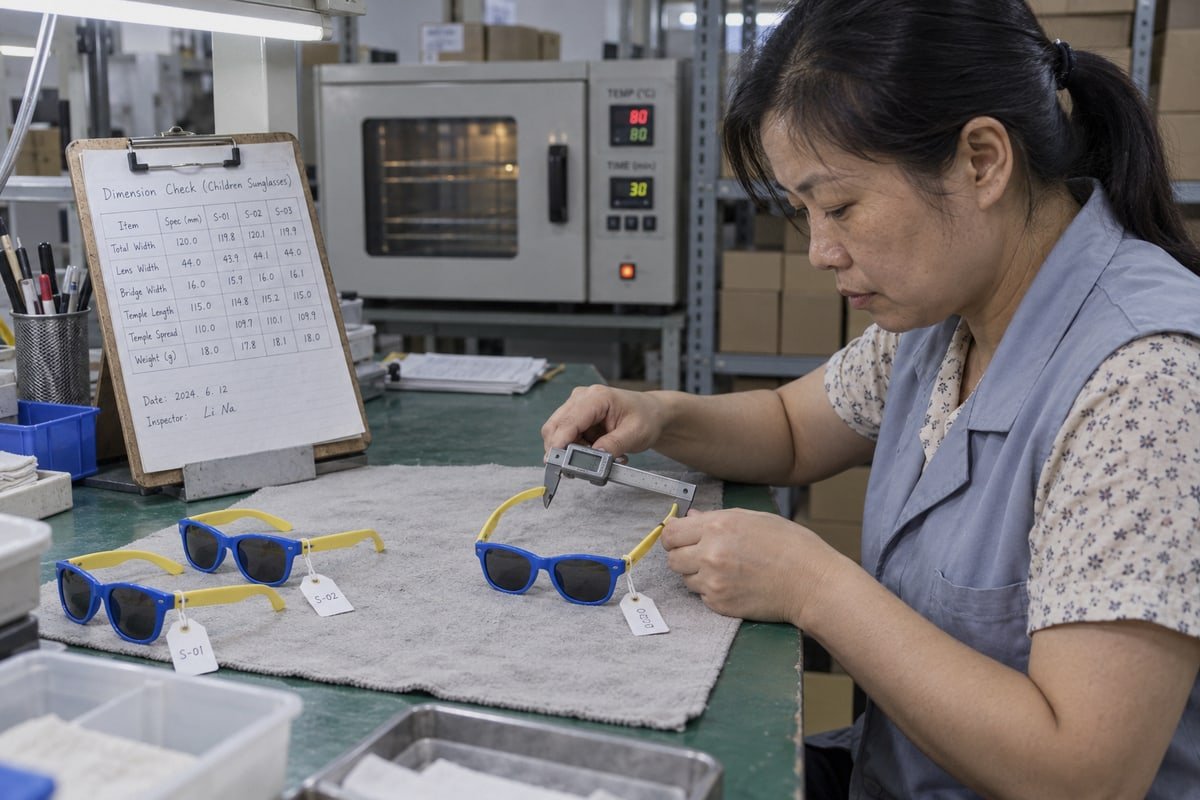
لا تحتاج إلى مختبر مواد لإجراء فحص ذي مغزى. تحتاج إلى فرن صغير مع ترموستات موثوق به، ومجموعة من الفرجار، ومصباح ساطع، وعينات كافية لتوفير بضع عينات. إليك العملية التي أوصي بها للمشترين الذين يريدون دليلهم الخاص قبل طلب بالجملة.
محاكاة سيارة ساخنة بخمس خطوات يمكنك تشغيلها على العينات
- قم بتكييف العينات في درجة حرارة الغرفة لمدة 24 ساعة. سجل القياسات الأساسية: تباعد المعبد عند الأطراف، وعرض الجسر، وعمق تثبيت العدسة، وشد المفصلة.
- سخن مجموعة واحدة عند 70 درجة مئوية لمدة ساعتين. هذا يطابق درجة حرارة التشوه الحراري المدرجة لدرجة واحدة على الأقل من درجات TPEE، لذلك يكشف عن التليين المبكر في التركيبات الأضعف.
- سخن مجموعة ثانية عند 90 درجة مئوية لمدة أربع ساعات. هذه هي درجة الحرارة الداخلية القصوى الواقعية لسيارة متوقفة في شمس قوية، وهي أعلى بكثير من نقطة 60 درجة مئوية - 70 درجة مئوية حيث تفقد الأسيتات والبلاستيك القياسي شكله.
- برد كل عينة لمدة ساعة، ثم قم بالقياس مرة أخرى. قارن كل رقم بالقياس الأساسي.
- قم بتدوير مجموعة ثالثة خمس مرات بين فرن 90 درجة مئوية وغرفة 20 درجة مئوية. هذا يحاكي الصدمة الحرارية لنقل النظارات بين سيارة ساخنة ومنزل مكيف.
| ماذا تقيس | كيف تتحقق من ذلك | علامة تحذير |
|---|---|---|
| تباعد المعبد | فرجار عند أطراف المعبد، الإطار مستقر مفتوحًا | يزداد التباعد ولا يعود بعد التبريد |
| عرض جسر الأنف | فرجار عند أضيق نقطة داخلية | يفتح الجسر أو يغلق أكثر من شعرة |
| تثبيت العدسة | ضغط إبهام لطيف من خلف العدسة | تنقر العدسة أو تدور أو تخرج من الأخدود |
| ملمس المفصلة | افتح وأغلق عشر مرات | حركة فضفاضة أو رخوة أو خشنة |
| تشطيب السطح | مصباح ساطع بزاوية منخفضة | بقع باهتة أو ازدهار أو بقايا ضبابية |
أضف حمولة لالتقاط مجموعة الضغط
TPEE مادة ذاكرة. عادة ما تعود إلى شكلها المصبوب بمجرد أن تبرد. الاستثناء هو الضغط. إذا تم تثبيت إطار ملين تحت حقيبة ثقيلة، فقد يعاني مجموعة الضغط, ، وهذا التشوه دائم. لذا ضع وزنًا معتدلًا عبر عينة واحدة أثناء تشغيل 90 درجة مئوية. بعد التبريد، تحقق مما إذا كانت المعابد لا تزال متوازية.
لا تنس العدسات
الإطارات هي نصف القصة فقط. ابحث عن التشققات، التي تظهر كشقوق دقيقة تشبه الشبكة في طلاء العدسة عندما يتمدد الركيزة والطلاء بمعدلات مختلفة. تحقق عدسات مستقطبة 1 من وجود فقاعات أو رفع للحواف، لأن المرشحات المستقطبة والمواد اللاصقة أكثر حساسية للحرارة من الإطار نفسه. أخيرًا، امسح العدسة بقطعة قماش نظيفة. يمكن لخلطات TPEE ذات الجودة الأقل أن تنبعث منها غازات تحت الحرارة وتترك طبقة ضبابية تقاوم التنظيف العادي.
ما هو نطاق درجة الحرارة الذي يمكن أن تتحمله نظارات TPEE بأمان قبل أن تفقد جودتها؟
يشعر TPEE الأكثر نعومة بأنه ألطف على معابد الطفل الصغير، ومع ذلك فإن الدرجات الأكثر نعومة عادة ما تلين في وقت مبكر تحت الحرارة. نحن نزن هذا المقايضة على كل إطار أطفال نقوم بتطويره.
نظارات شمسية عالية الجودة من مادة TPEE تحافظ على قوتها الميكانيكية الكاملة ومرونتها حتى حوالي 120 درجة مئوية وتذوب فقط بين 180 درجة مئوية و 220 درجة مئوية. تتراوح نطاقات الخدمة طويلة الأجل تقريبًا من -40 درجة مئوية إلى 150 درجة مئوية حسب الدرجة، ولكن قيم انحراف الحرارة تتراوح من 43 درجة مئوية إلى 193 درجة مئوية، لذا فإن بعض التركيبات تصبح لينة بالقرب من 70 درجة مئوية.
غالبًا ما يرسل لي المشترون وثيقتين متعارضتين. أحدهما هو كتيب مورد يعد بنطاق خدمة من -70 درجة مئوية إلى 180 درجة مئوية. الآخر هو مراجعة مستهلك تقول إن إطار TPEE ناعم قد تمدد في سيارة متوقفة. كلاهما يمكن أن يكون صحيحًا. الفجوة بينهما تأتي من كيفية تغير خصائص مطاط البوليستر الحراري مع التركيبة، ومن الفرق بين عدة تأثيرات حرارية مميزة.
مادة واحدة، أرقام متعددة
| درجة الحرارة | ماذا يحدث لـ TPEE | من أين يأتي الرقم |
|---|---|---|
| تحت التجمد | درجة حرارة انتقال الزجاج 2 القطاعات اللينة تقع جيدًا تحت 0 درجة مئوية، لذا يظل الإطار قابلاً للانحناء في الشتاء | مراجع المواد التي تشير إلى نطاق خدمة منخفض من -40 درجة مئوية إلى -70 درجة مئوية |
| حوالي 43 درجة مئوية | أدنى قيمة انحراف حراري شوهدت في ورقة بيانات عامة تحت حمل متطلب | نطاق ورقة البيانات من 43 درجة مئوية إلى 193 درجة مئوية |
| حوالي 70 درجة مئوية | درجة حرارة التشوه الحراري المدرجة لدرجة معينة؛ يبدأ التليين المبكر | مرجع درجة فردية |
| حوالي 90 درجة مئوية | درجة الحرارة القصوى النموذجية داخل سيارة مغلقة في شمس قوية | قياسات السيارة الساخنة |
| Up to 120°C | Mechanical strength and flexibility 3 remain intact in good grades | Material property summaries |
| 150°C to 180°C | Upper end of long-term service depending on grade | Supplier claims, formulation-dependent |
| 180°C to 220°C | Melting point; the frame physically melts | Polymer data |
Notice where 90°C falls in that table. It is far below the melting point. It is also above the 70°C figure for the weaker grade. That overlap is the whole story. Whether your frames survive depends on which grade sits inside them.
Melting, softening, warping, and permanent set are four different things
Melting only happens near 200°C, so a car will never melt a TPEE frame. Softening starts near the heat-deflection temperature 4, and the frame becomes easier to bend. Warping is temporary shape loss while soft, and TPEE's memory usually reverses it on cooling. Permanent set happens when a soft frame is stressed, stretched, or crushed long enough that the polymer chains relax into a new position. Thin temples, slim nose bridges, and springy wraparound shapes reach that point sooner than chunky fronts.
Why "heat-resistant" is not "heatproof"
Some suppliers argue that TPEE survives automotive paint-bake ovens and retains performance better than TPU at high temperature, so a parked car cannot harm it. That is a fair point for a thick industrial part. It is not a guarantee for a two-millimeter temple tip on a child's frame. Thermal degradation, where the polymer actually breaks down, needs far more heat than a car provides. Dimensional stability under mild load is the real concern, and it depends on grade, wall thickness, and how long the heat lasts.
هل إطارات TPEE أكثر مقاومة للحرارة من إطارات TR90 أو البلاستيك العادي للنظارات الشمسية؟
A procurement manager from Australia once asked me why her rubber-coated frames warped while our TR90 samples survived the same courier van. That question deserves a careful comparison.
إطارات TPEE تقاوم الحرارة بشكل أفضل من الأسيتات والبلاستيك القياسي، والتي تلين عند 60 درجة مئوية - 70 درجة مئوية، وتحافظ على الذاكرة الشكلية بشكل أفضل من TPU. تحتفظ TR90 بثبات الأبعاد الصلب بشكل أفضل قليلاً عند درجات حرارة السيارة القصوى، وهذا هو السبب في أن واجهات TR90 مع معابد TPEE تجمع بين نقاط قوة كليهما.
| المواد | Behavior near 90°C | المرونة ومقاومة الصدمات | Hot-car risk | Best role in kids' eyewear |
|---|---|---|---|---|
| TPEE | Softens in weaker grades, recovers shape on cooling, resists creep in good grades | Very high; bends flat without cracking | Low to moderate, grade-dependent | Temples, nose bridges, soft full frames for toddlers |
| TR90 | Stays rigid and stable; high heat tolerance for a nylon-based material | High; flexible but firmer than TPEE | منخفض | Fronts and optical frames that must hold lens alignment |
| TPU | Softens earlier than TPEE at elevated heat and can feel tacky | عالي جداً | معتدل | Budget soft frames and grips |
| بولي كربونات (PC) | Rigid and stable; used for shatterproof lenses | High impact resistance, little bend | Low for the frame, but lens coatings can craze | Lenses and rigid sport frames |
| Acetate and standard plastics | Begin to soften and lose shape at 60°C–70°C | Low; can snap under bending | مرتفع | Fashion adult frames, not active kids |
| Rubberized coatings | Coating can go soft or peel | Depends on the core | معتدلة إلى عالية | Grip zones only |
Why flexible does not mean heatproof
Many buyers assume a frame that bends flat must shrug off heat. That is a common mistake. Flexibility comes from a low glass transition temperature in the soft segments. Heat resistance comes from the hard crystalline segments and their melting point. TPEE happens to score well on both, which is why we use it so much. TPU has similar flexibility but weaker heat retention, so it drifts sooner. Acetate has neither advantage in a car.
لماذا نقوم بإقران واجهات TR90 مع معابد TPEE
Our two-tone square style, with a royal blue front and yellow temples, shows the logic. The front holds the lenses and needs dimensional stability, so TR90 does that job. The temples take the twisting, chewing, and sitting-on that children deliver, so TPEE handles flexible frame durability there. In a hot car, the rigid front resists movement while the soft temple can recover its shape after cooling.
Where the lenses fit in
TPEE has a higher coefficient of معاملات تمدد حراري 5 than polycarbonate. At peak heat, the frame can expand away from the lens and loosen the fit, which is one reason lenses pop out of cheap soft frames. A deep lens groove and a properly sized lens reduce that risk. Polarized filters and lens adhesives remain the most heat-sensitive parts of any pair, whichever frame material you choose.
ماذا يجب أن أسأل الشركة المصنعة الخاصة بي لتأكيد مقاومة الحرارة قبل تقديم طلب بالجملة؟
Years ago, we learned that a datasheet without a grade name is worth very little. Now we share the exact TPEE grade and its heat-deflection data with every bulk buyer.
اطلب من الشركة المصنعة اسم درجة TPEE الدقيق، ودرجة حرارة انحراف الحرارة تحت الحمل، ودرجة حرارة انتقال الزجاج، وتقرير اختبار التخزين الساخن عند 70 درجة مئوية - 90 درجة مئوية. قم أيضًا بتأكيد تحمل لاصق العدسة للحرارة، وحدود الفيلم المستقطب، وشهادة خلوه من BPA، وما إذا كانت معدلات تمدد الإطار والعدسة متطابقة.
The goal of these questions is not to trap a supplier. It is to find out whether they understand their own material. A factory that has worked with TPEE for years will answer quickly and show documents. A trading company will often pause and forward your email. That pause tells you a lot.
Questions about the raw material
| سؤال | تبدو الإجابة الجيدة كـ | A weak answer looks like |
|---|---|---|
| Which TPEE grade and supplier do you use? | A named grade with a datasheet attached | "Standard TPEE" or "high-quality TPEE" |
| What is the heat-deflection temperature under load? | A number with the test load and method stated | A single service range copied from marketing |
| Is the material BPA-free and does it meet food-grade safety standards? | Certificates from the resin supplier and third-party tests on the finished frame | A verbal yes with no paperwork |
| How does the grade handle thermal degradation during molding? | Controlled melt temperatures and dried resin, with scrap rate awareness | No clear process description |
The BPA-free material question matters more for toddlers than for older children, because young kids chew temple tips. Some buyers in Japan and Europe also ask whether the elastomer meets food-grade safety standards as an extra layer of reassurance. Good grades can, so ask.
Questions about the finished frame
Ask for a hot-storage test at 70°C and 90°C on your exact style, not on a random sample. Wall thickness changes results, so a chunky round frame like our blush-pink kids' model behaves differently from a slim lavender cat-eye. Ask how the lens groove was sized against the thermal expansion of the polycarbonate shatterproof lenses. Ask whether the polarized film supplier states a maximum storage temperature. And ask how many heat cycles the sample survived, because thermal shock across several seasons slowly reduces elastic recovery.
Questions about your program
If you are launching a new brand, ask whether you can start from existing tooling. Choosing from a large library of existing styles, in our case around 800, lets you test heat performance and market response without paying for molds first. Then confirm that custom colors, logos, lens options, and packaging can be added under full OEM/ODM support without changing the base material grade. Finally, request a care-label text about hot cars. Even the best frame benefits from a parent who knows to move it off the dashboard.
الخلاصة
TPEE kids sunglasses will not melt in a car, but heat can warp weak grades. Test the frames, pick a proven grade, and guide parents on storage.
هل أنت مهتم بتوريد المنتجات المذكورة في هذه المقالة؟ انظر التفاصيل واطلب عرض أسعار هنا:
ملاحظات ختامية
1. International standard covering requirements for sunglasses and polarized filters. ↩︎
2. Scientific resource explaining glass transition temperature in polymer science. ↩︎
3. Authoritative scientific definition of mechanical strength and material flexibility. ↩︎
4. Official ISO standard for testing the heat deflection temperature of plastics. ↩︎
5. Comprehensive explanation of how materials expand and contract with temperature. ↩︎
مقالات أخرى قد تعجبك

هل تبحث عن شريك موثوق به للنظارات للأطفال؟
استكشف أكثر من 800 نمط جاهز ودعم OEM/ODM كامل مصمم خصيصًا لعلامتك التجارية.
اتصل بنا English
 Español de México
 Deutsch
 Français
 日本語
 العربية
 Português do Brasil