頻繁な着用は子供用サングラスの寿命を縮めますか?
バイヤーは、ほぼすべてのトレードショーで子供用サングラスのフレームについてこの質問をします。彼らの本当の懸念は返品です。つまり、夏の毎日の摩耗で緩んだり、壊れたり、「ダメになったり」するフレームのことです。.
はい、頻繁な着用は子供用サングラスのフレームの寿命を縮めますが、それ自体ではわずかです。毎日の使用はヒンジとテンプルを疲労させますが、乱暴な扱い、素材の選択ミス、急速な頭の成長が、子供用フレームが1〜2年以内に破損したり、フィットしなくなったりするより大きな理由です。.
したがって、答えは複雑です。毎日の使用でフレームに実際に何が起こるのか、そしてバイヤーとして何がコントロールできるのかを説明します。.
耐久性のある子供用サングラスのフレームは、日常の使用で実際にどのくらい持続するはずですか?
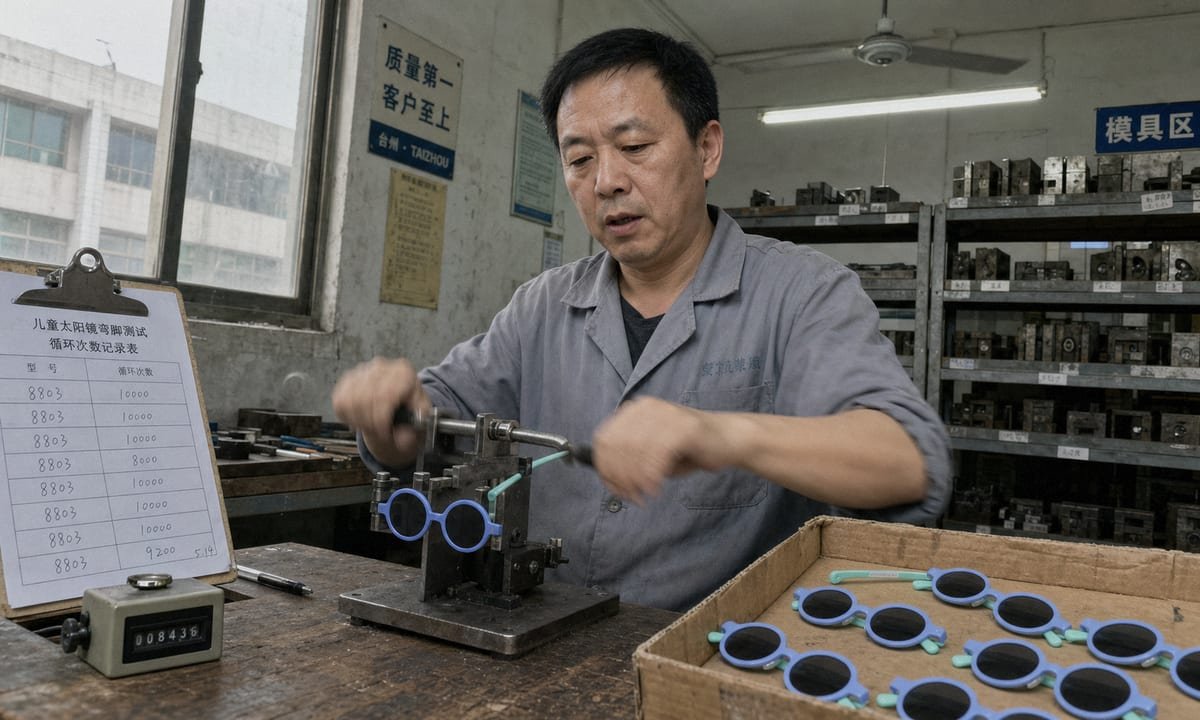
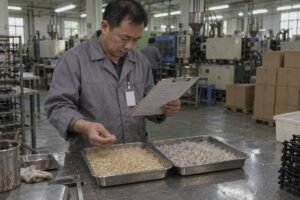
浙江省台州市の生産ラインでは、スタイルが出荷される前に、テンプルを数千サイクルも屈曲テストしています。「どのくらい持続するか」は、すべての注文の背後にある質問であるため、そのテストが存在します。.
よくできた子供用サングラスのフレームは、通常、日常的な使用で1年から3年持ちますが、安価なプラスチック製のものは1年以内に壊れることがよくあります。実際には、急激な成長やフィット感の変化により、素材自体が劣化する前にフレームの寿命が尽きることがほとんどです。.
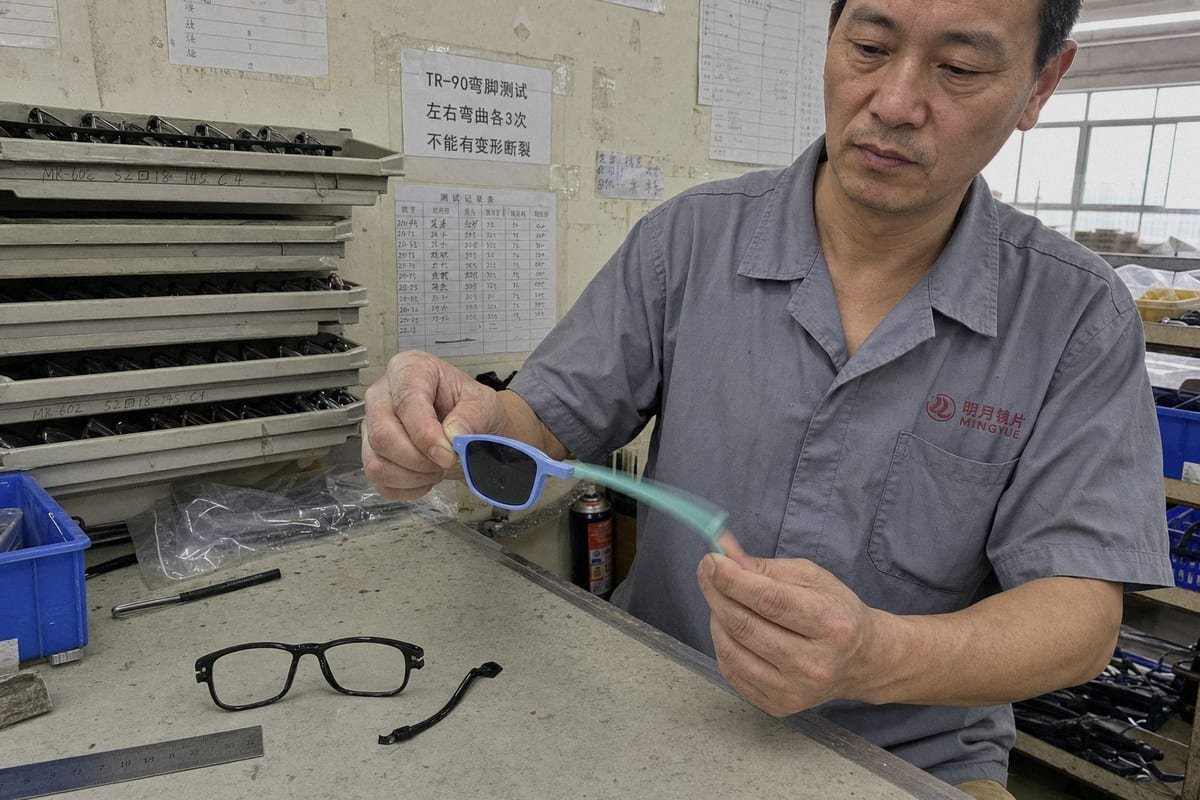
正直な答えは、同時に2つの時計が動いています。1つは機械的な時計です。毎日の摩耗でフレームが劣化するまでの時間です。もう1つは生物学的な時計です。子供がフィットしなくなるまでの時間です。ほとんどの子供にとって、2番目の時計の方が速く進みます。.
子供用フレームの2つの寿命
頻繁な着用は実際に大きなストレスを生み出します。子供がサングラスをかけたり外したりするたびに、テンプルは外側に曲がります。数百サイクル繰り返すと、ヒンジのネジが緩んだり、テンプルアームが伸びたり、フレームが 安価なプラスチックの場合、素材の疲労を引き起こす可能性があります。毎日の屋外での使用は、太陽光線、汗、砂、そして時折舗装に落とすことも加わります。 1 しかし、海外のクライアントから送られてきた使い古されたサンプルの状況は次のとおりです。ほとんどのフレームは構造的に健全です。子供の頭が大きくなったために鼻から滑り落ちます。鼻梁が広がりました。テンプルから耳までの距離が変わりました。親にとってはフレームは「使い古された」ように見えますが、実際には「大きすぎた」のです。.
フレームの品質ランク"
| 毎日の着用での通常の寿命 | 通常の破損モード | バジェットリジッドプラスチック |
|---|---|---|
| 6〜12ヶ月 | テンプルが折れた、リムが割れた | 中級射出成形フレーム |
| 12〜18ヶ月 | ヒンジが緩んだ、フィットがきつくなった | 柔軟なTPEE / TR90フレーム |
| 素材が破損する前にサイズアウト | 1〜3年 | ブランドにとっての実用的な教訓は次のとおりです。1〜2年の交換サイクルを中心に製品メッセージを構築してください。親は成長による交換を受け入れます。彼らが受け入れないのは、2ヶ月目に壊れるフレームです。品質が、あなたの顧客が語る物語を決定します。 |
ほとんどの子供用フレームは、素材が実際に破損する前に、フィット感の変化により使用できなくなります.
お客様のお子様が毎日サングラスをかける場合、どのフレーム素材が最も丈夫ですか?
アセテートフレーム で、ヒンジで真っ二つに折れ、もう1つは柔軟なフレームで、2シーズン後もまだ機能していました。素材の選択がその違いを説明しました。 2, 素材の選択は、毎日の着用が問題になるか、問題でなくなるかの分かれ目です。子供はアイウェアを丁寧に扱いません。片手でサングラスをひったくります。バックパックに押し込みます。それを着たまま眠ってしまいます。ねじれに耐える素材は、棚の上で同じように見えても、常に硬い素材よりも長持ちします。.
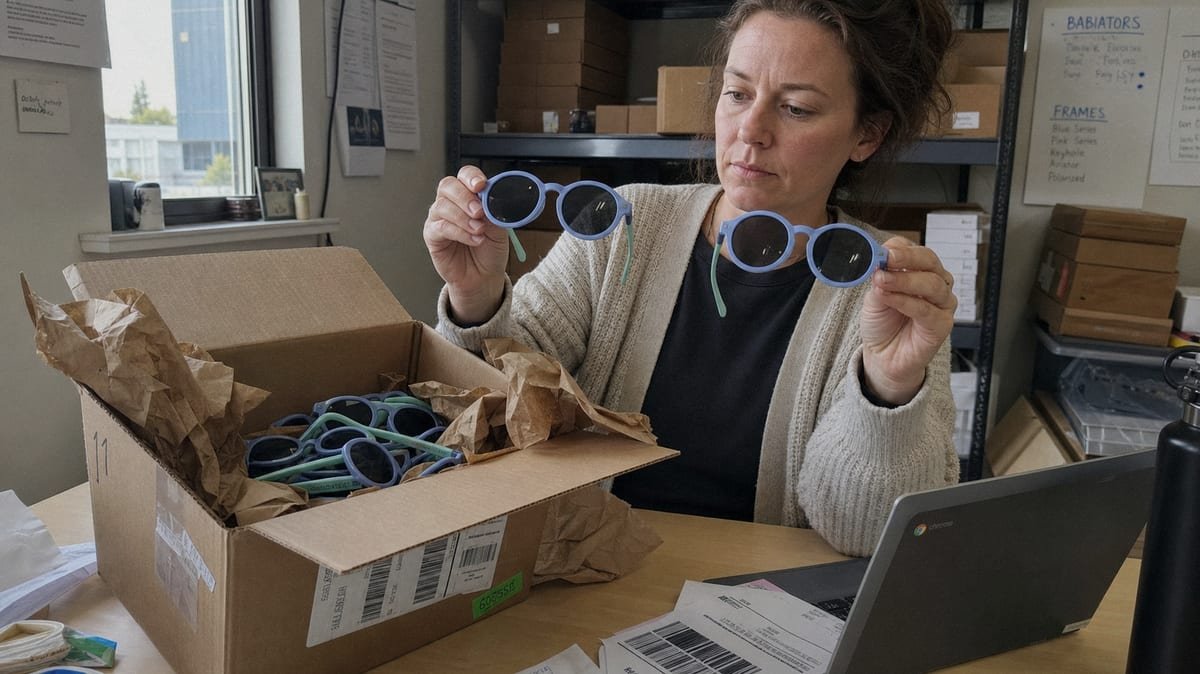
柔軟なTPEEとTR90は、子供たちの日常使いに最も耐久性のあるフレーム素材です。どちらもストレス下で曲がり、元の形状に戻り、フレーム素材の疲労に抵抗します。硬いPCまたはアセテートフレームはより早くひび割れますが、飛散防止ポリカーボネートはレンズにとって最も安全な選択肢であり続けます。.
子供にとって柔軟性が硬さよりも優れている理由.
硬いプラスチックは傷に強いですが、ヒンジとブリッジに応力を集中させます。子供が座ると壊れます。柔軟な
素材は変形して元に戻ることで同じ力を吸収します。軽量熱可塑性プラスチックであるTR90は、わずかにしっかりした感触で同様のメモリーフレックス特性を提供します。そのため、フロントはレンズを安定させ、テンプルは毎日の屈曲に対応するように、TPEEテンプルを備えたTR90フロントをよく使用します。 TPEEフレーム 3 フレックス回復.
| 素材 | 子供に最適な用途 | 中程度から重い | 180°曲がって回復する—優れた |
|---|---|---|---|
| TPEE | 幼児や活発な幼い子供 | 非常に軽い | 非常に良い—メモリーフレックス |
| TR90 | 年長の子供、光学およびサングラス | 軽い | 悪い—ねじれで壊れやすい |
| 標準的なPCフレーム | バジェットラインのみ | 軽い | 中程度—ヒンジで割れる可能性がある |
| アセテート | ファッションスタイル、丁寧な着用者 | より重い | レンズとコーティングもお忘れなく |
フレームは耐久性の物語の半分にすぎません。
フレームは耐久性の話の半分にすぎません。. 耐衝撃性レンズ 4 in shatterproof polycarbonate protect eyes during falls, and a scratch-resistant coating keeps daily handling from clouding vision. UV400保護 5 should be built into the lens material itself, not applied as a thin surface layer, so frequent wear cannot degrade the actual protection. When we develop custom lens specs for a client, we treat these three points as non-negotiable for children.
For toddler eyewear durability specifically, softer and fully flexible constructions matter even more, because the youngest wearers chew, bend, and drop frames constantly. Environmentally friendly flexible materials handle this abuse while staying safe against small faces.
フレームの摩耗による損傷がないか確認すべきストレスポイントはどこですか?
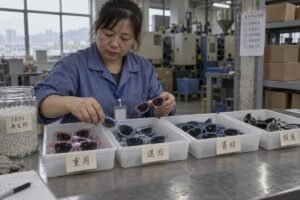
During incoming QC audits 6 at our 5S-managed workshop, we inspect the same five zones on every batch. Those zones are exactly where daily wear shows up first on a child's frame.
Check five stress points: hinge screws for looseness, temple arms for outward splay, the nose bridge for stress-whitening or crazing, the lens groove for loosened lenses, and rubberized coatings for stickiness. Damage at any of these points signals accumulating wear fatigue.
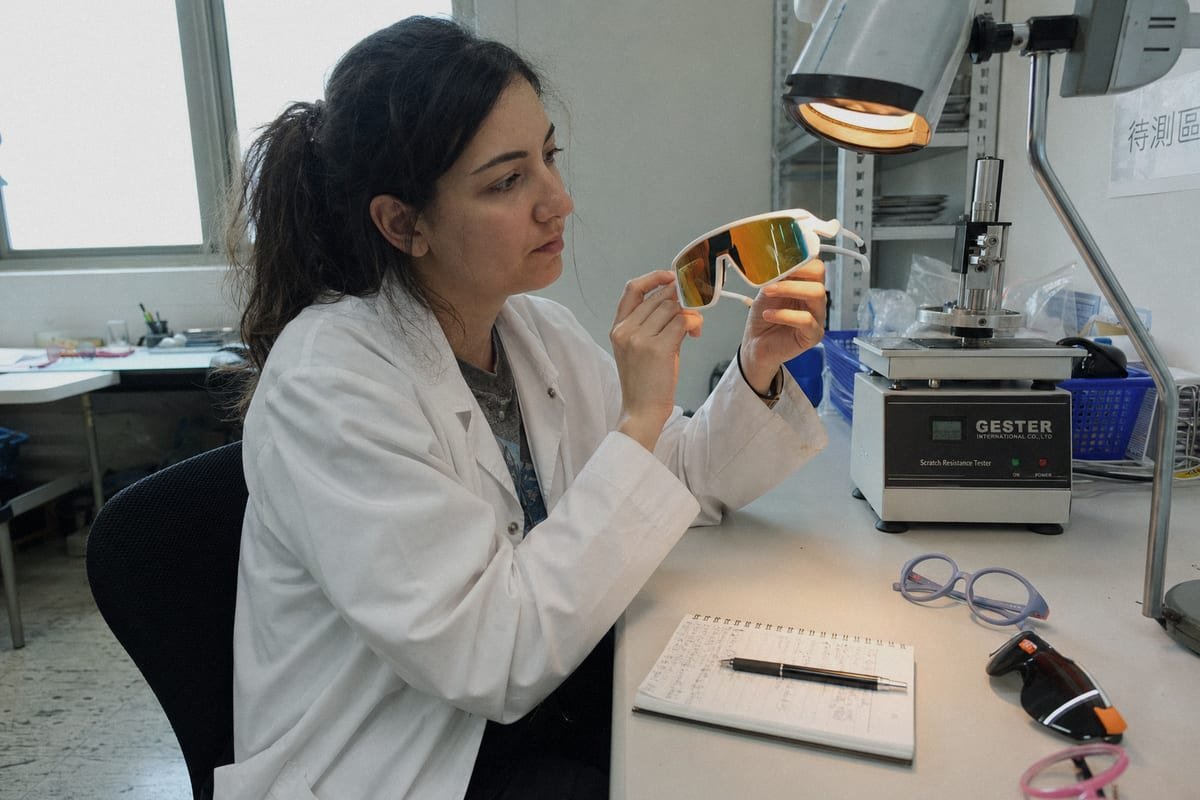
Frequent wear rarely destroys a frame in one dramatic moment. It accumulates quietly. Knowing where to look lets you diagnose whether returned or sampled frames are failing from wear, from abuse, or from a manufacturing defect. That distinction matters when you evaluate suppliers or handle warranty claims.
A five-point inspection routine
- Hinges and screws. Open and close the temples slowly. Grinding, wobble, or a screw backing out means the joint is fatiguing. Spring hinges resist this far better because they absorb over-extension instead of transferring it to the screw.
- Temple splay. Lay the sunglasses upside down on a flat table. If the temples no longer sit parallel, repeated on-off cycles have stretched them outward. On flexible TPEE frames this often self-recovers; on rigid frames it is permanent.
- Bridge crazing. Look at the nose bridge under bright light. Microscopic white stress lines in the plastic — crazing — are early fracture points caused by continuous outward tension from a growing head.
- レンズ溝。. Press each lens gently. If it clicks or shifts, micro-vibration and flexing have widened the groove, and the lens may pop out during a minor drop. Impact-resistant lenses should sit firmly with no movement.
- Surface coatings. Sweat, skin oils, and sunscreen can slowly attack soft-touch finishes, leaving them sticky or chalky. A degraded finish is cosmetic, but it tells you the frame has absorbed heavy daily exposure.
Heat is a hidden accelerator across all five points. A frame left in a hot car ages faster than a frame worn every day, because high temperatures soften polymers and can delaminate lens coatings. When parents report "sudden" failure, a hot dashboard is often the real cause.
日常の子供の使用に耐えられるフレームを製造する製造パートナーをどのように選べばよいですか?
One lesson from fifteen years of exporting children's eyewear to buyers in more than twenty countries: durability is decided at the factory, long before a child ever wears the frame.
実績のある柔軟素材の専門知識、社内でのフレキシブルおよびヒンジのサイクルテスト、子供の安全基準を満たす認定素材、そしてレンズとコーティングに対する完全なOEM/ODM管理を備えたパートナーをお選びください。幅広い既存のスタイルライブラリを持つ工場があれば、多額の金型投資なしで耐久性のある製品を発売することもできます。.

Two frames can look identical in a catalog photo and behave completely differently after three months on a child's face. The difference lives in material sourcing, mold precision, hinge construction, and quality control discipline. So when you evaluate suppliers, evaluate the process, not the sample photo.
What to ask a potential supplier
Start with materials. Ask whether the factory genuinely works with TPEE and TR90, or simply relabels commodity plastic. Genuine flexible-material expertise shows up in details: temple walls thick enough to flex without crazing, hinges designed for the material's movement, and colors that stay stable in flexible polymers. At our factory, roughly 800 existing styles let a brand test the market with proven constructions first, then move to custom molds once sales justify the investment.
Then look at testing and QC. A serious partner cycles hinges, flexes temples, and drop-tests lenses as routine steps, not as special requests. Ask how they verify UV400 protection and how scratch-resistant coating adhesion is checked batch by batch.
| 評価エリア | Weak supplier signal | Strong partner signal |
|---|---|---|
| 素材 | Vague "kid-safe plastic" claims | Named TPEE / TR90 grades, eco-friendly sourcing |
| テスト | 目視検査のみ | Flex, hinge cycle, and lens retention tests |
| カスタマイズ | Colors only | Custom lenses, logos, packaging, accessories |
| アクセサリー | Frame sold bare | Protective carrying case 7 and retail-ready packaging included |
| 身元 | Trading company reselling | Factory with visible workshop and stable workforce |
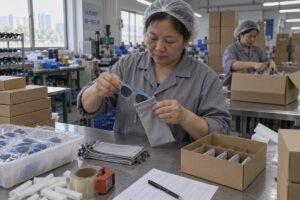
Finally, think beyond the frame. A protective carrying case, a cleaning pouch, and clear care instructions in the packaging materially extend product life in the customer's hands — and they cost little to add at the factory stage. A partner who proposes these details is thinking about your brand's reputation, not just the unit price.
結論
Frequent wear does age kids' sunglasses frames, but growth and handling decide their real lifespan. Choose flexible materials, check the stress points, and partner with a factory built for durability.
脚注
1. Explains mechanical fatigue in plastics, relevant to why cheaper frames crack under repeated flexing. ↩︎
2. Cellulose acetate background clarifies why rigid acetate frames crack at hinges under stress. ↩︎
3. Background on thermoplastic elastomers explains why TPEE flexes and recovers shape repeatedly. ↩︎
4. CPSC oversees children’s product safety standards relevant to impact-resistant eyewear requirements. ↩︎
5. WHO explains UV radiation health risks that UV400 lens protection is designed to prevent. ↩︎
6. ISO 9001 quality management underlies systematic QC audit practices described at the factory. ↩︎
7. Wikipedia section explaining the importance of using a case to protect eyewear from scratches and structural damage. ↩︎
 English
  Español de México
  Deutsch
  Français
  日本語
日本語  العربية
  Português do Brasil