What Substance Limits Must TR90 Kids’ Optical Frames Meet to Avoid Skin Allergies?
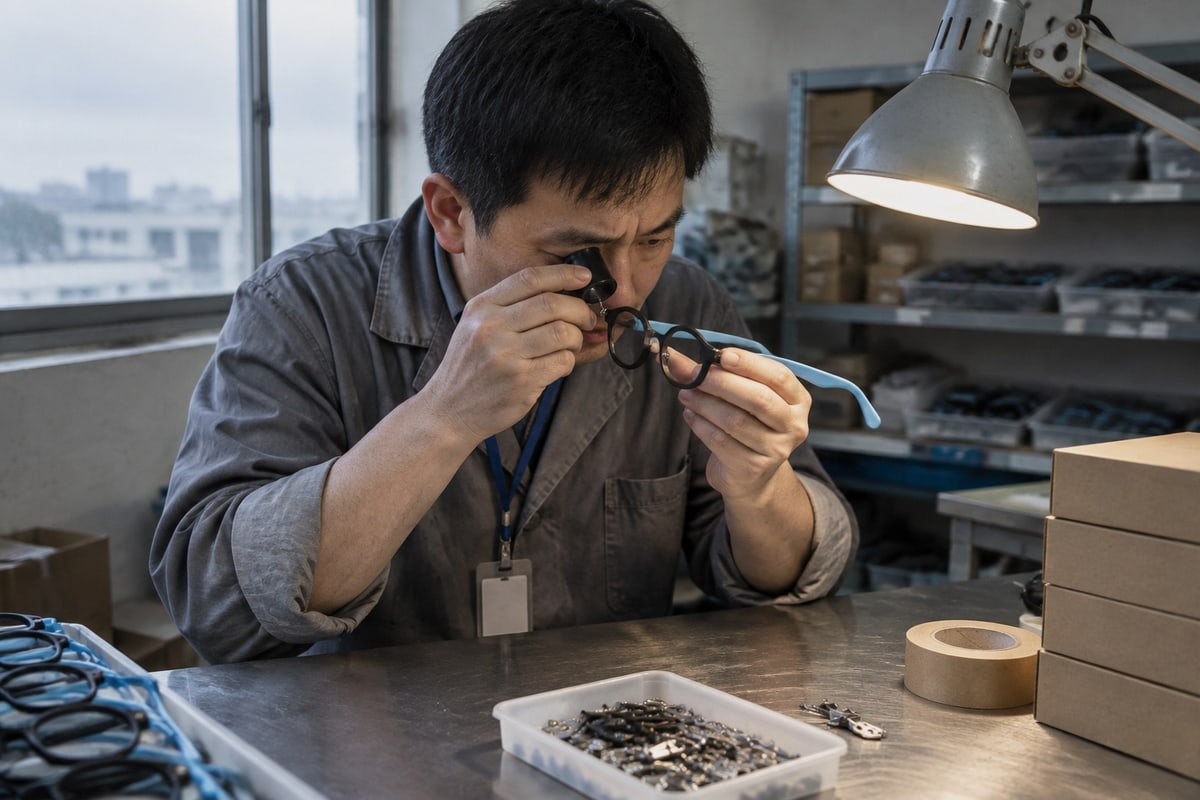
Parents return TR90 kids’ optical frames with red marks on the nose, and the brand gets blamed. On our Taizhou production line, one wrong hinge alloy can cause exactly that.
TR90 kids’ optical frames must keep nickel release below 0.5 µg/cm²/week on skin-contact metal parts, lead under 100 ppm (CPSIA) or 500 ppm (EU), cadmium under 100 mg/kg, and restricted phthalates under 0.1% by weight, while meeting ISO 12870 innocuousness requirements.
Those numbers look simple on paper. In practice, the polymer is rarely the problem. The hinges, screws, paints, and nose pads are. Below I break down what to test, which standards apply, how to check a supplier’s claims, and which documents to keep on file.
TR90製キッズ用メガネフレームでは、どのような化学物質の検査を行うべきですか?
Last season our QC team pulled a batch of sample hinges from a new supplier. The frame body was clean TR90. The hinge screws were not nickel-free.
TR90製キッズ用メガネフレームを対象に、金属製ヒンジ、ネジ、鼻パッドからのニッケル溶出、接触可能部分における総鉛およびカドミウム、柔軟性部品に含まれるDEHP、DBP、BBPなどの規制フタル酸エステル類、ならびに酸性汗へ溶出する可能性のある残留モノマーやコーティング化学物質の試験を行います。.

Why the TR90 Body Itself Is Rarely the Culprit
TR90 is a polyamide. Most buyers know it under the Grilamid TR90 trade name. Its properties matter here. It contains no BPA, because BPA belongs to polycarbonate chemistry, not polyamide chemistry. It needs no phthalate plasticizers 1 to stay flexible, so the frame body usually passes phthalate content limits without any special effort. Its high glass transition temperature keeps it thermally stable. It does not off-gas volatile organic compounds when a child leaves the glasses in a hot car. These are the reasons TR90 sits on nearly every list of hypoallergenic eyewear materials.
But "hypoallergenic" is a marketing word. It is not a test result. In our workshop, we see the allergy risk move to four places: metal hinges and screws, metal nose pads on combination frames, painted or lacquered surfaces, and any soft accessory such as a strap or a rubber temple tip. A TR90 frame with a low-grade alloy hinge is not a hypoallergenic frame. It is a TR90 frame with a nickel problem.
The Substance Checklist
| Substance | Where it hides in a kids' frame | Limit to demand | 規則 |
|---|---|---|---|
| Nickel (release) | Hinges, screws, temple cores, metal nose pads | 0.5 µg/cm²/week | REACH Annex XVII Entry 27, tested per EN 16128 |
| Lead (total) | Paints, solder, alloys, colored plastic | 100 ppm (US) / 500 ppm (EU) | CPSIA / REACH |
| Cadmium (total) | Pigments, plastic stabilizers | 100 mg/kg (0.01%) | REACH付属書XVII |
| Phthalates (DEHP, DBP, BBP) | Soft PVC nose pads, straps, cases | 0.1% total by weight | REACH Annex XVII Entries 51 & 52 |
| Residual monomers | Poorly processed polyamide | As low as possible; verify via resin data sheet | ISO 12870 innocuousness |
Irritation Is Not Always Allergy
Here is one point many buyers miss. A red mark is not always a chemical reaction. Sweat, heat, pressure, and friction cause irritation with no allergen present. TR90's flexibility, which we value for safety, can create persistent micro-friction on the nose and behind the ears. That friction disrupts the skin barrier. Once the barrier is open, trace chemicals that were harmless on intact skin get in more easily. Sweat is also mildly acidic, and that helps residual monomers and metal ions migrate out of the material. So contact dermatitis prevention is part chemistry and part fit. We tune temple tension and nose bridge geometry on our kids' styles for exactly this reason. A frame that grips too hard fails a child even when every lab report passes.
子供用アイウェアのサプライヤーが準拠しなければならない国際安全基準とは?
A procurement manager from Germany once asked us why our nickel report did not cite EN 1811. That question opened a useful conversation about spectacle-frame rules.
子ども用眼鏡サプライヤーは、フレームの無害性に関するISO 12870、ニッケル溶出試験に関するEN 16128、欧州におけるニッケル、鉛、カドミウム、フタル酸エステルに関するREACH附属書XVII、米国における鉛に関するCPSIAに準拠する必要があり、理想的にはISO 10993-10の生体適合性試験にも適合する必要があります。

| 標準 | 地域 | What it covers for kids' eyewear | 2019年12月31日に発行され、2022年1月1日に施行された中国国家規格 |
|---|---|---|---|
| ISO 12870 / EN ISO 12870:2025 | 国際 / EU | Core frame requirements, including innocuousness and nickel release on metal parts | Main spectacle-frame standard |
| EN 16128 | EU | ニッケル放出試験 2 method written for spectacle frames and sunglasses | Required method for nickel |
| REACH付属書XVII | EU | Nickel (Entry 27), phthalates (Entries 51 & 52), lead, cadmium | Legally binding |
| CPSIA | 米国 | Lead at 100 ppm in children's products, phthalates, third-party testing | Legally binding for children's products |
| EN 71-3 | EU (toys) | 材料からの重金属の移行 | Not mandatory for eyewear; often requested |
| ISO 10993-10 | 国際的 | Skin irritation and delayed-type sensitization | Voluntary; valued by pediatric brands |
Why Spectacle Frames Use EN 16128, Not EN 1811
EN 1811 is the ニッケル放出 test for pierced-body jewelry and similar items. Spectacle frames and sunglasses are explicitly excluded from it. EN 16128 is written for eyewear. It handles coated parts, and it allows disassembly or masking so each metal sub-part in prolonged skin contact can be tested on its own. The limit is the same 0.5 µg/cm²/week, but the method is different. If a lab report on glasses cites EN 1811, the lab used the wrong method. That is the answer I gave our German buyer. European compliance language is getting more precise about sub-part testing every year, so this detail matters more, not less.
Where EN 71-3 and ISO 10993-10 Fit
EN 71-3 standards belong to the toy directive. Glasses are not toys. Still, kids' brands in Europe often ask us for EN 71-3 because it measures です。CPSIAは、「素材にそもそもどれだけの鉛が含まれているか?」と尋ねます。EN 71-3は、「子供が口に入れたりこすったりした場合、素材からどれだけ移行する可能性があるか?」と尋ねます。これらは異なるラボ方法であり、一方に合格しても自動的に他方が証明されるわけではありません。 3 from coatings and colored plastic, which is exactly what a parent fears. ISO 10993-10 comes from the medical device world. It covers biocompatibility testing 4 for primary skin irritation and delayed-type hypersensitivity. When a buyer serves babies or children with eczema, we suggest it for raw material approval. Neither is legally required for eyewear. Both make a stronger dossier.
One Spec for Every Market
A common objection we hear: "REACH compliance is only for Europe. I sell in Australia and Japan." In our experience exporting to twenty-plus countries, REACH and CPSIA regulations are the two benchmarks buyers everywhere quote back to us. Our approach is simple. We work to the tightest limit in each category, such as the 100 ppm CPSIAの鉛制限値 5, and apply that one spec across all markets. It removes confusion for the buyer and for our line.
TR90フレームメーカーの素材安全性認証を確認するにはどうすればよいですか?
Every quotation forces a choice for us: test the raw TR90 pellets, or test the finished frame with hinges and paint. Only one of those protects your brand.
Verify certifications by requesting third-party lab reports from accredited bodies, matching the report's sample description, color, and hinge type to your actual order, checking the test method cited, confirming the report date is recent, and auditing the factory's raw material traceability.

5段階検証ルーチン
- Ask who issued the report. A factory's own QC sheet is useful, but it is not a certification. Look for an accredited third-party lab. For the US market, check that the lab is CPSC-accepted for children's products.
- Match the sample to your order. A report describes a specific sample: color, coating, hinge type. Our two-tone matte black front with sky-blue temples uses a different paint system than our translucent pink gradient frame. A report on one does not cover the coating on the other.
- Check the method. Nickel must cite EN 16128 and the 0.5 µg/cm²/week limit. Lead should be reported as total content, not just migration. Phthalates should list DEHP, DBP, and BBP individually.
- 日付を確認します。. Reports age. Hinge suppliers change. We recommend a retest whenever the hardware source or the paint formula changes, not only when the calendar says so.
- Trace the raw material. Ask for the resin data sheet and lot number. A real factory can show which pellet lot went into which production run. Our 5S-managed workshop labels every material bin for this reason.
Raw Material Test vs Finished Frame Test
| Test level | 登録番号 | What it misses |
|---|---|---|
| Raw TR90 pellet test | Polymer is clean, BPA-free, low in residual monomers | Hinges, paint, nose pads, assembly |
| Finished frame test | The complete product exactly as a child wears it | Must be repeated for each color and hardware variant |
| Component test | Each hinge or screw batch on its own | Meaningless without a bill of materials to link parts to styles |
This is the trade-off I mentioned. Pellet tests are cheap and reusable across our roughly 800 existing styles. Finished frame tests cost more per SKU. Our practice is to approve raw material grades once, then test finished frames by hardware family. When a buyer launches a new brand from our catalog, that structure keeps testing cost low without leaving gaps.
Look Beyond the Paper
A video audit takes an hour. Ask to see where hinges are stored and how they are labelled. Ask who signs off on incoming metal parts. A factory with 15 years of eyewear experience will show you without hesitation. A trading company usually cannot.
What Documentation Should I Request to Confirm My Kids' Frames Are Allergy-Safe?
We learned the hard way that a single "hypoallergenic" line on a spec sheet convinces nobody at customs or in a parent's complaint email. Documents do.
Request a Declaration of Conformity covering REACH and CPSIA, an EN 16128 nickel release report for metal parts, heavy metal test reports for lead and cadmium, phthalate results, a raw material data sheet for the TR90 grade, and a bill of materials listing every skin-contact component.
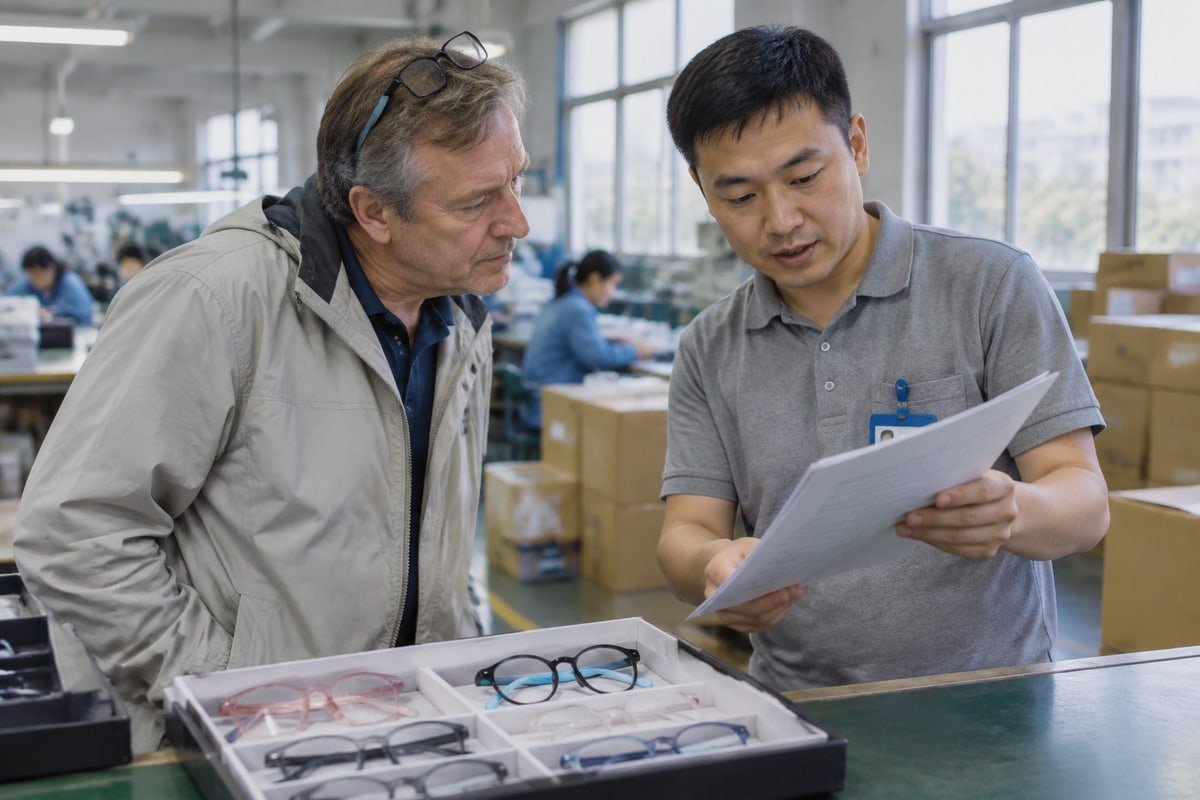
The Document Pack We Prepare for Buyers
| 文書 | 登録番号 | 発行者は誰か | いつリクエストするか |
|---|---|---|---|
| 適合宣言 | Supplier's legal statement of REACH, CPSIA, and ISO 12870 requirements | 工場 | Before the first purchase order |
| Nickel release report (EN 16128) | Metal parts release under 0.5 µg/cm²/week | 第三者ラボ | Per hardware family |
| Heavy metals report (Pb, Cd) | Total lead and cadmium under limits | 第三者ラボ | Per color and coating |
| Phthalate report | DEHP, DBP, BBP under 0.1% total | 第三者ラボ | For soft parts, straps, cases |
| Raw material data sheet | TR90 grade, BPA-free certification, no plasticizer | Resin supplier | At material approval |
| 材料リスト | Every skin-contact component listed | 工場 | With every sample approval |
| ISO 10993-10 report | Irritation and sensitization results | 第三者ラボ | Optional, for sensitive-skin claims |
Why the Bill of Materials Matters Most
A nickel report is only as good as the list of parts it covers. Take our round two-tone frame. The bill of materials names the matte black paint on the front, the glossy blue temple material, the hinge alloy, the screw alloy, and the keyhole bridge. Each line links to a report. If any line reads "unknown alloy decorative part," stop. That is where allergy complaints start. Our TR90 front with TPEE temple designs avoid metal temple cores entirely, which shortens this list and lowers risk for active kids.
An Emerging Option: Bio-Based Polyamides
The industry is shifting toward castor-oil-derived polyamides such as PA11. The aim is to remove petroleum-based impurities and improve pediatric skin compatibility. If a supplier claims bio-based material, ask for the resin data sheet just as you would for standard TR90. The claim should sit on paper, not only in a sales deck.
A Parent-Facing Checklist You Can Print
- Prefer frames with minimal or no metal touching skin.
- Ask for nickel-free or nickel-release-compliant hardware at the bridge, hinges, and temple tips.
- Avoid decorative metal parts of unknown alloy.
- Watch for pressure marks, sweat buildup, and rubbing behind the ears.
- Patch-test with short wear periods if the child has known contact dermatitis.
We include a version of this checklist in retail-ready packaging for buyers who request it. It turns a compliance topic into a customer service asset.
結論
Red marks on a child's nose cost brands trust. We build TR90 kids' optical frames knowing safety lives in every hinge, coating, and screw, and in the paperwork behind them.
この記事で言及されている製品の調達に興味がありますか?詳細を表示し、ここから見積もりをリクエストしてください。
脚注
1. US government agency providing information on the regulation of phthalate plasticizers under the TSCA. ↩︎
2. Authoritative international body for standards like ISO 12870 and nickel release test methods for eyewear. ↩︎
3. Official European Commission page detailing toy safety requirements and chemical migration limits. ↩︎
4. Primary US authority for medical device safety standards, including biocompatibility testing for skin-contact materials. ↩︎
5. Official US government guidance on children’s product safety requirements, including the CPSIA lead limit. ↩︎



 English
 Español de México
 Deutsch
 Français
 日本語
 العربية
 Português do Brasil