子供用サングラスの出荷前品質検査テストとは?
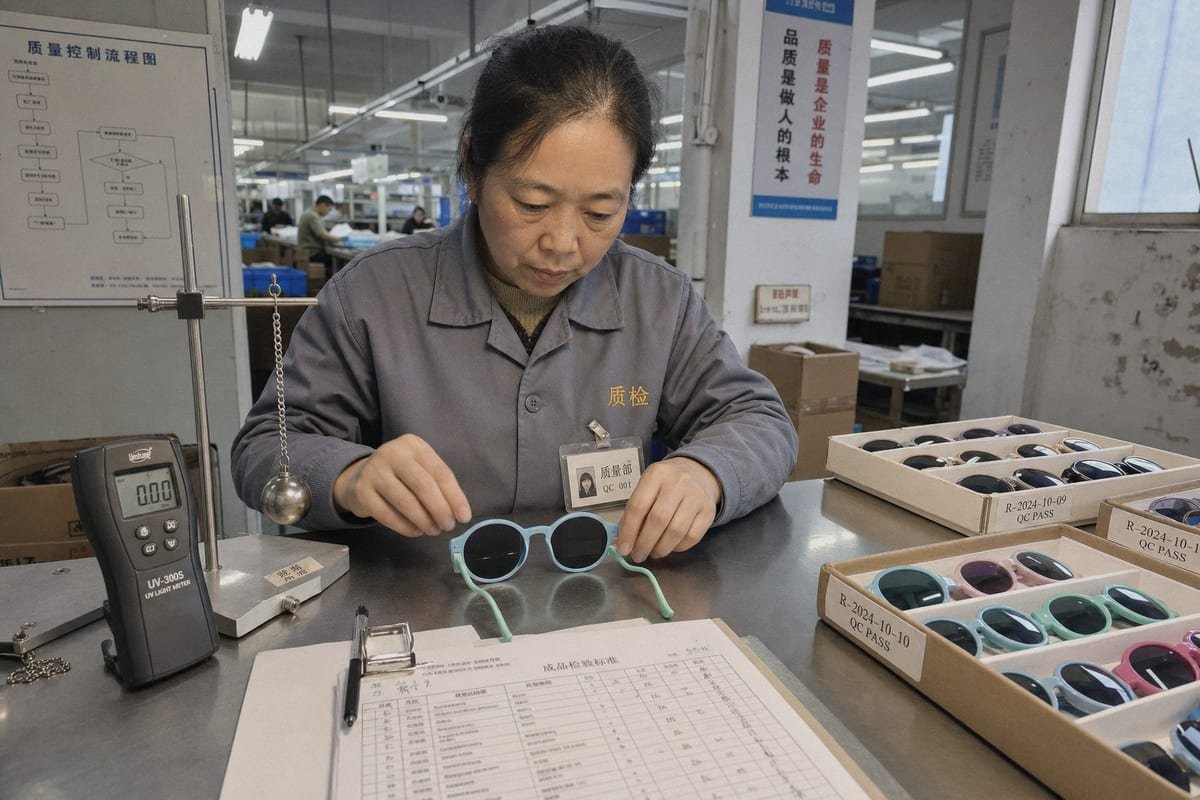
子供用サングラスの品質検査テストは、出荷される製品が子供たちを守るか、それらを危険にさらすかを決定します。 ヒンジ疲労試験 1. 私はバイヤーが私たちの生産ラインで苦い教訓を学ぶのを見てきました。.
出荷前に、子供用サングラスはUV400保護検証、落下球衝撃耐性テスト、フレーム耐久性およびヒンジ疲労テスト、鉛およびフタル酸エステル類に対する化学的安全性テスト、小部品および鋭利なエッジチェック、光学透過率検査、および完全な文書化を伴うAQLベースの出荷前サンプリングを受けます。.
それは長いチェックリストです。私がセクションごとに分解しますので、あなたの製品が工場を出る前にサプライヤーに何を要求すべきかを正確に知ることができます。.
サプライヤーはどのような安全基準でテストすることを期待すべきですか?
数年前、ヨーロッパのバイヤーから、私たちがすぐに提供できない書類を1つ求められました。その教訓は決して忘れられません。それ以来、私たちのチームは生産が始まる前にコンプライアンスファイルを準備しています。.
サプライヤーは、光学特性および透過特性についてISO 12312-1、耐衝撃性についてFDA 21 CFR 801.410、鉛およびフタル酸エステル類に関するCPSIA準拠、小部品に関するEN 71規則、皮膚に触れる金属部品のニッケル放出制限について、子供用サングラスをテストする必要があります。.
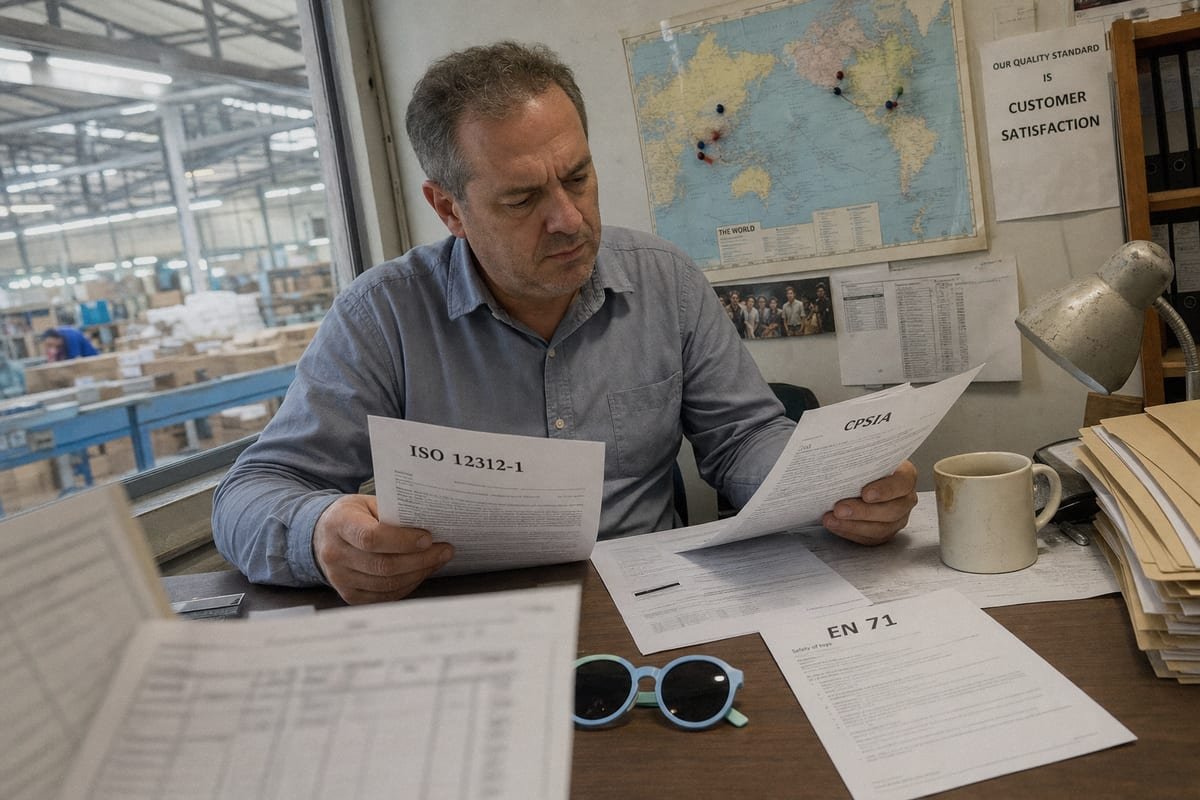
標準は相互に交換可能ではありません。各市場には独自の規則があり、子供向け製品は大人用アイウェアよりも厳しい精査に直面します。15年間で20カ国以上に輸出してきた経験から、まず注文をすべて仕向地市場にマッピングすることを学びました。それからテスト計画を確定します。.
テストの2つのレイヤー
テストを2つのレイヤーで考えてください。最初のレイヤーは規制遵守です。これらは製品を合法的に販売可能にするためのラボテストです。2番目のレイヤーは工場QCです。これらのチェックは、出荷前に緩いヒンジ、傷のあるレンズ、または悪いパッケージなどの欠陥を検出します。1つのレイヤーしか行わないサプライヤーは、仕事の半分しかしていません。.
市場別の主要基準
| 市場 | 標準 | 対象範囲 |
|---|---|---|
| アメリカ | 衝撃安全性 | 耐衝撃性試験(落下球試験) |
| アメリカ | CPSIAコンプライアンス 2 | 鉛90 ppm未満、フタル酸エステル類0.1%未満 |
| EU | ISO 12312-1基準 3 | UVフィルタリング、透過率、光学パワー要件 |
| EU | EN 71(小部品) | 幼い子供向けの窒息の危険性 |
| EU | ニッケル放出試験 4 | 長時間の皮膚接触における金属部品 |
| オーストラリア | AS/NZS 1067.1 | サングラスレンズのカテゴリーとUV性能 |
ここに多くの新しいバイヤーが見落としているニュアンスがあります。米国チェックリストに合格した製品でも、まだ不合格になる可能性があります。 ヨーロッパの要件, 、なぜなら ISO 12312-1基準 レンズカテゴリを測定し、 透過特性 5 異なって測定するからです。クライアントが両方の地域で販売する場合、私たちは統合されたテストマトリックスを構築します。初期費用は少し高くなります。しかし、出荷拒否やリコールよりもはるかに安価です。.
サプライヤーに簡単な質問をしてください:どの基準、どのラボ、どのロットですか?3つすべてに答えられない場合は、探し続けてください。.
TPEEおよびTR90フレームの耐久性と柔軟性をどのようにテストしますか?
すべての新しい金型で検討するトレードオフがあります。シャープな外観のためにフレームをより硬くするか、幼児が後ろに曲げたときの安全のために柔らかくするかです。子供用アイウェアの場合、私たちはほとんどの場合柔軟性を選びます。.
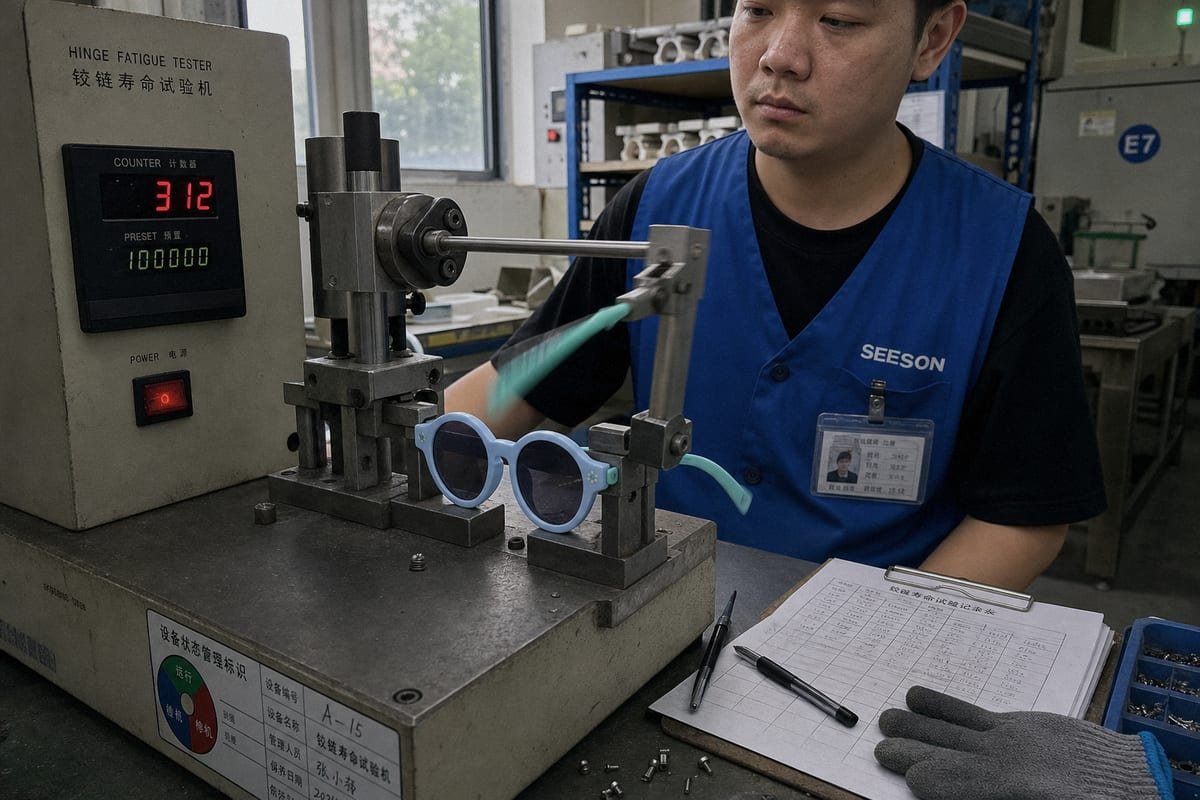
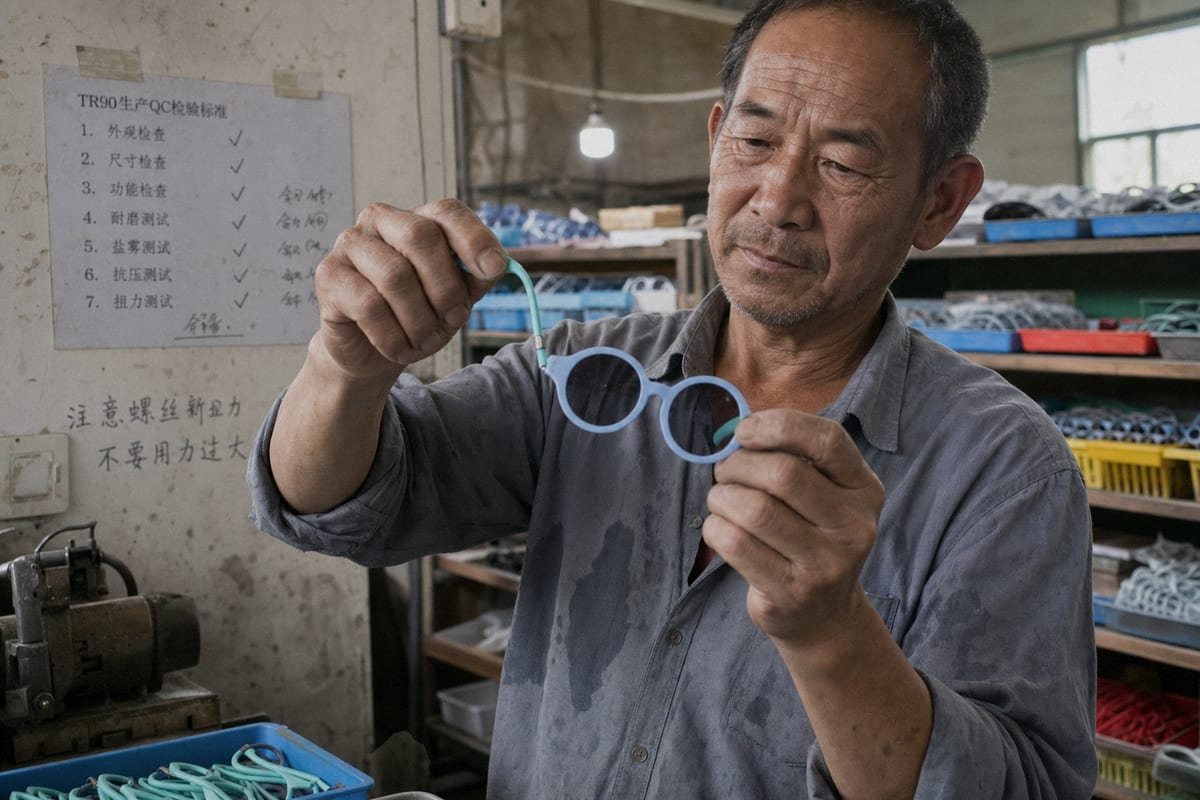
TPEEとTR90フレームは、約500回の開閉サイクルヒンジ疲労試験、テンプルツイストおよび曲げ戻しチェック、テーブルの高さからの落下試験、耐寒・耐熱試験、そして繰り返しストレス後の部品の固定を確認するプルフォース試験によってテストされます。.
子供たちはサングラスを丁寧に扱いません。彼らは座ったり、テンプルを噛んだり、片手で引っ張ったりします。だからこそ、私たちは約800のスタイルのほとんどをTPEEとTR90で作っています。これらは記憶力、柔軟性、軽量性を考慮して選ばれた素材です。しかし、素材の選択だけでは十分ではありません。フレームの耐久性テストは、実際の乱用に耐えられる設計であることを証明する必要があります。.
私たちが実行するコア耐久性チェック
- ヒンジ疲労試験。. テンプルを繰り返し開閉します。通常は500サイクルです。サイクリング後、ヒンジは緩んだり、割れたり、きしんだりしてはいけません。ネジはトルクを保持する必要があります。.
- テンプルフレックスとバックベンド。. TPEEテンプルを通常の開口角度をはるかに超えて曲げます。良いフレームは、接合部に白化やストレスマークなしで形状に戻ります。.
- ねじりテスト。. タオルを絞るようにフレームフロントをねじります。TR90は曲がって回復するはずです。脆い代替品は壊れます。.
- ドロップテスト。. テーブルの高さから複数の角度で、組み立て済みのサングラスを硬い床に落とします。レンズは所定の位置に留まる必要があります。何も外れてはいけません。.
- 耐熱性。. 子供たちは車の中やバックパックの中にメガネを置き忘れます。温度暴露後の歪み、色の変化、脆さをチェックします。.
素材検証が重要な理由
「TR90」として販売されているすべてのフレームが本物であるとは限りません。安価なブレンドは初日は同じように見えますが、数週間で割れます。私たちのラインでは、完成したフレームの耐久性テストでは、損傷した樹脂を完全に補うことはできないため、射出前に原材料ロットを検証します。これが、私たちが低価格サプライヤーではなく長期的なパートナーとしての地位を確立している理由の1つです。一貫した素材調達こそが一貫した耐久性の真の源です。.
すべての機械的テスト後のフレームとレンズの隙間も確認してください。一般的な許容誤差は0.5 mm以下です。隙間が大きいと、遊び中にレンズが外れる可能性があります。.
レンズの品質チェックは、紫外線防御と光学的な鮮明度をどのように保証するのか?
オーストラリアのバイヤーがかつて、非常に暗いレンズの競合他社のサンプルを送ってきて、子供たちが頭痛を訴える理由を尋ねました。私たちのラボは数分で答えを見つけました。強い色合い、弱いUVブロック、そして目に見える光学歪みです。.
レンズの品質チェックには、分光光度計によるUV400保護レベルの検証、透過率測定によるレンズカテゴリーの確認、レンズメーターによる歪みと光学パワーの検査、表示されている場合の偏光効率テスト、レンズ全面にわたるコーティング密着性と耐傷性チェックが含まれます。.
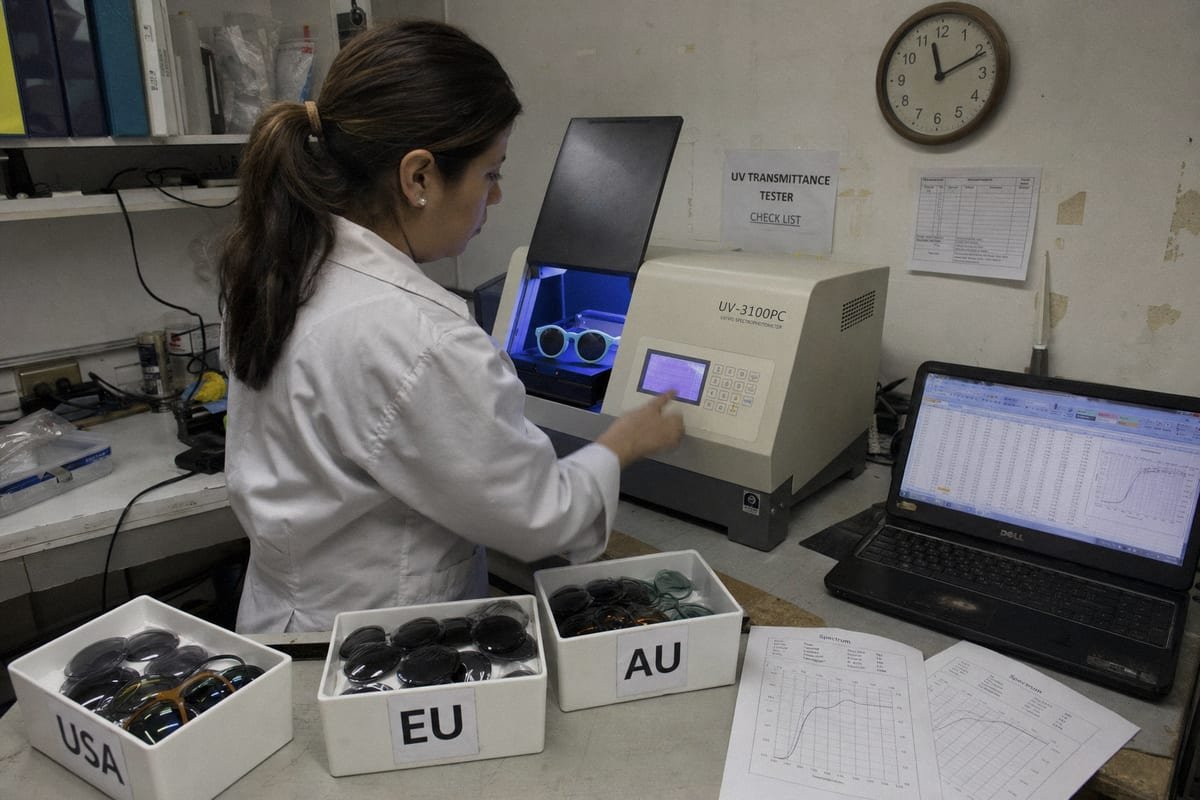
すべての子供向けブランドにとって最も重要な事実を次に示します。レンズの色合いの暗さはUV保護ではありません。適切なUVフィルタリングのない暗いレンズは、サングラスがないよりも悪いのです。暗い色合いは子供の瞳孔を拡張し、その結果、未フィルタリングのUV放射が発達中の目にさらに多く入ります。計器テストのみが実際の保護を確認できます。.
The Lens Test Sequence
| テスト | Instrument | 合格基準 |
|---|---|---|
| UVブロック | UV spectrometer | 100% UVA/UVB blocked up to 400 nm |
| Visible transmittance | Transmittance meter | Matches declared lens category (e.g., Cat. 3) |
| Optical distortion | Lensometer | No waves, prism, or unintended optical power |
| Polarization efficiency | Polarization tester | Meets declared efficiency for polarized SKUs |
| Coating quality | Visual + adhesion check | No peeling, bubbles, or uneven mirror coating |
| 表面仕上げ | Inspection light box | No scratches, pits, or haze |
Distortion and Comfort
Optical power requirements matter even for non-prescription lenses. A sunglass lens should have essentially zero corrective power. If cheap 射出成形 6 leaves waves in the lens, a child may experience eye strain, headaches, or dizziness. We check plano power on a lensometer for every production lot, because children rarely articulate the problem — they just stop wearing the glasses, and the parent blames your brand.
Mirror and Gradient Coatings
Our sport shield styles with orange-to-gold mirrored lenses need one extra check: coating uniformity. Mirror coatings applied unevenly can create transmittance "hot spots" where filtration drops. We scan across the lens surface, not just the center, to confirm consistent transmittance properties from edge to edge. For polarized options, we also verify polarization efficiency and correct polarization axis alignment, since a misaligned filter distorts how children perceive screens and reflections.
子供用サングラスが出荷される前に品質管理を確認するにはどうすればよいですか?
When new buyers visit our 5S-managed workshop in Taizhou, the question they ask most is not about price. It is this: how do I know every future shipment matches the golden sample I approved?
UV、衝撃、化学的安全性試験のロット固有のラボレポート、AQLベースのサードパーティ出荷前検査、署名済みのゴールデンサンプル、ヒンジおよび組み立てチェック記録、検査写真、および支払いリリース前の梱包およびラベリング検証を要求することにより、品質管理を確認します。.
You do not need to fly to China for every order. You need a verification system. Here is the workflow we recommend to every brand we work with, and the one we run internally on our own line.
The Pre-Shipment Verification Workflow
- ゴールデンサンプルの承認。. Both sides sign a reference sample covering color, tint, logo position, and packaging. Every later dispute resolves against this sample.
- Incoming material checks. Resin lots, lens blanks, and screws are verified before production. Defects caught here cost cents; defects caught at sea cost the whole order.
- In-process inspection. Operators check assembly, lens seating, and hinge tension during production, not just at the end.
- Lab testing per lot. UV400認証 7, the drop ball test with a 5/8-inch steel ball from 50 inches, CPSIA compliance screening, and nickel release test results where metal parts exist. For the U.S. market, impact resistance certification should exist for each lot, not just the first order.
- AQL final inspection. A statistically valid random sample is pulled from finished cartons and graded against agreed defect limits.
- Documentation package. Reports, photos, and lot numbers are retained for traceability.
What AQL Levels Mean for You
| 欠陥の種類 | 標準AQL | 例 |
|---|---|---|
| 重大な | 0(許容なし) | Sharp edges, detachable small parts, failed UV or impact test |
| 主要な | 2.5 | Loose hinge, lens misalignment, coating peeling |
| マイナー | 4.0 | Faint cosmetic mark, slight print offset on packaging |
One honest note: no factory lab-tests every single pair. Compliance works on statistically significant sampling, which is why lot-level documentation matters more than any single certificate. A supplier offering "certificates" with no lot numbers, no lab name, and no dates is offering paper, not proof. Ask for the full package, and any serious factory — ours included — will hand it over without hesitation.
結論
Kids' sunglasses face real hazards: UV leakage, shattering lenses, toxic materials, choking parts. Demand verified quality inspection tests — standards mapping, durability trials, lens verification, and documented AQL inspection — before any shipment leaves the factory.
脚注
1. ASTM International develops material and mechanical testing standards relevant to hinge fatigue methodology. ↩︎
2. CPSC page explains the federal law setting lead and phthalate limits for children’s products. ↩︎
3. Official ISO standard governing sunglass lens transmittance and optical requirements referenced in the article. ↩︎
4. Background on nickel allergy explains why nickel release testing matters for metal eyewear parts. ↩︎
5. Explains the optical concept of transmittance used to verify consistent UV filtering across lenses. ↩︎
6. Background on the manufacturing process that can introduce lens distortion if poorly controlled. ↩︎
7. WHO fact sheet on UV radiation supports why UV400 verification protects children’s developing eyes. ↩︎
 English
 Español de México
 Deutsch
 Français
 日本語
 العربية
 Português do Brasil