小売業者向け子供用サングラスのサイズガイドの作成方法
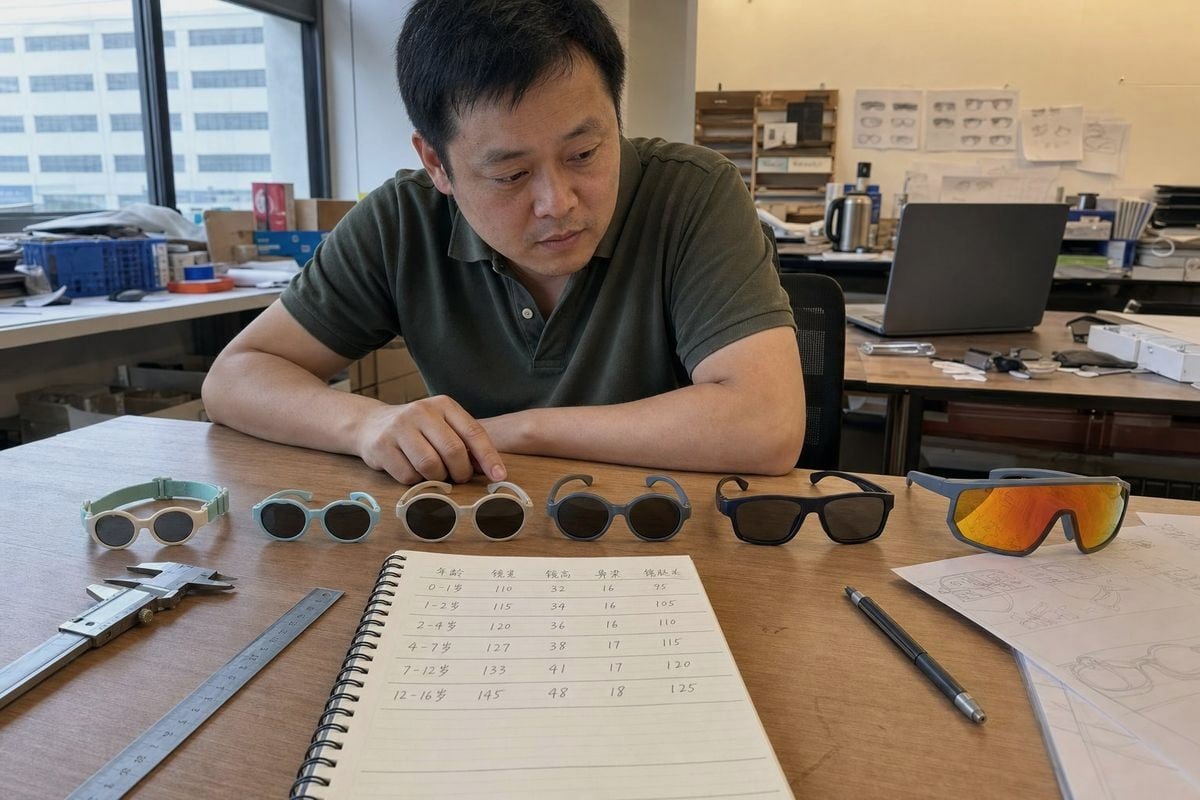
子供用サングラスのサイズガイドは、当社の太原工場が新しい小売バイヤーから最もよく聞かれる質問です。それがないと、親は推測し、フレームは滑り落ち、返品はすぐに積み重なります。.
子供用サングラスのサイズガイドを作成するには、0〜1歳から10〜16歳までの年齢層を定義し、各年齢層のフレーム幅、レンズ幅、ブリッジ幅、テンプル長をミリメートルでリストし、簡単な自宅での測定手順を追加し、返品を減らすフィットチェックリストを含めます。.
それが簡単な答えです。それでは、20か国以上のブランドの子供用眼鏡を製造してきた経験から学んだことを基に、各部分を段階的に説明します。.
子供用サングラスのサイズガイドに含めるべき年齢と頭囲の範囲は?
オーストラリアのバイヤーから、すべてを単に「子供用フリーサイズ」とラベル付けした後、返品率が倍増したと聞いたことがあります。当社のエンジニアが彼女の範囲を見直したところ、1つのラベルの下に3つの異なる頭のサイズがあることがわかりました。.
Include six age bands: 0–1 years, 1–2.5 years, 2.5–4 years, 4–7 years, 7–10 years, and 10–16 years. Pair each band with a frame width range, from roughly 35 mm for babies up to 52 mm for teens, and state that age is a guide, not a rule.
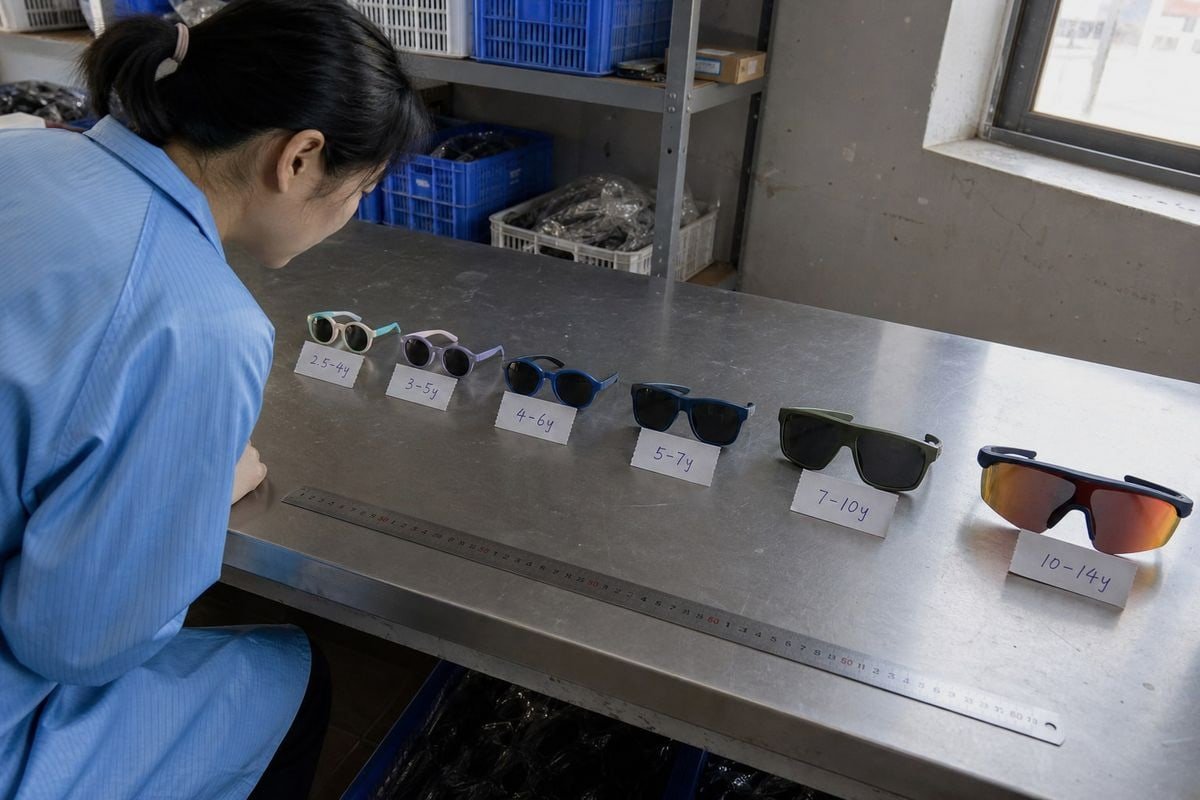
子供の顔は直線的に成長しません。. 頭の幅 1 最初は3年間で最も速く成長し、その後は遅くなります。したがって、あなたの 年齢ベースのサイズチャート は、幼い子供には狭い範囲、年長の子供には広い範囲が必要です。子供向けブランド向けに約800の既存スタイルを開発した経験から、幼児と若者の寸法のギャップは最も誤解されている点です。2歳と6歳はどちらも「子供」かもしれませんが、フレームの全幅は8〜10mm異なります。小さな顔ではそれは大きな違いです。.
実用的な年齢バンドフレームワーク
ここに、B2Bバイヤーと共有する開始テンプレートを示します。在庫しているフレームの実際の寸法に合わせて調整する必要があります。.
| 年齢層別の一般的なサイズコード | 鼻梁 | 一般的なレンズ幅 | 一般的なテンプルの長さ | 注記 |
|---|---|---|---|---|
| 35〜37 mm | 14〜15 mm | 30–33 mm | 105~110 mm | 調節可能なヘッドストラップ 2 推奨 |
| 1–2.5歳 | 37~38 mm | 33–36 mm | 37〜40 mm | 柔軟な TPEEフレーム 3 理想 |
| 5〜4歳 | 40~42 mm | 36~40 mm | 4〜6歳 | 初めての「歩き始め」サイズ |
| 4–7歳 | 43~45 mm | 40~44 mm | 125–130 mm | 最も人気のある小売バンド |
| 7–10歳 | 45~47 mm | 44~48 mm | 10–13歳 | 小学生のアクティブウェア |
| 10–16歳 | 47~52 mm | 48~52 mm | 10〜14歳 | 小さな大人と重なる |
Two important caveats. First, present these ranges as estimates based on average growth. Children of the same age vary widely in face width and bridge shape. Second, always show the exact frame measurements on every product page alongside the age band. Age gets the parent to the right shelf. Measurements get them to the right frame.
1歳未満の赤ちゃんには、常に調節可能なヘッドストラップ付きのスタイルをお勧めします。リジッドテンプルアームでは、赤ちゃんの頭に固定できないためです。幼児の場合、柔らかく柔軟なTPEEフレームは、素材が小さなサイズの間違いを許容するため、正確なミリメートルよりも重要です。.
正確なサイズのために、フレームの幅、テンプルの長さ、ブリッジのフィット感をどのように測定しますか?
作業場で新しい金型を校正するとき、生産に入る前に4つの寸法を確認します。それらの同じ4つの数値が、公開するすべての小売サイズガイドのアンカーとなるはずです。.
フレーム全体の幅を、レンズの幅を水平方向に片方のレンズに沿って、ブリッジの幅をレンズ間の隙間として、テンプルの長さをヒンジからテンプルの先端まで測定します。これら4つの数値をすべてミリメートルで記録し、すべての商品ページに一緒に表示してください。.
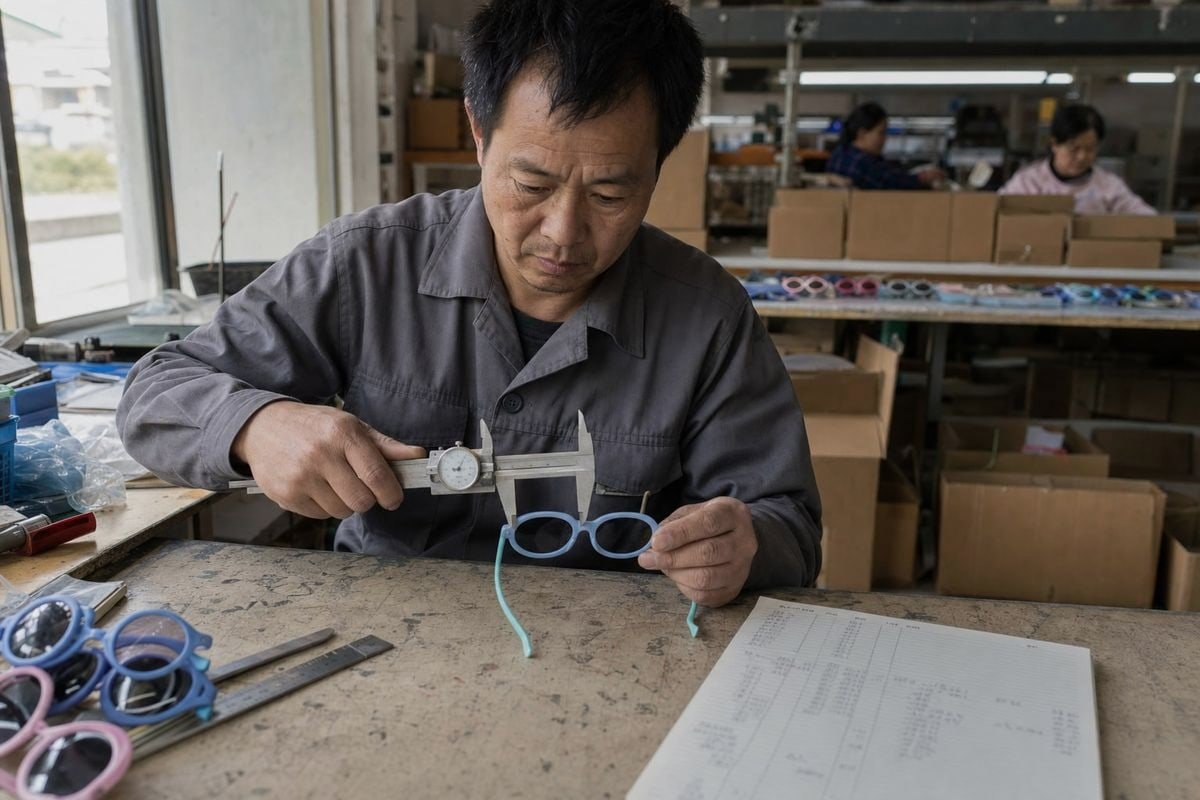
これらの4つの測定値はシステムとして機能します。1つしか公開しない場合、親はフィット感を判断できません。各数値が子供の顔で実際に何を制御しているかを説明します。.
各測定値の機能
フレーム幅 は、前面全体の幅です。フレームが顔に比例して配置されるかどうかを決定します。幅が広すぎると、サングラスは横に滑り落ち、 紫外線 4 端から漏れます。狭すぎると、テンプルが頭に押し付けられます。.
レンズ幅 子供の目が各レンズで水平に中央に配置されるようにします。これは瞳孔間距離に緩やかに関連しています。レンズが目の間隔よりもはるかに広い場合、子供は間違った光学ゾーンを通過し、フレームが大きすぎに見えます。.
鼻梁の幅 (場合によってはDBLと表示)は、フレームが鼻から滑り落ちるか、鼻を挟むかを制御します。子供は低く、柔らかい 鼻梁 5, 、そのため、これは子供用眼鏡で最も失敗しやすい寸法です。当社の生産ラインでは、この理由から、他のどの仕様よりもブリッジの公差を厳しくしています。.
テンプル長 は、アームが耳の後ろに快適に収まるかどうかを決定します。短すぎると、先端が痛く押し付けられます。長すぎると、遊んでいる間にフレームが滑り落ちます。.
親のための簡単な自宅測定プロセス
親に2分で完了できる番号付きプロセスを提供します。
- 柔らかいメジャーテープ、または定規付きの糸を使用します。.
- 子供の顔の幅を、耳のすぐ前のこめかみからこめかみまで測定します。.
- その数値をチャートのフレーム幅と比較します。.
- 子供がすでにうまくフィットする眼鏡を持っている場合は、テンプルアームの内側に印刷されている3つの数値を読み取り、直接比較してください。.
すでにうまくフィットする眼鏡を持っている親は、測定を完全にスキップできます。「既存の眼鏡と比較する」というショートカットは、最も摩擦の少ないパスなので、ガイドの最初に配置してください。.
小売業者向けのサイズガイドを作成するのに役立つツールやテンプレートは何ですか?
早く学んだ教訓の1つ:バイヤーはより多くのデータではなく、より良いフォーマットを必要としています。日本の販売代理店から、完全な仕様シートを、親が30秒で対応できるものに凝縮するように依頼されたことがあります。その要求が、現在すべてのクライアントのサイジングコンテンツをパッケージ化する方法を形作りました。.
印刷可能な1:1スケールのフィットテンプレート、ミリメートルベースのサイズチャート、レンズ、ブリッジ、テンプルの番号を表示する製品ページ仕様テーブル、および簡単なフィットチェックリストを使用します。オプションの追加機能として、ひもと定規の説明、オンラインストア向けのAR試着ツールが含まれます。.
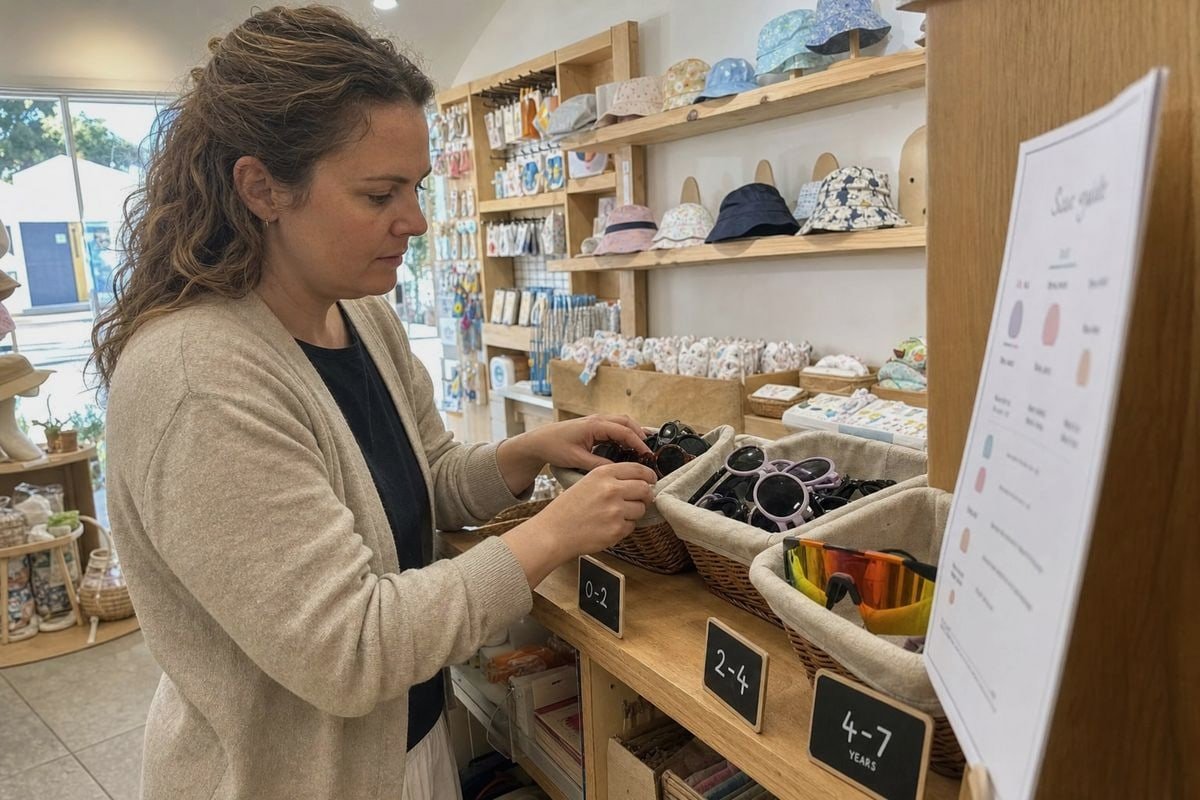
ショッパーによって必要なツールは異なります。定規で喜んで測定する親もいれば、視覚的な近道を望む親もいます。サイズガイドは両方のパスを提供する必要があるため、誰も行き止まりに遭遇してカートを放棄することはありません。.
The core toolkit
| ツール | それがすること | Effort for Parents | 最適 |
|---|---|---|---|
| Printable measurement tool (1:1 scale PDF) | Parent prints, cuts, and holds it against the child's face or current glasses | 低 | Online-only retailers |
| Millimeter size chart | Maps age bands to frame dimensions | 低 | Category and landing pages |
| String-and-ruler tutorial | Guides measuring without special tools | 中程度 | Detailed size-guide pages |
| Product-page spec table | Shows the "three numbers" per style | アクティブな子供のための安全性 | Every single PDP |
| AR fit-probability tools | Maps facial geometry against frame dimensions via smartphone | 低 | Larger e-commerce retailers |
| Fit checklist graphic | Confirms fit after delivery | アクティブな子供のための安全性 | Packaging inserts and emails |
The printable measurement tool deserves special attention. A print-cut-test guide lets a parent physically place their child's current glasses on the paper, or hold the paper against the child's face, to verify dimensions before buying. Just remind users to print at 100% scale, not "fit to page," or every measurement will be wrong.
For product pages, adopt the "three numbers" format that adult eyewear uses: lens width, bridge width, temple length, printed in that order. Parents who own any pair of glasses recognize this format instantly, and it lets them compare against frames they already trust.
B2Bクライアント向けに OEM packages 6 for our brand clients, we often include retail-ready sizing inserts and hang tags with these dimensions printed on them. Sizing information that travels with the product supports the in-store experience too, not just online.
サイズガイドで返品を減らし、顧客満足度を向上させるにはどうすればよいですか?
The trade-off we weigh most often with buyers is precision versus simplicity. A guide packed with technical detail intimidates casual shoppers. A guide that is too simple sends the wrong sizes out the door. The answer sits in the middle, and it starts with the language you use.
分かりやすいフィットのルールを書き、配送後のフィットチェックリストを追加し、子供がサイズの間にある場合にのみサイズアップを推奨し、すべての出品に正確なフレーム寸法を表示し、小さな間違いを許容する柔軟なフレームを在庫してください。これらを組み合わせることで、サイズに関する返品を大幅に削減できます。.
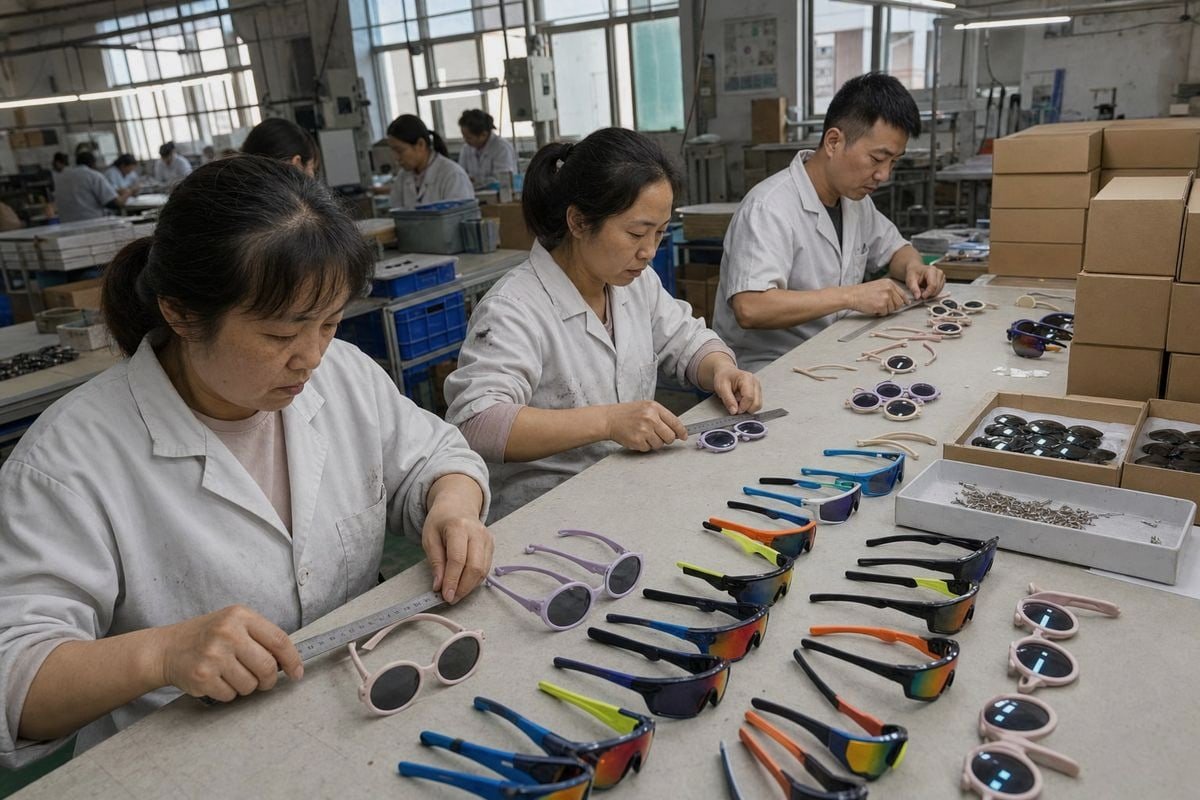
Reducing return rates is not one tactic. It is a chain of small decisions across your product pages, your copy, and your product selection. Let me break the chain into links.
Write copy that removes guesswork
Short, directive lines outperform long explanations. Use messaging like: "Measure first, then compare to the chart." "Age is a guide, not a rule." "If your child is between sizes, choose the larger size." "Check frame width, bridge width, and temple length together." Each line answers a question before the customer asks it.
Handle the size-up question carefully. Sizing up works when a child is between sizes or growing quickly. But too much growth room causes slipping and poor UVカット 7 around the eyes. Frame size-up as conditional advice, never a universal rule.
Give parents fit-success benchmarks
Parents cannot judge fit unless you define it. Publish a checklist they can run after delivery:
| Fit Check | Pass Looks Like | Fail Looks Like |
|---|---|---|
| Eye position | Eyes horizontally centered in the lenses | Eyes near lens edges |
| Nose comfort | No red marks after 15 minutes of wear | Pressure marks or sliding |
| Temple pressure | Arms rest lightly behind the ears | Squeezing at the temples |
| Movement test | Frame stays level when the child jumps and shakes | Slipping or bouncing |
| カバレッジ | Lenses shield the eyes with minimal side gaps | Light leaking around edges |
Choose products that forgive sizing errors
Materials matter as much as measurements. Flexible TPEE frames and TR90 constructions bend and adapt to varying head shapes within the same age band, so a frame that is one or two millimeters off still fits comfortably. This is the practical reason our factory has focused on flexible-material engineering for fifteen years: rigid frames punish small sizing mistakes, while flexible ones absorb them. For sensory-sensitive children 8, note the frame weight and gentle temple tension in your guide, since comfort details like these prevent the "my child refuses to wear them" return. For babies and toddlers, offer adjustable head straps as an accessory, which extends usable life across a growth spurt.
Finally, treat the size guide as living content. Track your return reasons monthly. If "too small" keeps appearing for one style, adjust that product's recommended age band, not just the chart.
結論
A clear size guide turns uncertain parents into confident buyers. Build it on real measurements, honest age bands, and forgiving materials, and returns fall while satisfaction climbs.
脚注
1. WHO global standards for head circumference, the standard measure for child head growth. ↩︎
2. Background on eyewear frame components including strap-based fitting solutions for infants. ↩︎
3. Explains the flexible plastic material class used to make forgiving children’s eyewear frames. ↩︎
4. EPA guidance on UV radiation supports the point about eyewear blocking harmful UV exposure. ↩︎
5. Anatomical background on the nasal bridge explains why it is a common fit-failure point. ↩︎
6. Alibaba is a major marketplace for OEM manufacturing services referenced in eyewear sourcing. ↩︎
7. WHO fact sheet explains why adequate UV coverage from eyewear protects children’s eyes. ↩︎
8. CDC resource on sensory processing considerations relevant to comfort in children’s products. ↩︎



 English
 Español de México
 Deutsch
 Français
 日本語
 العربية
 Português do Brasil