Comment l'indice de réfraction des verres affecte-t-il l'épaisseur des lunettes pour enfants ?
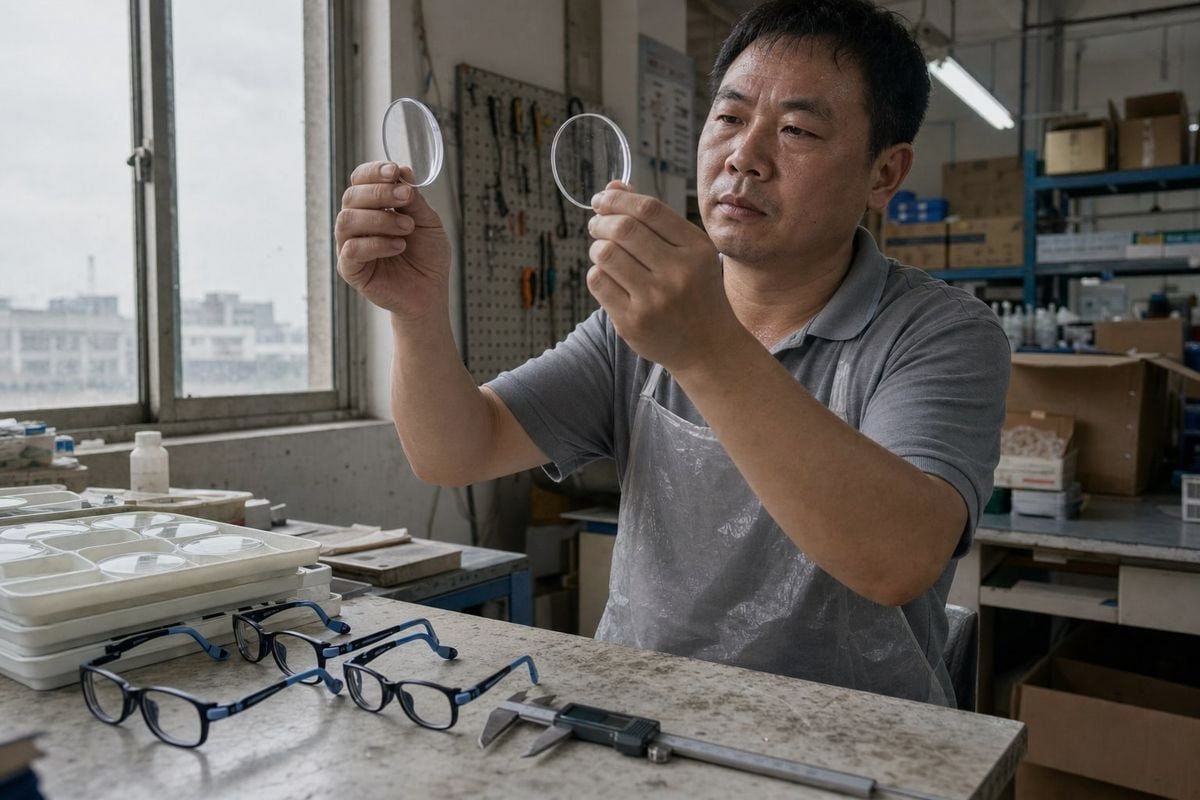
Verre indice de réfraction 1 est la question que j'entends le plus souvent de la part des acheteurs qui spécifient des montures optiques pour enfants sur notre ligne de production. Les verres épais sont volumineux, lourds et les enfants refusent de les porter.
L'indice de réfraction des verres affecte l'épaisseur des lunettes pour enfants car les matériaux à indice plus élevé courbent la lumière plus efficacement, de sorte que moins de matière atteint la même puissance de prescription. Un verre de 1,67 peut être 25 à 35 % plus fin que le plastique standard de 1,50, la plus grande différence se situant dans les prescriptions plus fortes.
C'est la réponse courte. Mais l'indice n'est qu'un facteur. La force de la prescription, la taille de la monture et le matériau du verre façonnent tous le résultat final. Laissez-moi vous expliquer chaque élément.
Quel indice de réfraction devrais-je choisir pour les verres optiques de mes enfants ?
Lors d'une récente tournée d'échantillonnage pour une marque optique européenne, nous avons équipé la même monture pour enfants TR90 avec trois verres d'indices différents. L'acheteur a été surpris de constater à quel point la différence visible était faible pour les faibles dioptries de prescription.
Choisissez l'indice de réfraction en fonction de la puissance de l'ordonnance : standard 1,50–1,59 pour les ordonnances inférieures à ±4,00 dioptries, indice élevé 1,60 pour ±4,00 à ±6,00, indice élevé 1,67 pour ±6,00 à ±8,00, et 1,74 uniquement pour les ordonnances supérieures à ±8,00.
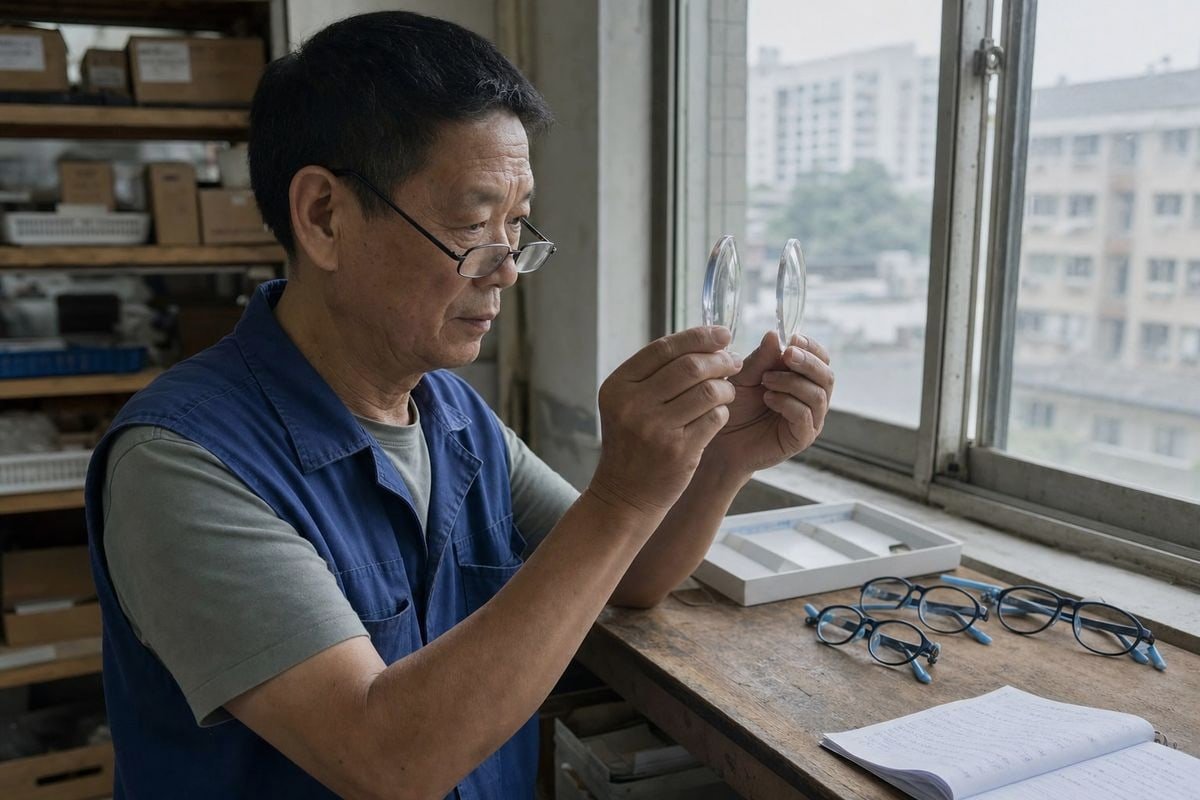
La science fondamentale est simple. Un verre courbe la lumière pour corriger la vision. Un matériau avec un indice de réfraction plus élevé courbe la lumière davantage par millimètre de matériau. Il faut donc moins de matériau pour atteindre la même puissance optique. C'est pourquoi un verre de 1,67 est plus fin qu'un verre de 1,50 pour la même prescription.
Mais voici la nuance que la plupart des parents et même certains acheteurs manquent. L'avantage d'un indice plus élevé augmente avec la force de la prescription. À -1,50 dioptries, la différence entre un verre de 1,50 et un verre de 1,67 est à peine visible. À -7,00 dioptries, elle est spectaculaire.
Un guide d'indice pratique pour les enfants
| Indice de réfraction | Gamme de prescription typique | Réduction approximative de l'épaisseur par rapport à 1,50 | Idéal pour |
|---|---|---|---|
| 1,50 (plastique standard) | Moins de ±2,00 | Référence | Prescriptions légères, montages économiques |
| 1,53 (Trivex) | Moins de ±4,00 | ~10% | Lunettes de sécurité avant tout pour enfants |
| 1,59 (polycarbonate) | Moins de ±4,00 | ~15% | Enfants actifs, protection contre les impacts |
| 1,60 (indice élevé) | ±4,00 à ±6,00 | 15–25% | Prescriptions modérées |
| 1,67 (indice élevé) | ±6,00 à ±8,00 | 25–35% | Prescription forte 2s |
| 1,74 (ultra-haut indice) | Plus de ±8,00 | 35–45% | Prescriptions très fortes |
Prescriptions négatives vs positives
L'épaisseur se manifeste à différents endroits. Les verres négatifs pour la myopie sont les plus épais sur les bords, donc un indice plus élevé réduit l'épaisseur du bord du verre. Les verres positifs pour l'hypermétropie sont les plus épais au centre, donc un indice plus élevé amincit le centre. Les deux types de prescriptions se retrouvent chez les enfants, et le volume visible diffère entre eux.
Une autre note clinique. Les conceptions de verres de gestion de la myopie, telles que celles avec des micro-lentilles intégrées, nécessitent souvent des indices spécifiques pour s'adapter à leur structure optique. Si votre marque dessert ce marché, l'indice devient un choix clinique, pas seulement esthétique.
Comment puis-je réduire l'épaisseur des verres sans compromettre la sécurité de mon enfant ?
Un acheteur d'Australie nous a un jour demandé de monter le verre le plus fin possible dans une monture pour tout-petit. Nous avons refusé. Nos quinze années de fabrication de lunettes pour enfants nous ont appris que résistance aux chocs doit passer avant tout pour les jeunes porteurs.
Réduisez l'épaisseur des verres en toute sécurité en combinant une monture plus petite, un matériau résistant aux chocs comme le polycarbonate ou le Trivex, et une conception de verre asphérique. Les dimensions plus petites de la monture éliminent les zones les plus épaisses du verre, ce qui correspond souvent à l'effet d'amincissement d'un indice de réfraction plus élevé seul.
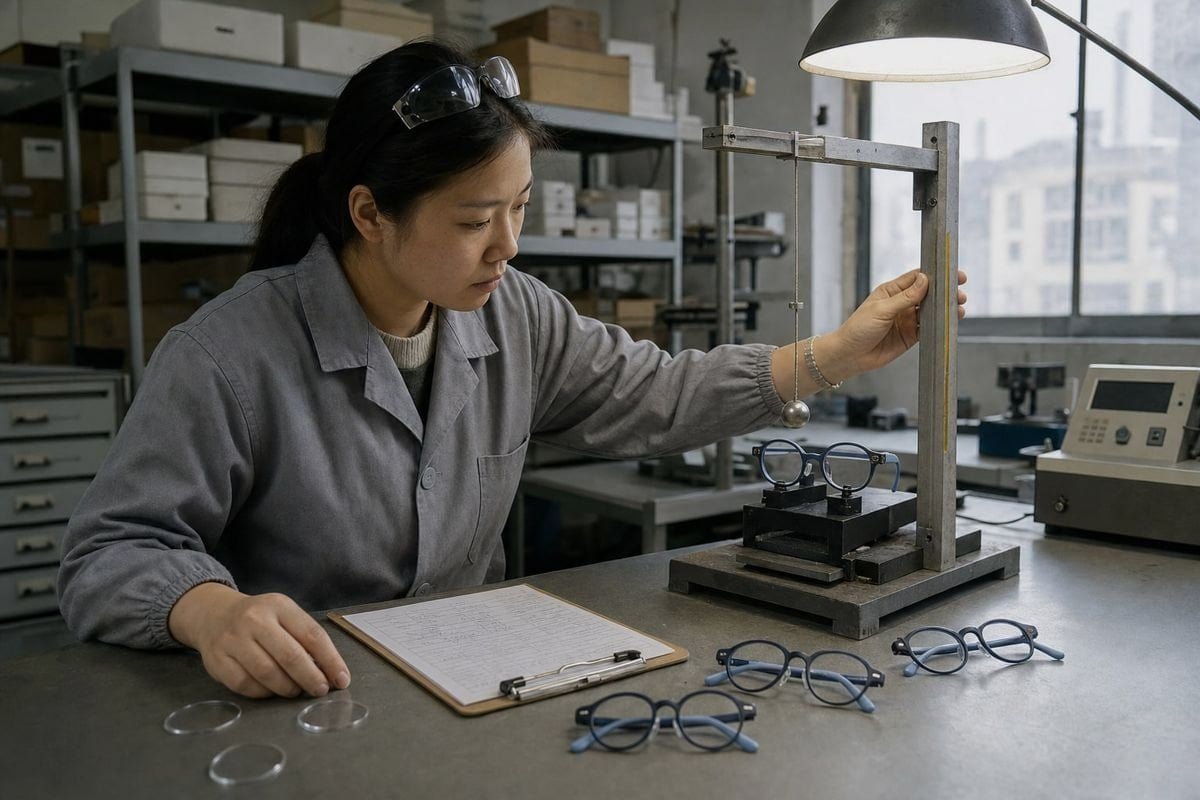
L'épaisseur n'est pas décidée par l'indice seul. La puissance de la prescription, le diamètre du verre, la distance pupillaire, la forme de la monture, la courbe de base, et la le centre optique 3 décentration affectent tous le résultat final. Cela vous donne plusieurs leviers à actionner avant de payer pour un indice ultra-élevé.
Commencez par la monture, pas par le verre
La monture est le réducteur d'épaisseur le moins cher. Un verre négatif devient plus épais à mesure que l'on s'éloigne de son centre optique. Une monture plus petite et arrondie coupe simplement les parties les plus épaisses parties extérieures 4 du blank du verre. C'est un avantage naturel dans les lunettes pour enfants, car les montures pour enfants sont déjà compactes. Lorsque nous concevons nos montures optiques TR90, nous gardons les formes de verres arrondies et la taille de l'œil modeste pour cette raison exacte.
La décentration compte aussi. Lorsque la distance pupillaire d'un enfant est beaucoup plus étroite que la disposition optique de la monture, le laboratoire doit décaler le centre optique vers l'intérieur. Ce décalage pousse plus de matière de verre épaisse vers le bord extérieur. Une monture pour enfants bien proportionnée minimise ce problème.
Une séquence sûre de réduction d'épaisseur
- Choisissez une monture avec une monture plus petite 5 dimensions et une forme de lentille arrondie.
- Adaptez la largeur de la monture à la distance pupillaire de l'enfant pour limiter la décentration.
- Sélectionnez le polycarbonate ou le Trivex pour leur résistance aux chocs.
- Ajoutez une conception asphérique pour aplatir le profil de la lentille et élargir le "point idéal" clair."
- Augmentez l'indice uniquement si la prescription est de ±4,00 ou plus forte.
Les conceptions asphériques méritent une mention spéciale pour les porteurs pédiatriques. Elles réduisent la distorsion périphérique en "fond de bouteille" que les enfants actifs trouvent désorientante, et elles aplatissent la courbe de la lentille, ce qui réduit le volume sans modifier le matériau.
Le point de sécurité ne peut être surestimé. Une lentille plus fine fabriquée à partir d'un matériau cassant est une responsabilité dans une cour de récréation. La lentille la plus fine n'est pas la lentille la plus sûre. Pour les enfants, la bonne réponse équilibre les deux.
Pourquoi un indice de réfraction plus élevé coûte-t-il plus cher pour les commandes de lunettes de mes enfants ?
Les discussions sur les coûts reviennent dans presque tous les devis que nous préparons pour les entreprises optiques et les importateurs. Lorsqu'un acheteur voit le prix passer d'une lentille 1,56 à une lentille 1,67, la première question est toujours la même : pour quoi est-ce que je paie réellement ?
Un indice de réfraction plus élevé coûte plus cher car les matières premières sont des polymères de spécialité qui sont plus chers à produire, nécessitent un moulage et un façonnage plus précis, ont besoin de revêtements antireflets haut de gamme pour gérer une réflectance de surface plus élevée, et se vendent en plus petits volumes que les matériaux de lentilles standard.
La différence de prix est réelle, et il vaut la peine de comprendre d'où elle vient avant de décider de la répercuter sur vos clients.
D'où vient le coût supplémentaire
| Facteur de coût | Pourquoi cela ajoute au coût | Impact sur les commandes des enfants |
|---|---|---|
| Matière première | Les monomères à haut indice sont des produits chimiques spécialisés | Coût de base plus élevé de la lentille |
| Précision de fabrication | Les lentilles plus fines tolèrent moins d'erreurs de surfacage | Contrôle qualité plus strict, plus de rebuts |
| Exigences de revêtement | Un indice plus élevé signifie plus de réflexion de surface, donc un revêtement AR est quasi obligatoire | Coût du revêtement ajouté par défaut |
| Faible valeur d'Abbe | Plus aberration chromatique 6 doit être gérée par la conception | Les meilleures conceptions coûtent plus cher |
| Économies d'échelle | Les 1,67 et 1,74 se vendent en plus petites quantités que les 1,50/1,59 | Moins d'échelle, prix unitaire plus élevé |
Le supplément en vaut-il la peine pour les enfants ?
C'est là que j'encourage les acheteurs à réfléchir de manière critique. Les prescriptions des enfants peuvent changer rapidement, parfois en un an. Payer une forte prime pour une lentille 1,74 7 qui sera remplacée dans douze mois est difficile à justifier pour des prescriptions légères. Cet argent est souvent mieux dépensé pour une monture durable et flexible et un revêtement résistant aux rayures.
Il existe cependant un argument valable pour le supplément. Pour un enfant ayant une forte prescription, des lentilles plus fines signifient des lunettes plus légères, moins de pression sur l'arête nasale en développement, et moins de grossissement de type "fond de bouteille" qui peut déformer l'apparence de ses yeux pour ses camarades de classe. L'estime de soi est un véritable avantage produit. Plusieurs de nos clients de marque positionnent les options à haut indice comme une amélioration du confort et de la confiance pour cette raison exacte, et cela se vend bien lorsqu'il est présenté honnêtement.
La conclusion pour la planification de votre assortiment : proposez des indices standard et intermédiaires par défaut pour les enfants, et réservez le haut indice 1,67 comme une amélioration clairement expliquée pour les prescriptions plus fortes.
Quel matériau de lentille offre le meilleur équilibre entre épaisseur, poids et durabilité pour les montures de mes enfants ?
La tolérance au poids est quelque chose que nos ingénieurs testent de manière obsessionnelle. Lorsque nous associons des faces en TR90 à des branches flexibles en TPEE, l'objectif est une monture suffisamment légère pour qu'un enfant oublie qu'elle est là. La lentille ne doit pas annuler ce travail.
Trivex et polycarbonate offrent le meilleur équilibre entre épaisseur, poids et durabilité pour les enfants. Le Trivex est le matériau le plus léger en volume avec d'excellentes propriétés optiques et une résistance aux chocs ; le polycarbonate est légèrement plus fin et très résistant aux chocs. L'indice 1.67 convient uniquement aux fortes prescriptions.
Voici une idée fausse courante qui mérite d'être clarifiée : plus fin ne signifie pas automatiquement plus léger. Les matériaux à haut indice sont plus denses que les plastiques standard. Une lentille 1,74 utilise moins de matériau, mais chaque millimètre cube pèse plus lourd. Pour les petites tailles de lentilles pour enfants, une lentille Trivex finit souvent par être plus légère qu'une lentille 'plus fine" à haut indice, car le Trivex a la plus faible densité spécifique des matériaux de lentilles courants.
Comparaison des matériaux pour les lunettes d'enfants
| Matériel | Indice | Résistance aux chocs | Clarté optique (Abbe) | Poids | Verdict pour les enfants |
|---|---|---|---|---|---|
| Plastique standard (CR-39) | 1.50 | Bas | Excellent | Modéré | À éviter pour les enfants actifs |
| Trivex | 1.53 | Excellent | Très bon | Le plus léger | Meilleur polyvalent |
| Polycarbonate | 1.59 | Excellent | Bon, mais points de contrainte des charnières | Très léger | Meilleur rapport qualité-prix pour les enfants actifs |
| Indice élevé | 1.67 | Modéré | Faible à moyen | Modéré | Uniquement pour les fortes corrections |
| Indice ultra-élevé | 1.74 | Modéré | Le plus bas | Dense | Uniquement pour les très fortes corrections |
Le compromis de la valeur d'Abbe
La valeur d'Abbe mesure la façon dont un matériau décompose la lumière en couleurs. Une valeur d'Abbe plus faible signifie plus d'aberration chromatique, qui se manifeste par des franges de couleur sur les bords de la lentille. Les enfants qui pratiquent des sports et déplacent rapidement leurs yeux sur la lentille peuvent remarquer ces franges plus que les adultes. Le Trivex présente un avantage clair à cet égard, offrant une vision périphérique plus nette que les lentilles en polycarbonate à un niveau de sécurité similaire.
Correspondance lentille-monture
La monture complète l'équation. Une monture flexible en TR90 ou TPEE absorbe les chocs et se plie au lieu de se casser, ce qui complète une lentille résistante aux chocs. Les lunettes légères ne fonctionnent que comme un système : une lentille lourde dans une monture légère glisse sur le nez, et une lentille légère dans une monture rigide se casse toujours à la cour de récréation. Lorsque nos clients choisissent parmi nos styles pour enfants existants, nous leur demandons toujours quel ensemble de lentilles sera utilisé, afin que le poids ajusté soit correctement équilibré sur un petit visage.
Conclusion
Les lentilles épaisses et lourdes font abandonner leurs lunettes aux enfants. La solution n'est pas toujours un indice plus élevé : adaptez l'indice aux dioptries de la prescription, choisissez des montures plus petites et privilégiez les matériaux résistants aux chocs comme le Trivex et le polycarbonate.
Notes de bas de page
Explication scientifique de la façon dont les matériaux avec différents indices courbent la lumière. ↩︎
Source faisant autorité du NIH sur la myopie, qui nécessite souvent des lentilles à indice élevé. ↩︎
Explique le point sur une lentille où la lumière passe sans déviation. ↩︎
Page Wikipedia faisant autorité couvrant les propriétés des lentilles correctrices et la fabrication à partir de blancs. ↩︎
Guide faisant autorité sur les mesures de monture et leur impact sur l'ajustement de la lentille. ↩︎
Page Wikipedia faisant autorité expliquant le phénomène optique de l'aberration chromatique. ↩︎
Détails techniques concernant les matériaux de lentilles à indice ultra-élevé et leurs propriétés. ↩︎
Plus d'articles que vous pourriez aimer
23 août 2026
Comment les lunettes pour enfants trop petites peuvent-elles être recyclées ou réutilisées ?

23 août 2026
Quelle est l'efficacité des matériaux biosourcés et recyclables dans les lunettes pour enfants ?
23 août 2026
Peut-on remplacer les verres après un changement de prescription pour les lunettes d'enfants ?
Vous recherchez un partenaire fiable en lunetterie pour enfants ?
Explorez plus de 800 styles prêts et un support OEM/ODM complet adapté à votre marque.
Contactez-nous English
  Español de México
  Deutsch
  Français
  日本語
日本語  العربية
  Português do Brasil