What Cost Factors Drive Price Differences in Kids’ Eyewear?
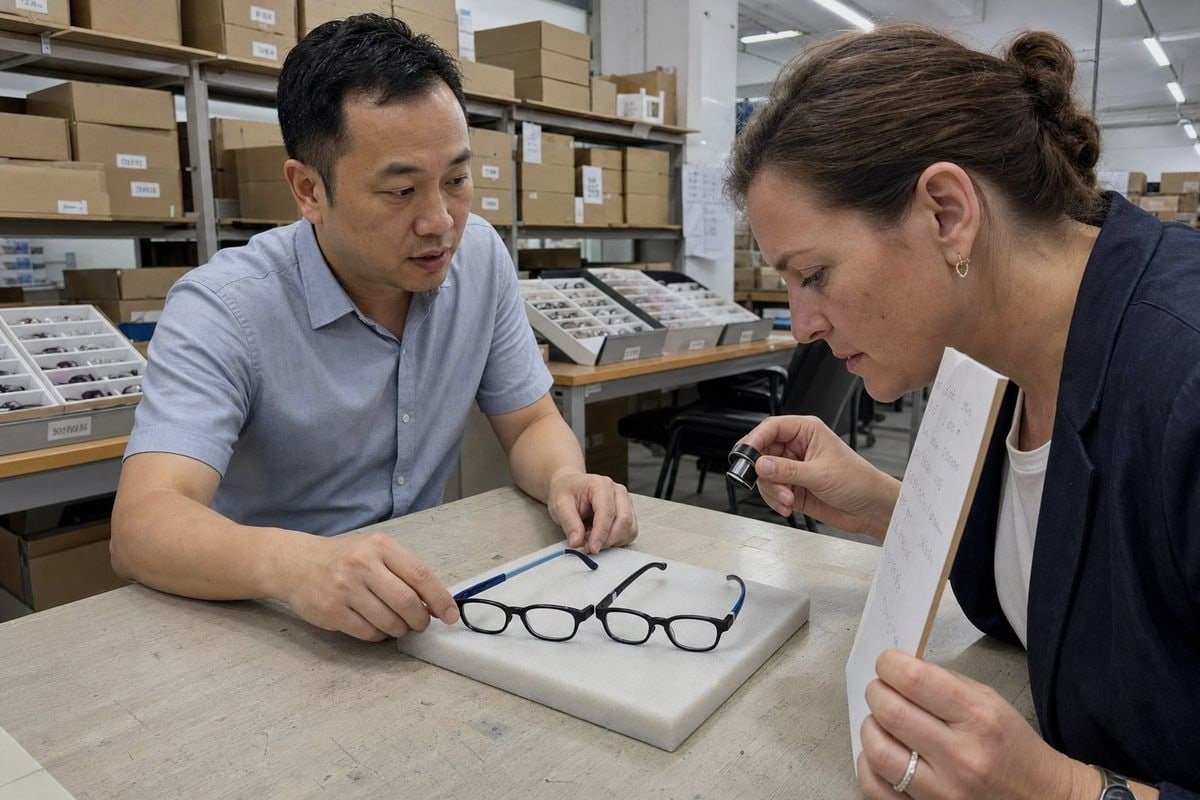
Cost factors in kids’ eyewear confuse many buyers who visit our Taizhou factory. Two similar-looking frames can differ in price by 300%, and quotes rarely explain why.
Price differences in kids’ eyewear are driven by frame materials like TR90 and TPEE, lens types and coatings, hinge and hardware quality, mold and tooling investment, MOQ levels, licensing fees, packaging, and hidden costs such as compliance testing, defect rates, and shipping terms.
Each of these factors adds or removes real dollars from your landed cost. Let me break them down one by one, so you can compare supplier quotes with confidence.
What Are the Main Cost Drivers Behind Kids' Eyewear Pricing?
Last month, a buyer from Australia sent me two competitor quotes for nearly identical kids' frames. The gap was 40%. We spent an hour tracing exactly where that money went.
The main cost drivers behind kids' eyewear pricing are raw frame material, lens material and coatings, hinge hardware, mold amortization, order quantity, labor and quality control, packaging, and compliance testing. Material and lens choices typically account for the largest share of the factory price.
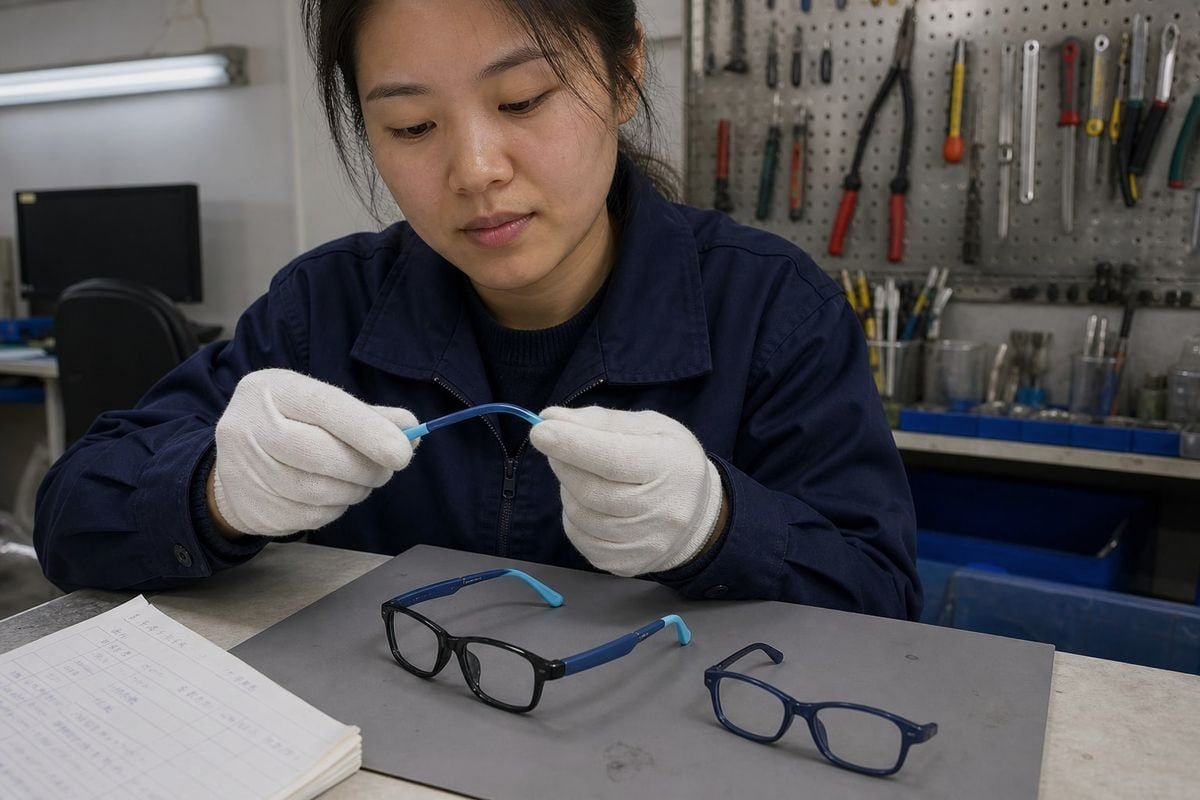
When you receive a quote for children's frames 1, you are really looking at a stack of smaller costs. Understanding the stack helps you negotiate the right things instead of just pushing on the total.
The Typical Cost Stack in a Kids' Frame
Here is how the cost of a typical flexible kids' optical frame breaks down at the factory level, based on what we see across our roughly 800 existing styles:
| مكون التكلفة | Share of Factory Price | What Changes It |
|---|---|---|
| Frame material (TR90, TPEE, PC) | 25–35% | Material grade, frame thickness, color masterbatch |
| العدسات | 15–30% | Polycarbonate lenses, UV400, polarized, photochromic lens options |
| Hinges and hardware | 5–15% | Flexible spring hinges vs. standard barrel hinges |
| العمالة والتجميع | 10–15% | Hand-fitting, two-tone designs, silicone tips |
| مراقبة الجودة | 5–8% | Inspection depth, معايير مقاومة الصدمات 2 testing |
| التعبئة والتغليف | 5–12% | Retail-ready boxes, cases, cloths, hang tags |
| Mold amortization | 0–10% | New tooling vs. existing molds |
A few points deserve emphasis. First, kids' frames are smaller than adult frames, so they use less raw material. But that saving is partly offset elsewhere. Children's frames need sturdier hinges, softer temple tips, and higher breakage resistance. Safety is non-negotiable in this category. Second, lens upgrades move the price more than most buyers expect. A polarized UV400 sun lens costs meaningfully more than a basic tinted lens. Third, licensing changes everything. Designer licensing fees for characters or brands can add a premium tier that has nothing to do with optical performance. Two frames that look similar in function can differ sharply in price simply because one carries a licensed design.
How Do Materials Like TPEE and TR90 Affect My Manufacturing Costs?
There is a trade-off we weigh on every new project: a stiffer, cheaper plastic frame costs less per unit, but a flexible TPEE temple survives a child twisting it daily.
TPEE and TR90 cost more per kilogram than standard plastics, raising unit price by roughly 10–30%. In return, they deliver flexibility, lighter weight, hypoallergenic comfort, and far lower breakage rates, which reduces returns, warranty claims, and total cost of ownership for your brand.
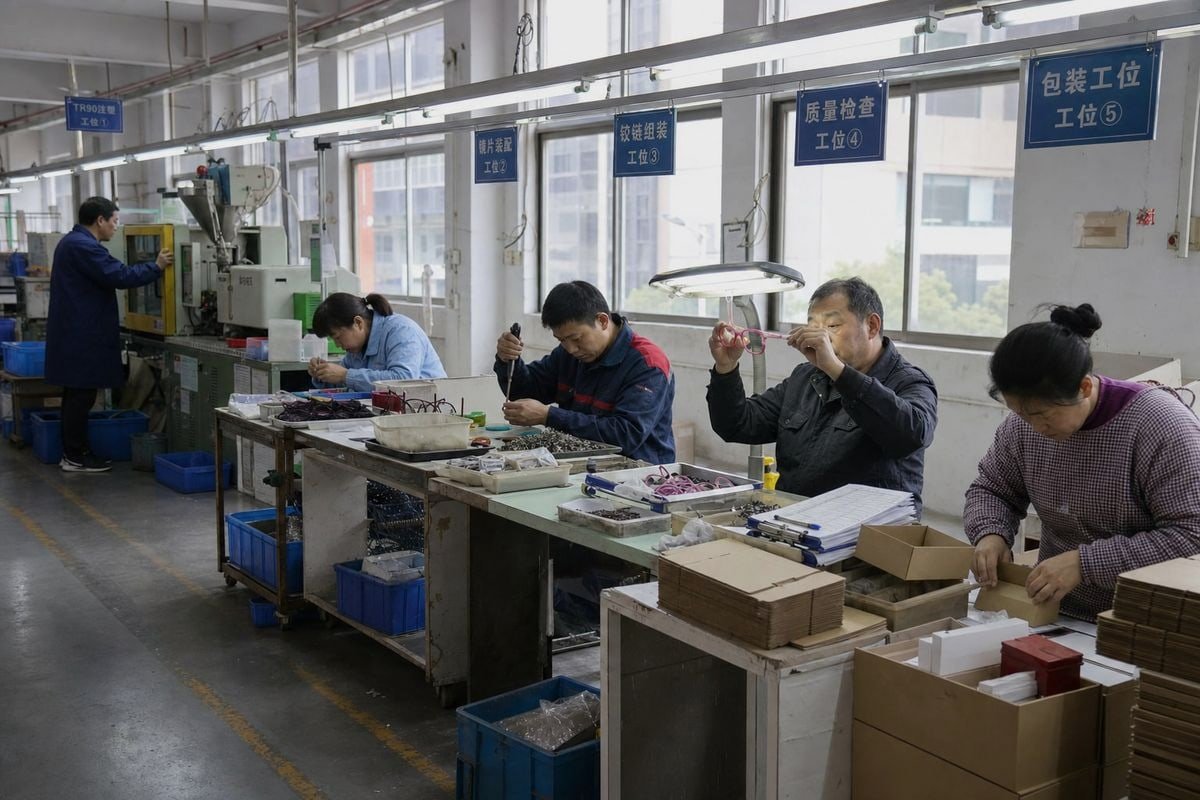
Material choice is the single decision that shapes both your cost and your product's reputation. So it is worth understanding what you actually pay for with each option.
Comparing Common Kids' Frame Materials
| المواد | التكلفة النسبية | المرونة | الوزن | أفضل استخدام |
|---|---|---|---|---|
| بلاستيك PC قياسي | منخفض | صلب، يمكن أن ينكسر | متوسط | نظارات شمسية ترويجية بميزانية محدودة |
| بلاستيك الذاكرة TR90 | متوسط | عالي، يعود إلى شكله | خفيف جدا | Kids' optical frames, everyday wear |
| TPEE | متوسط إلى مرتفع | Very high, almost unbreakable | خفيف | Toddler and active-kids frames, temples |
| TR90 + TPEE combination | متوسط إلى مرتفع | Rigid front, flexible temples | خفيف | Premium kids' optical and sun styles |
TR90 memory plastic bends and returns to its original shape. That matters because children sit on their glasses, pull them off with one hand, and drop them constantly. TPEE goes a step further. It is softer, environmentally friendly, and gentle on skin, which is why we often pair a TR90 front 3 with TPEE temples. The front keeps the lenses stable for optical accuracy, while the temples flex safely around a child's head.
There are hidden material costs too. Cheap recycled plastics can contain irritants, so hypoallergenic frame materials 4 require virgin-grade pellets, which cost more. Color also matters. Two-tone designs, like a glossy black front with sky-blue silicone tips, need extra molding steps and hand assembly. حقن القالب 5 Our engineers have found that these details add 8–15% to labor cost, but they are also what makes a kids' frame sell at retail.
One buyer objection I hear often: cheaper frames mean better margins. In practice, higher breakage rates erase that margin. Industry data suggests 20–25% of kids’ glasses are lost or broken each year. A frame that survives is a customer who reorders.
Can Choosing From Existing Styles Help Me Lower My MOQ and Investment?
A lesson I learned early in our 15 years of eyewear production: new brands rarely fail because of design. They fail because tooling costs drain their launch budget before the first sale.
Yes. Choosing from a manufacturer's existing style library eliminates mold costs of $2,000–$8,000 per frame, cuts development time from months to weeks, and lowers MOQs significantly, because the factory already has proven tooling, tested fits, and established production processes for those designs.

For a founder or product manager testing the kids' eyewear category, this is usually the smartest first move. Here is why the math works so strongly in your favor.
New Mold vs. Existing Style: The Real Numbers
Opening a new injection mold for a single frame style is a serious investment. You pay for the tooling itself, then for sampling rounds, then for adjustments. And because the factory must justify the setup, MOQs on fully custom tooling 6 are high. With an existing style, all of that disappears. At our workshop, buyers can select from around 800 existing kids' styles, then customize colors, logos, lenses, and packaging on top of proven molds.
| العامل | وقت التسليم للبضائع المجمعة | Existing Style + OEM Customization |
|---|---|---|
| Tooling cost | $2,000–$8,000 per style | $0 |
| Development time | 60–120 days | 15-30 يومًا |
| الحد الأدنى لكمية الطلب النموذجي | High, to amortize tooling | Much lower per color/style |
| Fit and safety risk | Unproven, needs testing rounds | Already validated on real production |
| Market test flexibility | One design, big commitment | Multiple styles, small commitment |
What You Can Still Customize
Choosing an existing frame does not mean selling a generic product. You can still specify:
- Custom frame and temple colors, including two-tone combinations
- Your logo printed or embossed on the temple
- Lens upgrades — UV400, polarized, or photochromic lens options
- Branded, retail-ready packaging, cases, and accessories
This approach lets you launch three or four styles, watch which ones sell, and only invest in custom tooling once you have real market data. When a Japanese baby-product brand tested our TPEE toddler frames this way, they validated demand across two seasons before committing to their own exclusive design. That sequencing protected their cash flow and their timeline.
What Hidden Costs Should I Watch for When Comparing Eyewear Suppliers?
During a QC audit in our 5S-managed workshop, a visiting procurement manager told me her previous supplier's "cheap" quote ended up 25% more expensive after rework, retesting, and delays.
Hidden costs when comparing eyewear suppliers include missing compliance testing, high defect rates requiring rework, weak packaging that causes transit damage, unclear shipping terms, sampling fees, slow communication delaying launches, and quotes that exclude essentials like coatings, cases, or replacement warranty programs.
A low unit price on a quotation sheet is not the same as a low landed cost. sales quotation 7 The gap between the two is where inexperienced buyers lose money.
Compliance and Testing Gaps
Children's eyewear must meet impact resistance standards and chemical safety regulations in your target market — think EN standards in Europe or ANSI-related requirements in the US. Some suppliers quote low by skipping testing entirely. If your goods fail at customs or, worse, after a child is injured, the "saving" becomes a liability. Always ask what testing is included and request documentation before you commit.
Quote Exclusions That Add Up Later
Watch for these items that are often quoted separately or omitted:
- Lens treatments: anti-reflective coating and scratch-resistant treatment are sometimes excluded, then billed as surprise extras.
- High-index lens materials: if you sell optical frames, your customers' stronger prescriptions may need thinner lenses; confirm whether your Rx lab partner or the factory handles this.
- Hardware upgrades: flexible spring hinges cost more than basic hinges, and some quotes silently substitute the cheaper option.
- التعبئة والتغليف: a poly bag is not retail-ready. Boxes, cases, cloths, and inserts each add cost — but they also protect goods in transit.
- Sampling and revisions: some factories charge heavily per sample round.
Service Gaps That Cost You Time
Slow communication is a hidden cost too. If email replies take four days, a small production question can delay your launch by weeks. This is a real difference between working with a factory directly and buying through layers of traders. Traders add markup and slow down answers, similar to how retail overhead and professional fitting services inflate prices at the consumer level. In our experience exporting to buyers in more than 20 countries, the suppliers who answer technical questions quickly are also the ones whose defect rates stay low — responsiveness and process discipline usually travel together.
الخلاصة
Kids' eyewear prices reflect materials, lenses, hardware, tooling, and hidden service costs. Choose flexible TPEE and TR90, start with existing styles, and compare landed cost — not just unit price.
مقالات أخرى قد تعجبك
هل تبحث عن شريك موثوق به للنظارات للأطفال؟
استكشف أكثر من 800 نمط جاهز ودعم OEM/ODM كامل مصمم خصيصًا لعلامتك التجارية.
اتصل بنا English
  Español de México
  Deutsch
  Français
  日本語
日本語  العربية
  Português do Brasil